
Gamigion
Gamigion is a mobile games industry news outlet. It publishes video interviews and discussions with industry figures on topics such as ad monetization, user acquisition, publishing and regional markets like Vietnam and APAC.
Documents

Google App Hub Istanbul 🇹🇷 Mobile Gaming, Cool People & FUN!
The Turkish mobile gaming sector is currently undergoing a strategic shift, moving away from the hypercasual models of the past five years toward more sustainable, long-term hybrid-casual and merge-based experiences.
- The Turkish mobile gaming sector is pivoting from hypercasual models toward sustainable hybrid-casual and merge-based game designs.
- Developers are shifting focus from aggressive, short-term user acquisition to long-term player retention as the primary driver of profitability.
- The industry has reached a consensus that the era of easy, day-one return on ad spend (ROAS) has ended, requiring a fundamental change in product design.

Google's Tobias Knoke: The Era of Growth at All Costs is Over
The mobile gaming and application industry has reached a growth plateau, signaling the end of the era defined by growth at all costs.
- The mobile gaming and app industry has reached a growth plateau, signaling the end of the 'growth at all costs' era and a shift toward predictive lifetime value (LTV) and long-term user retention.
- With approximately 700,000 new apps and games entering the Google Play Store monthly, developers must prioritize unique value propositions and high-quality user experiences to avoid being ignored by users.
- While AI is a powerful tool for rapid prototyping and eliminating repetitive development tasks, user research indicates that players across all generations demand authentic, human-designed experiences that AI cannot replicate.

Why Most Mobile Games Still Get Ad Monetization Wrong
The mobile gaming industry is undergoing a significant shift in monetization strategy, moving away from aggressive, revenue-extraction models toward a player-centric approach that prioritizes long-term retention.
- Prioritize retention over immediate revenue, as monetization should act as a multiplier to long-term player engagement rather than a tool for aggressive extraction.
- Design ad placements as core game mechanics during the prototyping phase rather than adding them as an afterthought, which often results in disruptive, high-pressure experiences.
- Implement rewarded ads as contextual, value-driven triggers—such as revivals or skill upgrades—rather than simple transactional exchanges for currency, as demonstrated by the success of Block Blast with its 60 million DAU.

Beyond Almedia’s Freecash Ban: What’s up, REWARDED UA?
The rewarded user acquisition sector is currently navigating a critical period of transition following the removal of major platforms like Freecash from the Apple and Google app stores.
- Apple and Google removed the rewarded UA platform Freecash from their app stores due to concerns over misleading advertising practices and sensitive data handling.
- The rewarded UA model is shifting from simple 'install and delete' mechanics to a focus on long-term engagement, play, and monetization.
- Advertisers in the rewarded space often face challenges with profitability, as some top-tier games like Monopoly Go may pay $15–$25 per user, making it difficult to recoup costs within a one-year window.
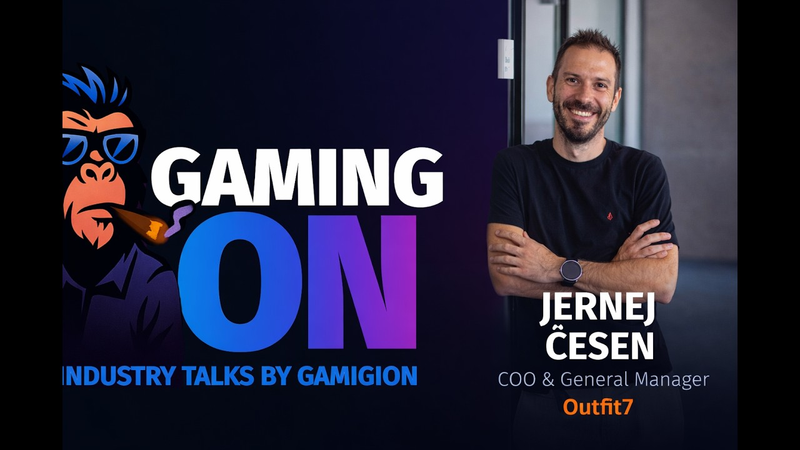
How's it going, Outfit7? Learnings from 2025 to New Projects in 2026
Outfit7, the developer behind the Talking Tom franchise, navigated a challenging 2025 by shifting from a KPI-driven, siloed organizational structure back to its core creative roots.
- Outfit7’s Talking Tom IP remains the global leader in mobile game downloads, surpassing 27 billion lifetime downloads as of 2025.
- To combat declining organic reach and rising user acquisition costs, Outfit7 shifted its strategy back to its core roots by focusing on clear project goals, remastering original titles, and expanding into the kids' segment with new products like Talking Tom and Friends World.
- The company successfully launched the survival roguelike game 'Vampirio' by empowering a small, autonomous team with full trust and resources, demonstrating that focused, silo-free teams outperform larger, distracted groups.
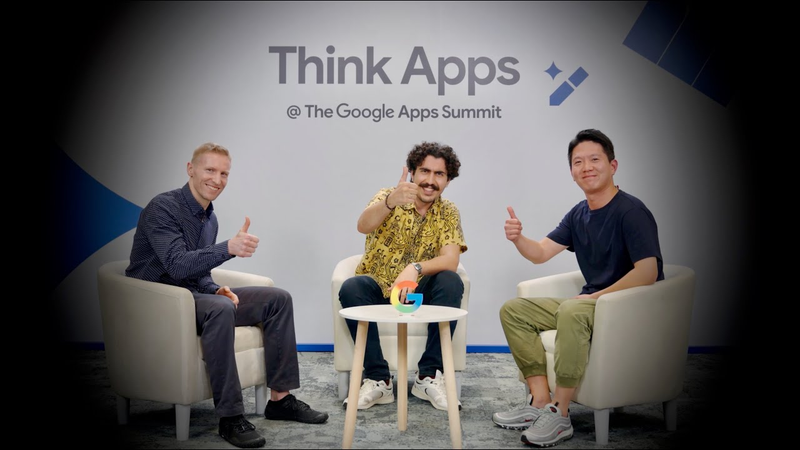
Google’s Thomas Zybulski & Saejoon Oh on APAC’s New Wave: Data, Fintech & Vietnam’s Rising Talent
The Asia-Pacific (APAC) mobile app and gaming ecosystem is currently defined by a transition toward data-driven decision-making and the diversification of business models.
- APAC developers are increasingly adopting data-driven decision-making and scientific measurement to differentiate their apps in an oversaturated market.
- Non-gaming sectors, particularly fintech and finance companies, are aggressively entering the ad monetization space to better understand user behavior and maximize Lifetime Value (LTV).
- Rising user acquisition costs post-COVID are forcing developers to move beyond traditional models and innovate with new business models, genres, and service offerings.
SayGames’ Kate Dekalenkova on Vietnam’s Rapid Rise and the Shift Toward Hybrid Casual
The Vietnamese mobile gaming ecosystem is undergoing a rapid maturation, transitioning from a hyper-casual foundation toward more complex hybrid-casual and midcore models.
- Vietnam’s mobile game development ecosystem is identified as the fastest-evolving market globally, characterized by a rapid transition from hyper-casual titles toward hybrid-casual and midcore genres.
- SayGames is actively seeking to replicate its success in the Korean market by establishing long-term partnerships with top-tier Vietnamese studios.
- The primary challenge for publishers like SayGames in Vietnam is identifying studios that share a long-term vision and a commitment to high-quality product development rather than short-term ad-based gains.

Google’s Zachary Kuney on Monetisation, AI & Why Vietnam is a Global Growth Engine
Vietnam has emerged as a critical growth engine within the global mobile application ecosystem, characterized by a unique combination of young, highly skilled talent, strong government support, and a collaborative, innovation-focused developer community.
- Vietnam is currently a primary growth engine within the APAC mobile app ecosystem, driven by a young, tech-focused talent pool and strong government support for the digital economy.
- AI is being leveraged by developers to transform massive datasets into actionable insights, effectively providing small studios with the capabilities of an in-house data science team.
- Google is shifting its support strategy for developers by integrating cross-functional teams—covering cloud, infrastructure, ad buying, and monetization—to provide a more cohesive and simplified scaling experience.

Tracy Phan on Vietnam’s Mobile Gaming Boom: Community, Culture & What's Next
The Vietnamese mobile gaming ecosystem has evolved from a bootstrapped, isolated industry into a globally recognized emerging market.
- Vietnam’s mobile gaming ecosystem is transitioning from a bootstrapped, ad-monetization-heavy model toward more sustainable, long-term revenue streams like hybrid-casual and in-app purchase (IAP) genres.
- The Vietnamese gaming community is characterized by a close-knit, collaborative culture where founders frequently share resources and network through informal social settings, which has historically fueled studio growth.
- Despite high download volumes, the industry currently faces a funding gap due to a cultural preference among founders to prioritize immediate profitability over raising venture capital or building for an exit.

Azur Games' Head of Publishing Sergey Marcinkiewicz on Vietnamese Mobile Gaming Ecosystem
Vietnam has emerged as a premier global hub for mobile game development, characterized by an exceptionally rapid pace of production and a unique mastery of the puzzle genre.
- The mobile gaming industry is shifting away from hyper-casual models toward complex, high-quality titles inspired by PC mechanics such as roguelite, tower defense, and survival arena games.
- Vietnam has established itself as a premier global development hub, distinguished by its rapid production speed and expertise in pioneering new puzzle sub-genres.
- Due to rising user acquisition costs, studios now require at least three months of data to effectively optimize return on ad spend (ROAS).

🚨 Under 16 Social Media Ban: What It Means for Gaming
The global trend of implementing social media bans for individuals under the age of 16 is gaining momentum, with several countries, including Australia, Denmark, and Malaysia, adopting or considering such legislation.
- A growing global trend, currently adopted by seven or eight countries including Australia, Denmark, and Malaysia, is moving toward banning social media access for children under 16.
- From a gaming industry perspective, the removal of social media platforms like TikTok and Instagram as primary entertainment competitors is expected to drive a 'halo effect,' increasing daily active users (DAU), session lengths, and engagement for gaming studios.
- The shift in the attention economy suggests that children restricted from social media will reallocate their time—often spent 'doom scrolling'—toward alternative digital entertainment, including video games and streaming services like YouTube, Netflix, and Prime.

Precise UA with Mastercard Data? Edik Mitelman talks Signal Hub & Beyond!
The emergence of data collaboration platforms, such as Signal Hub, marks a significant shift in mobile marketing by enabling privacy-preserving, cross-industry data sharing.
- Data collaboration platforms like Signal Hub allow gaming companies to target users based on real-world financial behavior, such as specific retail or in-app spending patterns, in a privacy-compliant manner (GDPR and CCPA).
- Gaming studios can now act as both buyers and sellers of audience data, creating a new high-margin revenue stream by monetizing their own user insights without compromising trade secrets or privacy.
- Precise targeting based on real-world purchasing data—such as identifying frequent customers of a specific pizza chain to market a pizza-themed mobile game—significantly improves user retention and reduces churn compared to traditional, less targeted advertising.