Games and Culture
SAGE journal for the cultural, social and humanities study of games. Only its open-access articles are included.
Documents
Let's Play Tinder! : Aesthetics of a Dating App
Tinder functions primarily as a ludic artifact rather than a conventional romantic tool, utilizing design principles that prioritize sustained user engagement over successful interpersonal connection.
- Tinder functions primarily as a ludic artifact designed to prioritize sustained user engagement and platform retention over the facilitation of successful interpersonal connections.
- The application utilizes gamified mechanics, such as swipe logic, to create psychological feedback loops similar to those found in slot machines and video games.
- By framing social interaction as a mechanical, game-like interface, the platform incentivizes users to focus on the act of playing and strategic impression management rather than romantic outcomes.
Introduction: A Literary Studies/Games Studies Conversation
This introduction to a special issue of Games and Culture explores the interdisciplinary intersection between literary studies and game studies.
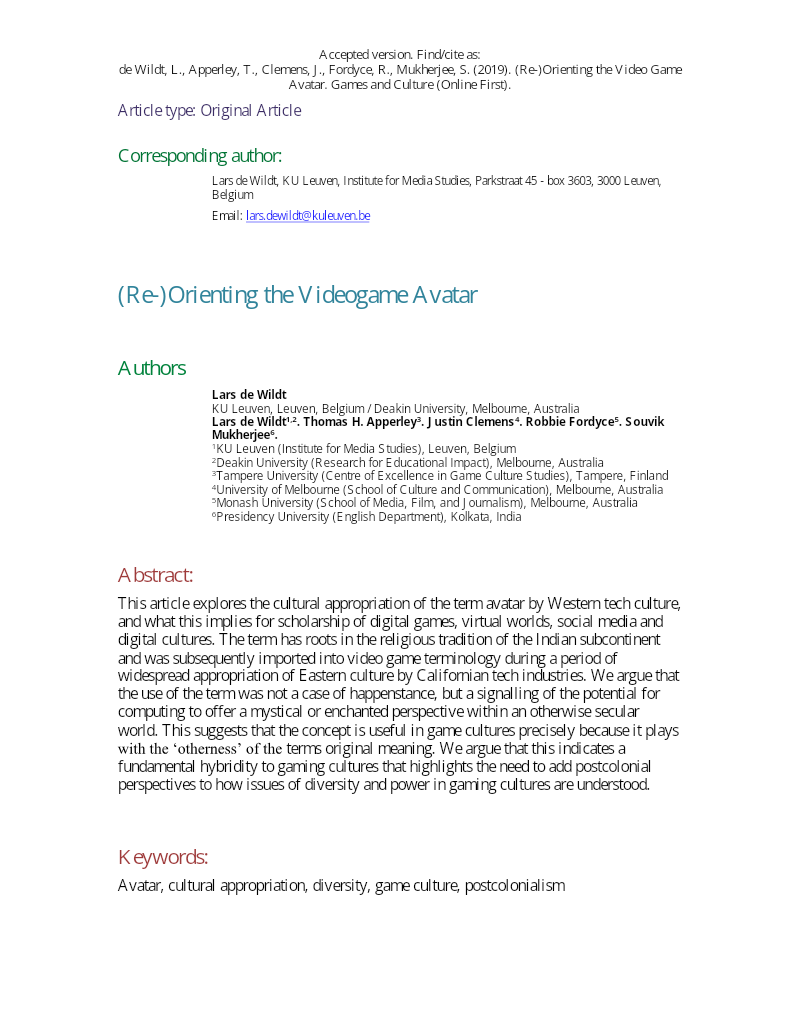
(Re-)Orienting the Video Game Avatar
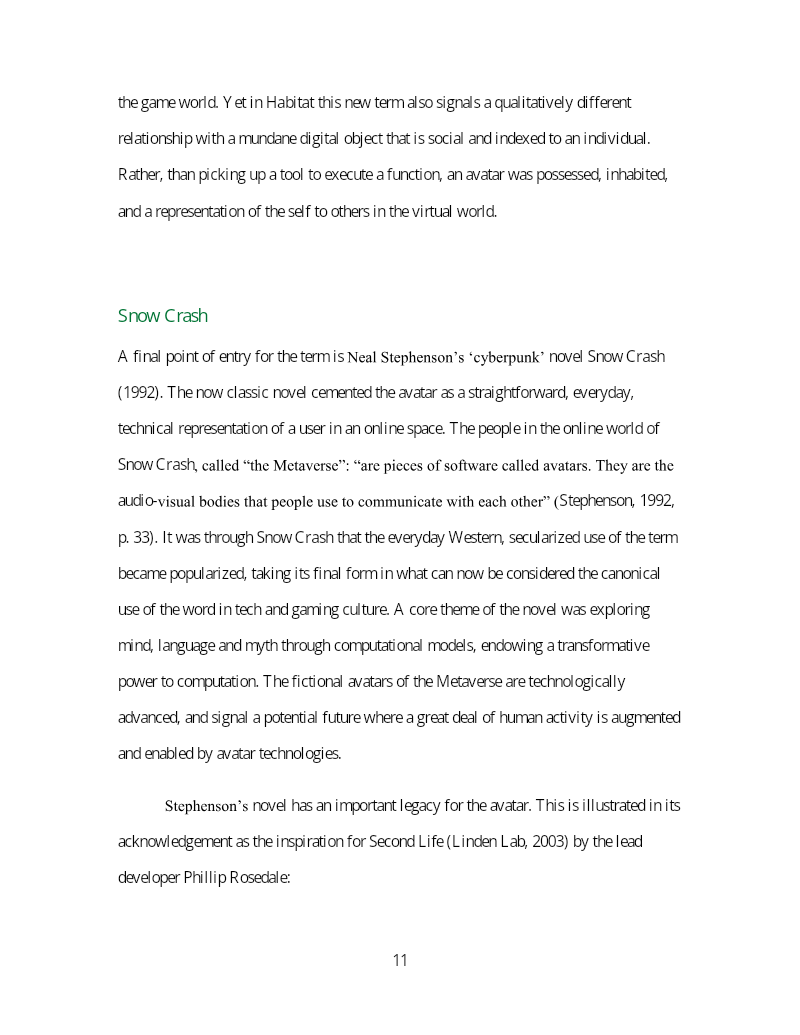
The Western technology and gaming industries have historically appropriated the term avatar from its origins in the Indian subcontinent to imbue secular digital environments with a sense of mysticism and transcendence.
Not Only for a Celebration of Competitive Overwatch but Also for National Pride: Sportificating the Overwatch World Cup 2016
The 2016 Overwatch World Cup serves as a definitive case study in the sportification of digital competition, illustrating how esports organizations intentionally adopt the production conventions of traditional athletics to secure professional legitimacy.
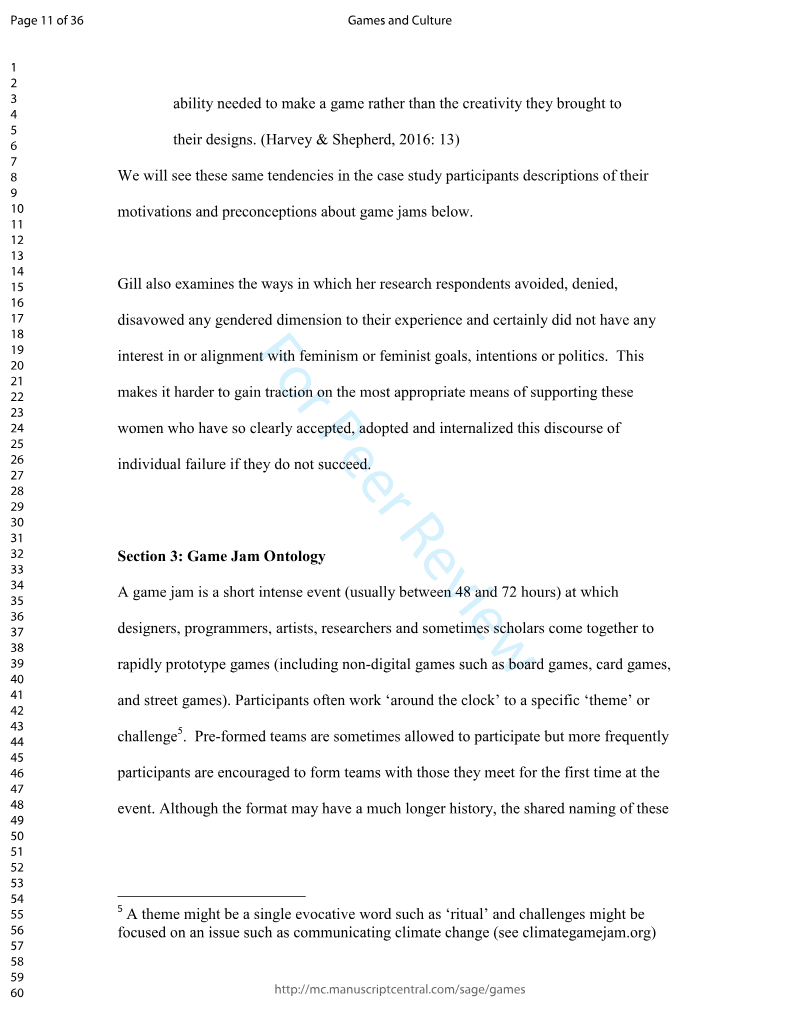
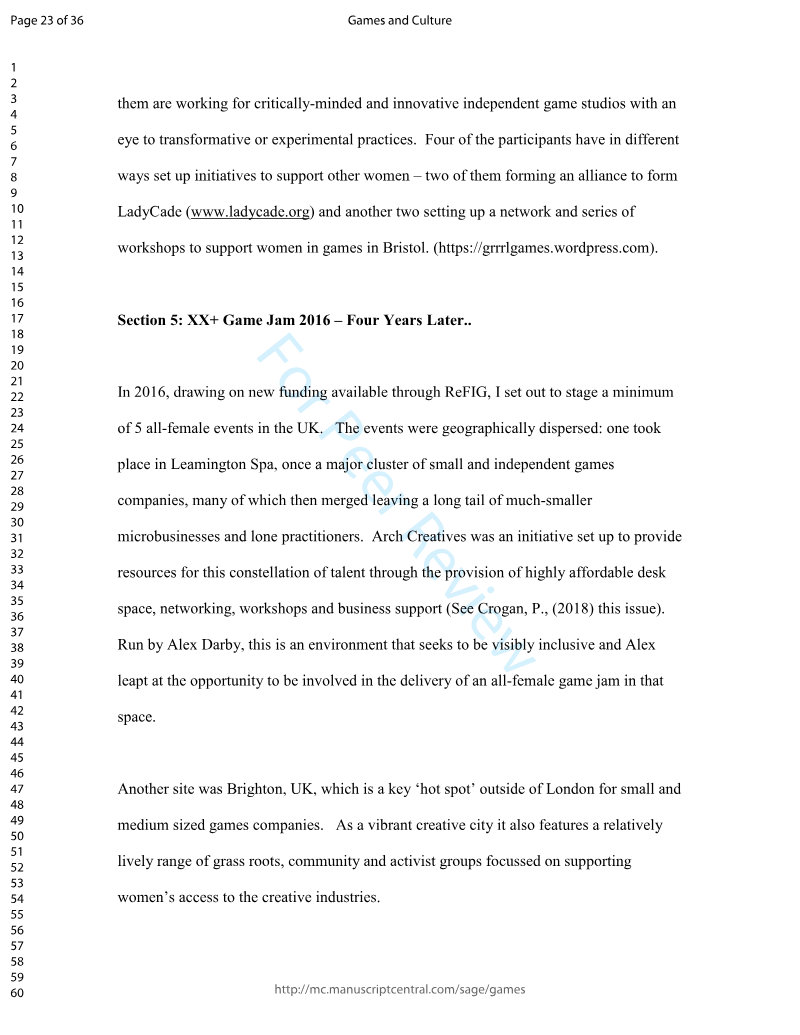
Game Jam as Feminist Methodology: The Affective Labours of Intervention in the Ludic Economy
All-female game jams function as a critical feminist methodology designed to dismantle systemic gender-based exclusion within the male-dominated games industry.

Game Theory for Computer Games Design
Game theory provides a robust framework for formalizing and refining complex game design, offering a structured approach to balancing player agency and mechanical depth.
Methodology, Representation, and Games
Textual analysis of digital games functions as a critical epistemological stance that treats interactive media as complex, multifaceted texts.

Alibis for Adult Play: A Goffmanian Account of Escaping Embarrassment in Adult Play
Adult play frequently conflicts with societal norms that prioritize productivity, self-regulation, and professional responsibility.
Play and Gameful Movies: The Ludification of Modern Cinema
The convergence of digital gaming and contemporary cinema represents a fundamental shift in narrative structure and audience engagement, driven by the process of ludification.
“What an Eccentric Performance”: Storytelling in Online Let’s Plays
Let’s Play videos represent a significant evolution in digital storytelling, functioning as a performative medium that shifts the narrative focus from the game’s original programmed structure to the subjective experience of the player-narrator.
The Pyrrhic Victory of Game Studies: Assessing the Past, Present, and Future of Interdisciplinary Game Research
Game studies has achieved a paradoxical success, having effectively legitimized games as a serious academic subject while simultaneously suffering from institutional fragmentation.
Anger, Fear, and Games: The Long Event of #GamerGate
The 2014 emergence of #GamerGate represents a pivotal shift in digital culture, functioning as a decentralized, swarm-like movement that weaponized online harassment against game developers, critics, and scholars.
Do you work at Games and Culture? Get a free report of how these documents are read and cited here.