1 free read left. Create a free account for unlimited reading + AI research.
Create free accountArticleGames and Culture
Distilling the key insights…
Game studies has achieved a paradoxical success, having effectively legitimized games as a serious academic subject while simultaneously suffering from institutional fragmentation. Although the field was founded on the promise of robust interdisciplinary collaboration, it has increasingly narrowed into a homogenous enclave dominated by cultural and humanities-based inquiry. As researchers from fields such as human-computer interaction and communication migrate back to their respective disciplinary venues, the field has lost its status as a cohesive umbrella for diverse methodologies. This trend has resulted in a compartmentalized landscape where specialized knowledge is siloed rather than integrated, undermining the original goal of a unified interdisciplinary framework.
The current state of the field reflects a disconnect between academic research and broader industry-relevant applications, such as gamification and social change. To overcome this stagnation, the discipline must move beyond its defensive origins and embrace a more design-oriented approach. By adopting middle-range theories and utilizing boundary objects, scholars can create shared conceptual spaces that facilitate cooperation across divergent epistemic paradigms. These tools are essential for bridging the gap between theoretical inquiry and practical application, allowing the field to evolve beyond its current insular trajectory.
Ultimately, the future of game research depends on a shift toward integrated objectives that prioritize cross-disciplinary synthesis over disciplinary isolation. By refocusing on game design studies and applied gaming, the field can reclaim its relevance and foster the collaborative environment necessary to address complex, real-world challenges. Without a concerted effort to reintegrate diverse perspectives and methodologies, game studies risks remaining a fragmented collection of sub-communities rather than a vital, unified discipline capable of shaping the future of interactive media.
Games and Culture · 2025
Games and Culture · 2024
Games and Culture · 2024
Games and Culture · 2024
Games and Culture · 2024
Games and Culture · 2024
Games and Culture · 2024
Games and Culture · 2023
Games and Culture · 2023
Games and Culture · 2023
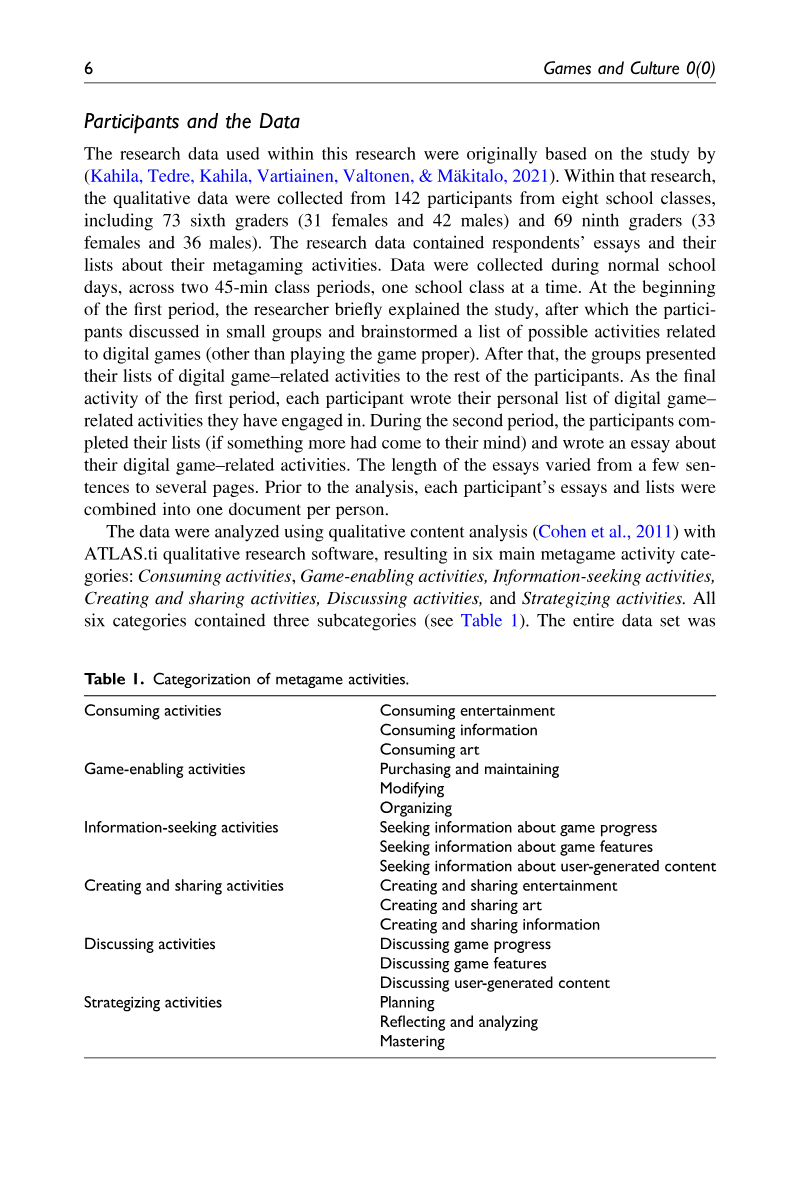
Games and Culture · 2023
Games and Culture · 2023
Replay. The Polish Journal of Game Studies · 2026





























Comments