
Game Developers Conference
Game Developers Conference (GDC, now the GDC Festival of Gaming) is the professional event for the games industry. It publishes recorded talks and interviews, annual industry survey reports such as the State of the Game Industry, and news articles.
Documents
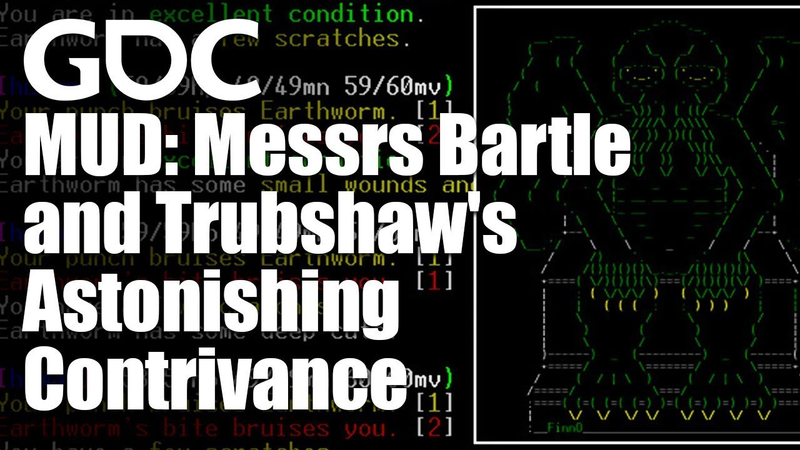
MUD: Messrs Bartle and Trubshaw's Astonishing Contrivance
The original Multi-User Dungeon, developed in 1978 by Richard Bartle and Roy Trubshaw, serves as a foundational case study for the importance of simulation-based design in virtual environments.
- The 1978 Multi-User Dungeon (MUD) by Richard Bartle and Roy Trubshaw demonstrates that immersive virtual worlds are best built on robust, logical mechanical systems rather than imitation of existing game tropes.
- Prioritizing consistent internal physics and environmental causality minimizes cognitive dissonance, allowing players to engage in emergent gameplay through environmental manipulation instead of scripted paths.
- The MUD's ten-level progression system was designed as a meritocratic structure to subvert rigid social hierarchies, illustrating that mechanics should function as a purposeful expression of the creator's vision.
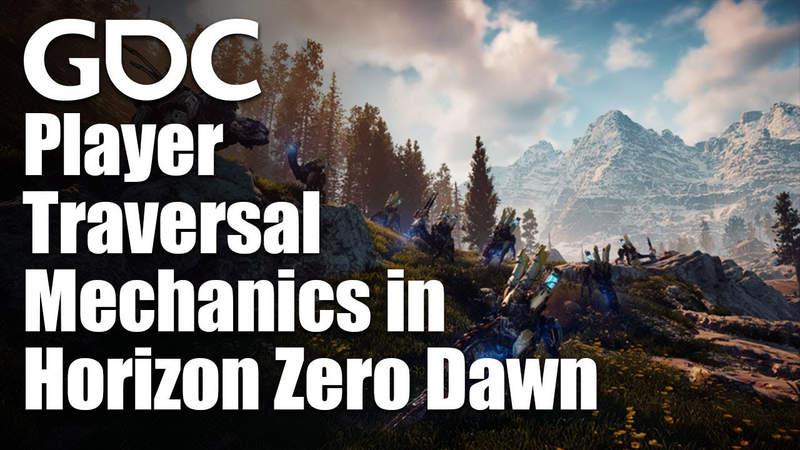
Player Traversal Mechanics in the Vast World of Horizon Zero Dawn
The development of traversal mechanics in Horizon Zero Dawn centers on achieving a balance between fluid, responsive player control and the technical demands of navigating a vast, procedurally generated open world.
- Horizon Zero Dawn prioritizes player agency by utilizing a start-stop movement system that minimizes animation latency, bypassing traditional navigation meshes to ensure high responsiveness.
- The engine employs a physics-based framework with collision probes to calculate stable ground planes, allowing the character to remain grounded on uneven terrain without sacrificing speed.
- Procedural leg adjustments via inverse kinematics and animation warping are used to refine context-aware vaulting animations and prevent visual artifacts across diverse environments.
The GDC 2018 Micro Postmortems
Game development success relies on balancing creative vision with rigorous technical and logistical constraints.
- Successful development requires balancing creative vision with rigorous technical and logistical constraints through iterative prototyping and strategic scoping.
- Technical limitations can be effectively masked to maintain high-fidelity visuals by utilizing specific techniques such as inverse kinematics and depth-mask shaders.
- Adopting film-industry 'previz' practices allows development teams to align stakeholder expectations rapidly and keep complex projects on schedule.
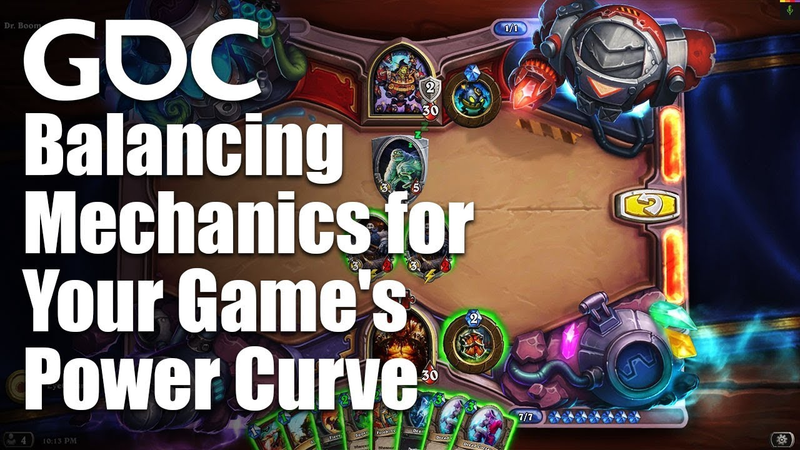
Board Game Design Day: Balancing Mechanics for Your Card Game's Unique Power Curve
Effective card game design relies on the strategic calibration of power curves, which are inherently non-linear due to the trade-offs between card cost, flexibility, and the risk of game termination.
- The power of a card is defined by its ratio of utility to cost, where higher-cost cards must provide significantly greater impact to justify the lack of flexibility and the difficulty of playing them late in a game.
- Games with automatic resource generation, like Hearthstone, require lower power ceilings for high-cost cards because players are guaranteed to reach those mana thresholds, whereas games like Magic: The Gathering must offer massive power payoffs to incentivize players to reach higher costs.
- Granularity in resource systems—such as Magic's ability to use color-specific mana or decimal-like cost adjustments—provides designers with more balancing 'knobs' compared to systems with rigid, chunky cost structures like Pokémon.
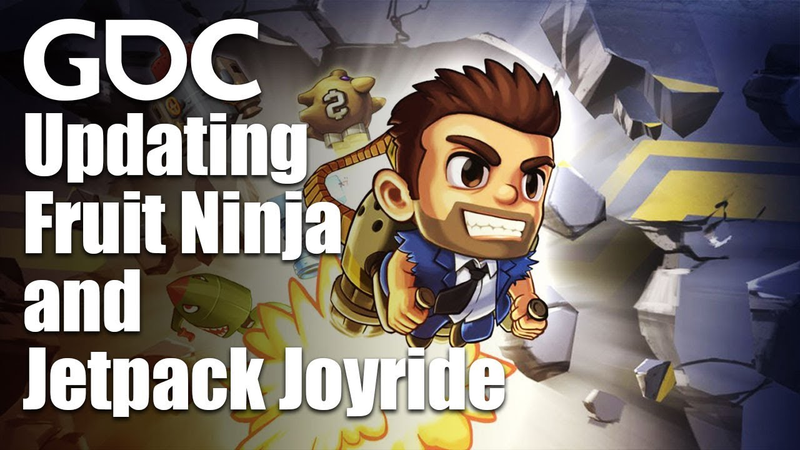
Iterating Design and Fighting Fires: Updating Fruit Ninja and Jetpack Joyride
The mobile gaming landscape demands a delicate balance between rapid iteration and the preservation of a title’s core identity.
- Maintain a design-first philosophy to filter community feedback, ensuring that new features do not compromise the integrity of the core gameplay loop.
- Implement a 'chaser update' model that pairs major content drops with rapid, community-focused patches to stabilize player retention and improve store ratings.
- Transition from simple currency-based shops to achievement-based progression systems to increase long-term player engagement and sense of accomplishment.
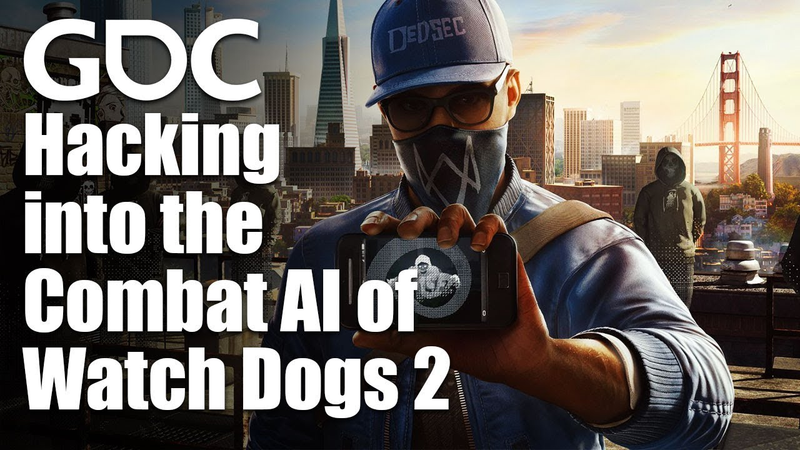
Hacking into the Combat AI of Watch Dogs 2
The combat artificial intelligence in Watch Dogs 2 relies on a multi-layered cover-selection system designed to balance tactical realism with computational efficiency.
- Watch Dogs 2 AI agents evaluate cover selection based on three primary criteria: distance to the target (optimized for weapon range), line of sight (ensuring a valid field of fire), and proximity to other agents (to avoid clumping and vulnerability to area-of-effect damage).
- To mitigate the player's ability to 'cheese' combat using unreachable vantage points like scissor lifts, developers implemented a special 'unreachable' AI mode where agents prioritize survivability and lateral movement toward cover rather than pathing directly toward the player.
- The AI uses three distinct cover-seeking behaviors: 'first cover' for immediate protection, 'neighboring cover' for repositioning during combat, and 'second cover' for tactical flanking or optimizing weapon range.
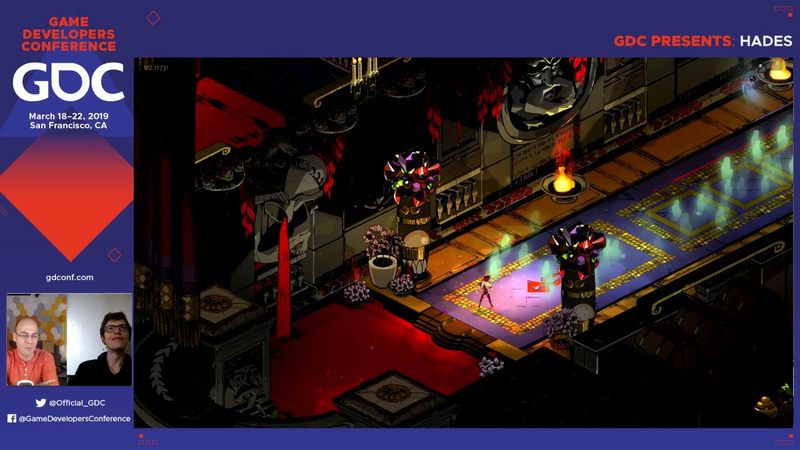
GDC plays Hades with Greg Kasavin
Supergiant Games’ development of Hades represents a strategic pivot toward iterative, community-driven design within the roguelike genre.
- Supergiant Games successfully transitioned from multi-year linear production cycles to an agile, monthly milestone cadence by utilizing the Early Access model on the Epic Games Store.
- The studio maintains high-quality, iterative development with a compact team of approximately 20 people, relying on direct feedback loops via platforms like Discord to refine gameplay and narrative in real time.
- Supergiant Games explicitly rejects industry-standard forced crunch by codifying internal values that prioritize work-life balance and individual responsibility.

Cosmic Top Secret: Do We Really Know Each Other?
The development of the autobiographical adventure game Cosmic Top Secret serves as a case study for integrating documentary storytelling with interactive game mechanics.
- Reality-based narratives can function as a primary design element, allowing developers to treat authentic historical facts with the same structural rigor as film or literature.
- Integrating real-world events into development—such as the creator’s father’s injury—can drive mechanical innovation, leading to unique features like the 'paper doll' aesthetic and paper-plane movement mechanics.
- The development of 'Cosmic Top Secret' utilized an interdependent, iterative process where narrative discoveries directly dictated changes to the game's mechanical systems.
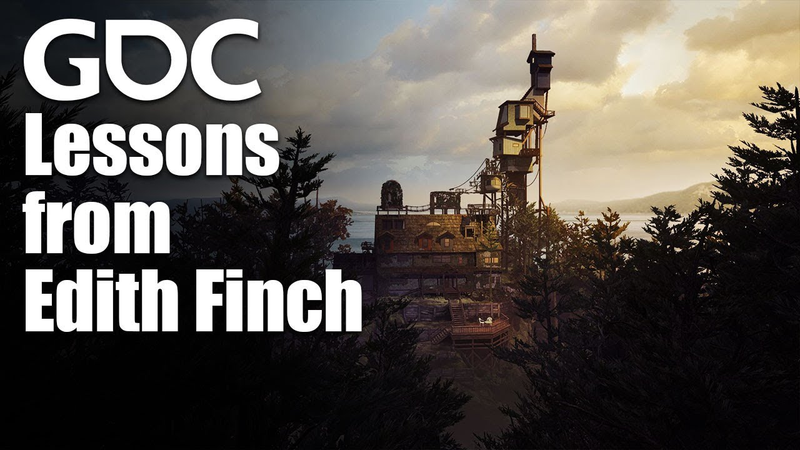
Weaving 13 Prototypes into 1 Game: Lessons from Edith Finch
The development of What Remains of Edith Finch demonstrates that prioritizing emotional resonance and the concept of the sublime over traditional mechanical complexity is a viable strategy for creating cohesive narrative experiences.
- Giant Sparrow developed What Remains of Edith Finch with a team that scaled from 3 to 15 members, utilizing a prototyping-first approach to ensure each mechanic felt unique and intuitive without the need for traditional tutorials.
- To maintain creative alignment across the team, the project was guided by three core pillars—sublime, intimate, and murky—which served as a shorthand for decision-making and artistic direction.
- The team avoided rigid, long-term production maps in favor of iterative, direction-based development, acknowledging that static planning tools often become inaccurate and hinder the discovery of unexpected, high-quality gameplay moments.
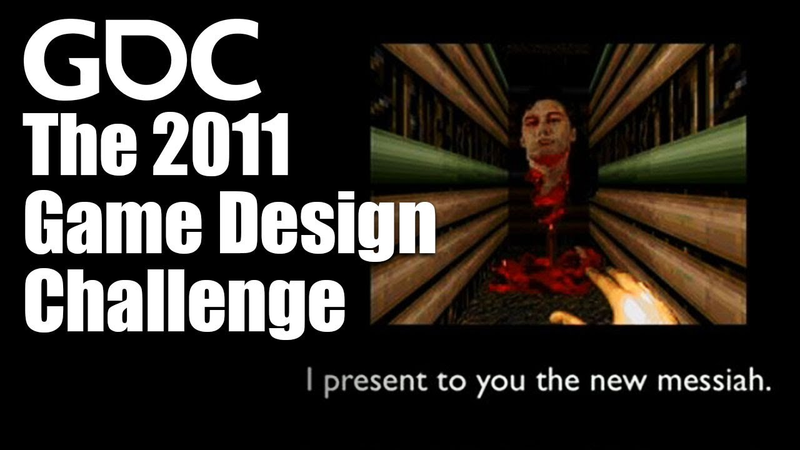
The 2011 Game Design Challenge
The 2011 Game Design Challenge examines the intersection of interactive media and metaphysical practice, positing that game design can serve as a framework for creating meaning, legacy, and spiritual connection.
- Game design can function as a framework for creating meaning and spiritual connection, potentially replacing traditional faith structures to address human needs for self-actualization.
- The philosophy of Propagationism posits that the primary purpose of life is the spread of ideas, suggesting digital environments should be redesigned to prioritize active intellectual growth over passive consumption.
- Designers can gamify social dynamics like devotion and conversion to foster community and influence, mirroring the way human cultures establish morality and purpose.
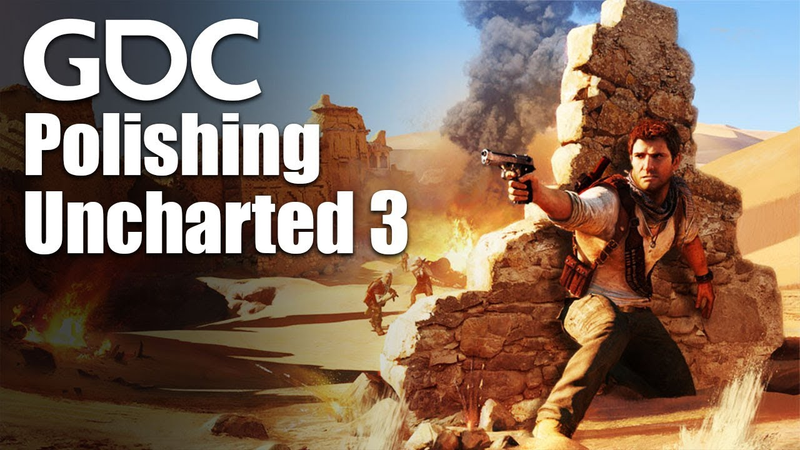
Polishing Uncharted 3
The primary objective of this analysis is to outline the strategies used by Naughty Dog to achieve high-level polish in game development, specifically focusing on the transition from a good product to an exceptional one.
- Naughty Dog allocates 20 to 25 percent of the total development schedule specifically for the alpha and beta polish phases to ensure high-level quality.
- The studio utilizes a rolling deadline system where game sections progress through alpha, beta, and gold stages independently to allow for focused resource allocation.
- Polish is defined as a distinct phase focused on refining presentation and removing imperfections, rather than iterating on core gameplay mechanics which should be finalized earlier.

Stop Shouting! Collaboration Through Candid Conversation
Productive collaboration in game development relies on reframing conflict as a vital component of team evolution rather than a threat to be avoided.
- Transform conflict into a tool for team evolution by reframing disagreements as necessary components of the development process rather than threats to be avoided.
- Prioritize psychological safety to ensure team members can express dissenting views without fear of hostility or personal character attacks.
- Address issues directly and privately after seeking permission to initiate the conversation, which minimizes defensiveness and keeps the focus on the problem.