
Game Developers Conference
Game Developers Conference (GDC, now the GDC Festival of Gaming) is the professional event for the games industry. It publishes recorded talks and interviews, annual industry survey reports such as the State of the Game Industry, and news articles.
Documents
RimWorld: Contrarian, Ridiculous, and Impossible Game Design Methods
RimWorld succeeds by fundamentally rejecting the traditional game design framework that prioritizes skill-based progression and competitive balance.
- Shift the design focus from traditional 'game' mechanics—which prioritize competition and player victory—to a 'story generator' frame that allows for comical misfortune and emotional narrative development.
- Leverage the human tendency toward apophenia, where players naturally anthropomorphize and find deep social meaning in simple, abstracted symbols and events.
- Prioritize the 'coolness-to-cost' ratio when evaluating features rather than simply asking if an idea is cool, as many cool ideas are not worth the development effort.
Why Make Games? Lessons from Frostpunk and This War Of Mine
Meaningful game design centers on the creation of interactive experiences that prioritize emotional depth, social values, and complex moral decision-making over traditional mechanics like leveling systems or conventional reward loops.
- 11 bit studios shifted its development philosophy from mechanics-focused design to 'meaningful games' after scrapping a project called Shelter, concluding that games must convey a message and evoke strong emotions to align with the studio's DNA.
- The studio prioritizes 'mood' as the primary binding agent between gameplay, art, and music, rather than focusing on any single element as the most important component of the experience.
- In This War of Mine, the team utilized a community-focused perspective rather than individual character tracking to force players to consider the survival of a group, using chaotic combat and moral dilemmas to reflect the reality of war.

The Making of Divinity: Original Sin 2
The development of Divinity: Original Sin 2 represents a pivotal transition for Larian Studios, as the company scaled from a single 40-person team in Belgium to a 200-employee international operation.
- Larian Studios scaled from a single 40-person team to a 200-employee international operation, necessitating a 'follow-the-sun' workflow to maintain productivity and reduce crunch.
- The 'n+1' design philosophy, which required the game to account for every possible player action including the killing of essential NPCs, resulted in a script exceeding one million words.
- The studio transitioned from a decentralized, overly collaborative leadership model to a centralized review process to resolve conflicting documentation and scope creep.
Marvel's Spider-Man: A Technical Postmortem
The development of Marvel’s Spider-Man centered on the challenge of rendering a dense, high-fidelity Manhattan while maintaining a consistent 30 frames per second.
- The development team reduced the memory footprint per city tile from 20 megabytes to under 12 megabytes by implementing advanced asset management and runtime calculation techniques.
- Engineers utilized a grid-based streaming system that loads geometry and textures based on player proximity and velocity to maintain a consistent 30 frames per second.
- The engine manages 600,000 city objects using a 'hibernate' system to ensure visual density without degrading performance.
Punch It (Up): Writing for Star Trek in VR
The development of Star Trek: Bridge Crew serves as a foundational case study in adapting narrative design for virtual reality, prioritizing the psychological phenomenon of presence over traditional cinematic pacing.
- VR narrative design must prioritize the psychological phenomenon of presence over traditional cinematic pacing to avoid overwhelming the player.
- Effective immersion requires providing space for users to inhabit the environment rather than relying on constant action or static, disruptive mission briefings.
- Star Trek: Bridge Crew successfully integrated narrative context by utilizing franchise-specific tropes like the Captain’s Log to maintain the flow of cooperative play.
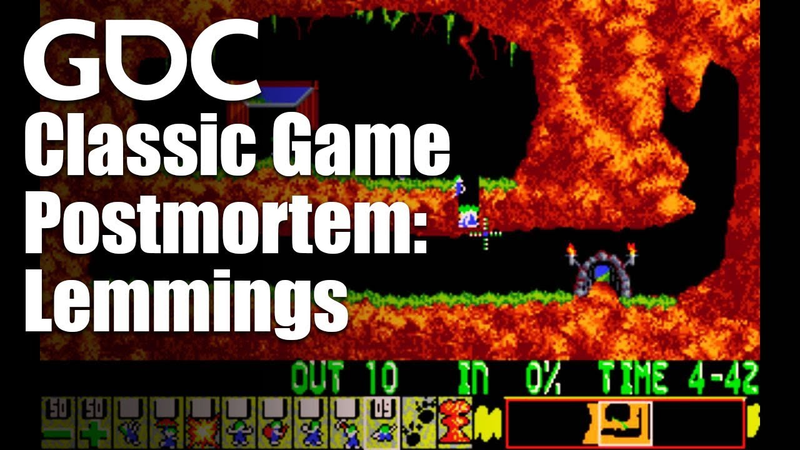
Classic Game Postmortem: Lemmings
The development of Lemmings represents a landmark achievement in early 1990s game design, originating from a desire to create humorous, sprite-based destruction within the severe technical constraints of 8MHz hardware.
- The core gameplay loop of Lemmings was built around the ability to manipulate terrain in real-time, allowing players to use brushes to edit bitmaps and create paths for characters to navigate.
- The game's broad appeal was driven by a carefully tuned difficulty curve, which allowed players of all ages—from five-year-olds to adults—to engage with the content at their own skill level.
- Technical constraints necessitated the 'nuke' feature, a point-cloud animation explosion, which served as a functional way to abort levels while providing a satisfying visual reward for the player.
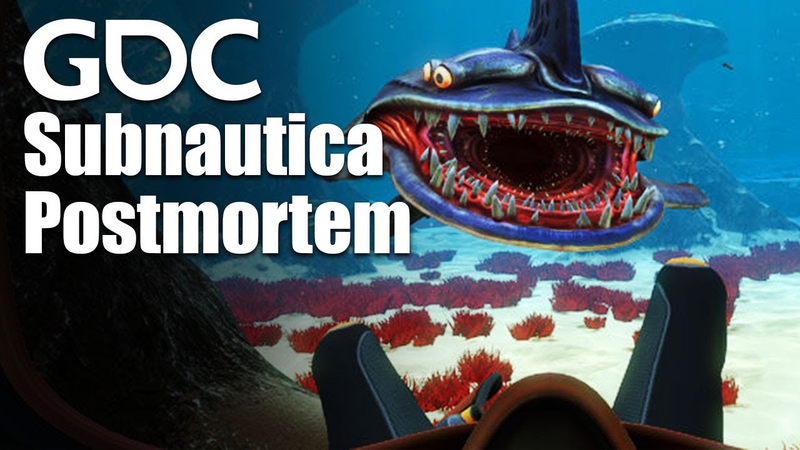
Subnautica Postmortem
The development of Subnautica serves as a definitive case study in the efficacy of transparent, iterative production within the survival genre.
- Unknown Worlds Entertainment utilized an 'open development' model for Subnautica, releasing daily experimental builds to the public to facilitate free, continuous playtesting and rapid bug fixing by thousands of users.
- The development of Subnautica spanned five years with a team of 25 people and a total budget of $10 million, significantly exceeding the original scope and timeline.
- The studio prioritizes 'designing for emotions'—such as wonder, fear, and tension—as a core principle, using these feelings to guide development decisions rather than relying on traditional market research.
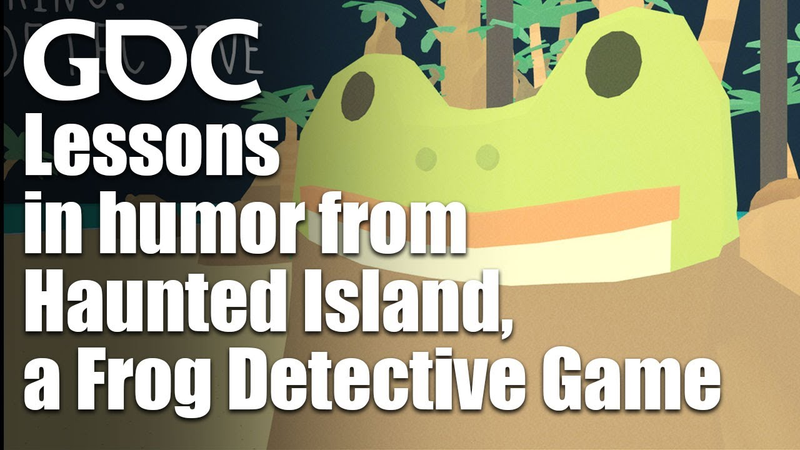
Building Games Around Humor: Lessons from The Haunted Island, a Frog Detective Game
Effective comedy in video games relies on the strategic subversion of established genre tropes, utilizing familiar aesthetic markers like noir cinematography or musical cues to ground the player before introducing absurd or mundane narrative twists.
- Subvert established genres by maintaining their visual and structural tropes—such as episodic formats or specific music—while intentionally misaligning the tone to create comedic friction.
- Base character writing on authentic, personal traits, including negative ones like anxiety or impatience, to ensure characters feel believable rather than relying on offensive stereotypes.
- Manage player expectations during marketing to avoid negative reviews; if a game is marketed as a detective genre, ensure the core gameplay loop actually includes detective mechanics.
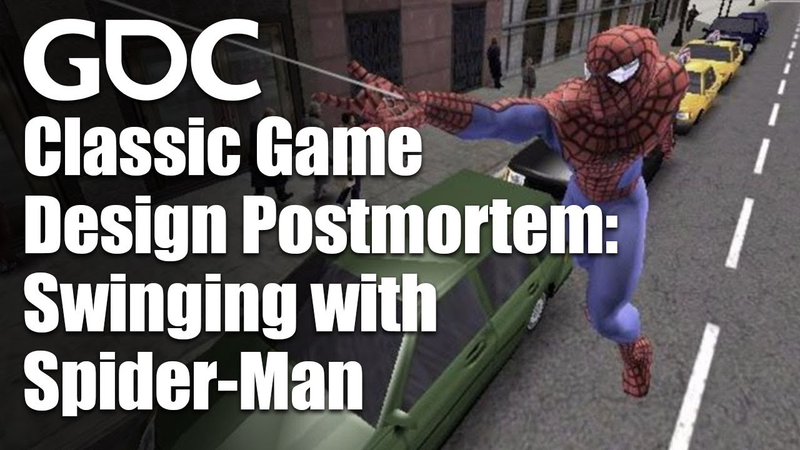
Classic Game Design Postmortem: Swinging with Spider-Man
The development of the Spider-Man 2 traversal system centers on the philosophy that intrinsic motivation—the inherent joy of movement—is the primary driver of player engagement.
- Prioritize intrinsic motivation by designing core movement mechanics that are inherently enjoyable, ensuring the act of traversal itself induces a flow state rather than relying on extrinsic rewards.
- Implement high-gravity movement and mid-air steering to favor the superhero fantasy over strict adherence to realistic physics, allowing for a more dynamic and expressive player experience.
- Utilize invisible 'feelers' to automatically attach to surfaces, which removes the need for precise aiming and prevents the frustration of velocity-canceling stops.
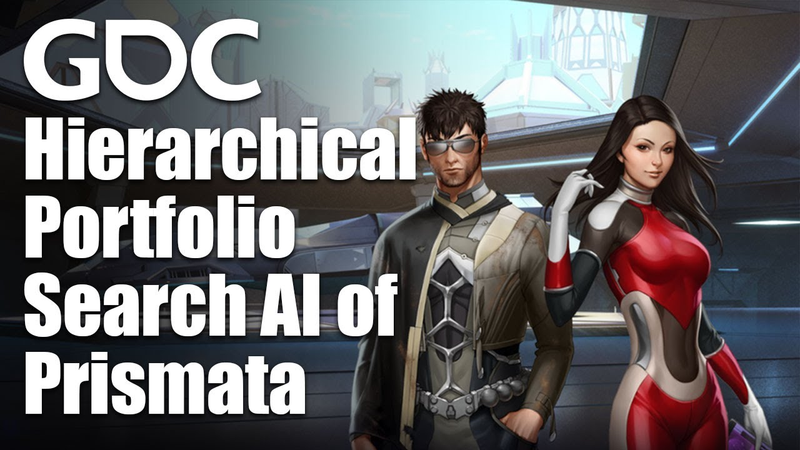
Playing Your Cards Right: The Hierarchical Portfolio Search AI of Prismata
The Hierarchical Portfolio Search system provides a robust framework for managing complex decision-making in strategy games like Prismata, where massive state spaces and multi-unit control requirements render traditional AI approaches insufficient.
- Hierarchical Portfolio Search (HPS) solves the state-space explosion problem in complex strategy games by decomposing game logic into a 'portfolio' of tactical algorithms, which are then combined and evaluated by a high-level search algorithm like Alpha-Beta.
- The HPS system allows for modular difficulty scaling by adjusting the search depth or the complexity of the tactical algorithms included in the portfolio, enabling developers to create everything from random-move bots to expert-level AI.
- By restricting the AI to a predefined set of tactical moves rather than allowing it to generate arbitrary actions, designers can prevent 'emergent' but undesirable behaviors while maintaining high-level strategic intelligence.

Legal Battle Royale: Not Boring Edition
The gaming industry faces a complex web of legal challenges that scale alongside commercial success.
- Developers must conduct rigorous, asset-by-asset risk assessments for intellectual property, as there are no universal legal standards for creative assets like dance-move emotes.
- Regulatory bodies are actively monitoring influencer marketing, requiring developers to ensure all material connections are disclosed through clear and conspicuous labeling.
- Data privacy compliance, particularly under standards like GDPR, requires a shift from blanket consent models to transparent, specific data collection practices.
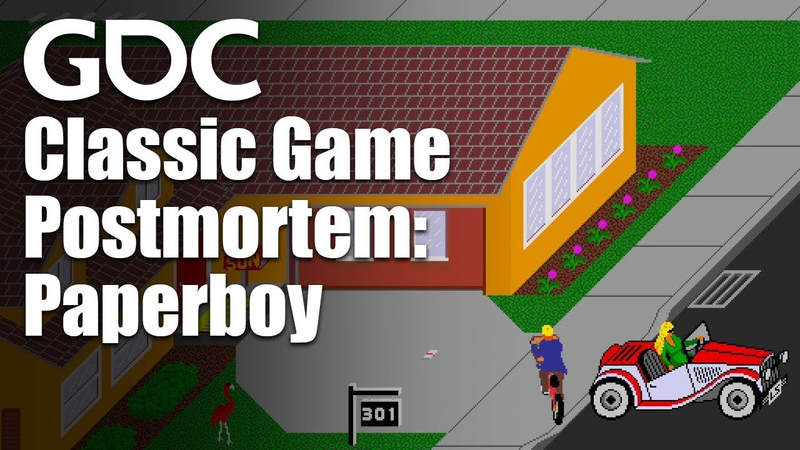
Classic Game Postmortem: Paperboy
The development of the 1985 arcade title Paperboy represents a pivotal shift in Atari’s design philosophy, moving away from traditional vector-based graphics toward a sophisticated, isometric raster-based experience.
- The NES home console port of Paperboy achieved significant commercial success with 2 million copies sold, far outpacing the 3,500 units sold for the original 1985 arcade version.
- Development of the arcade title utilized Atari’s System 2 hardware, featuring a 16-bit processor programmed in BLISS and a custom medium-resolution monitor to surpass the fidelity of 8-bit competitors.
- Gameplay was engineered around tight 30-to-90-second loops to maximize arcade player turnover, a strategy refined after initial focus group failures led to a shift toward a parallel horizontal layout.