
Game Developers Conference
Game Developers Conference (GDC, now the GDC Festival of Gaming) is the professional event for the games industry. It publishes recorded talks and interviews, annual industry survey reports such as the State of the Game Industry, and news articles.
Documents
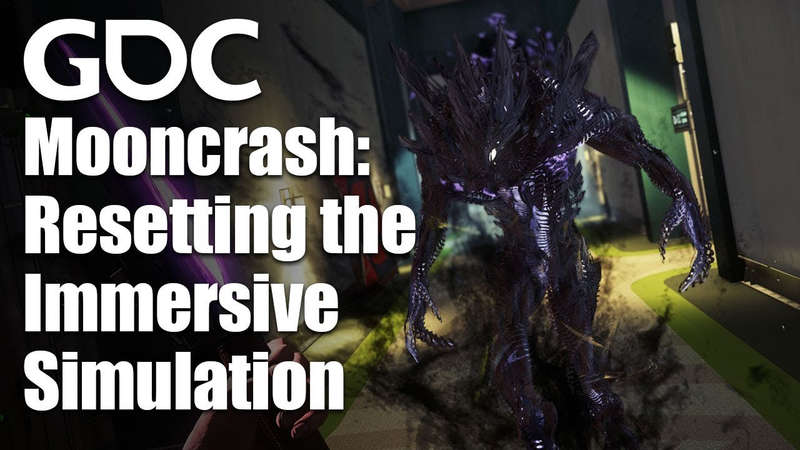
Mooncrash: Resetting the Immersive Simulation
The development of the Prey: Mooncrash expansion serves as a strategic pivot for the immersive sim genre, successfully integrating roguelike mechanics to foster creative innovation within Arkane Studios.
- To avoid the 'chopped salad' effect where randomized levels feel identical, developers should cluster random elements by theme (e.g., fire or radiation) rather than distributing them evenly, ensuring each area provides a distinct, palpable experience.
- Immersive sims often suffer from inefficient content consumption, where players miss significant portions of non-linear, high-cost assets; moving toward a roguelike structure allows for higher replayability and more efficient utilization of existing development assets.
- The 'Rogue Legacy' model of persistent progression—where players retain experience points and currency across failed runs—serves as an effective negative feedback system that encourages continued engagement despite repeated deaths.
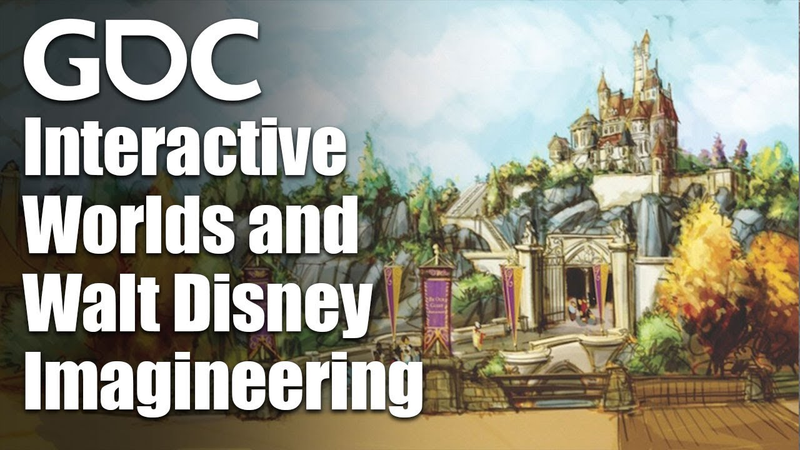
Playing with Magic: Interactive Worlds and Walt Disney Imagineering
The evolution of theme park design centers on transitioning guests from passive observers to active protagonists within immersive, narrative-driven environments.
- Theme park design is shifting from passive observation to active participation, where guests function as protagonists who influence the narrative through purposeful interactions.
- The 'magic circle' framework is utilized to define physical and narrative boundaries, granting guests the agency to shape their environment and drive the story forward.
- Designers integrate game mechanics, responsive environments, and bespoke hardware to transform attractions into interactive interfaces that react to guest actions.
Art Direction Bootcamp: Pantalones! Things I Wished I knew Prior to Becoming an Art Director
This presentation outlines essential lessons for transitioning from an artist to an art director within the video game industry, drawing on the speaker’s experience scaling a studio from a small indie team to a 120-person AAA organization.
- Successful art direction requires shifting focus from maintaining absolute creative control to fostering team motivation, delegating authority, and managing interpersonal dynamics.
- Art directors must avoid micromanagement by hiring specialists and granting them genuine ownership over their work, which improves both output quality and employee engagement.
- To effectively lead, art directors should provide clear, goal-oriented direction rather than prescriptive solutions, allowing artists the creative freedom to solve problems within established parameters.
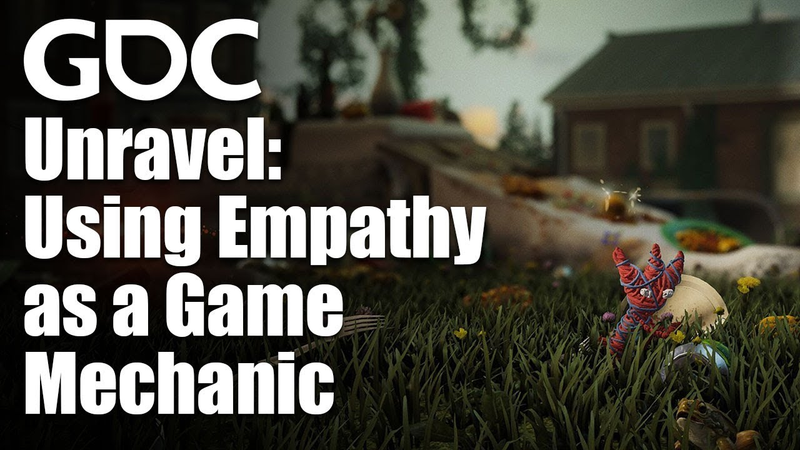
Unravel: Using Empathy as a Game Mechanic
The core objective of Unravel is to redefine the player experience by centering gameplay around empathy rather than traditional power fantasies.
- Unravel replaces traditional power fantasies with a design philosophy centered on empathy, positioning the player as a fragile protagonist to emphasize protection and connection over dominance.
- The game utilizes personal family history and authentic artifacts, such as real photo albums, to anchor its narrative themes in a tangible and relatable reality.
- Gameplay mechanics are driven by the themes of persistence and redemption, focusing on the act of mending broken bonds as both a narrative and mechanical objective.
Dream Daddies and Fearful Fathers: How Indies Can Cope with Being Terminally Online
The modern independent game development landscape is increasingly defined by a toxic attention economy that prioritizes performative outrage over meaningful creative discourse.
- The current digital attention economy prioritizes performative outrage over creative discourse, leading to severe developer burnout, imposter syndrome, and physical exhaustion.
- Platform affordances cause 'context and temporal collapse,' which flattens complex human interactions into performative exchanges that reward cynicism and inflammatory behavior.
- The fear of dogpiling and harassment discourages developers from exploring nuanced or controversial themes, stifling creative expression in favor of social capital.
Game Discoverability Day: NOTICE ME: The Grind Behind the $272K Funding Success of Boyfriend Dungeon
The successful crowdfunding of the indie title Boyfriend Dungeon, which raised $272,000 against a $65,000 goal, serves as a case study for effective game discoverability and community-driven marketing.
- Boyfriend Dungeon achieved 418% of its funding goal, raising $272,000 against a $65,000 target by prioritizing community-driven engagement over paid advertising.
- Twitter served as a critical conversion engine, driving 17% of total pledges—a rate significantly higher than the industry average of less than 1%.
- A high-conversion hook must be immediately understandable, utilizing a clear 'one-sentence' pitch that combines distinct genres, such as the game's 'dating sim meets dungeon crawler' premise.
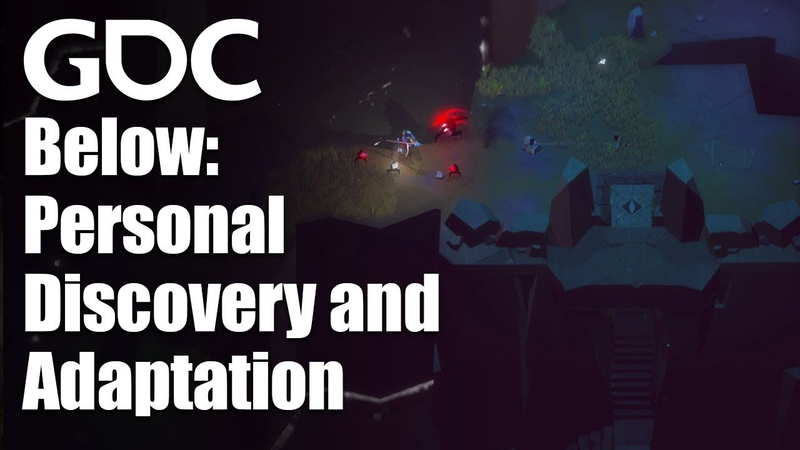
A New Dimension to Below: Personal Discovery and Adaptation
The development of the title Below serves as a case study in overcoming significant technical and creative hurdles through iterative adaptation and cross-disciplinary collaboration.
- The development team for Below achieved its distinct visual style by combining 3D geometry with hand-painted normals and flat cards, creating a complex 'Zelda-skew' perspective where objects point toward the camera to avoid clipping.
- Initial production workflows were highly inefficient, requiring artists to compile assets via batch files that took up to 30 minutes and script changes through text editors rather than using a real-time game editor.
- To improve productivity, the team developed in-game tools that allowed for real-time movement of assets, light editing, and post-process adjustments, significantly reducing the need for external scripting and level reloads.
AI Arborist: Proper Cultivation and Care for Your Behavior Trees
Effective behavior tree implementation hinges on the use of a centralized, compact blackboard database that utilizes key-value pairs to store game world data.
- Use a centralized, compact blackboard database with key-value pairs to store game world data, which simplifies node access and debugging.
- Adopt a hybrid architecture by pairing behavior trees with finite state machines or planners to avoid the spaghetti code and implicit dependencies caused by using trees for complex decision-making.
- Decompose AI in high-complexity environments like real-time strategy games into specialized manager subsystems—such as income, construction, and tactics—that communicate via message passing.
Feeding the Maw: Managing a Live Narrative Game in Fallen London
Fallen London, a decade-old free-to-play browser game, serves as a critical financial and creative anchor for the London-based indie studio Failbetter Games.
- Failbetter Games uses the decade-old browser game Fallen London as a financial anchor, providing stable revenue that de-risks the development of standalone premium titles like Sunless Sea and Sunless Skies.
- The studio’s monetization strategy relies on the 'Exceptional Friendship' monthly subscription model, supplemented by 'Fate,' a premium currency used for one-off narrative purchases.
- To maintain subscriber retention, the studio produces approximately 100,000 words of exclusive narrative content annually, which is later sold individually to ensure long-term revenue.
Making Games That Stand Out and Survive
In an increasingly saturated digital marketplace, the primary challenge for developers is securing consumer attention amidst intense competition for limited leisure time.
- Success in a saturated market requires communicating a game’s core value proposition and emotional experience through a visual representation that is digestible in five to six seconds.
- Long-term commercial viability is achieved by treating a game as a living ecosystem that requires consistent content updates and active community engagement to maintain momentum.
- Developers should design low-friction, non-punitive 'home-like' spaces to allow players to maintain progress and connection during periods of low time or energy, thereby mitigating burnout.
Designing Path of Exile to Be Played Forever
Path of Exile achieves long-term player retention by adhering to five core design pillars: visceral combat, randomized levels, randomized items, a secure online economy, and deep character customization.
- Path of Exile maintains player retention through a rigid 13-week development cycle, which creates predictable return dates and manages burnout by allowing players to step away between cycles.
- The studio drives concurrent user growth by treating large-scale content expansions as the primary engine for re-engagement.
- Operational efficiency is achieved by using procedural generation and a strategic content library to repurpose existing assets, allowing for rapid assembly of new expansions within the 13-week window.
League of Legends Client Update: Art Directing a Consistent and Scalable Interactive Brand Identity
The League of Legends client update represents a strategic shift from fragmented, unstable architecture toward a unified, scalable design system.
- The League of Legends client update transitioned from a fragmented, unstable architecture to a unified, scalable design system to improve both developer efficiency and brand cohesion.
- The design team replaced generic aesthetics with a narrative-driven 'Hextech' theme, positioning the interface as a lore-integrated, magical partner within the game.
- To support decentralized feature teams, the studio deconstructed complex mechanical elements into a modular visual language based on geometric precision and metaphorical material rendering.