
Game Developers Conference
Game Developers Conference (GDC, now the GDC Festival of Gaming) is the professional event for the games industry. It publishes recorded talks and interviews, annual industry survey reports such as the State of the Game Industry, and news articles.
Documents
Into the Breach Design Postmortem
The development of Into the Breach demonstrates the efficacy of a minimalist design philosophy, where the prioritization of core gameplay mechanics over technical or narrative complexity leads to a more cohesive experience.
- The core design philosophy of Into the Breach centered on 'telegraphed attacks,' where all enemy intentions are visible to the player, removing hit/miss chance to create a deterministic, puzzle-like combat experience.
- Subset Games prioritized 'collateral damage' as a central theme, shifting the player's focus from unit survival to defending immovable buildings, which serve as the primary fail-state condition.
- To maintain player hope in a deterministic system, the developers included a 'grid defense' mechanic—a low-percentage chance for buildings to resist damage—which acts as a necessary 'ugly pillar' to prevent the game from feeling unsolvable.
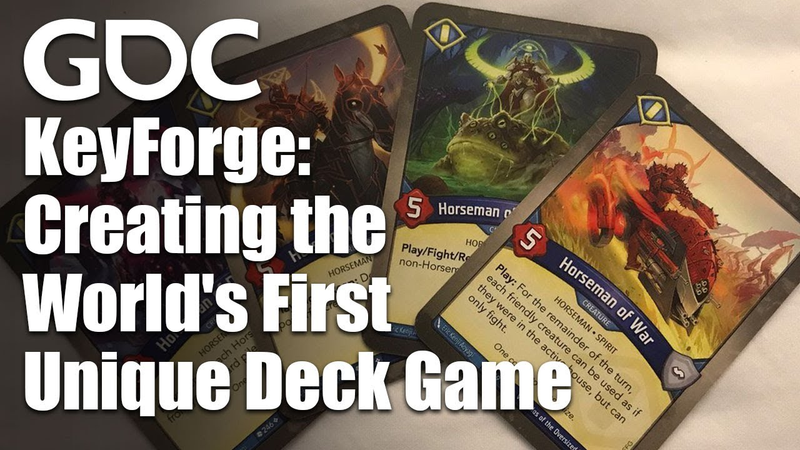
Board Game Design Day: KeyForge: Creating the World's First Unique Deck Game
KeyForge represents a paradigm shift in tabletop gaming by introducing the world’s first unique deck game, where procedural generation ensures that every deck is entirely distinct, non-customizable, and possesses a unique identity.
- KeyForge utilizes a complex algorithm to generate unique 37-card decks, ensuring that the probability of encountering a duplicate deck is statistically negligible until approximately 15 trillion decks are produced.
- Each deck is composed of three distinct houses, an Archon card, and a unique name, with a secondary uniqueness check comparing every generated deck code against the existing database to prevent duplicates.
- The game design prioritizes accessibility with a 10-15 minute learning curve, allowing players to start playing immediately after purchasing a single deck without the need for deck-building or extensive rulebook study.

Put Your Name on Your Game, a Talk by Bennett Foddy and Zach Gage
Independent game developers should prioritize personal branding over corporate identity to ensure long-term professional recognition and artistic growth.
- Independent developers should prioritize personal branding over corporate identity to ensure professional longevity, as most independent studios dissolve after releasing only a single title.
- Attaching a personal name to a project prevents the loss of individual credit that occurs when developers rely on transient, faceless corporate entities.
- Adopting personal attribution aligns game development with other creative industries where individual authorship is the standard for long-term career growth.
Raising Atreus for Battle in God of War
The design of Atreus as an AI companion in God of War centers on the core philosophy that a partner character must enhance the player’s experience without requiring constant management.
- To ensure Atreus functioned as a reliable teammate rather than a realistic one, the development team utilized 'warping' (teleportation) to position him near enemies instantly, ensuring his combat actions were always timely and responsive to the player.
- The design of Atreus was governed by four core pillars: he must support the player, never hinder the player, ensure all actions are helpful, and require zero babysitting to prevent player frustration.
- To maintain combat flow, the team transitioned Atreus from a traditional archer to a hybrid fighter who uses his bow as a melee weapon, which creates more fluid animations and clearer visual cues for the player.
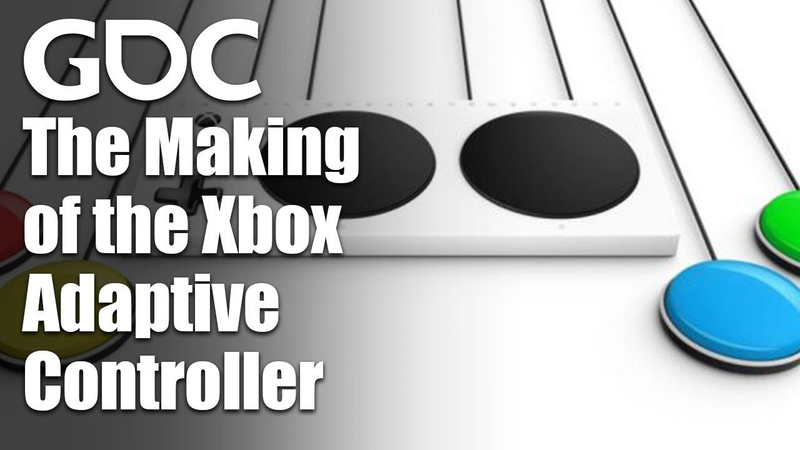
The Making of the Xbox Adaptive Controller
The Xbox Adaptive Controller represents a fundamental shift in gaming hardware, moving away from rigid, standardized interfaces toward a modular, inclusive design ecosystem.
- The Xbox Adaptive Controller functions as a modular hub designed to replace rigid, 17-button interfaces for users with restricted dexterity, spinal cord injuries, or repetitive stress conditions.
- Development was driven by deep collaboration with specialized organizations including AbleGamers, SpecialEffect, and Craig Hospital to ensure the hardware addresses specific user constraints.
- The device design prioritizes physical health and integration through ergonomic sloping to prevent skin breakdown and reinforced mounting options for wheelchair stability.
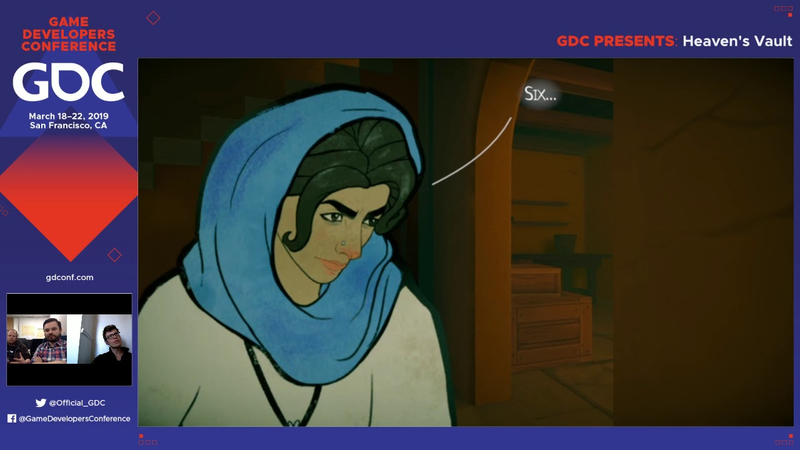
GDC Plays Heaven's Vault with Jon Ingold and Joseph Humfrey
Heaven’s Vault represents a significant evolution in narrative-driven game design, prioritizing a systemic approach to storytelling over traditional, rigid branching structures.
- Inkle developers prioritize narrative fluidity by avoiding formal planning processes like spreadsheets, instead opting for a reactive, scene-by-scene development approach that allows for constant refinement until launch.
- The studio uses their proprietary 'ink' engine to treat game scripts as interactive films, where each line of text functions as a command for camera shots, sound effects, or environmental triggers.
- To maintain high-quality writing, the developers intentionally avoid full voice acting, arguing that it forces players to read at an actor's pace and limits the team's ability to iterate on the script late in development.
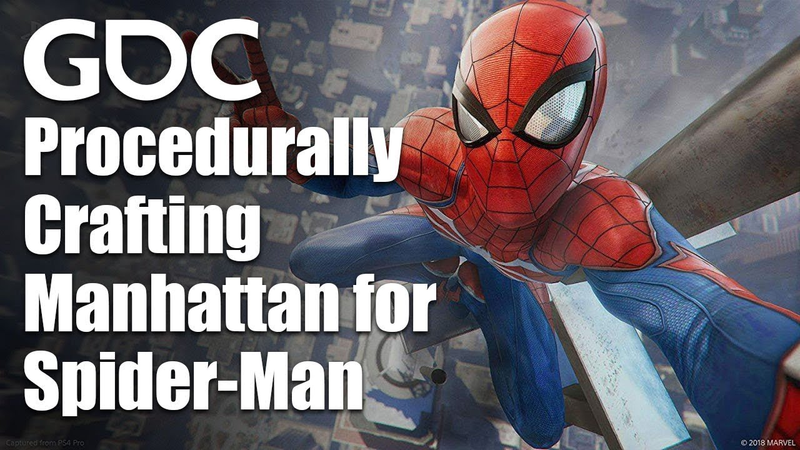
Procedurally Crafting Manhattan for Marvel's Spider-Man
The development of Marvel’s Spider-Man relied on a sophisticated procedural pipeline to construct a high-fidelity, open-world representation of Manhattan.
- The development team used a procedural pipeline to automate 80% of the city's environmental content, successfully generating 8,300 buildings and 544 roads.
- This procedural approach allowed a relatively small team of 250 people to construct a high-fidelity, open-world representation of Manhattan.
- The pipeline utilized a modular dependency system that enabled the entire game world to be regenerated overnight, significantly reducing the risk of widespread rework.
Game Discoverability Day: Building a Community for Your Game from Scratch
Community building has emerged as the primary driver for game sales, effectively superseding traditional reliance on press coverage and influencer marketing.
- Community building has replaced traditional press and influencer marketing as the primary driver for game sales, making it the most reliable method for ensuring launch momentum.
- Developers should aim to accumulate 8,000 to 10,000 Steam wishlists by initiating community efforts four to six months before the official game release.
- Establishing a dedicated, game-specific Discord server is more effective than using a centralized company hub, as players form stronger attachments to individual titles.
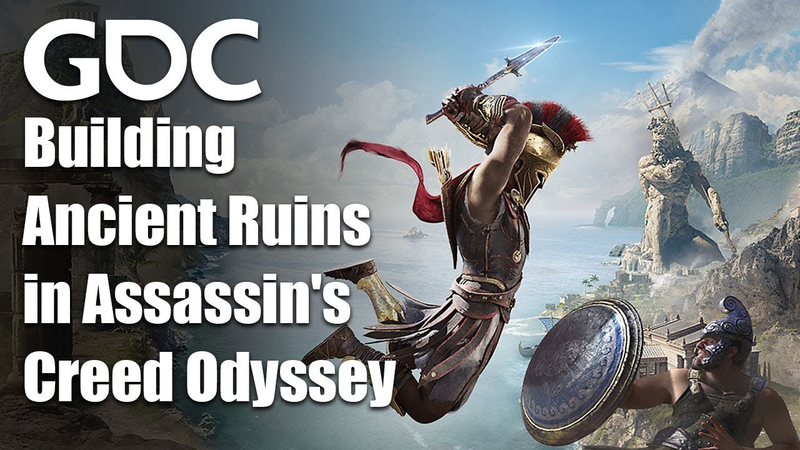
Building a Living World from Ancient Ruins in Assassin's Creed Odyssey
The creation of ancient Greece for Assassin’s Creed Odyssey centers on the synthesis of rigorous historical research and large-scale, modular production techniques.
- The development team managed the massive geographic scope of ancient Greece by coordinating nine global studios under a unified creative vision and a honeycomb design philosophy.
- Production efficiency was achieved through a robust pipeline featuring over 35 architecture kits and 4,000 unique props, supplemented by procedural tools for vegetation and cave systems.
- The project utilized agile two-week development sprints to maintain consistency and alignment across decentralized teams throughout the production cycle.

It's Still Emulation: Saving Video Game History Before It's Too Late
The video game industry faces a critical juncture regarding the preservation of its cultural heritage, as the loss of source code, original assets, and technical documentation threatens to erase decades of creative history.
- The video game industry must shift from treating legacy software as protected trade secrets to viewing it as an essential educational resource to prevent the permanent loss of source code and original assets.
- Emulation is the most viable and cost-effective preservation tool, functioning as a digital equivalent to film codecs for maintaining access to historical software.
- Companies should move beyond low-effort re-releases by creating 'playable documentaries' that incorporate developer insights, historical context, and quality-of-life improvements.
Classic Game Postmortem: Command & Conquer
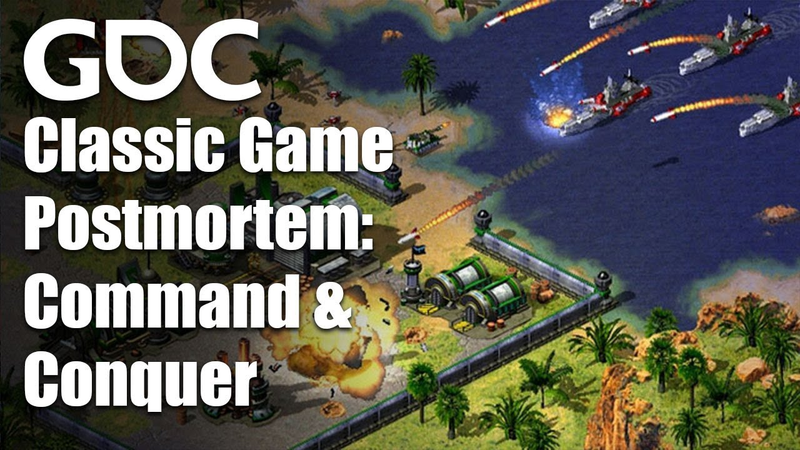
The development of Command & Conquer at Westwood Studios during the mid-1990s represents a pivotal moment in the evolution of the real-time strategy genre.
- Command & Conquer was a pioneer in transitioning game audio from MIDI-based sound chip playback to streaming audio, allowing for the integration of synthesizers and live guitar.
- To overcome severe rendering bottlenecks for in-game cinematics, the team implemented a 'VQ slave mode' policy that utilized idle employee workstations overnight, effectively doubling their render farm capacity from 50 to 100 machines.
- The game's multiplayer functionality was designed to support local area networks via IPX, as well as modem and null-modem connections, though internet play was ultimately deferred to the sequel, Red Alert, due to technical constraints.
Reinventing God of War
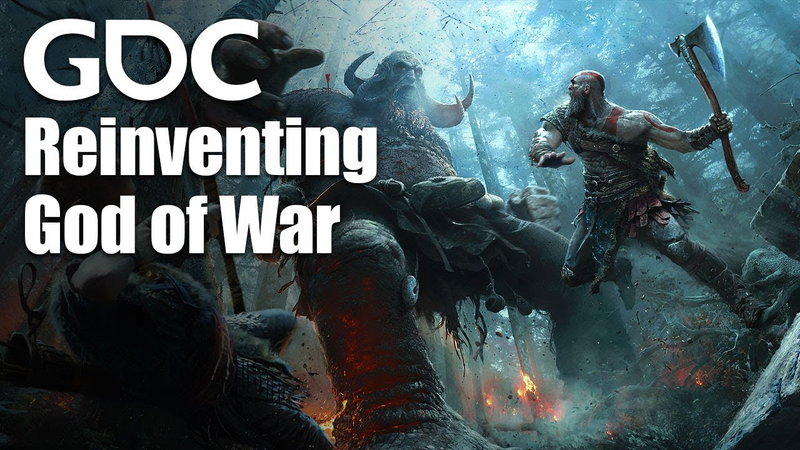
The 2018 reboot of the God of War franchise represents a fundamental evolution of the action-adventure genre, shifting the series from a bombastic, rage-driven spectacle to an intimate, character-focused narrative.
- The 2018 God of War reboot fundamentally shifted the franchise from a spectacle-driven action series to an intimate, character-focused narrative centered on the father-son dynamic between Kratos and Atreus.
- The development team implemented a continuous, no-cut camera perspective, requiring exposition to be delivered through environmental cues and character interaction rather than traditional dialogue.
- To maintain player agency within the cinematic experience, the studio utilized technical solutions like invisible collision bumpers and camera-smoothing algorithms to ensure fluid navigation and combat.