
Game Developers Conference
Game Developers Conference (GDC, now the GDC Festival of Gaming) is the professional event for the games industry. It publishes recorded talks and interviews, annual industry survey reports such as the State of the Game Industry, and news articles.
Documents
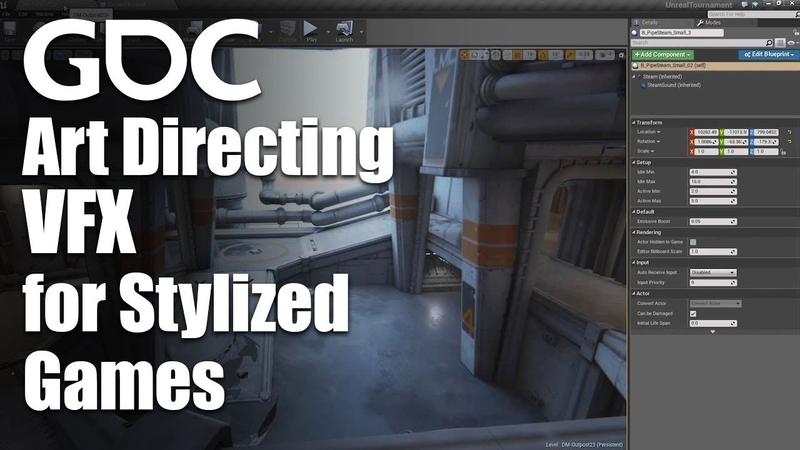
Art Directing VFX for Stylized Games
Stylized visual effects in modern gaming prioritize intentional artistic pillars and technical efficiency over the pursuit of photorealism.
- Stylized VFX prioritize intentional artistic pillars and technical efficiency over photorealism by utilizing hand-modeled meshes and hand-painted textures instead of resource-heavy fluid simulations.
- Modern stylized pipelines favor volumetric meshes and vertex animation tools over traditional 2D sprites to ensure 360-degree visibility and greater asset reusability.
- Visual impact is maintained through the application of classical animation principles and the use of simplified, geometric shapes that ensure gameplay clarity.
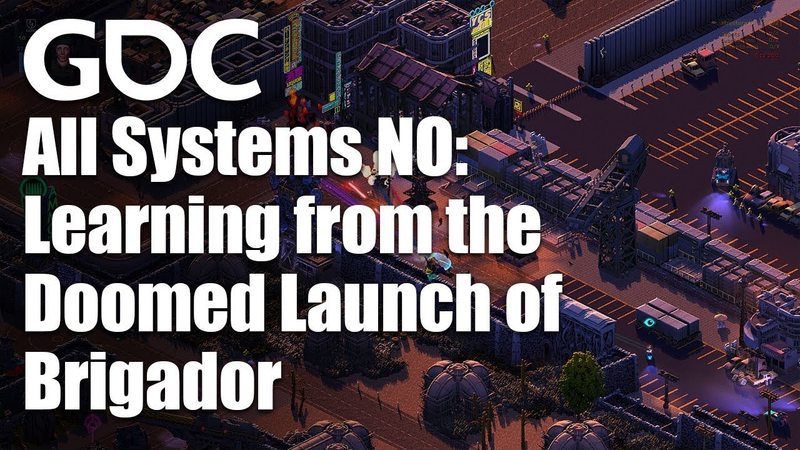
All Systems No: Learning from the Doomed Launch of Brigador
The debut of the indie title Brigador serves as a cautionary case study on the disconnect between critical acclaim and commercial viability.
- Marketing must prioritize conveying the subjective player experience over technical feature lists, as traditional trailers often fail to communicate a game's core value proposition.
- Personality-driven outreach and candid discourse on public forums can be highly effective, with such efforts accounting for approximately one-third of total sales for niche titles.
- Indie developers should prioritize intuitive onboarding over complex tutorials, as the majority of players drop off within the first two hours of gameplay.
Build Your Own Fan Club: How to Use Your Email List
Email marketing serves as a critical, high-conversion tool for game developers seeking to cultivate a dedicated player base.
- Email marketing provides a direct, permission-based connection that bypasses algorithmic volatility, resulting in superior click-through rates and more reliable conversion metrics compared to social media.
- Developers should prioritize proactive lead magnets—such as exclusive soundtracks, early access demos, or unique in-game items—to convert casual observers into committed subscribers.
- A nurturing communication sequence that prioritizes high-quality content over aggressive sales tactics is essential for building community trust and reducing unsubscribe rates.
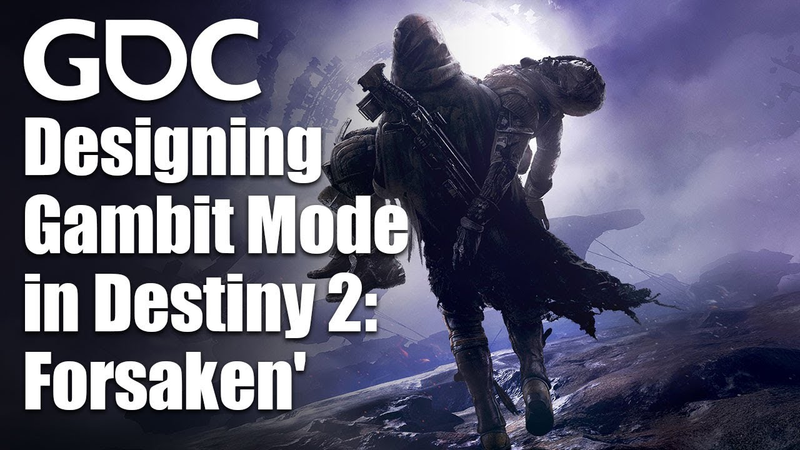
Designing Gambit Mode in Destiny 2: Forsaken
Gambit serves as a hybrid PvE-PvP mode for Destiny 2, designed to offer a fresh, replayable endgame ritual by blending AI-focused combat with competitive tension.
- Gambit was designed as a PvE-focused end-game ritual for Destiny 2: Forsaken, utilizing a core design philosophy of 'Firefight meets Super Puzzle Fighter' where players send 'blocker' AI units to hinder the opposing team.
- The development team implemented a 'ready room' to allow teams to see each other before matches, facilitating social interaction, loadout adjustments, and the introduction of an in-game announcer.
- To balance the risk-reward mechanic of carrying motes, the team reduced the penalty for dying during an invasion from five motes to three, encouraging more players to engage in PvP combat.
2014 vs. 2018: The Shape of Financial Success Before and After the Indiepocalypse
The independent game industry has undergone a fundamental structural shift, moving away from a centralized, press-driven launch model toward a decentralized ecosystem defined by long-term community engagement.
- The independent game industry has shifted from a centralized, press-driven launch model to a decentralized ecosystem reliant on long-term community engagement.
- Market saturation following the transition to open-access storefronts has replaced traditional platform-vetted visibility with discovery driven by YouTube and Twitch.
- Financial success in the post-2018 market is increasingly tied to 'infinite situation generators' that foster ongoing player expression rather than short, consumable experiences.
9 Takeaways from Duelyst: From Tabletop to Digital Game
The development of Duelyst demonstrates a strategic transition from physical tabletop prototyping to a refined digital tactical experience.
- To ensure high-frequency engagement, prioritize matchmaking quality by using real-time monitoring tools to track performance metrics, aiming for a quality score above 0.5 to identify and resolve balance or algorithm issues early.
- Design for short, high-intensity sessions by setting strict constraints on match duration; the Duelyst team successfully reduced average match times from 15 minutes to under 10 minutes through iterative card tuning.
- Launch digital games on web-based platforms initially to enable rapid deployment of balance updates and patches, which allows for faster iteration cycles without requiring players to download frequent client updates.
Rules of the Game: Five Further Techniques from Rather Clever Designers
Successful game design relies on shifting away from rigid constraints toward flexible frameworks that prioritize systemic, goal-agnostic simulations.
- Prioritize systemic, goal-agnostic simulations over rigid constraints to foster emergent gameplay and long-term player engagement.
- Replace subjective metrics like 'fun' with precise, outcome-oriented objectives that measure specific emotional transformations or learning goals.
- Eliminate 'accidental design' by identifying and removing legacy mechanics that no longer serve the core vision, preventing the accumulation of unintuitive workarounds.
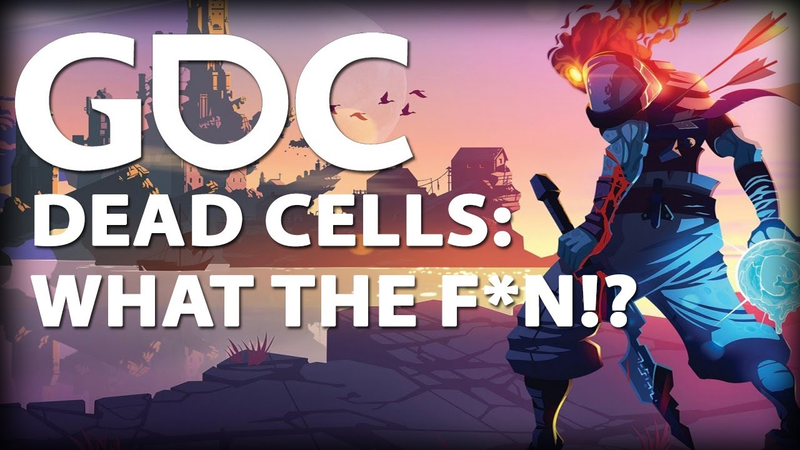
Dead Cells: What the F*n!?
Dead Cells functions as a definitive case study in the successful synthesis of roguelike permadeath and Metroidvania exploration, a hybrid genre the developers term rogue-vania.
- To mitigate the frustration of permadeath, Dead Cells implements a 'cells' currency system where players lose resources upon death but retain permanent progress toward weapon and skill unlocks.
- The game minimizes downtime by keeping the post-death loop to approximately 10 seconds, removing unnecessary stat screens and forcing an immediate return to action.
- To ensure combat and movement feel fair rather than punishing, the developers implemented 'coyote time' mechanics, such as auto-teleporting players to platforms if they are within a few pixels of success.
Theme Oriented Design: The Case of Phantom Doctrine
Structural integrity in system-heavy game development relies on modular design, where a clearly defined minimum viable product serves as the foundation for all subsequent features.
- Design systems and balance for the world map and tactical missions independently, as coupling them creates rigid dependencies that make it impossible to adjust one without breaking the other.
- Prioritize gameplay mechanics over thematic wrapping, as it is easy to convince a team to accept a poor mechanic simply because it is disguised by a compelling theme.
- To prevent content fatigue, define the exact number of times a feature should ideally appear in a game and plan the precise amount of content and player actions required to support that specific frequency.

Why Fashion in (Most) Games Sucks, and Why You Should Care
Fashion serves as a sophisticated, underutilized language within game design, functioning as a critical tool for storytelling, character development, and world-building.
- Developers should decouple aesthetic choices from functional gear statistics to allow players to express personal identity without compromising gameplay performance.
- Fashion should be treated as a core gameplay mechanic rather than a static asset, using examples like Hitman or Love Nikki to integrate clothing into active player experience.
- Intentional fashion design serves as a critical tool for storytelling and world-building, communicating a character’s history, cultural identity, and personality.
Efficient Texture Streaming in Titanfall 2
Optimizing texture streaming in Titanfall 2 centers on a sophisticated prioritization system that moves beyond simple distance-based metrics to ensure high-fidelity visuals within strict hardware constraints.
- Titanfall 2 optimizes texture streaming by using a cost-benefit metric that divides pixel coverage by texel count, allowing for dynamic mip level management beyond simple distance-based metrics.
- The engine utilizes a dynamic memory buffer that achieves a 9:1 compression ratio to manage high-fidelity assets within strict console hardware memory constraints.
- Runtime performance is maintained through asynchronous I/O and a dedicated texture creation thread, which effectively minimizes driver-related hitches.
Creating a Tools Pipeline for Horizon: Zero Dawn
The development of Horizon: Zero Dawn necessitated a fundamental overhaul of legacy, fragmented toolsets to address critical inefficiencies and poor user satisfaction.
- The development of Horizon: Zero Dawn replaced fragmented legacy tools with Decima, a unified, engine-integrated environment that ensures the editor experience matches the final game output.
- The architecture maintains system stability by running the editor and game as distinct processes that communicate via a transaction-based system.
- A diffing utility automatically generates undo and redo commands, removing the need for manual command-pattern implementations while ensuring data reliability.