
Game Developers Conference
Game Developers Conference (GDC, now the GDC Festival of Gaming) is the professional event for the games industry. It publishes recorded talks and interviews, annual industry survey reports such as the State of the Game Industry, and news articles.
Documents
Platforms Are People Too: The Importance of Finding Your Champion
Securing visibility and commercial success in the modern game industry depends less on organic reach and more on cultivating a dedicated internal advocate, or champion, within a platform, publisher, or media organization.
- Securing commercial success in a saturated market relies on cultivating an internal champion within a platform or publisher to advocate for editorial features and promotional placement.
- Developers must treat the identification and nurturing of internal advocates as a core business priority rather than relying on organic reach or algorithmic discovery.
- To attract champions, developers must present high-quality, visually distinct games with clear, marketable concepts that align with current industry trends.
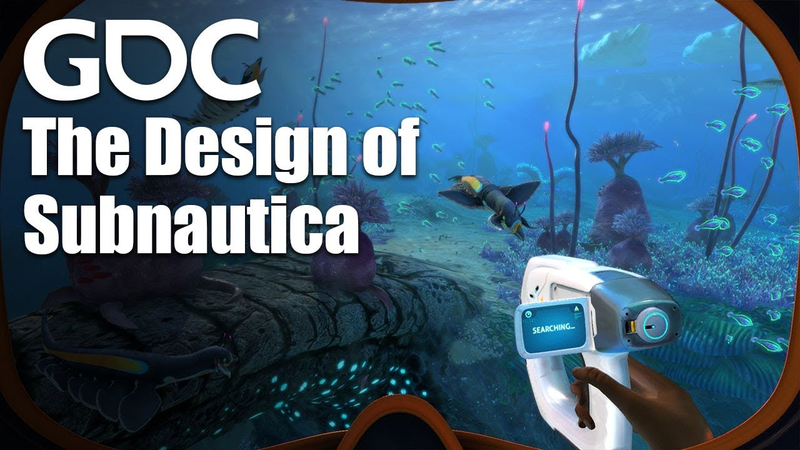
The Design of Subnautica
Subnautica represents a deliberate departure from the hyper-competitive, combat-heavy shooter genre, shifting the focus toward the emotional resonance of exploration and the thrill of the unknown.
- Subnautica achieved commercial success with over four million units sold after a five-year development cycle and a $10 million budget.
- The development team utilized an iterative 'Minimum Viable Product' approach, specifically employing 'Minimum Crappy Playable' prototypes to rapidly test and refine core systems.
- Designers replaced traditional combat mechanics with a scanner tool, successfully incentivizing environmental engagement and curiosity over violence.
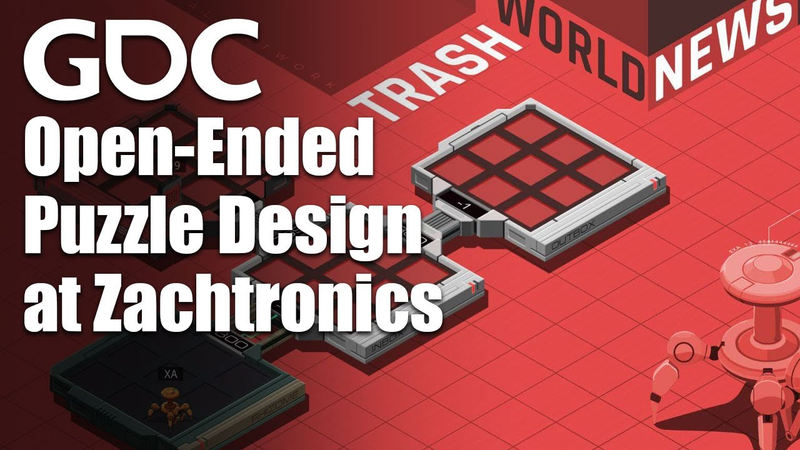
Open-Ended Puzzle Design at Zachtronics
Zachtronics employs a rigorous, paper-based design methodology to create puzzle games that prioritize mechanical authenticity and narrative integration.
- Zachtronics prioritizes open-ended puzzle design by replacing rigid, single-solution structures with systems that allow for personalized, creative player solutions.
- The studio utilizes a 'bumpy funnel' design method, which rejects hand-holding tutorials in favor of constrained environments that force active experimentation and mental model development.
- Mechanical authenticity is achieved by abstracting complex real-world concepts—such as circuitry and alchemy—into simplified models grounded in historical and technical primary research.
Game Design Tools: For When Spreadsheets and Flowcharts Aren't Enough
Game design requires a sophisticated approach that transcends traditional reliance on spreadsheets and flowcharts, necessitating specialized software to bridge the gap between conceptual planning and technical implementation.
- Specialized design software like Machinations, Articy:draft, and Luda Scope allows teams to simulate complex systems and narrative structures before committing to full-scale technical implementation.
- Using dedicated modeling tools enables rapid iteration and risk management by allowing designers to test abstract mechanics and progression systems without requiring playable prototypes.
- Mixed-initiative tools such as the Sentient Sketchbook integrate artificial intelligence to provide real-time feedback and procedural suggestions, augmenting human intuition during the design process.
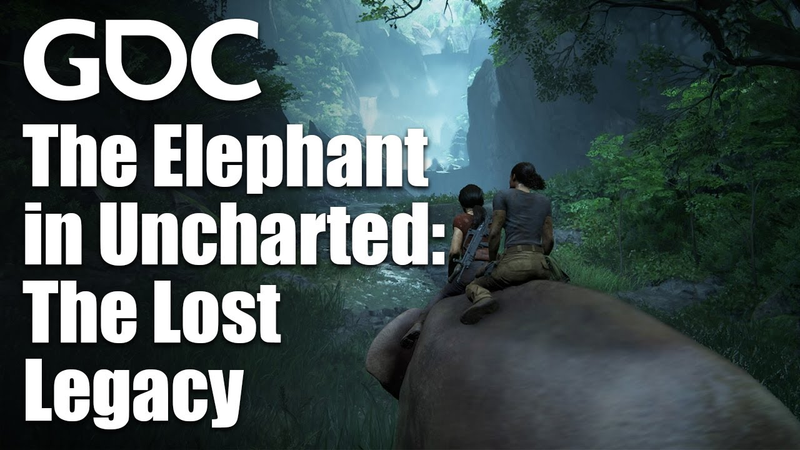
Design vs. Story: How Uncharted: The Lost Legacy Addressed the Elephant in the Room
The development of the elephant-riding sequence in Uncharted: The Lost Legacy serves as a case study in the iterative collaboration between design and narrative teams at Naughty Dog.
- Naughty Dog successfully transformed a static background asset into a core gameplay sequence in 'Uncharted: The Lost Legacy' by responding to playtester feedback requesting interaction with elephants.
- The development team operated under a constrained production timeline of less than one year to deliver a ten-hour game, necessitating a streamlined, cross-departmental workflow.
- To maintain narrative grounding, the team restricted player control to specific splines and replaced standard combat mechanics with subtle interactions like feeding the elephant.
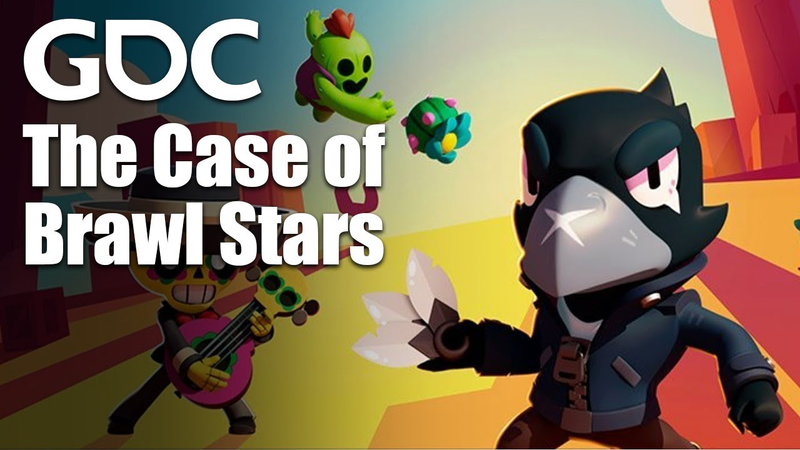
Designing Two Tasty Cores Three Times Over: The Case of Brawl Stars
The development of Brawl Stars serves as a definitive case study in the necessity of iterative design and the strategic value of extended soft launches.
- Supercell transitioned Brawl Stars from portrait to landscape orientation to accommodate a dual-joystick control scheme, which provided better ergonomics and more precise combat feedback than the original single-joystick portrait design.
- The development team iterated through multiple progression systems during the beta phase, eventually replacing an elixir-based model that caused player confusion with a 'Power Points' system similar to Clash Royale to improve clarity and satisfaction.
- Internal playtesting at Supercell involves a wide cross-section of company employees—from finance to legal—to gather diverse feedback before testing with real players.
Ethics in the Game Industry
The game industry faces a critical juncture regarding the ethical implications of design choices that prioritize engagement and monetization over player well-being.
- Gaming disorder is a recognized concern affecting between 0.3% and 1% of the global population across major markets, including the U.S., U.K., Germany, and Canada.
- Developers are urged to abandon engagement-focused metrics in favor of ethical game architecture that avoids exploiting cognitive biases through variable ratio reinforcement schedules.
- Predatory monetization strategies, specifically loot boxes and frictionless payment systems, pose significant ethical risks, particularly when targeting minors who lack the cognitive maturity to resist impulsive behaviors.

Do You Copy? Dialog System and Tools in Firewatch
The development of Firewatch centered on creating a highly responsive, non-linear narrative experience through a lightweight, event-driven dialogue architecture.
- The Firewatch dialog system utilized a lean, event-driven architecture where game state was interrogated via boolean tests on floating-point values rather than complex string parsing.
- Dialogue choices were generated on-demand at runtime rather than being pre-compiled, allowing the system to dynamically match responses based on specific player history, such as naming a pet.
- To manage non-linear, branching narrative complexity, the team built a custom tool called Magpie that provided full-text search, free-form tagging, and a unified ID system to track dialogue lines from development through to final recording.
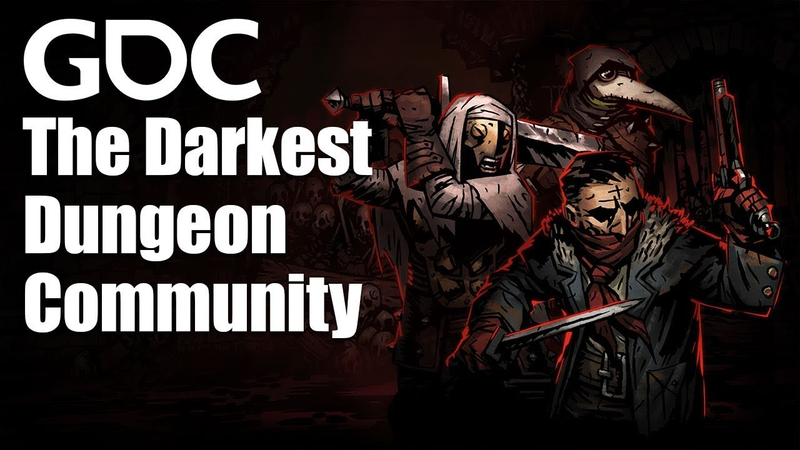
Circle in the Dark: The Darkest Dungeon Community
The community management strategy for the single-player game Darkest Dungeon centers on a "camp counselor" philosophy, which rejects the traditional, hierarchical "manager" role in favor of a horizontal, collaborative dialogue between developers and players.
- Red Hook Studios employs a 'camp counselor' community management philosophy that prioritizes horizontal, collaborative dialogue over hierarchical developer-player relationships.
- To mitigate unproductive feedback, the studio uses a tier-based survey system that forces players to evaluate character utility holistically, creating a shared vernacular for more nuanced design discussions.
- The studio manages the 'endowment effect'—where players value a game based on its state at purchase—by utilizing a public beta system to separate iterative development for long-term fans from stable experiences for new players.
Slay the Spire: Metrics Driven Design and Balance
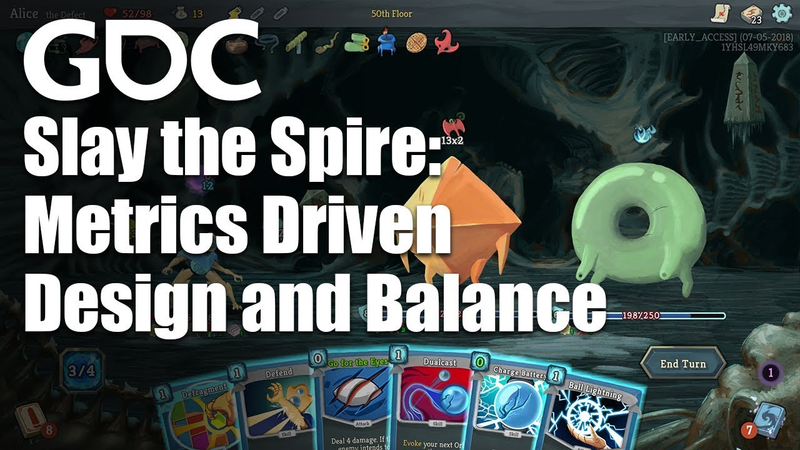
Strategic balance in Slay the Spire prioritizes meaningful diversity over mathematical equality, ensuring that every card serves a distinct purpose while avoiding mechanics that warp the core gameplay loop.
- Strategic balance in Slay the Spire prioritizes meaningful diversity over mathematical equality, ensuring every card serves a distinct purpose without warping the core gameplay loop.
- The development team utilized a dual-layered feedback mechanism that combined large-scale automated metric collection with qualitative insights from community channels, streamers, and direct player discourse.
- The Early Access model facilitated rapid iteration, using a stable beta branch to test major overhauls like the intent system and Ascension levels.
1,500 Slot Machines Walk into a Bar: Adventures in Quantity Over Quality
The mobile gaming landscape of 2013 underwent a radical stress test when developers pivoted from premium game design to an automated, high-volume strategy.
- In 2013, an automated pipeline generated over 1,500 low-quality slot machine apps, proving that aggressive keyword targeting and market saturation could bypass traditional quality benchmarks.
- The experiment achieved 1.6 million downloads and $50,000 in revenue despite lacking basic features like save functionality, demonstrating that algorithmic discovery can monetize minimal content.
- Developers utilized a 'Golden Goose' web service integrated with Unity to automate the entire production lifecycle, including theme generation based on Google Trends and automated store submissions.
The 2019 Animation Microtalks
The animation industry demands a sophisticated equilibrium between rigorous technical execution and profound creative expression.
- Professional success in animation requires balancing rigorous technical tool mastery with the ability to imbue characters with autonomy and personality.
- Animators should treat production constraints, such as budget and technical limitations, as catalysts for innovation and cross-disciplinary collaboration rather than as obstacles.
- Prioritizing the player experience over individual perfectionism enables more efficient, iterative workflows and reduces unnecessary development friction.