Transcript
[Music] I'm Charlie Cleveland the design director of subnautica and I'd like to remind you to fill out your evaluation cards at the end to make sure the quality of talks is improving and I just want to mention also that you don't need to take notes for this talk because the slides are all online so just take a picture of that URL and the handouts and reference and all the slides are up there so let's go so yeah the the great thing about GDC is we look really cool in retrospect after we spent way to way too many years making a game and trying a lot of things that didn't work but so I wanted to give a disclaimer that this talk makes the development of subnautica look a lot easier than it was it took about five years to make this game and it was a really hard development for a good portion of that and our previous game
actually took eight years so we're now just getting to the point where we think we know how to make games and our games are becoming more successful and you know I don't want this to look like it was an overnight success they there's a there's a saying that you know an over an overnight success rarely happens overnight and that's definitely true for us so let's get started before subnautica we spent eight years working on a first-person shooter realtime strata strategy hybrid called natural selection one and two and at the end of that development I was totally exhausted we had a lot of guns in that game and it was a competitive online shooter so people are always going on the forums and yelling at us for balance you know yelling at me basically and it was just a hyper competitive game and
and I love that stuff I love the guns I love the strategy I love the you know tech trees and you know intense like team versus team combat but I just felt like I didn't want to spend another you know section of my life adding more you know basically doing the same thing and I was feeling really burned out creatively and right around that time is when we had the Sandy Hook shooting and yeah maybe you remember this picture I definitely remember it and of course we've had so many mass shootings since that time and you know now we have the Christchurch one not even a week old it can't even keep track for them anymore and I just didn't want to add more guns to a game or to the world even if their virtual guns like even if I believe that you know virtual violence does not create real violence which I do believe that that's not true
but I just didn't want to spend more time doing that and that's where the original idea of subnautica came from we were also really inspired by minecraft so the I mean to me the idea of making an open game something like more sandbox II something where the designers and the the developers didn't push you down one path you know we see that a lot in triple-a games where there's pretty much one way to play the game and you know any kind of surprises in the game were pre-designed and you're just pretty much going along down the line so minecraft showed this new way to build a game you know expansive with player stories and player creation and I was thinking oh we should we can make a game like Minecraft but we can do it underwater we also got inspired by clay the makers of don't starve and oxygen not included invisible ink among others and clay over the thing
I love about clay is that every game they make is a different genre so they never repeat themselves and there's a few members on the on our team including myself that really got inspired by that so we wanted to try something completely different so we had this nonviolent idea you know player has no guns though truthfully there is violence in the game it's just the of course the creatures are attacking you and then you basically can't do anything about it so that yeah you're you're definitely not at the top of the food chain so that's the background that's why we made the game and I just want to talk a little bit about how we built it just briefly we started development on it in early 2013 it came out in early access in late 2014 so it's almost two years we had a three million dollar budget roughly and that was all the money that we had earned from our previous game natural selection - and we
spent about four years in early access and we released 30 or so headliner updates and these headliners are that the concept is where you you build an update around one feature and that feature is really marketable and it's appealing and you make a video you make a website and it was a way for us to draw attention to the game because you know we had never were not known in this area at all if you want to know more about how we did this early access development Jonas who's here he gave a great talk yesterday I've heard it was amazing a talk called subnautica post mortem yeah and it'll be available on the vault so if you want to hear about early access go watch that I'm not going to talk much about it I'm just gonna say one more thing which is I guess that we let's see yeah we spent three million to get it - early access and then another seven after that which was all funded from the from the headliner updates from
players buying the game which was incredible it was a wonderful rollercoaster ride and our players ended up by showing us what the game really needed to be and to date we've sold about four million and Counting units on PC Steam Xbox one ps4 just really just launched on ps4 so it's done super well we feel extremely grateful and lucky so this talk is about making original games not about all that business stuff when I talk about original games what I really want to talk about is this idea of making a game that's never been seen before you can make a sequel sequels can be original by my definition but I want to talk about making something that is unique enough that you don't have a model to look at so this illustration shows you know maybe when you start the game you have it you know you have an idea and you think you see something that you want in your mind and that's way off there in the jungle off to the
right three o'clock you have all sorts of assumptions and you know about what what the game will be you have dreams and hopes and desires and you start building the game and you're kind of going along that line and you start to get lost and you you know your players maybe if you have them they're saying you know do this do that what is this game really about I want more of this more that and that can be a really desperate terrible place to be in because you you still don't know what your game is how can you possibly know what it is how can you take feedback if you don't know really what you're building so eventually I mean so this talk is about how to get through that jungle if there's one thing I hope that that you have a takeaway from it's less about the design of subnautica and more about how to find your own way through the jungle and I'm going to show you how we did it and I hope to tie it into a larger framework that you can use for your own games okay Jesse Schell wrote a
book called the art of game design game game design lenses a book of lenses and in it he talks about using lenses as a as a tool as a way to look at one aspect of your game so for instance he might talk about the lens of skill so if you look through that lens of skill and you look at every aspect of your game can you say how much skill does this level require how much does this one is this too easy too hard you can start to get insight about just skill in your game but that's useful because if you just think about your game in terms of fun that's super generic and it's not very helpful to anyone so he taught talks about here's how you do the lens of chance here's how you do the lens of accessibility and to me one of the most important ones is the lens of emotion Jenova Chen of that game company talks a lot about designing games with emotion first and to me that's really about that
that lens of emotion you have to figure out what emotions your players what emotions you want them to feel then you notice what emotions they are feeling and then you want to figure out how to get them from where they are to where you want them to be so I think this lens of emotion is where I mean this is where we started with subnautica and I think it was probably the most important decision we ever made a lot of design talks talk about pillars design pillars and I'm not going to give much information on design pillars because well I'll give a summary because some people may not know a pillar is where you create a concept of usually a feature or a set of mechanics around your game and you have a couple of those pillars and those decisions you know you just you choose that at the beginning of your game and that guides the development of your game for you know all of eternity basically so I am a big fan of design pillars we've used them in every game but if we apply the lens of
emotion to a design pillar I think they get a lot more powerful and a lot more important and relevant so right here this is here the first there are the only three pillars that we ever had for subnautica and this is actually a screen shot with the very first document ever written about the game and you can see the first one is vessel design building and that's you know kind of like a gameplay system and then to the right in parentheses intoxicating creation so why do we have vessel design and building like the reason is because we want players to have the feeling of intoxicating creation so I say okay the we have three pillars here I won't go through all of them because we actually only focused on one of them so we thought we're gonna do three we ended up by doing one and we thought that would be exploration and discovery you know parentheses the thrill of the unknown the why and we actually focused
only on that the other stuff came in a you know like secondary way but I think that's actually one of the reasons why it works so well so starting with the emotion thrill the unknown the first thing we did was started with the music and this is how I like to work I just because it's a about subnautica out I thought I would show it to you and it's about the emotion so the first perotta oops prototype was just a menu with a song which you can hear right now [Music] so I don't know about you but when I heard this I mean I went through it so many different artists and I tried to
find something that would it was a vocally idea of the feelings we wanted to create with this game I mean I I feel like I'm underwater already it's just one track of music this is solar fields is shamelessly stolen and never published anywhere so I think it's okay you can even hear like a little like a radio signals or something in the background now I don't know I've never really played this for anyone else so I don't really know if you guys feel it but that's what I feel so that was how we started with that emotion and whenever I needed to I just go back to that and think you know to reconnect with what the point of this game is so after that musical exploration starting with the emotion we ended up by building our first prototype real playable prototype and I want to give a little background on something popular here in Silicon Valley called the Minimum Viable Product the MVP so if you're making a
car you can you know it's really hard to go make a car because a lot of times you don't know that you're making a car so you instead of building a car you start with a skateboard something that serves the same purpose its transportation and it will get you where you need to go but it doesn't have all the bells and whistles or the technical complexity of building a car and plus you don't really know you want a car yet you just know you want something that gets you from point A to point B so you released a skateboard you can see this the unhappy face like users are like it's just a skateboard and yeah it's not that great and so you go back you work some more and you add the handle bar on it and I have a skateboard like this there you know get a little happier then you add a couple you know add the seat and you add the pedals and now you have a bicycle people are starting to get a little happier then you go on suddenly have a motorcycle finally you have the car so this idea of Minimum Viable Product or that product is that you can release
that skateboard to your users right away and it is functioning in the way that you want it to it is transport it just it doesn't happen to be the best version of it yet but it is transport so I actually think making MVPs for original games is extremely difficult which is why we don't do that we build this is my term the minimum crappy playable the mCP so this is it's not full-featured it's a piece of crap but if you don't start with making something crappy you're just going to be frozen or at least I'm always paralyzed so you know it's it's a heady endeavor to create a game but if you just create something crappy just something crappy that's playable okay done I get C moving it gives you permission to make something crappy and start you know the wheels start turning and the amazing thing about making an MCP is that something that turned that starts like
this which are the first and I would say MC ps4 subnautica eventually turn into something like this just like that skateboard and car it's the same process okay so start with the motion build an MCP the next thing that that we found really helpful for this game we've never done this before is this idea of building minutes of fun into your game so we started with five minutes of fun that was that main menu you just loaded up it's not really fun but it's five minutes maybe you listen to the song and it stops playing and then you close it the next part of type I think we did what was it five okay yeah listen make music with the main menu the next part type you say okay how do we make this last 20 minutes like we have no idea we just know we have a main menu we have a song we have the feelings where do we go next well what we did is we said okay let's swim and explore one
biome collect some loot you know you can't do anything with it but you can go click some loot okay that's that'll take players about 20 minutes to get through and they'll kind of say yeah it's it's alright then you go to 40 minutes okay what do you do now well maybe you maybe the game starts on top of a raft and you fabricated around there it's really ugly but you can swim you can collect loo you craft your first knife and then you can use that to harvest kelp okay that's about 40 minutes worth and so on and so forth then you get to 1 hour and the cool thing is as if you when we did this process at least I think it's replicable you're it gets exponentially expansive like the amount of time that you get with each prototype the amount of gameplay time goes up and up and up because all the systems start to work with each other and of course you know you know the game now you're knowing you know more and more about it so what's you know one prototype gets you 20 minutes the next one might might get to you might get you another hour worth of
gameplay so now maybe you see some creatures swimming around you harvest this we have no alien creatures we had in our walls they were just like copy from I don't know where from the asset store or something I camera where we got them just earth creatures and I have a submarine and you know on it you go on and on and so forth and we use this technique to go all the way to what I don't know what we have now 30 hours of gameplay 40 50 60 for some people okay so early on in those prototypes we we didn't know what the goal of the game would be and it was way too much work to try to figure out what that goal could be because we knew we wanted a sandbox experience or somewhat sandbox II and you know we had no idea about story yet but we need to get players going so someone had the idea well maybe just put in some treasure chests and players if
they collect five then then they win the game and well we don't really have time to program program that in so they'll they'll just notice if they have five then they can quit quit playing which is really weird and it sounds really stupid but this actually freed us up completely to just focus on the low-level stuff swimming crafting oxygen the environments creatures we didn't have to think about the high level so you know you don't you hear a lot about placeholder models and I think we can start placeholder using placeholders for other things like goals try it house rule so this is a recent footage I don't have the old footage here unfortunately but one of the in our early prototypes we had a bug in our oxygen meter so you know you're diving underwater you have say 30 seconds of oxygen and when you start to run out the HUD you know starts to go black as you lose consciousness it's very dramatic and as you get to the
surface well I'll show you we I'm gonna show you what happens here there it takes there's a pause where your screen is totally black and you're not dead and you you seem like you're not alive but then you get to the surface and then you come back a lot come back to life so I'm going to show you that real quickly [Music] oxygen swimming swimming the hut is just starting to dark in out of oxygen now okay not at the surface not the surface not the surface it could be dead surprise okay so this was a bug that we decided we had to keep in there forever and in fact we'd ever even decided it because no one ever complained we people loved it it was the weirdest thing we didn't even discuss fixing this I don't even know if it's like maybe this is the first time we've ever even mentioned it it in the reason why that was so great
I mean maybe it doesn't look that great in this one clip but if you watch a youtuber experience that and they're like Fiero at the top they're just jubilant that they made it with all their loot it fit really well into our emotional idea of the game just thrill of the unknown and it that one is less on the thrill of the unknown and more on just positive emotion people are so happy to have that that we again by being emotionally driven we kept it it wasn't even a discussion so early on we also had some ideas on we had a problem where we knew that our world could not be infinite we wanted it to feel infinite but you know we obviously had a boundary and so we were trying to figure out what to do at the world edge so right there one of the ideas we we had we floated around was making cliffs at the world edge of course we could do invisible walls none of those things really made a lot of sense to us someone
it might have been Jonas actually had the idea to drop the world down into an abyss like negative you know infinity depth and which is what we did and what what was so cool about that is that that it actually helped our theme something that was a limitation the fact that we don't have an infinite world yet we wanted to feel infinite by dropping that that height map down to negative infinity it actually gave players the feeling that the world actually was Infinite and players go out there all the time and they encounter these kind of crazy creatures - we put those in there in there to make sure you don't swim down too far so that was an example of something in a limitation that we actually turned into essentially a strength of the game we also put in this HUD this is just a scuba mask and you'll see a recurring theme in this talk is stuff that we tried that we didn't realize was great that actually turned
out to be great and then but it's us noticing that it was great so the scuba HUD you know you're underwater you're scuba diver you have a scuba mask and one really cool thing about that is it actually makes your makes you feel more claustrophobic which was tied really well into to our the feelings that we wanted to get out of the game and then we put this guy in this huge reef back he and the funny thing about this reef back is I always thought he was really lame and he doesn't do anything he's just this huge like sea cow he just like make some noise and he floats around he's you barely even can see that he's moving but we put him in and I want you to see a clip here of this is a eat my diction won and he was one of the first kind of medium tear streamers that covered our game and watch his face when he sees this thing oh it's scared he stopped being oh my god I found Cthulhu I found a zoo
I felt Cthulhu if halo 5 is downloaded I'm gonna be so mad okay it looks like a lavon's downloaded okay okay he's not depressing or broken we have the perfect amount right don't move right yeah yeah it's just wonderful oh yeah right there I've just sign in and when we saw that like we knew that we had to add more big creatures in the game this is a huge amount of work like I was fighting it the whole way but it's hard to it's hard to relent I mean you had to relent when you see reactions like that so we added this crab squid huge amount of work we added this sea dragon don't don't even want to think about what was required for that and
then of course this guy the Reaper Leviathan who's probably responsible for half of our YouTube views and maybe corresponding sales and definitely all the jump scare videos so we also put in some small creatures but look you fish there cuttlefish so we discovered that big creatures work well in this game and we embraced it so more on the map and you know making an open-world game we we knew that we knew that we didn't want to limit players and we didn't want to tell them where to go but we did want them to kind of be drawn downward because down is how you advance the game down is where all the mysteries lie in subnautica but we never want to tell you that we want you to discover that and go there on your own so the first thing we did is we you know we made the world infinite I mean is the the level the map
terrain is not infinite but technically you can swim as far as you want it just turns into nothingness so we kept that in there and players just you know they turn around and they they come home because it's really boring and then here is you can see the same map with its the height data and you can see if you know what the aurora looks like it's around 4 o'clock it's that big kind of oval shape the crash spaceship let's see so when the game starts we choose a random start location and that's that green area in the middle and the cool thing about this random start is that people actually thought that our world was procedurally generated many players thought that which was a huge win for us because they felt like they could replay the game and they probably could replay it a little bit like you know maybe a couple times but it added to that feeling of mystery so let's see they start there randomly and you can see that's the side view the of the height map and the green is where where they spawn and what we ended up by doing
is putting just basically making the map almost like a pyramid so you start at the top and of course you have the water up here and you know as you swim out as you explore in any direction you're just gonna naturally follow the line down so this meant that and we I mean we tried other approaches too but this one ended up by having players just go where we wanted them to basically go to the interesting stuff and follow follow the world down and then of course we did pipe all this other the ghost leviathans out there too which I already mentioned ok so another a huge kind of refrain for us in this game was this idea of never telling the player what to do and respecting the players time and this this ties into the idea of an intrinsic reward you know intrinsic / extrinsic rewards so Jamie Chang and Chris hacker both wrote excellent articles on this subject and they really inspired us and
got us to the next level with our game so an extrinsic reward is something you probably are familiar with like game or rank achievements leveling up you know gold it's like you know tangible specific rewards that are given to you when you do the right thing an intrinsic reward is like maybe a positive emotion or maybe like you feel good when you play the game or you enjoy spending time with your friends so that's why you play the game you're if you're motivated by an intrinsic reward I like to think that you're having a more meaningful interaction with the game and I was really hoping that we could fully embrace 100% intrinsic rewards in this game it's a little scary because you know we've all been taught as designers that extrinsic rewards drive player behavior and motivation and there have been a lot of studies on this and they do Drive it in the short term I mean you should definitely read these papers it's
all in the appendix if you want to dive deeper on this I won't summarize it here but it does drive player motivation in the short term and it drops it in the long term that's the that's the summary it's not fully accurate but let's just say it's largely accurate so we wanted players to play the game because they love the game and we were willing to take a risk and not handhold them and not give them quests along the way we didn't want them to feel like they were tricked into playing the game so one of those one of the ideas there was we had to start thinking about like instead of tutorials or helping players learn the game we had to flip that idea on its head and realize that when players discover the game that's actually the fun part so you know would come back coming back to this the pillar of motion you know the the thrill the unknown it just goes away once it becomes known right like it's like a like the horror
like the monster in a horror movie as soon as you see it the thrill goes away so we definitely didn't want to just tell people things if you know it was okay if they discovered it on their own but we were never gonna just explain it to them so this is the idea of this mantra that we had at least I would basically you know yell at other people and tell them never tell the player what to do you're telling the player what to do and this idea of not not feeling bad if players have to go to the wiki and that was something that kind of crippled us early on were like oh but what if players have to go to the wiki because we didn't explain something well minecraft did it and it was amazing so we realized that that learning is by far like that learning is actually the fun part so as long as players are learning I mean it's it's still not great if they have to go to the wiki you'd rather have them learn in game but as long as they're the ones learning and we're not just telling them that's by far more important and a corollary is that the
more frustration players would have the more exhilarated they would be when they finally overcame the obstacle so we had to change how we thought about frustration it wasn't just necessarily bad as soon as players were frustrated it's like well actually this could be good as long as they don't stop playing if they stop playing then you know that's bad we actually put some telemetrics in there to see to get a better example of that to know more about that okay let's see here check it my time so we another technique we used a couple times in the game that I would like to continue to use more is this concept of training wheels so the you know we had when we first released into early access we didn't have any survival mechanics we had no hunger you know no eating or drinking and our players were like how can you make a survival game without you know the hunger and thirst and we didn't even know we're making a survival game but
someone tagged it on Steam so they said it was a survival game so they convinced us to put the the hunger thirst in and the really cool thing about it something again this is this talk is all about how we just stumbled on like the good stuff but it's noticing the good stuff we noticed that players with you know early on in the game because we had no direct goals they would they were they understood that they needed to eat and drink immediately because if they didn't they would die so early on in the game they would go out find fish you know get water come back cook it eat it then they'd have a you know some time where they can just kind of explore interfaces or just kind of go out on their own then a little indicator pops up again it says up you know you're running out of food they go back over time as they as they learned how to master their calories and water like most survival games it gets easier and easier so the you know the it kind of like falls away you don't
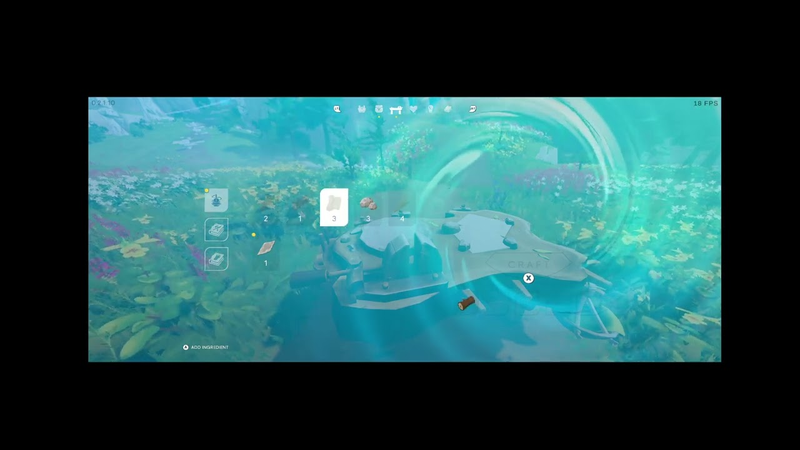
have to think about anymore you start farming you have machinery that's cranking out water for you so this whole kind of like motivation of telling you what to do early on it just kind of slipped away like training wheels which to me was the perfect solution because we wanted players to come up with their own goals but we didn't want them to feel aimless in the beginning another way we use this concept of training wheels is through our crafting menu so in the beginning like you know we were heavily inspired by don't starve their crafting we have a similar crafting menu but in the beginning we only give you a few options I mean I can't remember how many are there at the start but there's only a few relevant ones and over time we add many many more options and even entire new menus so you have the fabricator menu to start that expands and expands and then we added like five other menus over the course of the game but in the beginning the stuff that we really want you to do is get loot and if you craft
one of the only options there which is like the dive to the tank or the fins then that kind of promotes a get loot style of game you know of gameplay or you know we wanted you to fix that radio which was there in your escape pod that kind of kicks off one of the storylines so instead of telling you like go fix the radio we just put as one of the only options a little repair tool and guess what there's only one thing you can repair that you can know about when you start the game and that's the radio and then we have pipes and air pumps and those kind of encourage you to build a mini base so those are kind of more of our directed goals these are things that we wanted the player to do we knew it was good for the early game that helped the players get comfortable get that get on their feet and but we didn't you know we didn't want to like control them the whole game we wanted them to start coming up with their own goals so over time we added many more options and what's happening is the menu menus getting more because it's getting bigger
like the and it's being populated by player choices essentially by scanning fact fragments and things we have less and less control over that so as this expands these other goals they tend to be more player driven so we have a high capacity Oh to tank that lets you go deeper we have a radiation suit you see the radiation suit maybe I'll go I'll go maybe I can get through that radiation now next to the Aurora ah maybe I can board the Aurora but the players feel like they created that that goal themselves and they more or less did but we influenced it then we have a Pathfinder tool oh maybe I should explore some caves air bladder maybe I can explore some deep open areas because the thing lets you come back up really fast so you can go straight down and use all your oxygen then pop straight back up or the laser cutter maybe I can go explore Rex so this is this is a way that we can kind of guide players but kind of do it invisibly and have that
control that guide kind of go away over time okay a lot of people have talked about the story in subnautica and you know how its structured and how they had a different experience than someone else and which that makes us super happy and I would say that we pretty much organically fellip fell into this approach in the way we did it was you know most games would have a linear story or no story and what we did is we had multi multi linear stories like seven different stories so the first one this is the aurora storyline so the explorer find the exosuit the prong and find blue tablet that one kicks off at a random time so this is you know left to right is time and the gray box is what the thing that triggers the beginning of the storyline so then we have another one the sunbeams story when you repair the radio that that one kicks off so whenever possible we had storylines kick
off by player action sometimes we have random timers but either way there's variants there and that's what's the most important we have the big asti story this is the floating island I think that one that's what it was escape pods when you find the first escape pod the infection story the precursor story and the Emperor story so the thing that's really cool about this and the wave the reason why it's different but you know different players have a different experience even though you know it's all just basically a bunch of linear stories is because their experience let's see that's showing there yep okay that that vertical line is their experience of the story at a given moment right they go left to right but all those events these are all kicked off at different times so the slice that you're that you're experiencing is different for different players so if you want to do kind of open-ended story this might might be an approach okay
another way we subconsciously guided the player is the first time you exit your escape pod you know we wanted you to get to that Aurora so I didn't even know this was in there until I was research researching this talk which is interesting there's so many little details in this game that we're just contributed by everyone on the team which is just thrills me but this is what happens the first time you exit the Aurora are your escape pod rather [Music] so we had that audio stinger it's like this is important you know dramatic and you look right at the Aurora did you put that in Brian no okay I don't know who put that in so and the way that we did that even though we have the random start that I showed you before your escape pod is always just orienting towards the Aurora so it was basically almost no work but it imprints on your
mind maybe I should go check out the Aurora even though we'd never dare tell you so later in the game we Scott I'm sure you remember this we were really struggling with how to how to deal with this giant submarine at the bottom of the ocean with all these huge creatures you know we'd spent all this time putting in those dam huge creatures and we didn't want guns on the sub on the Cyclops but we you know those creatures are attacking you so how are you going to interact with them how is that fun and it this required a reframe and when I say reframe it we had to change our mindset around the whole thing obviously a recurring theme here we wanted to you know we thought maybe we could instead of you instead of this being game play this can be an experience of being under attack so like in Das Boot or hunt for red october you have those really tense scenes at the bottom of the ocean and
you can hear the sonar pinging and you can hear the creaking and we thought well maybe we can just you can't you still can't fight the creatures but they're still fighting you but you can hide from them and you can like hit all these buttons and toggles on your sub and we can actually make it feel like a cat-and-mouse experience in fact so this is a ton of work like all the UI and you know the motion detectors and the Klaxons and I'll you know later will catch fire but it wasn't guns [Music] what horrifying
[Music] okay so that was a reframe another reframe and here's another one conflict is magic we had so much arguing on our team over this five years and I was starting to wonder if maybe we were doing something wrong or maybe like I don't even want to be in games anymore this is so unpleasant and what I realized was after I read creativity Inc by Pixar is that the conflict is actually critical and it's actually really it's wonderful actually so here's an example you have your creative team who wants the you know the best aesthetic and all the features then you have the tech team who you know what wants their game to run well and run on everything and then of course you have biz that wants it all on time and on budget that's if you have biz I mean no
not everyone does but so if you if those if any of those needs are not met then you get a bad result so if creative and biz won you know they win then you get a buggy mess you know if tech and busy at you got a tech demo and otherwise like to go out of business so but in the middle if everyone can compromise and argue their way to something that you're all grudgingly agreeable to that I learned is where the magic of games that's where that's where magic is that's torment that's where magic happens and so instead of avoiding conflict I started to learn well okay we just have to be nicer about it but we can't avoid it don't avoid it and this is all to say that you know starting off with this idea of a game without guns
and underwater game you know we never set out to make a horror game and our fans tell us you made a horror game by mistake or maybe I tell them that because it's clear that we did I mean I would actually say technically it's more of a terror game by mistake but that's not you know really people don't really talk about terror games so the fact that we did make a terror game by mistake I think is the reason why this game came into its own and it's only because we actually listen to the game and this is what Stephen King says about listening to his characters which I find creepy so he when there was some quote he had in his book on writing he talks about in misery how he didn't know how he wanted the book to end and he started just listening to Annie what's her name Annie and the character started writing themselves and they wrote the ending and that really rings true with
me because I feel like that's how it is when you're making original games you kind of think you know where you're going you have someplace on the horizon and someplace like it's a mountain and there's many paths and you don't know how to get there but if you listen to the game it will tell you where it wants to go okay so that was the design part of subnautica and now I just wanted to talk a little bit about like a bigger framework for making your own original games so last year I felt like my life was really stuck and I felt like maybe I have I'm addicted to making games maybe I need to investigate that and stop it for a little while I just spent all my time doing it and and I felt like my life might be off track and I read this book called designing your life it was actually written by one of the cofounders of of EA and there are two Stanford professors and in this book
they talked a lot about this concept of a wicked problem and they talked about how people's lives are actually wicked problems and these are problems that are highly resistant to solving in fact maybe there is no solving of a wicked problem because our lives certainly cannot be solved they can only become subjectively better or worse so I was reading about these wicked problems and here are their main characteristics that they they talk about now keep in mind the you know wicked problems they're not saying it's only life people's lives they're also saying you know nuclear weapons homelessness you know poverty you know climate change these are all wicked problems so what do they say about them they say they're not understood until the after the formulation of a solution okay you don't know when you're done they say there's no stopping point so it's not solved
solutions are not right or wrong each problem is essentially novel and unique and every potential solution is a one-shot operation which means you can't ever get better at it you're just there's no trial and error and there's no body of existing solutions out there unlike if you're building bridges or highways or skyscrapers there's all this engineering work out there you can just go look up solutions wicked problems don't have these things that if I this sounds kind of familiar this is like pretty much exactly like making any original game and I realized that actually original games making original games are original problems I mean they're wicked problems and we have to think about them in a completely different way than any other type of problem solving so each original game is unique there's no end point it's never
solved again no trial and error and there's no existing solutions so this is the whole idea of being in the jungle this is not knowing what you're making and yet you still have to go ahead and make progress anyways there's another quote that I really liked and I think that's really true games are insanely complex and you want it if you want to do something new it's gonna be even harder so this book talks about their framework for design thinking which you know they did not create this is a this is a known discipline essentially and design thinking some of the things they talked about our try stuff which is prototyping and what they call building your way forward they talked about reframing problems knowing it's a process which is
to say that sometimes you make sometimes you take a step forward and a couple steps back sometimes you have happy accidents along the way they talk about wayfinding wayfinding is the idea that you think you know where you're going or you've got it on the horizon and you're just gonna aim there but you have no idea how you're gonna get there and they say ask for help then I started thinking well the stuff that worked really well in subnautica fits pretty well into these categories trying stuff that's the MVP and MCP the minutes of fun that's building your way forward pretty much identically placeholder goals okay reframing problems is probably the most important thing that we ever did which is reframing player learning intrinsic intrinsic rewards instead of extrinsic embracing conflict rethinking how the sub works knowing it's a process a lot of us a lot of this for us was embracing those happy accidents and
noticing them the listening and yeah the off to the big creatures and the training wheels we just notice that those worked and wayfinding probably the most important one which is the whole idea of knowing where you knowing where you want to go at least emotionally and just aiming for it so that just leaves one so we've covered a lot of tools about finding your way through that jungle of making original games and I would not say that it's gonna make development easy but I'm hoping it's gonna make it a little bit easier and it's it's easy to forget that other people have walked this path before us and that we don't have to do this alone so I hope that you remember that there's help all around you and what's difficult or impossible for you may suddenly become easy with a little bit help from someone else especially here at GDC the friendships that you make here will last your last
you your entire career so if you'd be so kind would you please take a moment and introduce yourself to your neighbor okay hate to cut you off Wow I was amazing
okay one moment yet we're back I didn't think that was gonna take so long Wow holy moly you guys are energetic okay one more thing Wow it's gone it's done okay that's it okay [Music] thank you so I think we have maybe 10 minutes for Q&A yeah 10 okay I don't know where the mics are but you're here hi I John many from secret lab I so can you talk a little bit excuse me can you talk about how you implemented the story over the course of your your open access your early access because how did you deal with like player spoilers how'd you take
care of things like change in your mind as you built out the story oh man so the question was like how did we unveil the story basically in early access knowing that sometimes we needed to change things very painstakingly and carefully I mean one thing we realized is we we didn't care about spoilers obviously in early access you can't but there was always some team resistance saying well you know do we really want to spoil this right now because you know it's gonna remove all the juice from the game we basically just let people be spoiled and if they if they didn't want to be spoiled we thought they just shouldn't be playing early access but I unfortunately don't really have a good answer for you on that that's wish I could keep I wish I could help conflict need a lot of conflict hey they're here hi I have to say it is just an amazing game a really great accomplishment thanks for the presentation you
mentioned something about telemetrics and telemetry that you used in the game how much does that influence like early development and what what were the things that you're actually looking at so Jonas I think talked a lot about that in his talk ok um but we did look at it a lot our discussions were often players you know players haven't found the seamoth yet and it's four hours in you know that because we had the data among the team so I think it was really important that everyone had access to that so we could all talk about it okay and it wasn't like as you probably have come to understand now this wasn't like this top-down designer driven game know it doesn't seem like no the team is talking about this stuff and as soon as they had that data it just informed all their discussions so we used it and we used it a lot cool yeah and it's actually pretty easy to implement yeah I recommend any other talk as well ok great thanks hi there hi thanks to the talk did you have to iterate much on the rendering or the design of the hands were there any
decisions about so the rendering in the modeling of the hands oh yeah because it's the kind of always there and this this whole worry about the uncanny valley was did that just work or whether did you have to wait to rate on that a little bit I mean Brian would probably have I think it just worked yeah I don't think we ever had a problem with the hands maybe the legs were a little more difficult I don't know but yeah maybe I think it never really worked that great in VR but sorry think of hearing Carl from University of Wisconsin stout my question is related to research and design did you take any inspiration did you go out and snorkel or scuba dive yeah first-hand experience I did actually I'm a evidence scuba diver that scares the living hell out of me still it's funny I don't get scared about subnautica but I get really scared in actual scuba yeah I mean I think we have a couple members on the team that are scuba people but we didn't really do too
much and we had like no I don't think we ever had like a field trip or anything now I mean we are our team Cory especially researches the heck out of underwater life but I think I was probably only one one or two people to actually scuba dive yeah hi there hey so you um like talked about the the inspiration for a lot of your gameplay mechanics came from like kernels like The Hunt for Red October where you're evading that there's those tense moments for you aiding when you design this game because it was so from the ground up what was the kernel for the original concept like was there a particular experience that the like who came out of like the what was the initial inspiration you know I don't know if there actually was one I mean I love the abyss I love James Cameron films so those were always you know there but gosh I mean we were
definitely influenced by avatar we wanted to make a dreamy dreamy surreal world with a lot of like alien nature I don't know if there's actually one specific experience is more of a feeling than than an experience honestly cool yeah and an underwater minecraft was like an early direction that was like the probably the original and it just wasn't good okay so you said let's not do that let's not do that okay the buildings I could have gone into depth on that but the building basically got in the way of the exploration because we actually had subs that you could build pieces onto like modular Lee and it would like change their their their properties like how they navigate and then you couldn't actually explore because they were so clumsy so we realized that the game was about the discovery and exploration not about building yeah it shows okay good that's good I guess hi hi their name is Matthew Owens I'm designing with EE a I thought it was really fascinating your concept of placeholder goals along with like having
placeholder models how did you go about the process of getting the permanent goals was it more of a process of discovery where the the right concept came to you over time or did you have to really sit down and say what the heck are we actually doing with our game I mean we don't really have any prime like real goals in the game I mean they're there but we would never tell you so I mean that you kind of all this the story I mean you could say that the story is the goal and that's all just there if you want to find it and there's got bread crumbs all over the place to help you find it but there's really I mean I wouldn't say you could say that there's goals in the fabricator like I really want to build my first Cyclops or I want to build you know I don't know this underwater base that looks like them in this configuration but they're all implicit there's nothing I wouldn't say that we have any any actual goals in the game that we decided on cool thank you yeah you're welcome I know I'll get a better billion questions but I'm gonna I'm gonna just go with this I wanted to actually thank you guys a whole lot
[Music] playing this game as a frustrated Explorer oceanographer it it really it scratched a niche that I I knew was there but I didn't know I didn't know how to frame it but like I said so I just want to thank you guys a lot for putting this out welcome hi you talked a little bit about the pyramid shaped map to sort of influence and motivate players to like go deeper but how did like my questions about the biomes like the discrete and and very unique biomes they're very distinct from each other did you guys design that dude like the lens of emotions because each of them sort of evoke a certain emotion or did you have certain gameplay things that you want them to do I mean it's a lot fuzzier so the question was about like did we use the like design pillars basically for the making the biomes yeah I hope so I wasn't really involved too
much with level design so the art team that's actually something that I cut out of this talk but early on I realized I had to remove myself from the world design which is a really weird realization because art wanted to art had ideas like they wanted to make this like huge submarine right because it looks so cool level design wanted to figure out how to get that submarine to fit and you know like we meet they need to make biomes that are big enough but no they don't have the you know giant plants they're gonna stick up and your sub gets stuck on them or whatever and they would ask me like how big is this world supposed to be how long is it gonna take to get from one biome to another and I didn't have any answers for them I would ask Cory like our artists our art director I have questions for him on crafting ingredients so like we were stuck in this circular dependency and I realized the only way we can make forward progress on the world design would be for me to leave that discussion and let them make the world that they think that
they can make so the artists and level-design made the world that they loved and I had to fit the gameplay to the world so I I wish I could tell you more about that but I actually deliberately had to leave I had believed that those discussions thank you sorry it's a terrible answer but those great so a lot of your design or I don't know how much of your design came from streamers and youtubers on early access yeah would you always go down that route knowing what you know today yes only because I I don't think of them as it's not about how popular they are or anything like that it's just about watching someone play the game of course you can see the likes and dislikes and the number of views that will influence you sometimes but I don't feel like yeah I was kind of worried that this was gonna come across like we were just chasing the jump scares and I don't think that we did I mean I guess we probably did to an extent but I don't think we ever made decisions with the
game that we weren't 100% behind we would never you know we would never just say like oh people want this like someone modded in a torque like I don't know some kind of blade gun or something and people loved it we wouldn't put that in I'm a big fan of early access ok I like having the players have fun and you know of course yeah so I could jump I think I mean definitely I can't imagine this is the world we live in now right with streamers so we probably make half of our our income from streamers to pretty much directly so it used to be when a video went up our sales would just you just be 100% correlated to that so I think it would be folly to ignore it and I would I have tickets there here stay and you know we love watching them it gives us energy when we see what people love you know even the non famous ones too so hi hi question regarding the data bank and the fact that you can like scan all the creatures and stuff where did where did that fit into the whole design
of the game good question I had to do that yeah I was actually really against the scanner so the question was was how does the scanner fit into the game into the like design pillars I guess it doesn't really honestly and I never really liked it but you know the team like really liked the idea and they put it in and I think it's I think it works well for the just the feeling of exploration you know every time you see something new you you want to go scan it and it also is a nice replacement for combat because you you know you can't really interact with the creatures too much but you can't scan them and you just like combat you have to like see how they're moving get close to them make sure they don't hurt you and keep them in your sights long enough to get them scanned so I think it actually is a nice proxy for very simple light combat so I wholeheartedly love it now thanks yeah you're welcome is that it I think I probably out of time anyway so thank you everyone for
the great GDC
Auto-generated captions from YouTube — names and numbers may be misheard.
Key insights
Distilling the key insights…
Ask AI about this video
Cite this video
Citation
Generating citation…
















Comments