
Game Developers Conference
Game Developers Conference (GDC, now the GDC Festival of Gaming) is the professional event for the games industry. It publishes recorded talks and interviews, annual industry survey reports such as the State of the Game Industry, and news articles.
Documents

Metaverse Games: State of Play and Opportunities
The metaverse represents an evolutionary leap in internet consumption, characterized by persistent, immersive virtual spaces that facilitate social interaction and digital commerce.
- The active virtual reality install base is projected to grow to 69.1 million units by 2026, driven by standalone headset adoption and significant capital investment.
- Future market leadership will be defined by platforms that combine Fortnite’s live event and cross-platform capabilities with Roblox’s creator economy and brand integration models.
- Monetization is transitioning toward performance-based, spatial advertising models that utilize location-responsive and proximity-triggered content native to 3D environments.
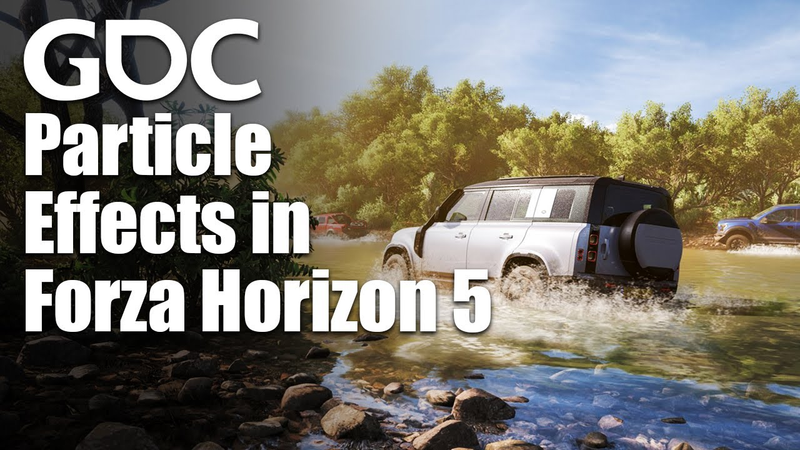
How Parameters Drive the Particle Effects of 'Forza Horizon 5'
The development of Forza Horizon 5 necessitated a fundamental shift in visual effects architecture to accommodate the game’s diverse environments and rigorous performance requirements.
- The Forza Horizon 5 particle system utilizes a node-based framework powered by PopcornFX to integrate real-time vehicle physics, such as RPM and tire slip ratios, directly into particle behavior.
- Engineers maintained a strict 2.5ms performance budget for particle effects by using XML-based templates and payload data to manage over 500 unique smashable props.
- The system replaces binary triggers with a temperature-based model for tire smoke and employs a six-directional light map shader to ensure consistent, per-pixel lighting across smoke volumes.
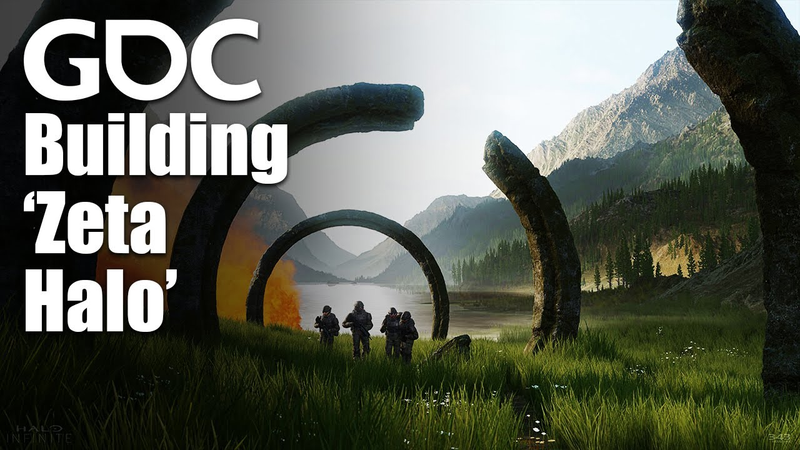
Building 'Zeta Halo': Scaling Content Creation for the Largest 'Halo' Ever
The development of Halo Infinite required a fundamental shift in production methodology to accommodate the franchise’s transition into a massive, open-world environment.
- To manage the massive scale of 'Zeta Halo,' which was roughly 10 times larger than the campaign levels of Halo 5, 343 Industries transitioned from manual, non-destructive editing to a modular, node-based procedural workflow.
- The team implemented a 'Mass Painter' system that allows artists to paint textures and material layers across multiple modular meshes simultaneously, decoupling the painting process from specific Uber Shaders.
- A custom terrain system utilizes two sets of graphs: a 'sculpting graph' for geometry and a 'surfacing graph' for materials and ground cover, which are optimized at runtime into virtual textures and procedural placements.

Launch Day: The Emotional Cost Of Releasing a Game
The modern game development landscape imposes significant emotional and physical strain on creators, particularly within small indie studios.
- The shift toward games-as-a-service models has eliminated clear project endpoints, forcing developers into a state of perpetual exhaustion and operational instability.
- 75 percent of developers regularly work outside of standard business hours to address post-launch issues, driven by the fear that negative community reception will permanently damage market performance.
- The lack of a defined conclusion to the development process creates a high-stakes, reactive cycle that threatens both individual well-being and long-term project viability.
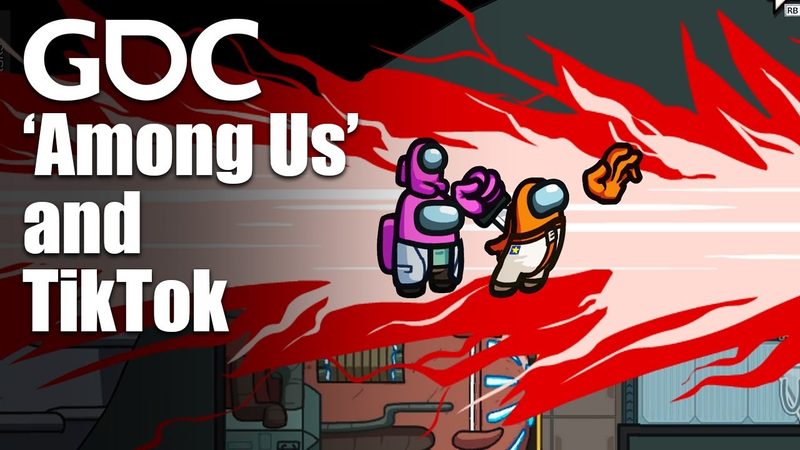
Social Media Deep Dive: 'Among Us' TikTok Strategy
A successful TikTok strategy for game developers hinges on balancing high-effort, personality-driven content with data-backed experimentation to foster long-term community loyalty.
- Prioritize sustainable community engagement and a consistent brand voice over chasing fleeting viral moments to foster long-term player loyalty.
- Maximize total views by keeping videos under 15 seconds and ensuring a strong hook within the first three seconds to trigger immediate curiosity.
- Use TikTok as a primary discovery tool for younger demographics by blending gameplay updates with culturally relevant memes and niche-interest sub-genres.
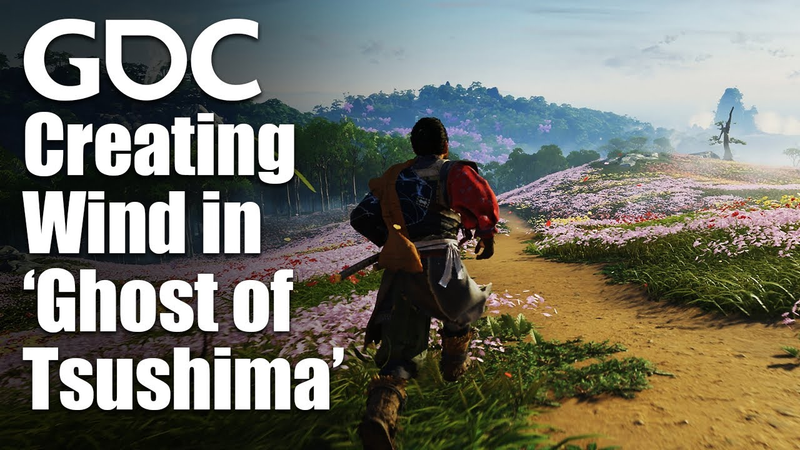
Blowing from the West: Simulating Wind in 'Ghost of Tsushima'
The development of Ghost of Tsushima required a sophisticated, performance-oriented approach to environmental simulation, specifically regarding the pervasive presence of wind.
- Sucker Punch Productions optimized Ghost of Tsushima's performance by offloading wind-driven simulations for particles, foliage, grass, and cloth entirely to the GPU using async compute shaders.
- The cloth simulation system manages up to 1,000 simultaneous simulations—totaling approximately 70,000 vertices—while consuming only 2% of the PlayStation 4 GPU's resources.
- To handle stiff materials like leather or rope without the performance cost of high-iteration spring-mass solvers, the team implemented a parallelized spring-set coloring approach to prevent thread contention.

Sharing in Success: How to Compensate Your Team Through Revenue Sharing
Revenue sharing serves as a strategic mechanism for independent game studios to attract top-tier talent in a highly competitive labor market while simultaneously mitigating the constraints of limited upfront cash budgets.
- Revenue sharing serves two primary purposes: incentivizing talent in competitive job markets and supplementing base salaries for independent studios.
- Revenue sharing agreements are contractual royalties paid to individuals, whereas equity-based revenue sharing distributes funds as dividends to shareholders.
- Dividends must be equal for all shareholders within the same class, making it legally difficult to create separate revenue-sharing calculations for different projects or team members using equity structures.

Making Indie Games with Public Domain Content
Indie game developers can significantly enhance their projects by integrating public domain content, which provides a cost-effective strategy for establishing distinct visual and audio identities.
- Works published in 1926 or earlier are in the public domain, allowing developers to legally build games based on classic characters and stories like The Wizard of Oz, Don Quixote, and Night of the Living Dead.
- Trademark law remains distinct from copyright; even if a character is in the public domain, companies like Edgar Rice Burroughs Inc. may still hold trademarks on the brand, preventing the use of specific names or titles in your game.
- Sourcing public domain assets is time-intensive, with some developers spending up to two weeks searching for appropriate music or art for a three-month development cycle.
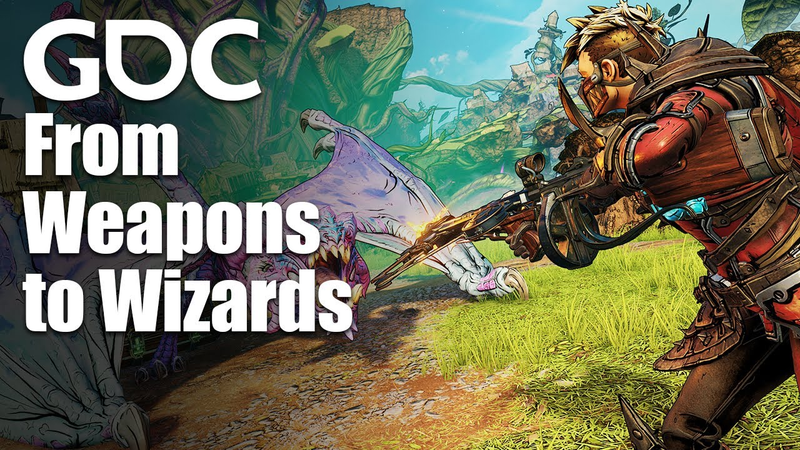
From Weapons to Wizards: Transforming Aesthetic and Modularity in 'Tiny Tina's Wonderlands'
The development of Tiny Tina’s Wonderlands represents a significant evolution in audio production, transitioning from the established industrial aesthetic of the Borderlands series to a high-fantasy soundscape.
- Gearbox Software expanded its audio department significantly, growing from four staff members in 2009–2010 to 21 personnel by the release of Tiny Tina's Wonderlands in 2022.
- The studio utilizes a modular sound design philosophy where weapon audio is constructed from distinct layers—such as transients, bodies, and tails—assigned to specific components like muzzles and grips to ensure sonic clarity and prevent frequency clashing.
- To support the high-fantasy aesthetic of Tiny Tina's Wonderlands, the team remixed the Borderlands 3 weapon system by integrating crossbow behaviors, replacing grenades with complex spell systems, and introducing melee weapons as a lootable category.

Contract Killers: What Developers Should Eliminate From Their Publishing Agreement
Publishing agreements in the video game industry are frequently structured to favor the publisher, necessitating a strategic approach from developers to mitigate long-term risks.
- Developers should reject full intellectual property assignment in favor of exclusive licensing agreements that are strictly limited by duration, territory, and platform.
- Contracts must include clear reversion clauses that allow developers to reclaim their IP rights if a publisher fails to meet contractual obligations or breaches the agreement.
- To prevent financial exploitation, developers must precisely define net revenue and limit deductions to verifiable third-party costs while establishing robust audit rights.

Good Deeds Through Games: Integrating Features to Address Climate Change
Integrating climate change initiatives into free-to-play gaming environments serves as a viable strategy for fostering player engagement while maintaining financial sustainability.
- Climate initiatives in free-to-play games must achieve profit neutrality by offsetting costs through in-game purchases, ad revenue, or increased player retention to secure studio leadership support.
- Integrating environmental causes into a game's core thematic elements allows developers to transform standard live operations into platforms for real-world impact.
- Successful programs leverage existing infrastructure and API-integrated partners to automate the conversion of player activity into tangible environmental benefits like reforestation.

How NOT to Build a VR Arcade Game
Developing successful virtual reality arcade experiences requires a rigorous focus on physical comfort, sensory integration, and operational efficiency.
- Five-minute experience durations are the most effective length for maximizing arcade throughput and operator profitability.
- Motion sickness in VR arcades is best mitigated by avoiding yaw rotation and implementing physical guard rails for player movement.
- High-quality haptic feedback requires a 240 frames per second update rate to ensure smooth, organic physical sensations.