
Game Developers Conference
Game Developers Conference (GDC, now the GDC Festival of Gaming) is the professional event for the games industry. It publishes recorded talks and interviews, annual industry survey reports such as the State of the Game Industry, and news articles.
Documents
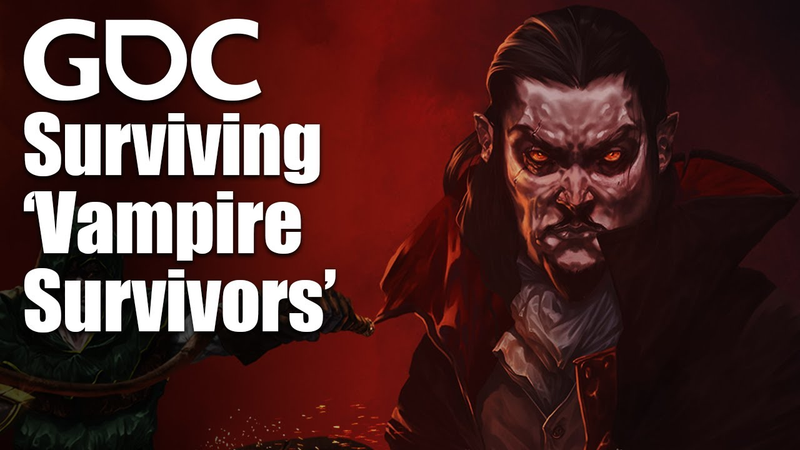
Surviving 'Vampire Survivors': Agile Community Management
The rapid growth of the indie hit Vampire Survivors serves as a case study for agile community management within the gaming industry.
- Vampire Survivors grew its Discord community from 11,000 to 58,000 members and its Steam reviews from 14,500 to 178,000 between February 2022 and the time of the talk, achieving status as the second most-reviewed game on Steam.
- Community managers should prioritize agility by analyzing data to identify high-engagement content; for Vampire Survivors, specific character and item memes (e.g., garlic, floor chicken, and the character 'Poiracho') consistently outperformed other content types.
- Effective community management requires setting strict boundaries for mental health, such as ignoring toxic comments and repetitive requests for new platform ports, while utilizing community helpers and automated bots to maintain a safe environment.

Creative Future with Artificial Intelligence
The game industry is currently undergoing a fundamental shift where the traditional reliance on technical tool proficiency is being challenged by the rise of generative artificial intelligence.
- The game industry is shifting from technical tool proficiency to high-level creative intent, as generative AI automates baseline production tasks.
- Developers should pivot toward storytelling, composition, and unique problem-solving to differentiate their work from commoditized AI-generated output.
- AI acts as a force multiplier by automating administrative burdens like code refactoring, meeting documentation, and asset indexing to accelerate iteration cycles.

'Dark Pictures: Season 1': 4 games in 4 years: Audio Systems for Narrative Horror
Supermassive Games successfully navigated the challenges of an aggressive annual release schedule for the Dark Pictures Anthology by shifting from traditional, linear audio pipelines to systemic, procedural frameworks.
- Supermassive Games developed a systemic, runtime-driven audio architecture for 'The Dark Pictures Anthology' to deliver cinematic quality without relying on linear, pre-rendered cutscene pipelines.
- To manage performance in titles like 'House of Ashes,' which featured up to 50 enemy soldiers and 11 friendlies, the team implemented a distance-based culling system for audio events and emitters to respect CPU constraints.
- The studio developed a '50% Center Bias' panning system for dialogue and Foley, which prevents immersion-breaking harsh cuts by constraining audio panning to half of the character's actual position relative to the listener.
The Future of Game Communities, and How We Avoid It
Community management has reached a critical inflection point, transitioning from a supportive function into a high-pressure role where professionals frequently serve as buffers against pervasive industry toxicity.
- The current industry reliance on engagement cycles and extrinsic rewards fosters toxic environments by prioritizing short-term hype over genuine trust and long-term retention.
- Community management has shifted from a supportive function to a high-pressure role where staff act as buffers against systemic detractor behavior.
- Rapid community expansion often leads to identity misalignment, where the group fails to reconcile the diverse and conflicting expectations of its members.

Occupational Burnout in Games: Causes, Impact, and Solutions
Occupational burnout in the game industry functions as a chronic syndrome rooted in systemic workplace failures rather than individual shortcomings.
- Burnout is defined by three measurable dimensions: persistent emotional and cognitive exhaustion that prevents recovery, a consistent decline in professional effectiveness, and a sense of cynicism or detachment from one's work.
- Systemic workplace factors contributing to burnout include a lack of community and belonging, unfair application of policies or rewards, and a misalignment between company goals and individual values.
- Recovery from burnout requires a minimum of two weeks of continuous time away from work to allow the brain to fully detach from professional stressors.
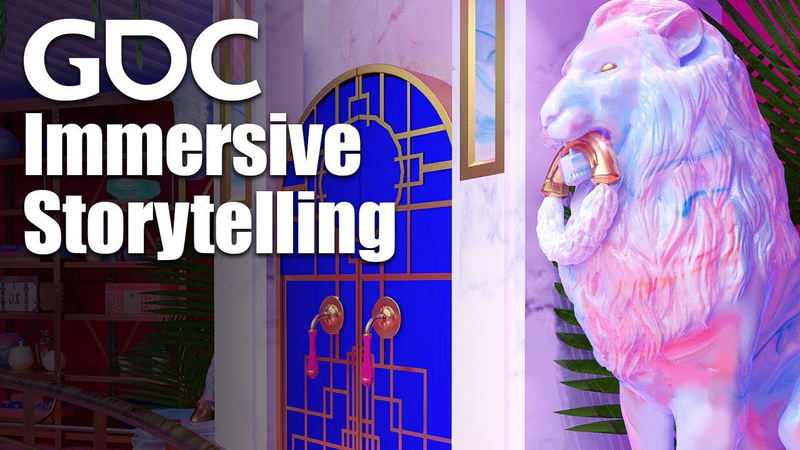
The Design of HoloVista: Crafting Mechanics for Immersive Storytelling
The development of HoloVista centers on a thematics-first design philosophy, prioritizing the exploration of memory, identity, and the influence of social media as the foundational pillars of the experience.
- Prioritizing thematic pillars—specifically memory, identity, and social media influence—over initial influencer-based concepts allowed HoloVista to establish a cohesive narrative identity.
- The development team improved narrative clarity by pivoting from a complex branching structure to a more focused, linear experience.
- Replacing diegetic realism with structured, intuitive mechanics like camera-based interfaces and hidden-object photography increased player immersion.

Advocacy Microtalks: Cultivate Your Karass
The game industry is increasingly leveraging interactive media as a sophisticated tool for civic engagement, social impact, and cultural preservation.
- Game developers are increasingly using interactive media as infrastructure for civic engagement, utilizing techniques like pre-bunking in titles such as Harmony Square to combat disinformation.
- Social-impact projects are shifting toward sustainable, co-designed models that localize content for specific communities to overcome high production costs and accessibility barriers.
- Historical role-playing simulations and games that force players to navigate ideological differences are being used to foster empathy and epistemic humility, provided developers maintain neutrality.

Open Salaries: Ensuring Equitable Pay Through Pay Transparency
Open salary policies serve as a critical mechanism for achieving organizational pay equity and addressing systemic wage disparities.
- Open salary policies improve pay equity and trust by replacing opaque negotiation-based compensation with a standardized, rubric-based system that links specific job levels and expectations to clear salary bands.
- Lightforge Games, which has practiced open salaries for three years with nearly 40 employees, maintains a 3.1x pay ratio between its lowest and highest-paid staff, demonstrating that transparency does not require flat compensation.
- Younger workers prioritize corporate transparency and ethical leadership, with Millennials and Gen Z ranking employee well-being as their top workplace concern and diversity/inclusion as their third.
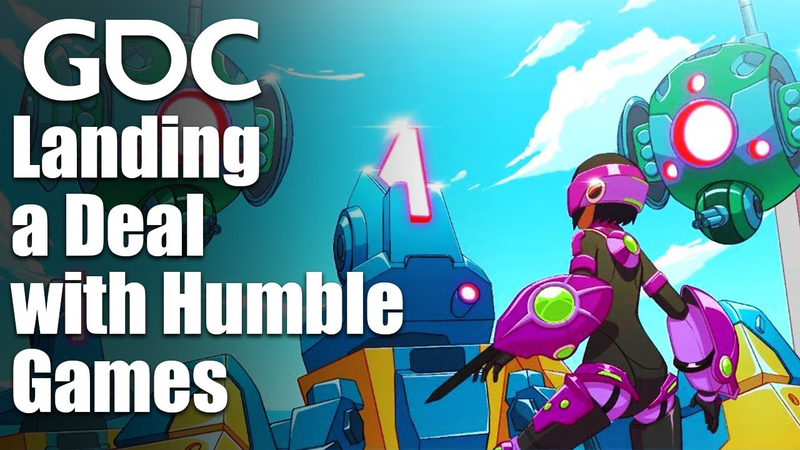
Finding Inspiration and Planning Luck: A Story of a Solo Dev-Dad of Color
The development of Protodroid DeLTA serves as a case study for the viability of solo game creation when balanced against the demands of professional life and fatherhood.
- Solo developers can mitigate the risks of independent game creation by using an iterative development process that aligns ambitious design goals with the practical constraints of limited time and resources.
- Success in the competitive gaming industry is best achieved by treating networking, recruitment, and outreach as statistical probabilities to manufacture opportunities for partnerships and publishing deals.
- Sustaining a multi-year development cycle while balancing professional and family responsibilities requires a disciplined schedule of working nights, weekends, and vacation time fueled by a clear personal mission.
GDC Q&A: How to Submit a Talk, Session or Panel to GDC 2024
Securing a speaking slot at the Game Developers Conference requires a strategic focus on delivering high-value, actionable insights that directly benefit the professional development of the gaming community.
- Proposals must prioritize actionable, technical depth over high-level concepts or marketing pitches to demonstrate unique expertise.
- The GDC advisory board favors original content that provides new insights not already documented in the GDC Vault.
- First-time speakers should target a 30-minute session format to maintain a focused narrative and avoid the complexity of hour-long presentations.
Play With Your Audience: Enhancing Your Social Strategy Through Theater
The primary objective of this strategy is to enhance game community engagement and brand awareness by utilizing theatrical performance techniques to develop a character-driven social media presence.
- Treating a brand voice as a character rather than a corporate entity fosters more authentic and playful community engagement, particularly for indie titles and narrative-driven games.
- Applying theatrical principles like the improvisational 'yes, and' technique and defined personality pillars allows community managers to build a consistent, approachable brand persona.
- Successful implementations, such as the Bear and Breakfast Twitter account and the Spamton Sweepstakes charity event, have demonstrated engagement rates and follower growth that significantly exceed standard industry benchmarks.
Benefits of Missing Out: What 'Cyberpunk 2077' Taught Us About Non-Linear Level Design
The pursuit of player freedom in Cyberpunk 2077 necessitates a sophisticated approach to level design that balances narrative cohesion with diverse gameplay archetypes.
- Level designers should embrace the 'Benefits of Missing Out,' accepting that players can miss content if that absence is the result of choosing a different, equally rewarding path.
- The 'generic path' should not be the default difficulty; instead, playstyle-specific paths should offer the least resistance to reinforce player power fantasies, while generic paths serve as a challenging fallback.
- To enhance the perceived distance between branching paths, designers should prioritize limited visibility and difficult access points rather than relying solely on physical distance, which is often constrained by production realities.