
Game Developers Conference
Game Developers Conference (GDC, now the GDC Festival of Gaming) is the professional event for the games industry. It publishes recorded talks and interviews, annual industry survey reports such as the State of the Game Industry, and news articles.
Documents
Designing for AR: A Postmortem on the Development of 'Woorld'
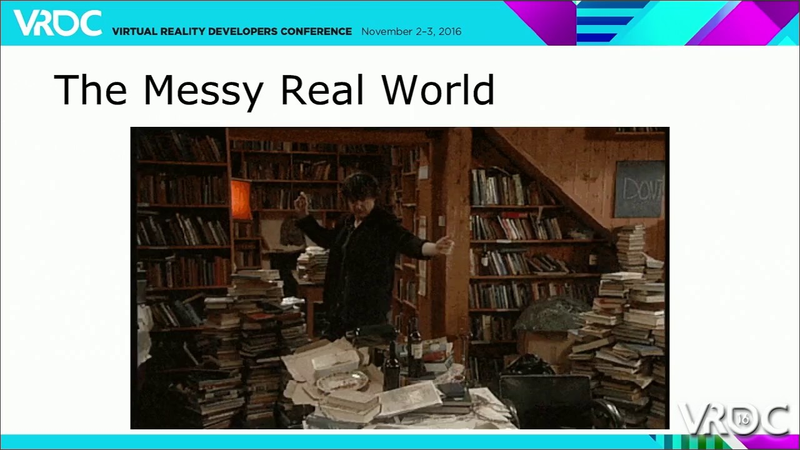
The development of the augmented reality title Woorld centers on the challenge of creating cohesive virtual experiences within unpredictable, user-defined physical environments.
- Successful AR design requires abandoning fixed, developer-controlled camera perspectives in favor of intuitive guidance systems that allow users to navigate unpredictable physical environments.
- To manage volatile surface data, the development team utilized custom edge-detection algorithms and smoothing processes to ensure virtual objects interacted naturally with noisy real-world spaces.
- Performance optimization for mobile hardware was achieved through low-poly asset modeling, texture atlasing, and asynchronous audio loading to mitigate battery drain and thermal output.

Data and Insights in the VR Market
The virtual reality market in 2016 is defined by a strategic recalibration toward realistic growth expectations, moving away from initial hype toward a focus on high-end hardware limitations and niche accessibility.
- The 2016 VR market is shifting from initial hype toward realistic growth expectations, prioritizing high-quality experiences over mass-market volume due to a nascent install base.
- PlayStation VR has successfully captured a strategic middle ground by balancing immersive quality with broader consumer accessibility, outperforming the high entry costs and GPU requirements of PC-based systems.
- Early adopters are a high-spending demographic where revenue is strongly correlated with positive user review scores rather than traditional metrics like content length or aggressive pricing.
Animation Style and Process for Broken Age
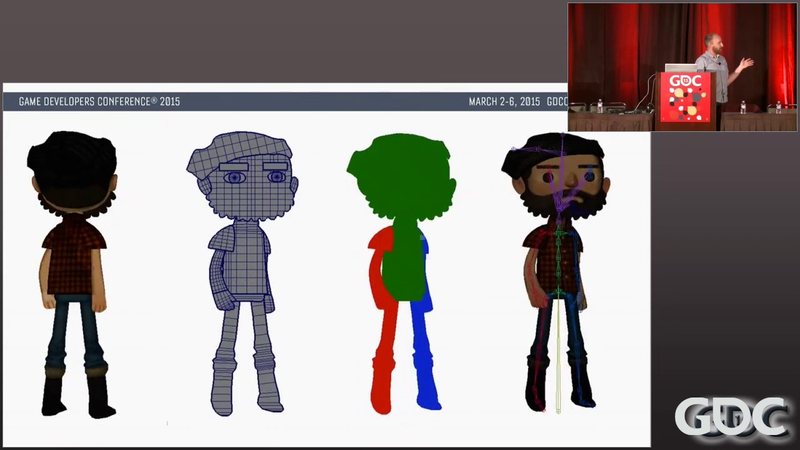
The animation pipeline for Broken Age centers on a 2.5D hybrid system designed to translate intricate, painterly 2D art into a functional, dialogue-heavy interactive environment.
- The development team reduced animation data size from 7.4 gigabytes to 36 megabytes by using a joint-driven texture plane system instead of traditional 3D modeling or sprite sheets.
- A custom cutscene editor and automated lip-sync tools allowed a single animator to produce five hours of scripted dialogue by mapping phonemes directly to character joints.
- The animation pipeline utilized a 2.5D hybrid system to preserve Nathan Stapley’s painterly 2D art style while ensuring technical efficiency in a dialogue-heavy environment.
How to Build an Indie Game Co-Working Space
Establishing a successful co-working space for independent game developers requires a strategic balance of community building, financial discipline, and operational resilience.
- Establishing a sustainable co-working space requires a core group of committed members to reach the break-even point and offset significant upfront costs like security deposits, renovations, and equipment.
- Founders must prioritize operational resilience by utilizing automated management software to handle recurring billing and administrative tasks efficiently.
- The Gamenest model, established in 2015, demonstrates that success in high-cost urban environments like San Francisco depends on thorough research into local zoning and accessibility regulations.
Reimagining a Classic: The Design Challenges of Deus Ex: Human Revolution
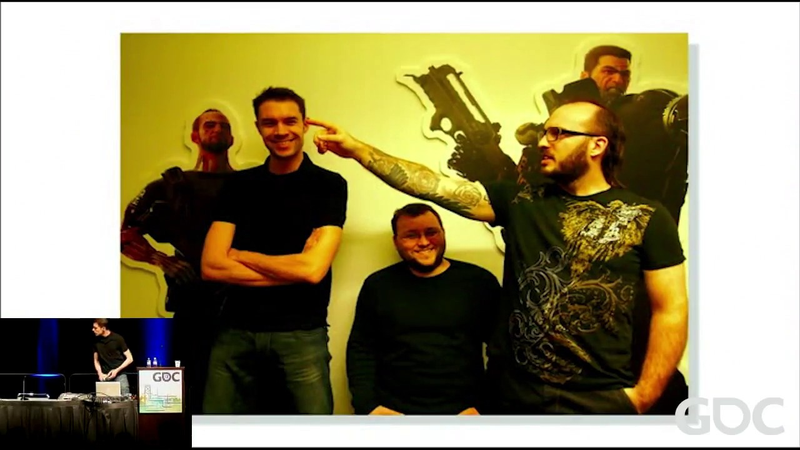
The development of Deus Ex: Human Revolution centered on the challenge of modernizing a beloved franchise while preserving its core identity.
- To ensure design consistency, the Eidos Montreal team established core pillars—choice, consequence, and spectacular/rewarding gameplay—which were physically posted on walls to guide all development decisions.
- The 'Blueprint' process was used to map the entire game in advance, documenting every location, conversation, and player choice to ensure a cohesive, story-driven experience.
- Balancing the game was achieved by separating the critical path from exploration, ensuring players could complete the game without needing to find every optional item.
Indie Development & The Economy of Favors
The modern independent game development landscape has transitioned from a solitary endeavor into a complex, interdependent ecosystem defined by an economy of favors.
- Independent game development has shifted from solitary work to an interdependent 'economy of favors' where professional tribes exchange essential resources like marketing, production management, and QA testing to remain viable.
- Collaborative networks formed through shared workspaces, game jams, and community events serve as a primary risk-mitigation strategy to overcome high market barriers to entry and discoverability without requiring large capital investments.
- Formal legal agreements regarding intellectual property are mandatory in collaborative projects to prevent conflicts of interest and protect the long-term ownership and creative integrity of the developer's work.
The 2016 Narrative Innovation Showcase
Modern game design is undergoing a significant shift toward experimental storytelling, moving away from traditional branching paths and cinematic cutscenes in favor of mechanics that prioritize player agency and emotional specificity.
- Modern narrative design is shifting away from traditional branching paths and cinematic cutscenes toward mechanics that treat storytelling as a sculptural or collaborative experience.
- Games like Icebound and Elenor demonstrate a move toward systems that replace static choices with thematic editing and time-loop constraints to subvert player power fantasies.
- The Church in the Darkness utilizes randomized, modular narrative systems and combinatorics to explore complex, shifting moral landscapes that linear plots cannot achieve.

Luck and Skill in Games
The interplay between luck and skill is a fundamental component of game design, serving as the primary driver of indeterminacy—a necessary quality for any engaging game.
- Luck and skill are not a binary dichotomy but a multidimensional relationship where the perceived level of luck depends on a player's ability to navigate the game's decision tree.
- Adding luck to a game does not remove skill, but it increases the number of trials required to achieve a consistent, measurable result.
- Designers should use luck as a strategic tool to broaden the audience and facilitate social play, as it provides psychological comfort by allowing players to attribute losses to chance.
One Up: How Our Game Saved a Life
Pixelberry Studios operates on the core philosophy that mobile gaming can function as a powerful vehicle for social change without sacrificing commercial viability or entertainment value.
- Pixelberry Studios successfully integrated anti-cyberbullying narratives into 'High School Story' by partnering with the Cyber Smile Foundation, reaching over 5 million players.
- The initiative generated $350,000 in charitable contributions, demonstrating that socially conscious content can drive significant philanthropic impact.
- Data shows that embedding social impact features and support resources into gameplay bolsters player engagement and retention rather than alienating the user base.
Games Accelerators for the Arts, Not for Monetization
The Stugan game accelerator, established in Sweden in 2014, serves as a non-profit initiative designed to foster the artistic development of independent games rather than prioritizing commercial monetization.
- Stugan is a non-profit Swedish game accelerator founded in 2014 that prioritizes artistic innovation over commercial monetization by taking zero equity from participating developers.
- The program hosts 20 to 23 global developers for an eight-week, distraction-free residency in the Swedish wilderness to focus exclusively on creative project development.
- Operational costs for the inaugural year totaled approximately $150,000, funded through a mix of private sponsorships, regional grants, the Swedish Innovation Fund, and in-kind facility donations.
Reclaiming My Soul: Why I Quit Making F2P Social Games
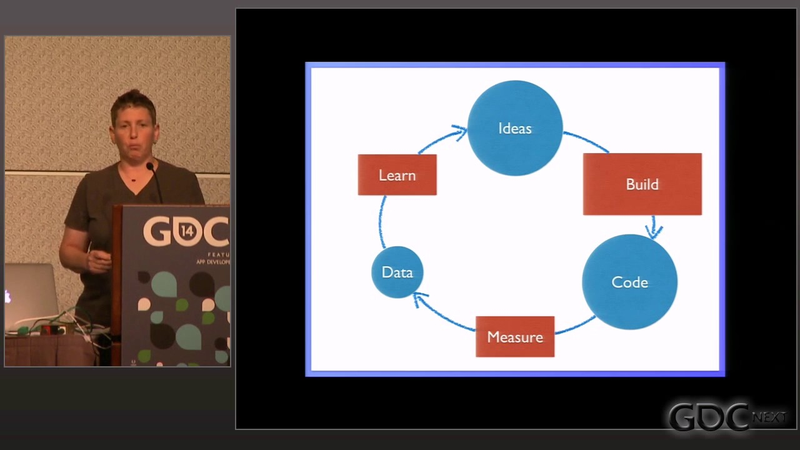
This analysis examines the transition from free-to-play (F2P) mobile social game development to AAA production, focusing on the ethical and creative challenges inherent in the F2P model.
- The F2P mobile model frequently prioritizes 'whale' monetization, where development resources are disproportionately allocated to satisfy a tiny fraction of high-spending players rather than the broader user base.
- Data-driven design in F2P often shifts focus from artistic innovation to managing financial funnels, where metrics like retention funnels and user acquisition costs dictate development priorities.
- The industry's reliance on 'fast follows' and cloning successful mechanics undermines creative integrity and incentivizes the release of incomplete or buggy 'minimum viable products.'

Faerie Dust and Sparkles: Bringing Your AI Characters to Life
This presentation explores the craft of designing non-combat artificial intelligence (AI) to create believable, lifelike characters within video games.
- Achieve character immersion by prioritizing behavioral consistency over graphical fidelity, ensuring NPCs demonstrate constant, subtle activity like breathing, fidgeting, and shifting attention.
- Avoid the unnatural precision of mathematical paths and rigid animation loops by 'fuzzifying' movement through asynchronous blending and varying playback speeds.
- Utilize a bottom-up design methodology that layers granular behaviors—such as head-tracking, blinking, and environmental reactions—to construct complex, lifelike performances.