
Game Developers Conference
Game Developers Conference (GDC, now the GDC Festival of Gaming) is the professional event for the games industry. It publishes recorded talks and interviews, annual industry survey reports such as the State of the Game Industry, and news articles.
Documents
Free Range AI: Creating Compelling Characters for Open World Games
Creating compelling characters in open-world environments requires a fundamental shift from rigid, scripted sequences toward systemic, player-centric artificial intelligence.
- To maintain open-world longevity, developers should move beyond simple scripted events by using behavioral annotation, where level designers place objects in the environment that dictate AI positioning and actions.
- Avalanche Studios utilizes modular behavior trees that support 'external trees,' allowing game objects to dynamically load and execute specific logic or animations without hard-coding.
- External state machines enable developers to extend NPC capabilities on the fly by loading in new states, transitions, and animations, which can be disconnected once the specific interaction is complete.
Fast and Flexible: Technical Art and Rendering For The Unknown
This 2016 presentation outlines the technical strategies employed by Sony London Studio to navigate the uncertainties of early virtual reality development on the PlayStation 4.
- Sony London Studio achieved a 25% reduction in GPU frame time by implementing a resolution gradient technique that masks peripheral pixels to maintain the 60 FPS requirement for VR.
- The studio utilized a tiled forward renderer in their LSS DK engine to avoid the constraints of G-buffers, allowing for rapid experimentation with varied shading models and stylized lighting.
- Real-time, voxel-based Light Fields were adopted to replace traditional light maps, providing superior ambient lighting and depth while accelerating the artistic iteration process.

Animation Bootcamp: Animating Cameras for Games
This presentation provides a foundational guide for game developers on applying cinematography principles to virtual cameras, arguing that understanding physical camera mechanics is essential for creating immersive, believable, and emotionally resonant gameplay and cinematic experiences.
- Stabilizing the camera’s rotation relative to the horizon is the primary method for reducing motion sickness, as it mimics human biological stabilization mechanisms more effectively than adjusting field-of-view settings.
- Camera movement should incorporate subtle, human-like imperfections, such as those simulated by jib or dolly constraints, to avoid the overly smooth or erratic motion that breaks immersion.
- Focal length choices must be carefully selected as they directly impact the perception of character models and the spatial scale of the game environment.
4.5 Million Players in 100 Days: Lessons from Dying Light
The success of the open-world survival game Dying Light, which reached 4.5 million players within its first 100 days of release in 2015, is attributed to a strategic combination of pre-launch feature communication and aggressive post-launch community engagement.
- Techland achieved 4.5 million players within the first 100 days of Dying Light's release by focusing on clear communication of core game pillars, such as melee combat, the day-night cycle, and co-op play.
- The development team maintained pre-release momentum by releasing weekly 'Dying Highlights' gameplay videos rather than traditional marketing trailers, showcasing specific features and humorous scenarios.
- Post-launch engagement was driven by a robust telemetry system that tracked player behavior, resulting in a high 35-40% completion rate for the PC version.
Texturing Uncharted 4: A Matter of Substance (presented by Allegorithmic)
The production of Uncharted 4 marked a pivotal shift in high-end game development by integrating a node-based, procedural texturing pipeline to manage the creation of approximately 3,000 assets.
- Naughty Dog integrated a node-based, procedural texturing pipeline using Substance Designer and Substance Painter to manage the production of approximately 3,000 assets for Uncharted 4.
- The team utilized a modular library of simple, reusable nodes rather than monolithic tools, allowing 80 percent of the game’s assets to be produced within the Substance suite.
- Standardizing the material pipeline enabled seamless collaboration between internal staff and external outsourcing partners while maintaining a consistent artistic vision.

Asking the Hard Questions: Morality in Narrative Design
This analysis explores the challenges of integrating morality and meaningful choice into narrative game design.
- Current morality systems often fail because they rely on superficial binary choices that function as aesthetic markers rather than impactful, long-term lifestyle decisions.
- Excessive branching narratives frequently lead to inconsistent characterization and a lack of meaningful gameplay incentives for players who choose neutral paths.
- Effective narrative design should integrate moral consequences into core gameplay mechanics, such as resource management or character relationship systems, instead of using simple point-based tracking.

Shipping Kills Studios: A Study of Indie Team Dynamics
The transition from creative development to post-launch operations represents the most significant existential threat to independent game studios.
- The transition from creative development to post-launch operations is the primary existential threat to indie studios, as the skills required for innovation differ fundamentally from those needed for business administration and live support.
- Studios must treat post-launch support as a calculated business operation rather than an afterthought to prevent the burnout and morale decline that often follow a product release.
- To protect core creative talent from exhaustion, studios should outsource repetitive support tasks like community engagement and bug tracking to contractors.

Teaching AI-Based Game Design
The educational approach to AI-based game design focuses on empowering students to integrate advanced computational technologies into their artistic and design practices.
- AI-based game design is most effective when AI is treated as a foreground design element rather than a background utility, allowing students to move beyond standard game conventions.
- Anchoring complex AI systems in real-world metaphors, such as personality psychology or social behavior, is the primary driver of innovative and accessible game design.
- The 'SimCity effect'—using rich metaphors to make complex systems transparent—is a critical design strategy to avoid the 'tailspin effect,' where AI logic remains invisible and confusing to the player.
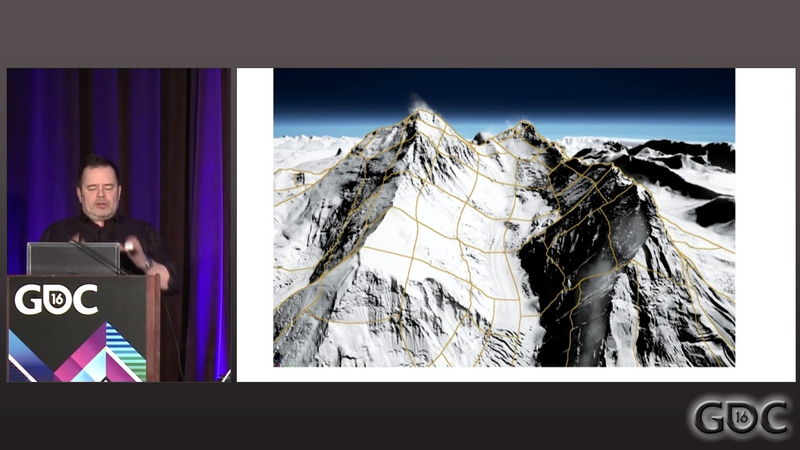
Magical Realism: The Art of Creating Everest in Your Living Room with VR (presented by NVIDIA)
The development of Everest VR serves as a blueprint for achieving deep emotional immersion in virtual reality through the synthesis of photorealistic graphical fidelity and psychological sensory manipulation.
- Achieving photorealistic VR immersion requires processing over 1.5 trillion polygons using stereo photogrammetry and Unreal Engine.
- Performance optimization for high-fidelity VR is maintained through custom mesh patching, advanced texture streaming, and NVIDIA’s Multi-Res shading.
- Motion sickness is mitigated by utilizing black box framing techniques and prioritizing vertical movement over horizontal traversal to ground the user.

Automated Level of Detail Generation for Halo Reach
The automated Level of Detail (LOD) generation system developed for Halo: Reach addressed the studio’s need for a scalable, high-performance rendering solution as the game’s visual fidelity requirements increased.
- The automated LOD system for Halo: Reach achieved significant performance gains, rendering character impostors 10 to 20 times faster and static environment objects 50 to 100 times faster than original models.
- The pipeline utilizes voxelization via six-axis orthogonal projection to clean up geometry, effectively automating 90 to 95 percent of asset simplification tasks.
- To optimize distant character animation, the system maps original vertex weights to a single dominant bone, drastically reducing computational overhead.
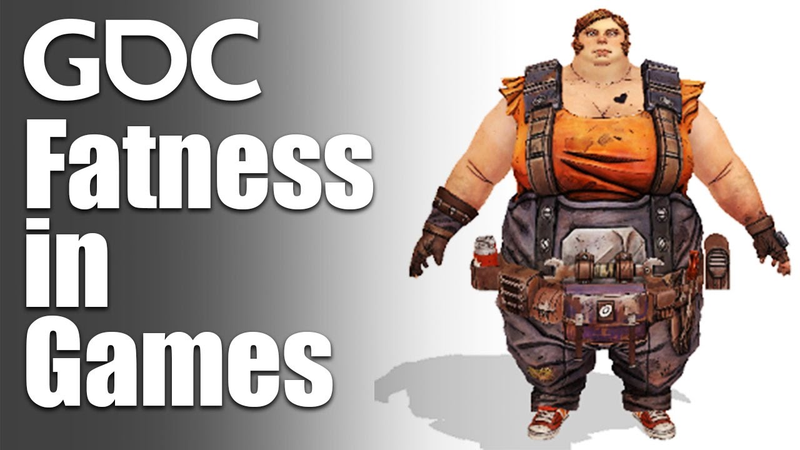
Portrayals and Pitfalls of Fatness in Games
Video games frequently perpetuate systemic fatphobia by relying on reductive tropes that equate larger body types with moral failings, incompetence, or comedic relief.
- Video game character design frequently reinforces systemic fatphobia by using larger body types as shorthand for moral failings, incompetence, or comedic relief.
- Fat characters are often relegated to the 'sitcom effect,' where their physical appearance is treated as a punchline or an object of pity rather than a component of a well-rounded character.
- Nuanced representations of fat characters remain rare outliers, with titles like Borderlands 2, Pokémon X/Y, and Saints Row serving as exceptions to an industry-wide lack of body diversity.
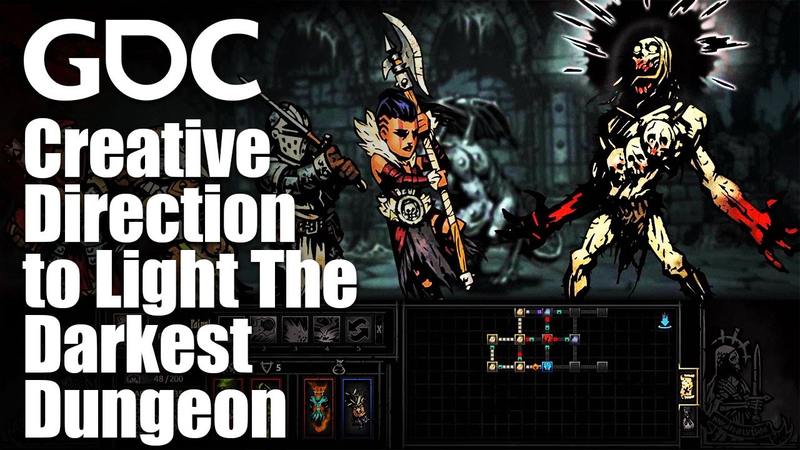
A Torch in the Dark: Using Creative Direction to Light The Darkest Dungeon
Maintaining a rigid, externalized creative vision serves as the primary defense against scope creep and development drift for independent studios.
- A clearly articulated, externalized creative vision acts as a decision-making razor, allowing developers to filter features and resolve conflicts during the uncertainty of production.
- Red Hook Studios defined the core of Darkest Dungeon as an uncompromising, Gothic, low-fantasy, Lovecraftian experience centered on making permanent decisions with imperfect information.
- The team rejected standard RPG tropes like isometric camera angles and exhaustive lore exposition to maintain a claustrophobic, uncertain atmosphere that forces players to experience the game's horror.