
Game Developers Conference
Game Developers Conference (GDC, now the GDC Festival of Gaming) is the professional event for the games industry. It publishes recorded talks and interviews, annual industry survey reports such as the State of the Game Industry, and news articles.
Documents
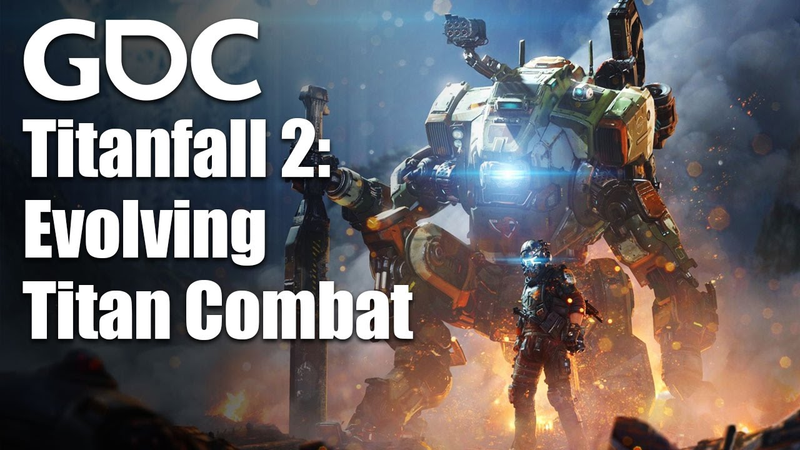
Solving Titan-Sized Problems: Evolving Titan Combat in Titanfall 2
The evolution of Titan combat in Titanfall 2 centers on transforming high time-to-kill (TTK) gameplay from a repetitive, bullet-sponge experience into a dynamic, skill-based system.
- Titanfall 2 transitioned from generic, customizable loadouts to distinct, role-based Titan classes inspired by fighting games and MOBAs to foster complex ability synergies.
- The combat model shifted to a high time-to-kill (TTK) system by replacing hit-scan weapons with low-frequency, high-impact projectiles to reward mechanical precision and positioning.
- Developers mitigated the risk of stagnant, unkillable team compositions by removing automatic health regeneration and enforcing unique, character-specific loadouts.
The 2017 Game Developers Choice Awards
The 2017 Game Developers Choice Awards served as a comprehensive celebration of the industry’s evolution, balancing commercial blockbusters with innovative independent titles.
- Overwatch was named Game of the Year at the 2017 Game Developers Choice Awards, reflecting its significant cultural impact during that period.
- The 2017 awards ceremony formally recognized the industry's expansion into new platforms by establishing a dedicated virtual reality category, with Job Simulator winning the inaugural award.
- Pokémon Go was highlighted for its role in driving mobile innovation, underscoring the industry's shift toward diverse and accessible gameplay experiences.
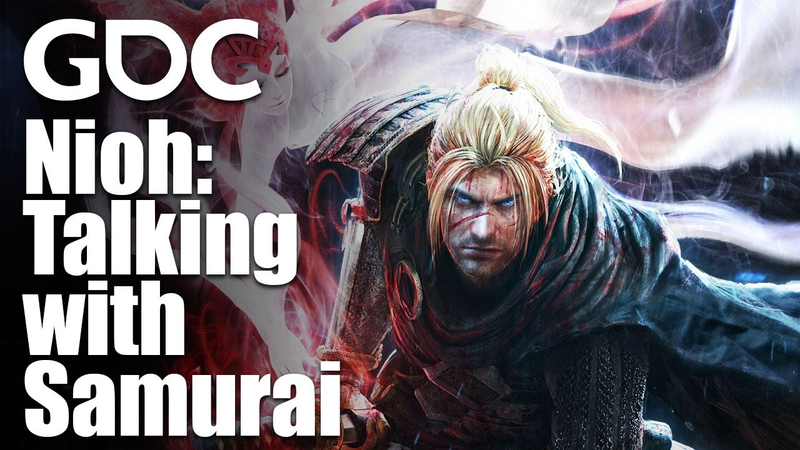
Nioh: Talking with Samurai
The development of Nioh represents a strategic pivot toward a hardcore, challenging action experience designed specifically for dedicated players.
- The development team utilized public alpha and beta demos as iterative development tools rather than marketing assets, resulting in nearly 800,000 downloads that provided more actionable data than traditional focus groups.
- Developers used quantitative telemetry, such as tracking specific player death locations, to identify and resolve gameplay friction points throughout the development cycle.
- The project secured a publishing partnership with Sony and improved market viability by using direct player feedback to refine technical performance and gameplay mechanics.

The 2017 Independent Games Festival Awards
The 2017 Independent Games Festival Awards served as a pivotal platform for celebrating creative experimentation and the expansion of the medium’s social responsibility.
- Quadrilateral Cowboy won the 2017 Seumas McNally Grand Prize and the Excellence in Design award, establishing it as the top-honored project of the ceremony.
- The 2017 festival introduced the Alt.Ctrl.GDC award, which was presented to Fierce Sphere to recognize innovation in non-traditional hardware and interactive design.
- Key category winners included Hyper Light Drifter for visual art, Everything for audio, Lady Killer in a Bind for narrative, and Oikospiel Book I, which received the Nuovo Award for unconventional design.

Pokemon Go & Designing Interactive Games for the Real World
The development of Pokémon GO represents a strategic effort to transform mobile gaming by integrating GPS and sensor technology to encourage physical movement and real-world exploration.
- Pokémon GO achieved massive scale by leveraging GPS and sensor technology, resulting in over 650 million downloads and billions of kilometers walked by players within its first year.
- The game’s development strategy utilized the foundational location-based mechanics established in Ingress to successfully bridge virtual gameplay with physical-world exploration.
- Technical performance was optimized for diverse mobile hardware by using the Unity engine, a thumb-centric interface, and lightweight, stylized visuals to ensure accessibility across varying connectivity levels.
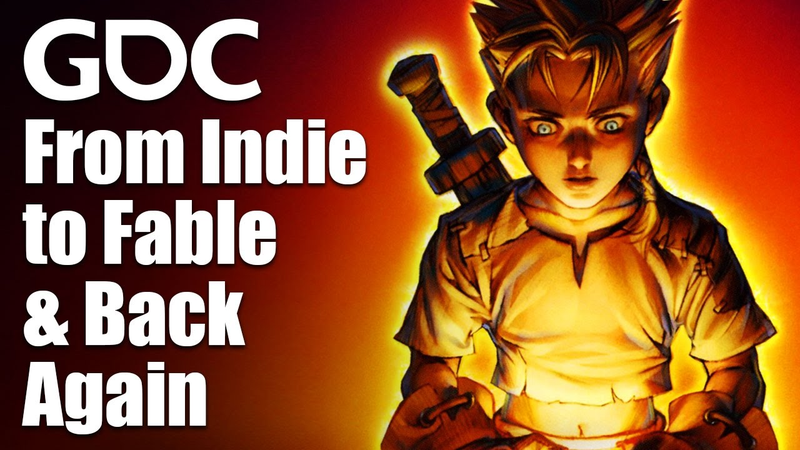
From Indie to Fable & Back Again: 30 Years of "Wisdom"
Effective game development requires a fundamental shift in perspective, moving away from the developer’s internal familiarity toward the player’s actual experience.
- Development teams must prioritize the player's perspective over internal familiarity, as players lack the inherent context of the design process.
- To combat the Ringelmann effect—where individual productivity declines as group size increases—organizations should maintain smaller, cohesive teams with clear role definitions.
- Developers should cultivate a T-shaped skill set, combining deep expertise in one area with broad knowledge of adjacent disciplines to improve cross-functional empathy and collaboration.
The Art of Destiny's First-Person Animation
First-person animation in modern shooters requires a delicate balance between maintaining high-speed, responsive gameplay and establishing a tangible sense of physical presence.
- Prioritize immediate controller feedback and fluid motion transitions to maintain player agency and eliminate disruptive input delays.
- Achieve a grounded physical presence by layering first-person animations over third-person rigs and using real-time data to drive subtle movement reactions.
- Decouple camera animation from character locomotion to enable naturalistic head-leading motions that mimic human equilibrium without causing motion sickness.
What We Can Learn from "Classic" Game Music
The evolution of game audio reflects a transition from the rigid technical constraints of the 1990s to the expansive, high-fidelity capabilities of the modern global entertainment market.
- The most effective game audio strategy balances high-production resources with self-imposed creative constraints to maintain artistic focus and avoid the friction of complex programming workflows.
- Strong, melodic, and anthemic compositions remain the industry standard for defining player experience, regardless of the transition from 1990s technical limitations to modern high-fidelity capabilities.
- Early 1990s game audio development required composers to function as both musicians and programmers, often necessitating the creation of proprietary tools to manage adaptive music and game state logic.
Board Game Design Day: The Making of Pandemic Legacy
The development of Pandemic Legacy represents a pivotal shift in tabletop design, moving from static, repeatable rule sets to evolving, narrative-driven experiences.
- Pandemic Legacy utilizes a 12-month campaign structure to deliver narrative content, balancing player engagement by setting the campaign length at approximately 15 games to ensure players feel the value of the purchase without experiencing burnout.
- The designers implemented a 'consolation prize' mechanic where losing groups receive additional event cards and funding in subsequent games, allowing different skill-level groups to maintain a consistent, challenging experience.
- To foster emotional investment, the game requires players to name their characters and tracks their personal history, including permanent 'scars' or phobias that persist across the campaign.
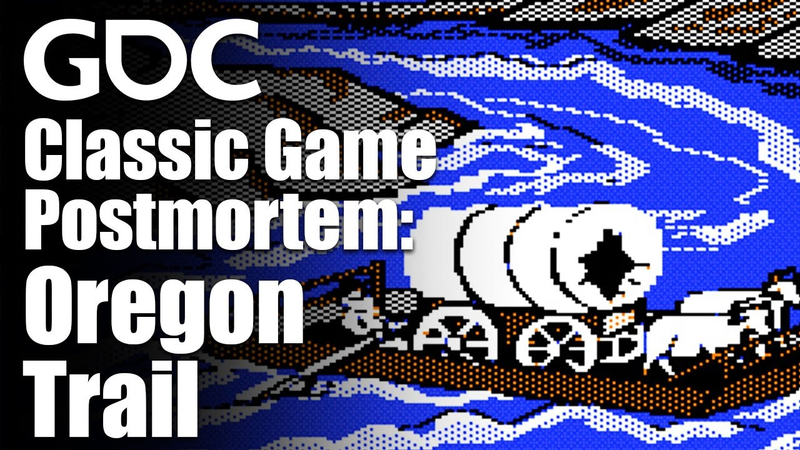
Classic Game Postmortem: Oregon Trail
The Oregon Trail originated in 1971 as a classroom simulation designed to transform history education through interactive technology.
- The Oregon Trail was created in 1971 by student teachers Don Rawitsch, Bill Heinman, and Paul Dillenberger to shift educational computing away from math-centric applications toward interactive history simulations.
- The game achieved significant commercial success after moving to the Minnesota Educational Computing Corporation (MECC), eventually accounting for one-third of the company's annual revenue.
- Developers enhanced the game's historical authenticity by integrating primary source materials from historical diaries, which helped facilitate its widespread adoption in schools.
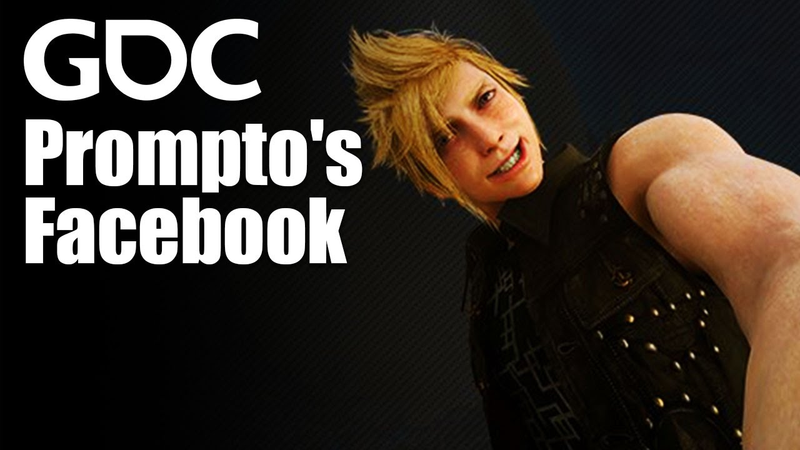
Prompto's Facebook: How a Buddy-AI Auto-Snapshots Your Adventure in FFXV
The development of the photo system in Final Fantasy XV serves as a case study in integrating emotional artificial intelligence into open-world game design.
- The 'Prompto Snapshot' system in Final Fantasy XV was designed to serve as a core storytelling tool, documenting the player's journey to reinforce the narrative of brotherhood and emotional loss within an open-world environment.
- The system operates on three primary design policies: photos must serve as achievements, they must spark player imagination, and they must facilitate gameplay sharing by automating the process to overcome the friction of manual screenshotting.
- To manage the volume of content, the system captures over 20 photos per day but automatically curates and limits the final selection to 8–12 images to ensure the player is not overwhelmed during the daily review process.

The Law of Ideas in Game Development
Intellectual property management in the game development industry relies on a nuanced understanding of how legal protections apply to creative and functional assets.
- Establishing a clear chain of title through documented ownership, licenses, and work-for-hire agreements is the most critical operational requirement for securing insurance and facilitating future funding or acquisitions.
- Copyright law protects only expressions fixed in a tangible medium, meaning abstract game concepts and mechanics are generally ineligible for legal protection.
- Developers should prioritize the maintenance of trade secrets through rigorous internal security protocols and non-disclosure agreements as a cost-effective alternative to expensive patent litigation.