
Game Developers Conference
Game Developers Conference (GDC, now the GDC Festival of Gaming) is the professional event for the games industry. It publishes recorded talks and interviews, annual industry survey reports such as the State of the Game Industry, and news articles.
Documents
The 2017 Indie Soapbox
Independent game development thrives when creators prioritize authentic personal expression over market trends.
- Indie developers should prioritize authentic personal expression and creative integrity over chasing market trends to foster deeper audience connections.
- Sustainable production requires realistic task estimation and the rejection of crunch culture to treat game development as a long-term craft rather than a sprint.
- To prevent feature creep, developers should implement formal conceptualization and requirement-freezing while utilizing hybrid processes to optimize limited resources.

Everything's on Fire and No One Knows What to Do (In Game Writing)
Modern game narrative design functions as a highly collaborative, iterative process that demands a departure from solitary creative work.
- Modern narrative design requires shifting from solitary creative work to a collaborative, iterative process integrated directly into the broader game production pipeline.
- Writers should employ modular design strategies, such as floating NPCs and narrative choke points, to ensure story elements remain resilient during frequent project rescoping.
- Effective narrative management relies on data-driven communication, where writers quantify the impact of requested changes to help producers balance creative vision with technical constraints.
Level Design Workshop: Architecture in Level Design
The application of architectural principles to level design serves as a powerful tool for establishing mood, guiding player behavior, and creating cohesive game environments.
- Architectural consistency in structural layout, materials, and massing is more critical for player immersion than achieving photorealism.
- Designers should establish a 'party'—a fundamental organizational logic—to ensure that circulation, massing, and materials create a unified atmosphere.
- Spatial geometry should be used to intuitively guide player behavior and navigation, reducing the need for explicit signposting or decorative detail.
Creating Complex AI Behavior in Stellaris Through Data-Driven Design
Stellaris employs a sophisticated, data-driven, utility-based artificial intelligence architecture designed to manage complex decision-making processes within a grand strategy framework.
- Paradox Interactive utilizes a data-driven AI architecture in Stellaris to separate game logic from content, allowing designers to modify NPC behavior via scripts without requiring constant code recompilation.
- The system uses a weighted algorithm to drive AI decision-making, where designers assign values to specific actions (such as ship construction or perk selection) that the AI evaluates against current game states.
- Data-driven design enables rapid content expansion; for example, implementing complex features like traditions and ascension perks required less than a day of programming work because the underlying logic was already modular.
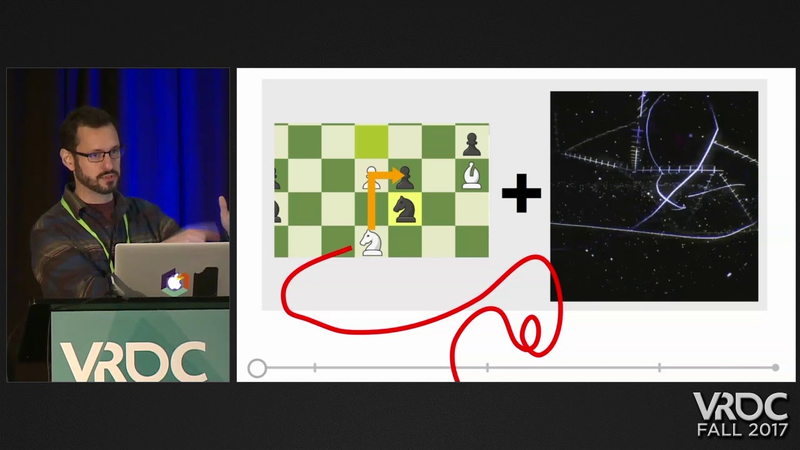
Three Years of Tilt Brush
Tilt Brush originated as a serendipitous byproduct of a virtual reality chess experiment, where debug trails were repurposed into a functional 3D painting tool.
- Tilt Brush originated as a two-day prototype created from debug trails in a VR chess experiment, demonstrating the value of repurposing game development assets.
- The project successfully transitioned from an independent studio to a Google-backed product by applying agile gaming workflows like particle rendering and rapid iteration to non-gaming VR.
- To scale development after the 2015 Google acquisition, the team launched an Artist in Residence program involving 60 professional creators to stress-test features and inform product direction.
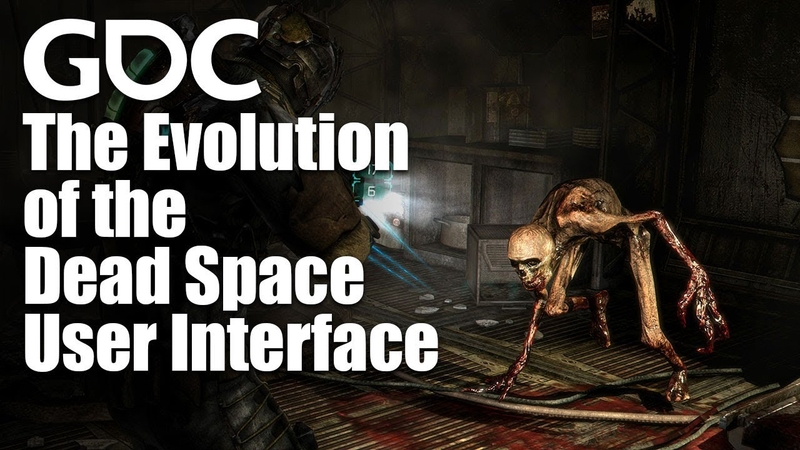
Crafting Destruction: The Evolution of the Dead Space User Interface
The design philosophy behind the Dead Space franchise centers on the integration of diegetic user interfaces to heighten player immersion within a sci-fi horror setting.
- Diegetic UI design prioritizes immersion by integrating essential information like health and inventory directly into the game world rather than using traditional screen overlays.
- The development of Dead Space utilized particle systems to project interface elements that react to environmental lighting and depth, grounding the UI in the protagonist's reality.
- The franchise's interface design evolved from the industrial, broken aesthetic of the Ishimura to more advanced, brain-integrated systems in later installments to reflect narrative progression.
eSports Journalism: Challenges and Opportunities
The esports industry is currently undergoing a period of rapid expansion, with major events such as the League of Legends World Championship achieving viewership numbers that rival traditional athletic competitions.
- Esports journalism must pivot from reporting basic match results—now commoditized by platforms like Twitch—to producing analytical, narrative-driven content to remain relevant.
- The industry faces a critical identity crisis caused by the gap between a highly specialized core audience and a broader public hindered by social stigmas and technical illiteracy.
- To establish credibility, journalists must shift away from developer-controlled public relations toward independent, investigative reporting that examines the human implications of professional gaming.

Care and Feeding of Wild Fansites
The modern gaming industry has transitioned from an adversarial stance toward fan-led platforms to a strategic, cooperative model that treats independent sites as essential extensions of the development team.
- Studios should treat independent fansites as strategic extensions of the development team, leveraging community expertise to produce complex wikis and guides that internal teams lack the bandwidth to create.
- Partnerships with fansites serve as a cost-effective mechanism for user acquisition and retention by utilizing community leaders to drive long-term engagement.
- Community managers must synthesize qualitative sentiment into data-driven reports to quantify the return on investment of fan engagement for executive leadership.
Autonomy, Mastery, Purpose - Building a Hyper-Engaged Team
The transition from traditional, high-crunch production models to a philosophy centered on autonomy, mastery, and purpose represents a fundamental shift in managing AAA game development.
- Shift from top-down management to a framework based on autonomy, mastery, and purpose to improve morale and efficiency in AAA development.
- Operational success is driven by a structured seven-week milestone cadence supported by three specific review processes: update, steering, and quality.
- Maintain team integrity during growth by keeping units small and cross-disciplinary, distributing work across multiple spaces or subcontractors rather than expanding individual team sizes.
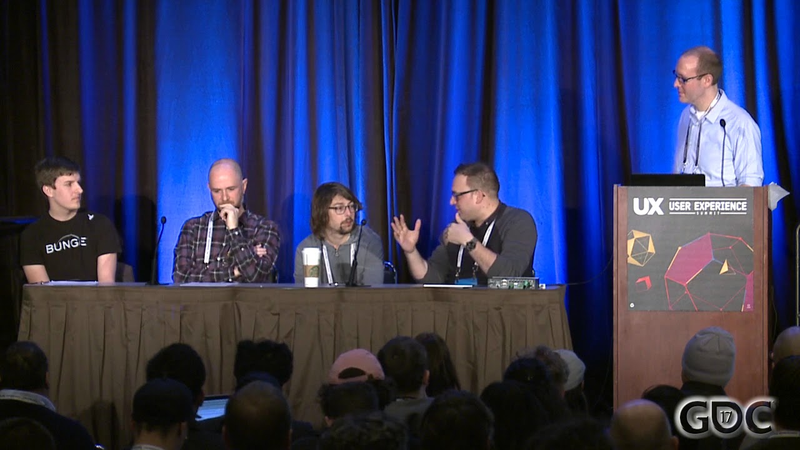
Playing the Middle: Balancing Trust, Creativity, and Business in the Science of User Experience
The integration of user experience research into game development necessitates a delicate equilibrium between quantitative metrics and creative intuition.
- User experience research should function as a diagnostic tool for identifying systemic friction rather than a prescriptive mandate that dictates creative direction.
- Development teams must prioritize identifying the root causes of player issues over reacting to superficial feedback to protect the game's core creative vision.
- Leadership should foster radical transparency by sharing both positive and negative research findings immediately to mitigate confirmation bias and facilitate collective problem-solving.
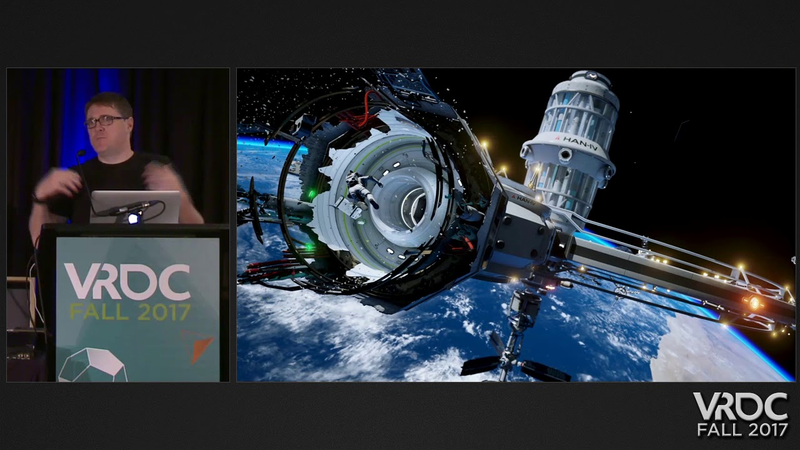
Use Your Illusion: Creating Immersive Virtual Reality Worlds
The creation of immersive virtual reality experiences relies on a delicate balance between intuitive interaction design and the careful management of user focus.
- To minimize disorientation and sensory overload, developers should constrain primary user action within a 210-degree field of view.
- Sense of presence is best established by prioritizing high-fidelity detail for objects within the player's immediate reach.
- Immersion is more effectively achieved through consistent internal logic, diegetic user interfaces, and a unified interaction grammar rather than relying solely on photorealism.
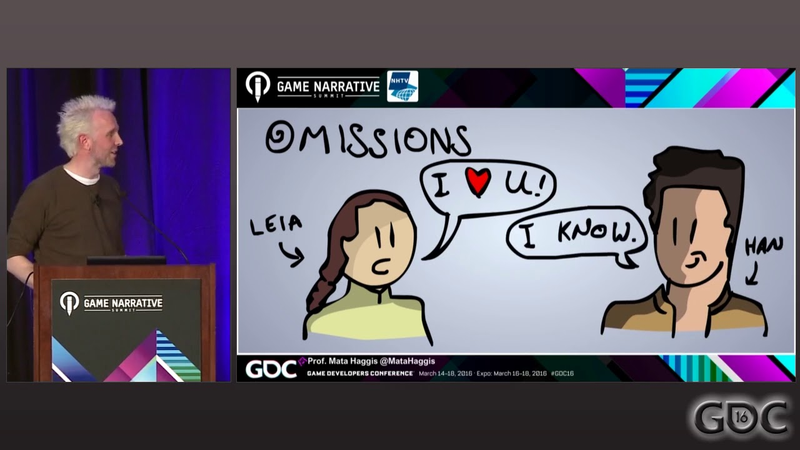
Writing 'Nothing': Storytelling with Unsaid Words and Unreliable Narrators
Narrative design in modern gaming thrives when developers move away from passive, exposition-heavy dialogue in favor of ambiguity and active player interpretation.
- Shift narrative design away from passive, exposition-heavy dialogue toward ambiguity to turn storytelling into an integrated, interactive gameplay element.
- Utilize unreliable narrators who mask intentions through bravado or contradictions to force players into higher levels of cognitive investment.
- Incorporate environmental art, audio, and animation as primary narrative tools to provide layered clues rather than relying on explicit explanation.