
Game Developers Conference
Game Developers Conference (GDC, now the GDC Festival of Gaming) is the professional event for the games industry. It publishes recorded talks and interviews, annual industry survey reports such as the State of the Game Industry, and news articles.
Documents

The 1996 Psychic Detective Postmortem
Psychic Detective represents a significant evolution in interactive cinema, prioritizing a relentless narrative pace over the traditional, disruptive puzzle-solving mechanics common in mid-1990s gaming.
- Psychic Detective utilized a hub-and-spoke technical architecture to manage complex branching paths, resulting in 14 distinct narrative endings.
- The game prioritized narrative pace by replacing traditional, disruptive puzzle-solving mechanics with decision-making integrated directly into live-action footage.
- Development relied on a proprietary authoring environment that bridged video editing and software coding, allowing for narrative flow without the need for external instruction manuals.
Legendary: GoH 5 Lessons from 12 Months of LiveOps Growth
Legendary: Game of Heroes demonstrates that sustained growth in the mobile free-to-play sector relies on a disciplined, data-driven approach to LiveOps.
- Legendary: Game of Heroes achieved a 652% increase in average revenue per daily active user and a 136% rise in daily engagement time over a 16-month period through disciplined LiveOps.
- A compact, cross-functional team of approximately 16 people drove growth by prioritizing high-impact features such as competitive leaderboards, guild systems, and time-sensitive events.
- Long-term success requires a rigorous, data-driven approach that aligns development capacity with measurable business outcomes rather than relying on accidental discovery.
Make Things Worse: Enabling Setbacks for Consequential Play
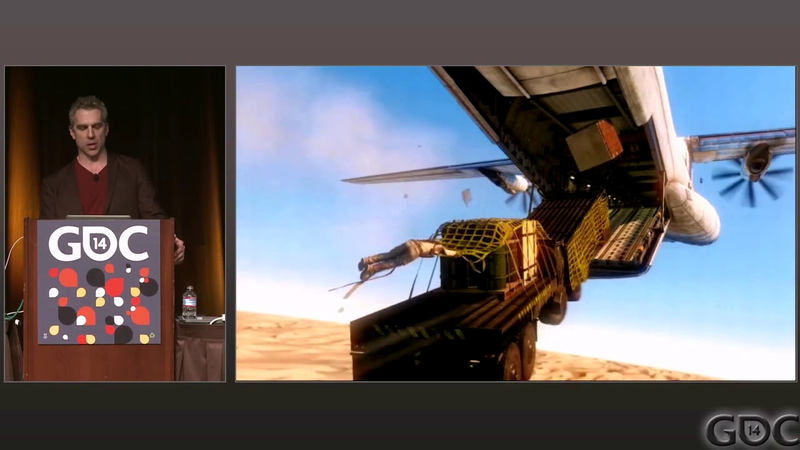
Traditional game design often relies on binary failure states that force players to restart after a loss, a practice that frequently results in wasted time and diminished narrative continuity.
- Replace binary failure states that force restarts with systemic setbacks, which act as survivable disruptions that require players to adapt strategies without halting overall progress.
- Define setbacks as unexpected shifts in immediate objectives that force a re-evaluation of the current game state rather than a complete reset.
- Implement dual-tension economies that combine resource management with time constraints to discourage save-scumming and force tactical recalibration.
Animating the Spy Fantasy in Splinter Cell: Blacklist
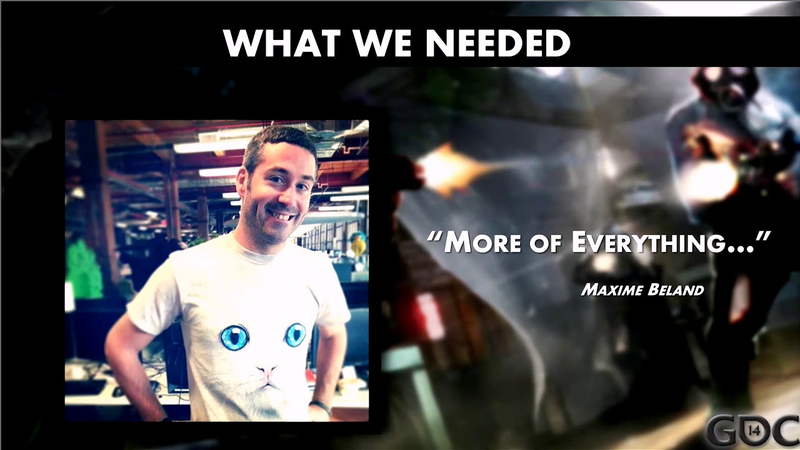
The development of Splinter Cell: Blacklist centered on the dual pillars of Panther-style surgical precision and grounded realism to deliver an immersive spy fantasy.
- The development team successfully reduced animation memory usage from 40MB to 23MB while maintaining high-quality character movement.
- Engineers implemented dynamic animation bundles that loaded assets based on specific map requirements to optimize memory usage.
- The team utilized mirroring techniques for cover animations and animation layering to eliminate redundant animation sets.
The 2017 Experimental Gameplay Workshop
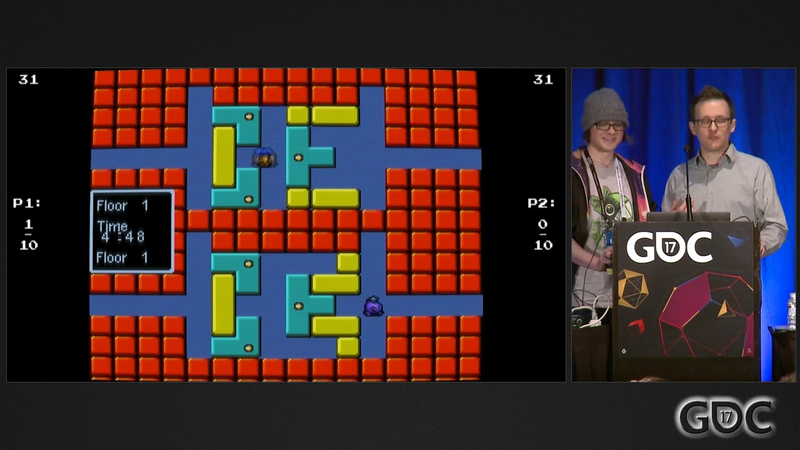
The 2017 Experimental Gameplay Workshop serves as a vital forum for exploring the boundaries of interactive design, emphasizing that innovation often arises from rejecting established genre tropes in favor of unconventional mechanics.
- Innovation in game design is driven by rejecting established genre tropes and standard UI conventions in favor of unconventional mechanics that create unique, untranslatable experiences.
- The 2017 Experimental Gameplay Workshop demonstrates that games can effectively communicate complex emotional themes, such as long-distance relationships in 'A Fold Apart', by using metaphorical mechanics like paper-folding.
- Game design methodologies are expanding to include diverse platforms and physical interactions, ranging from asymmetrical VR titles like 'Panoptic' to edible games that leverage social rituals.
OpenXR News: Converging on a Widely Accepted VR API Standard
The OpenXR initiative, spearheaded by the Khronos Group, seeks to resolve the persistent fragmentation within the virtual and augmented reality sectors by establishing a universal, vendor-agnostic application programming interface.
- The Khronos Group's OpenXR initiative establishes a universal, vendor-agnostic API to eliminate the need for developers to build custom integrations for every individual VR/AR hardware platform.
- Major industry stakeholders, including Valve, Oculus, Google, and Epic Games, are collaborating to ensure content compatibility across diverse runtimes and hardware configurations.
- The 1.0 release utilizes a core feature set supplemented by an extension-based model, allowing for vendor-specific innovations like gesture recognition while maintaining a unified standard.

How Saying 'No' Can Help You Make a Better Game
Achieving high-quality game development requires a disciplined adherence to a core design vision, balancing the inherent constraints of budget, schedule, and scope.
- Protect project integrity by establishing a concise mission statement and actionable design pillars early to serve as objective filters against feature creep.
- Prioritize iterative design and early prototyping over rigid documentation to ensure resources are allocated to essential mechanics rather than distracting concepts.
- Evaluate all new feature proposals against data-driven metrics, such as player engagement, retention, and psychological satisfaction, to determine their necessity.

Creating Social Experiences in VR
The primary objective of social virtual reality development is to transition the medium from a niche gaming platform into an accessible, everyday communication tool.
- Social utility, rather than high graphical fidelity, is the primary driver for mass adoption of virtual reality as an everyday communication tool.
- Developers should prioritize the concept of 'presence' through intuitive interactions and shared activities that mirror real-world social networks.
- Six-degrees-of-freedom tracking is essential for avatars to convey authentic body language, eye contact, and nuanced gestures.
What Are You Driving At? Vehicle AI in Assassin's Creed Syndicate
The implementation of vehicle artificial intelligence in Assassin’s Creed Syndicate was driven by the need to integrate dynamic, physics-based carriages into a world defined by parkour, stealth, and historical accuracy.
- To integrate carriages into Assassin's Creed Syndicate, developers implemented 'navmesh patching,' which dynamically alters the navigation mesh by punching holes in it based on the vehicle's rigid body size to allow NPCs to interact with moving vehicles.
- Due to the high computational cost of navmesh patching, the system was limited to updating only one vehicle per frame and prioritized patching based on the vehicle's proximity to the player.
- The team utilized 'virtual vehicles'—fake entities existing in virtual space—to group NPCs by faction, allowing multiple NPCs to spawn with a single vehicle request rather than spawning individual vehicles for every enemy.
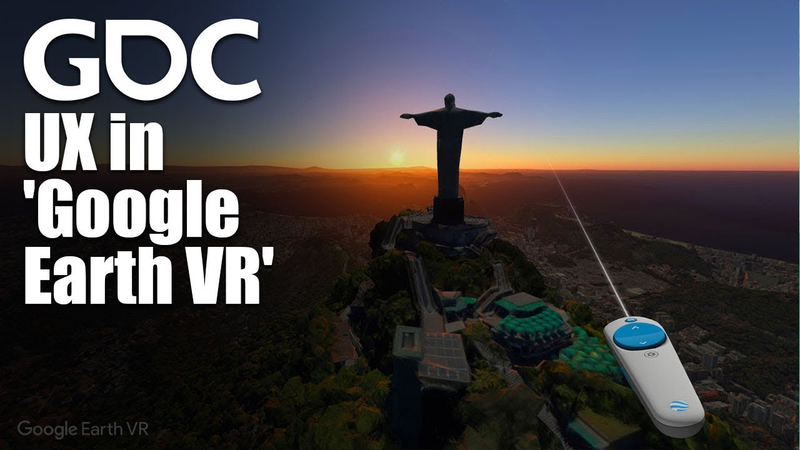
UX in Google Earth VR
Google Earth VR prioritizes user comfort and intuitive navigation as the primary pillars of its design philosophy.
- Google Earth VR mitigates motion sickness and spatial disorientation by using a tunnel vision technique that provides a stable horizon reference via a high-contrast grid.
- Navigation is optimized through non-linear power curves and altitude-based blending to replace jarring constant speeds with smooth, responsive movement transitions.
- The platform incorporates tactile feedback through low-pass filtering on controller rays and physics-based spring models to simulate weight and resistance in the virtual environment.
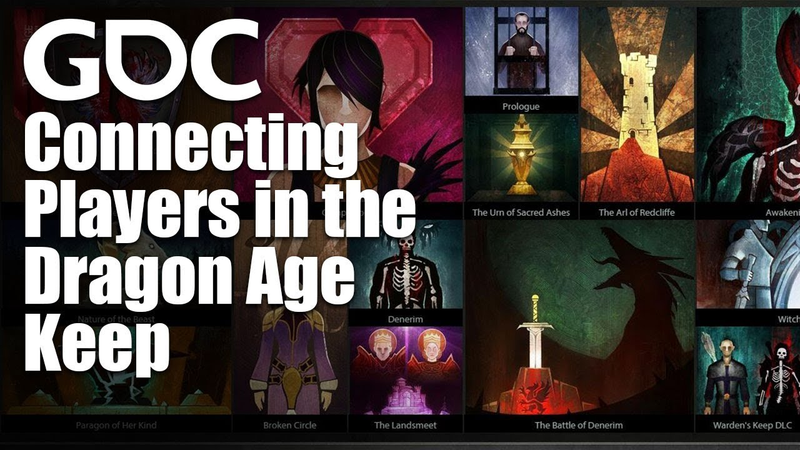
Connecting Players and Franchise Across Console Generations in the Dragon Age Keep
The Dragon Age Keep serves as a strategic solution to the technical limitations inherent in traditional save-game imports, effectively decoupling narrative logic from specific game clients.
- BioWare developed the Dragon Age Keep as a web-based 'World Vault' to solve the technical failures of traditional save-game imports, which were prone to errors and difficult to patch across console generations.
- The system uses a centralized web service called 'Orbit' to abstract plot logic and player choices from the game client, allowing developers to update story states and fix bugs without requiring client-side patches.
- By moving the world state management to the web, the team enabled players to maintain continuity and emotional investment across multiple games, novels, and comics within the franchise ecosystem.

Hearts and Minds
Games function as a unique bridge between rational, systematic thought and intuitive, emotional experience, serving as a microscope that renders the internal mechanics of human cognition visible.
- Games function as a unique bridge between rational, systematic thought and intuitive, emotional experience, allowing players to observe their own transition from deliberate rule-based learning to unconscious mastery.
- Designers should treat game design with the same intellectual seriousness as film or literature to elevate the medium into a significant art form.
- Players engage in a form of rigorous, personal scientific inquiry—such as theory-crafting and experimentation—to uncover the underlying logic of virtual worlds.