Foundations of Digital Games (FDG)
The International Conference on the Foundations of Digital Games, run by the Society for the Advancement of the Science of Digital Games and published by ACM. It covers game design, game AI, games education and game studies.
Documents
Introducing QRogue: Teaching Quantum Computing Using a Rogue-like Game Concept
QRogue is an educational game designed to teach the mathematical foundations of quantum computing to computer science students.
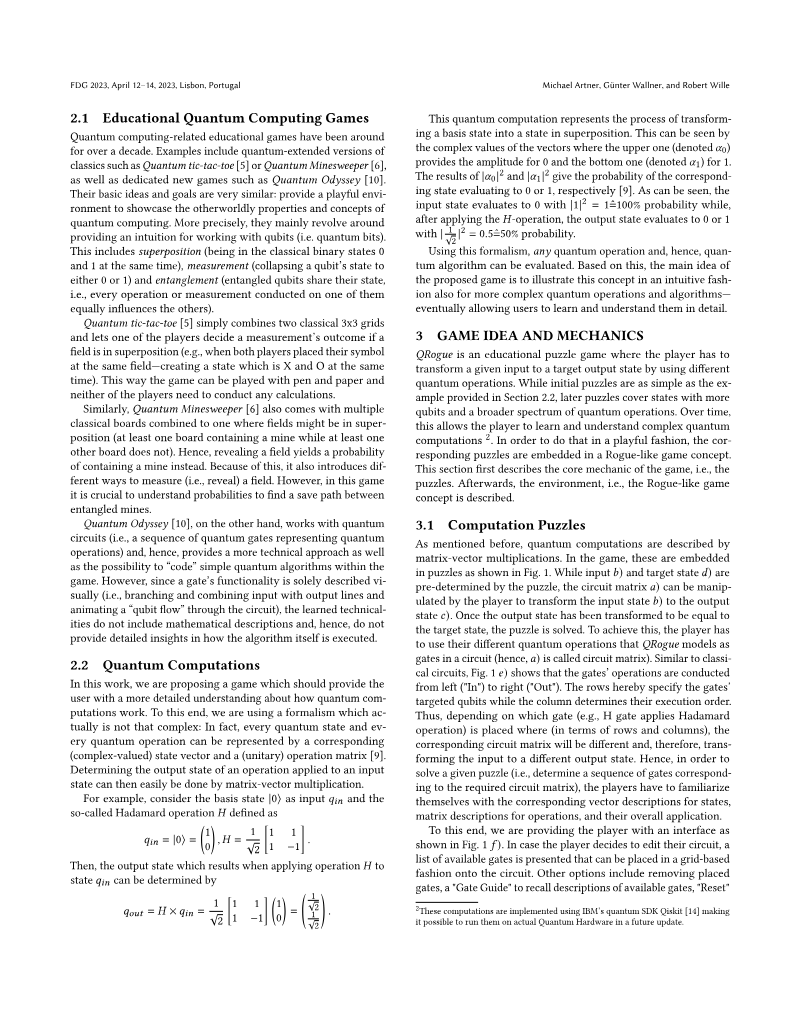
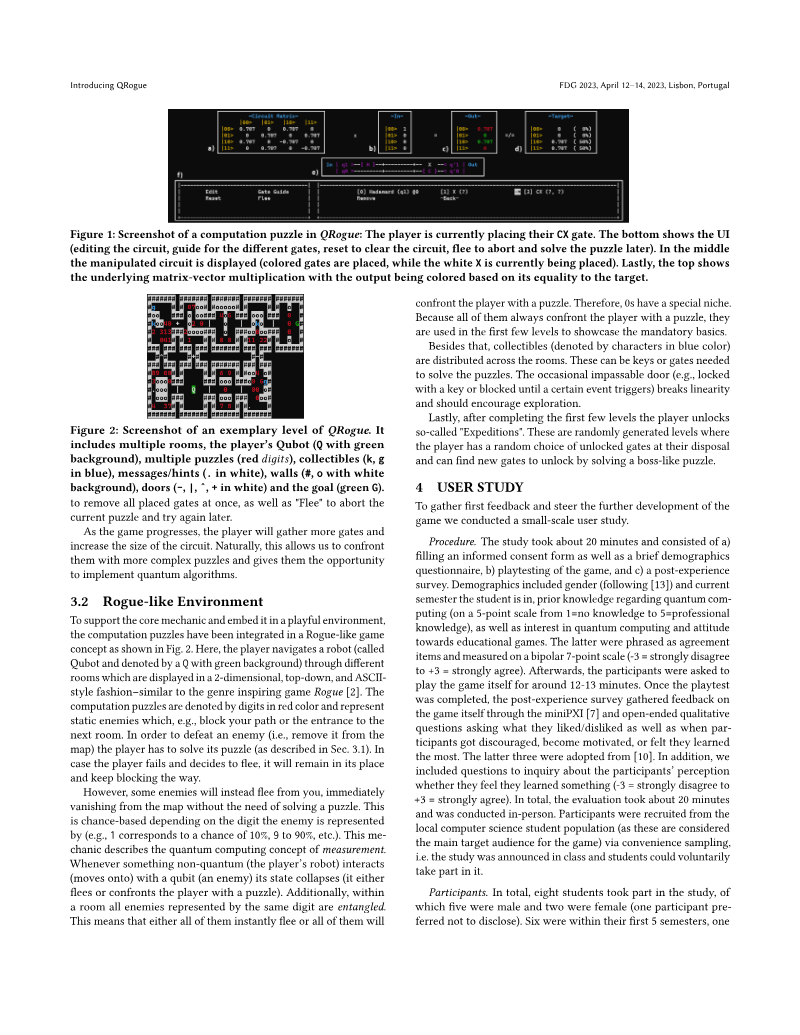
- QRogue uses a Rogue-like game structure to teach computer science students the mathematical foundations of quantum computing, including matrix-vector multiplication and circuit manipulation.
- A user study of eight computer science students revealed that while the game's visual style and immersion were well-received, the current learning curve is too steep for effective education.
- Six out of eight participants reported feeling discouraged during the 12–13 minute gameplay sessions due to a lack of foundational explanations regarding the underlying matrix mathematics.


Modifying a Game to Study the Impact of Hostile Environments on Foraging Behavior
This pilot study evaluates the efficacy of a modified 3D video game, Shinobi Valley, as a research tool for examining the impact of hostile environments on human foraging behavior.
- A pilot study using the 3D game 'Shinobi Valley' with 18 adult participants confirmed that introducing predatory NPCs significantly increases self-reported stress levels compared to non-hostile environments.
- Despite elevated stress levels, the hostile environment failed to produce measurable behavioral shifts, as item collection rates and timing remained consistent across both test conditions.
- The study utilized a within-subject design to track in-game metrics, including player location, distance traveled, and item collection frequency, alongside subjective stress and spatial presence surveys.
The Challenge of Evaluating Player Experience in Tabletop Role-Playing Games
Tabletop role-playing games have experienced significant growth, yet they currently lack a standardized, formal methodology for evaluating player experience.
- Tabletop role-playing games currently lack a standardized, formal methodology for evaluating player experience, unlike the established frameworks available in digital gaming.
- A new evaluation instrument must quantify six core components: cognitive challenge, immersion, agency, character attachment, group dynamics, and the role of the Game Master as a referee.
- The unique, unscripted nature of tabletop gaming requires an evaluation tool that accounts for fluid storytelling and the specific influence of Game Masters on group dynamics.

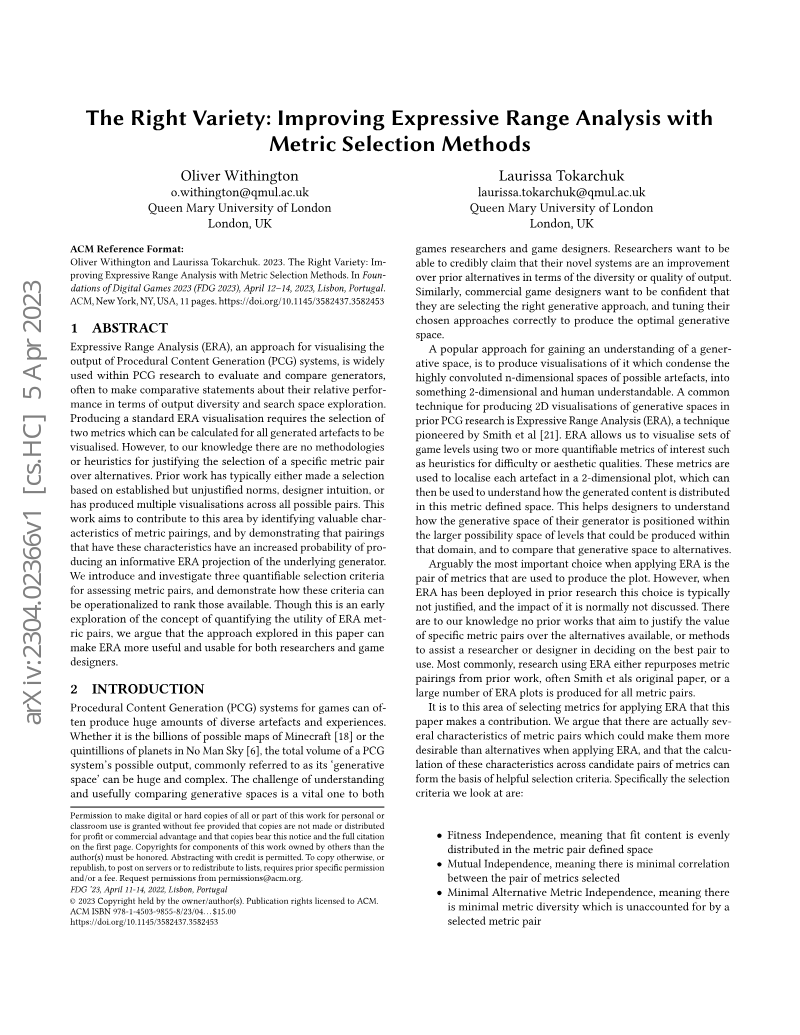
The Right Variety: Improving Expressive Range Analysis with Metric Selection Methods
Expressive Range Analysis serves as a critical tool for evaluating procedural content generation, yet the field has historically lacked a standardized, objective methodology for selecting the metrics used to visualize generative spaces.
- A new quantitative framework replaces intuition-based metric selection in Expressive Range Analysis with three criteria: Fitness Independence, Mutual Independence, and Minimal Alternative Metric Independence.
- The study validated this methodology by analyzing 9,015 Mario levels across 18 distinct structural and agent-based metrics.
- Combining structural metrics with agent-evaluated metrics produces the most robust visualizations because these categories exhibit lower mutual correlation.
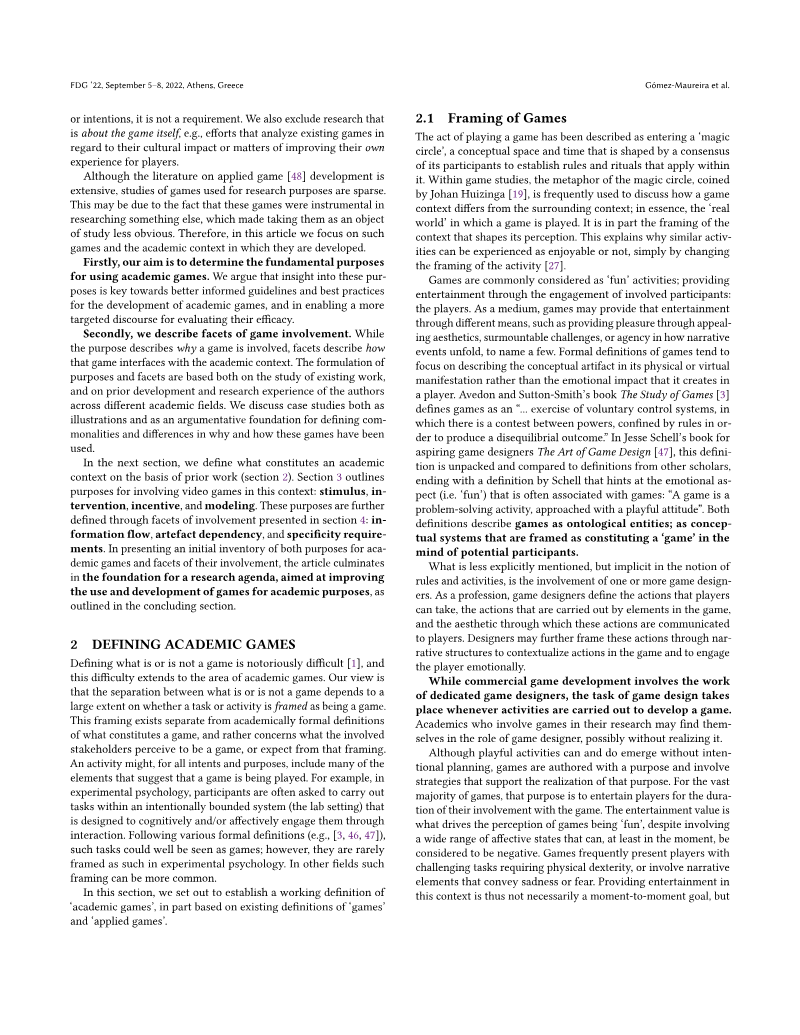
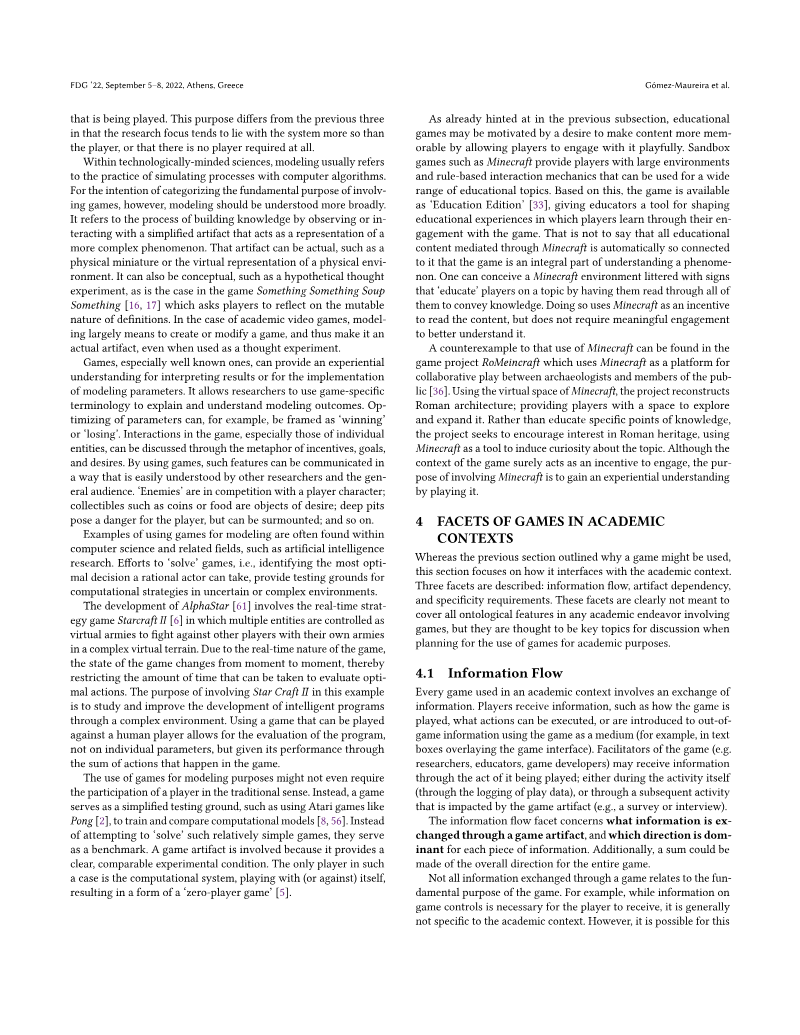

Academic Games: Mapping the Use of Video Games in Research Contexts
Academic games represent a distinct category of video games developed or utilized within research institutions primarily for the generation, evaluation, or dissemination of knowledge rather than entertainment.

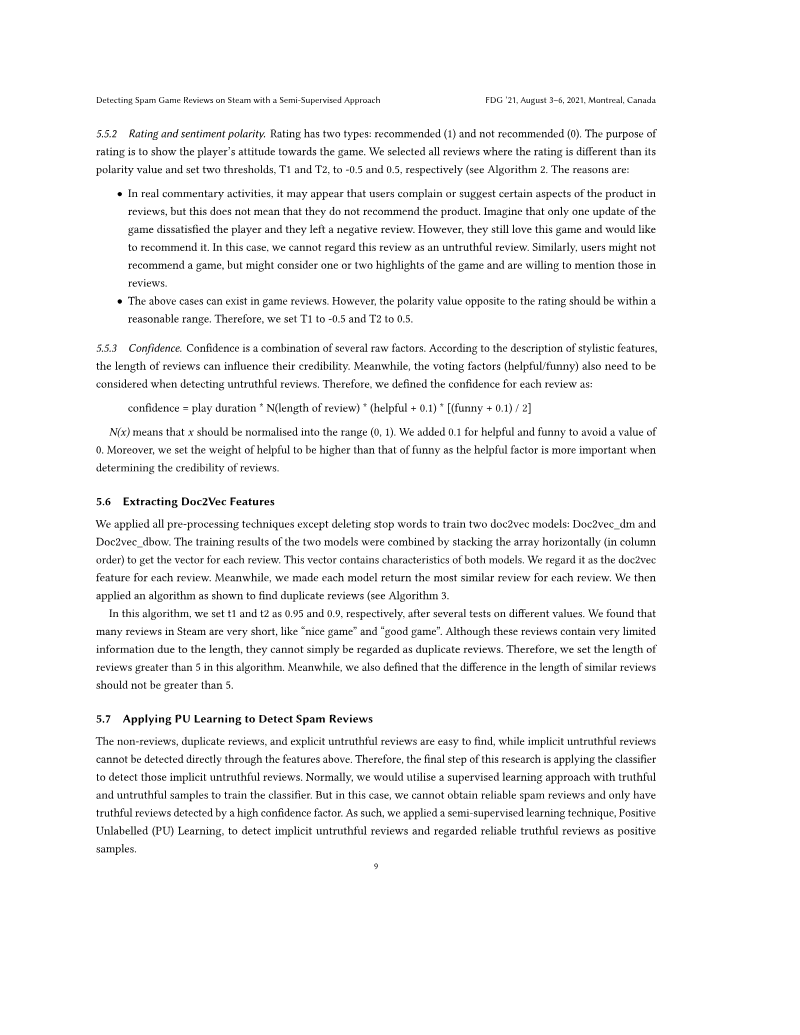
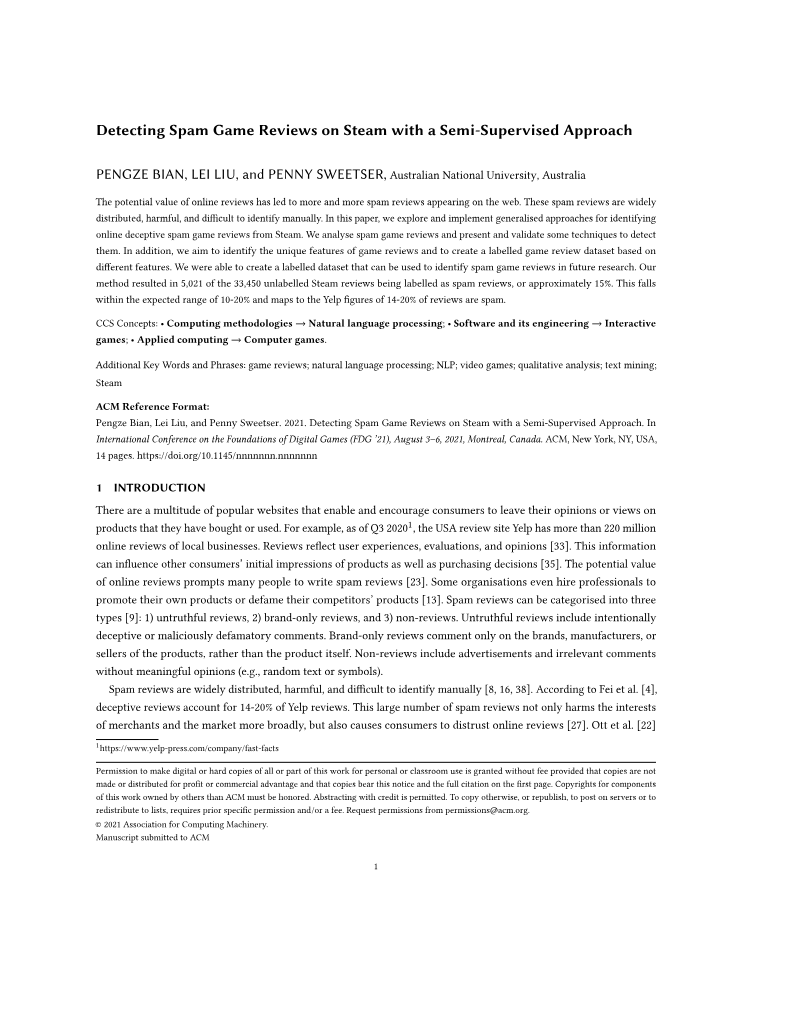
Detecting Spam Game Reviews on Steam with a Semi-Supervised Approach
The proliferation of deceptive content on digital storefronts undermines consumer trust and distorts market signals.
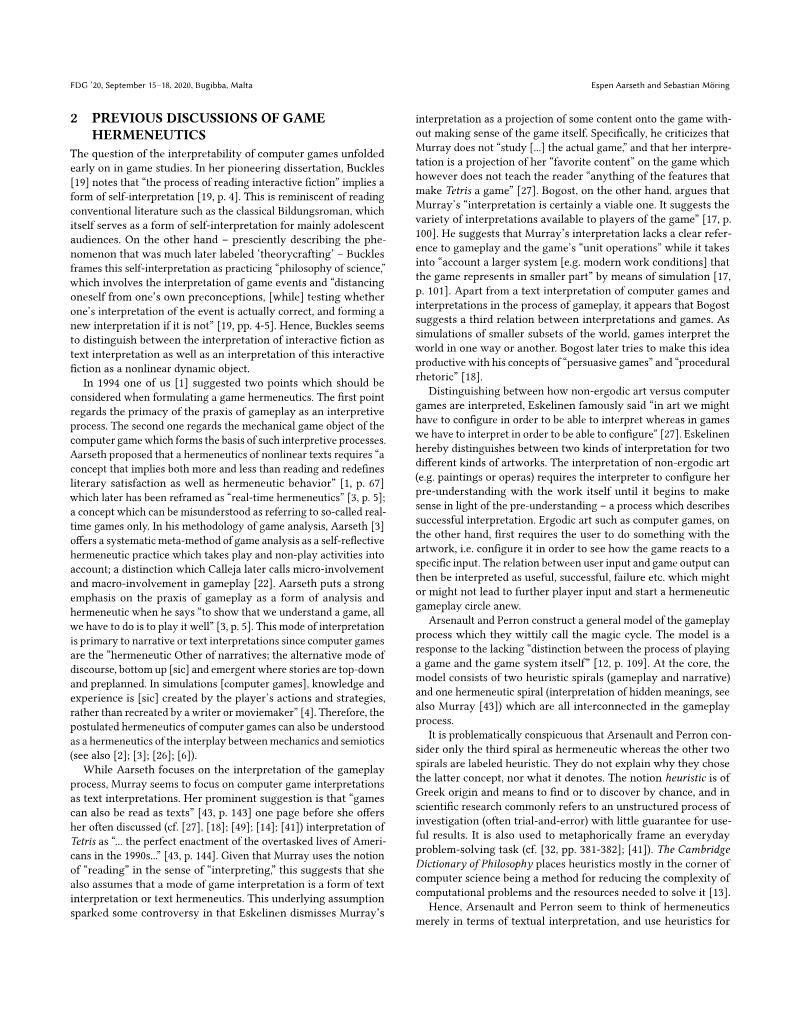
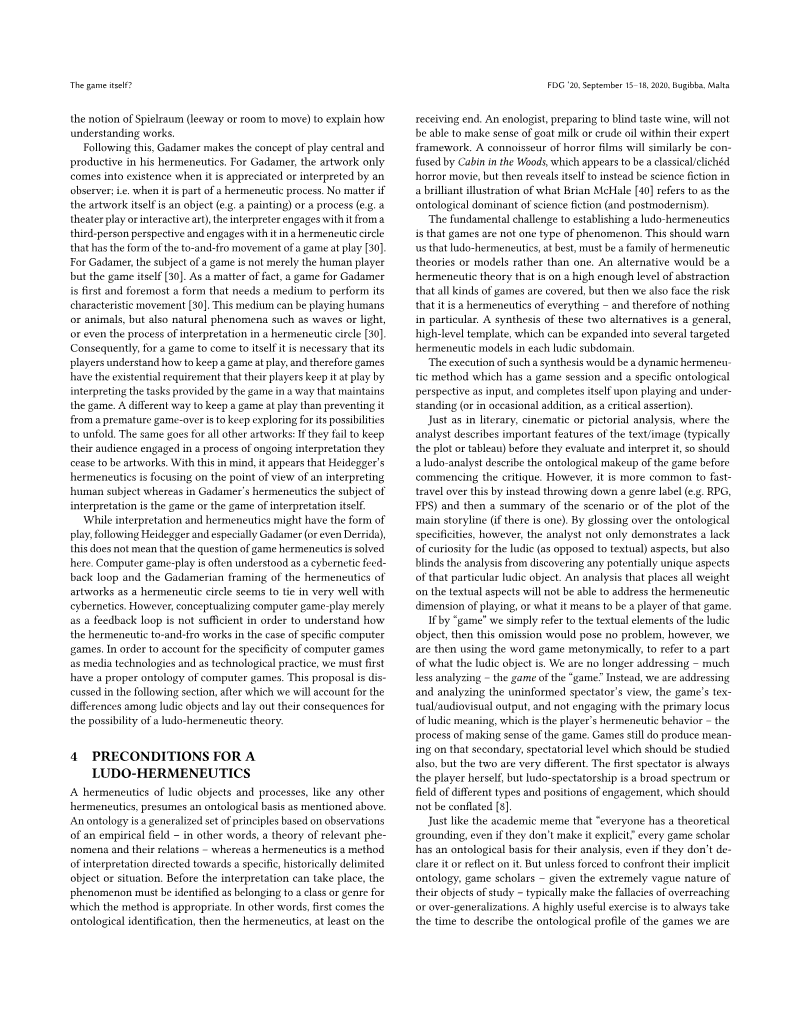
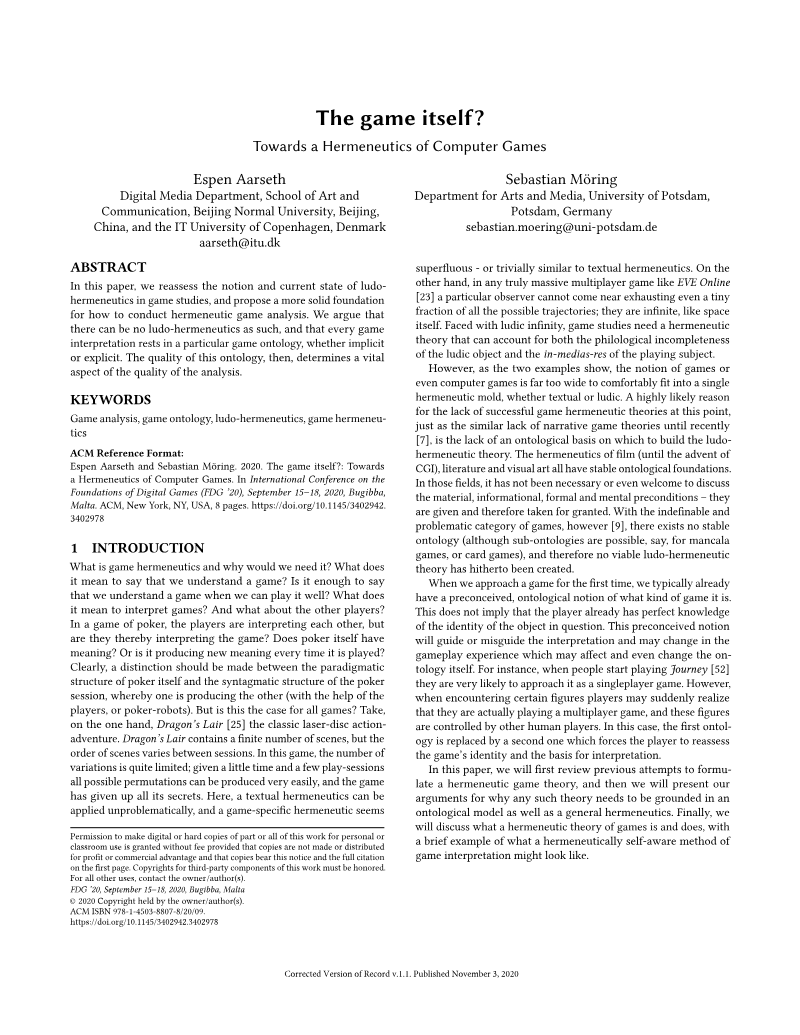
The Game Itself?: Towards a Hermeneutics of Computer Games
The field of game studies currently suffers from a lack of a viable ludo-hermeneutic theory, primarily because the discipline lacks a stable ontological foundation.

Player Style Clustering without Game Variables
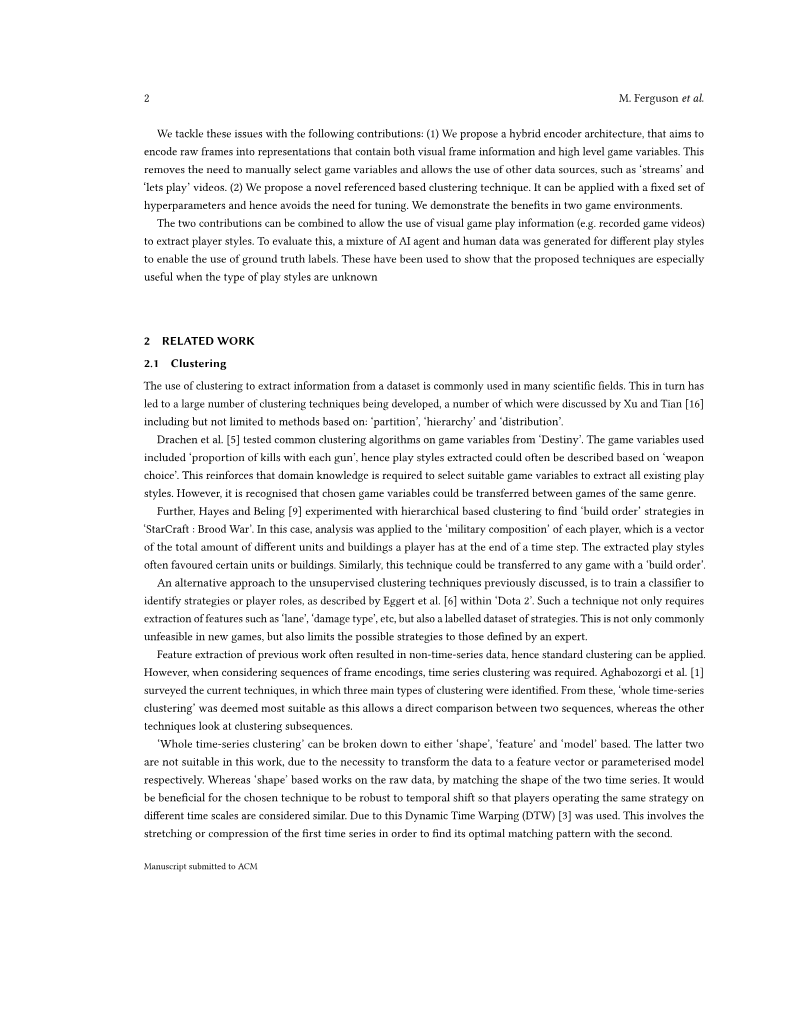
This research addresses the challenge of identifying player styles in video games without relying on internal game variables, which typically require source code access and manual selection.

Towards a Taxonomy of AI in Hybrid Board Games
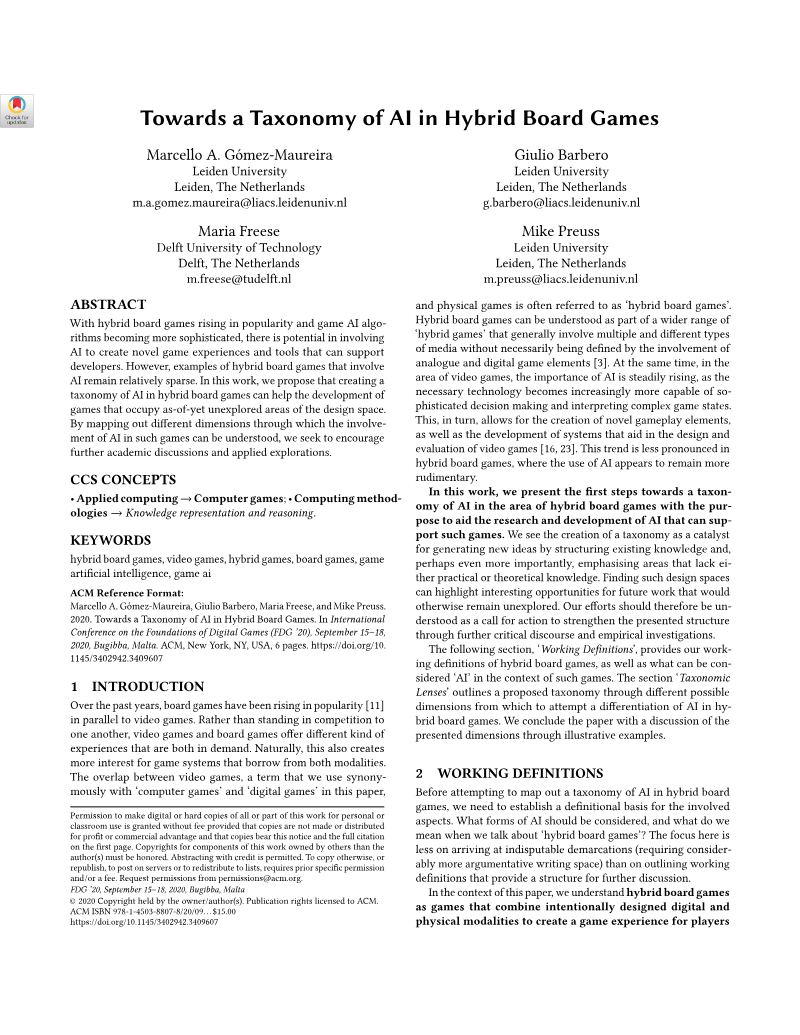
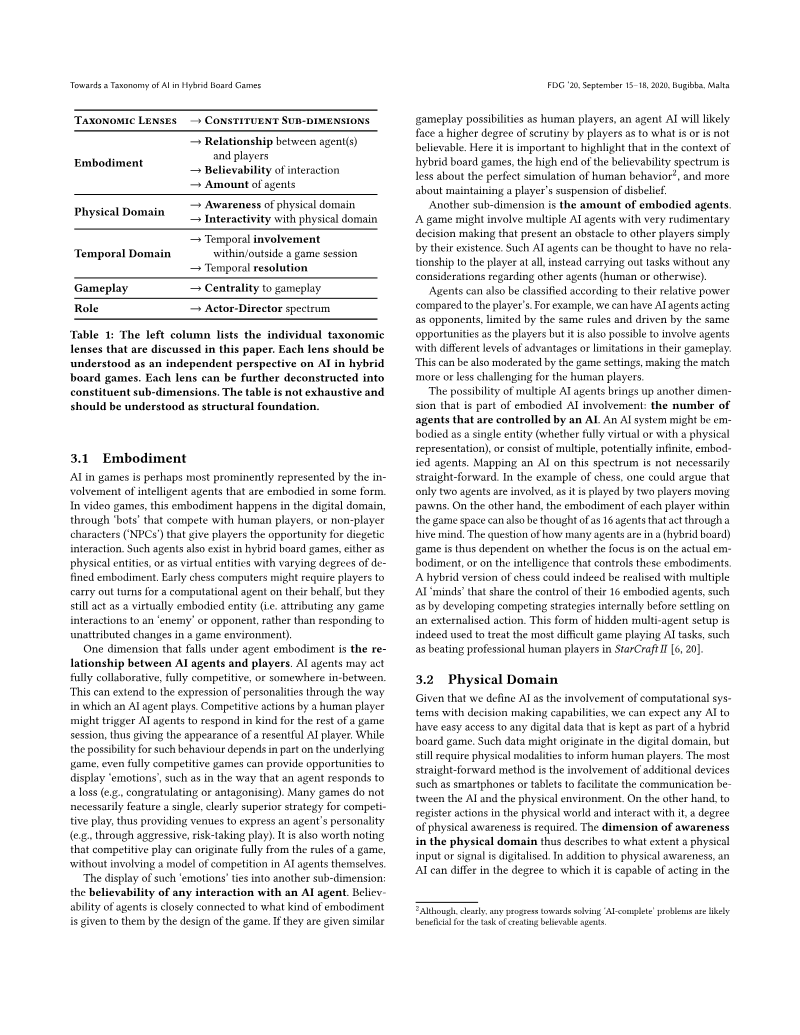
Hybrid board games, which integrate digital and physical modalities, represent an evolving intersection of technology and traditional tabletop play.
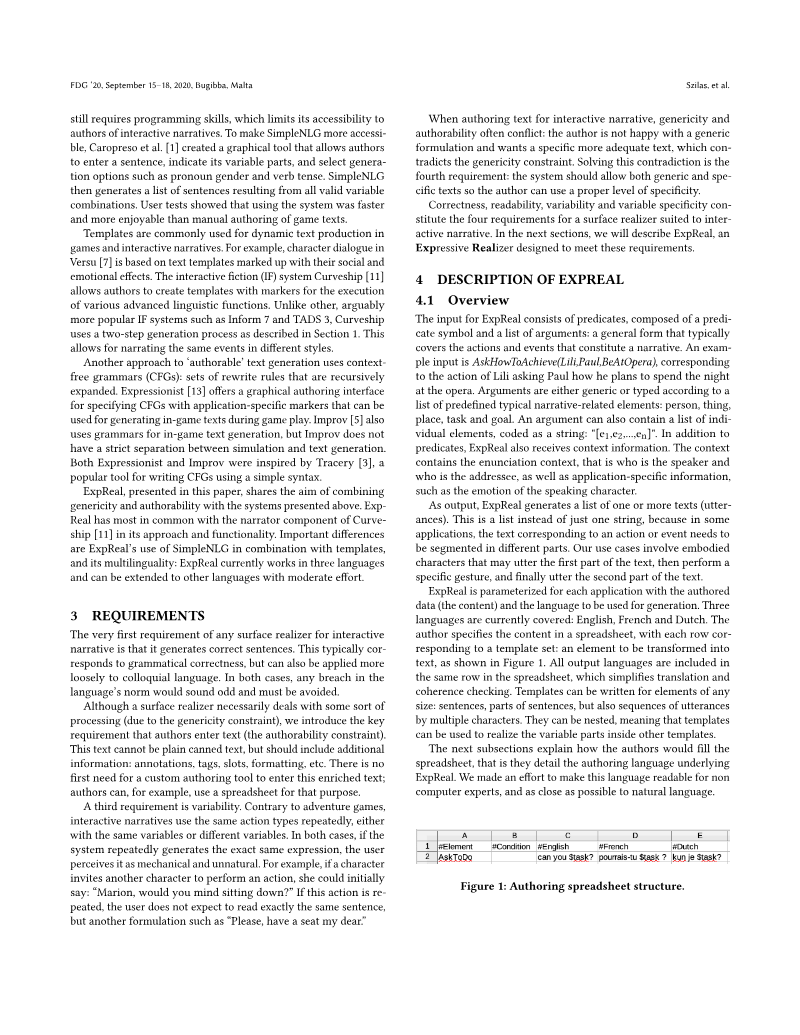
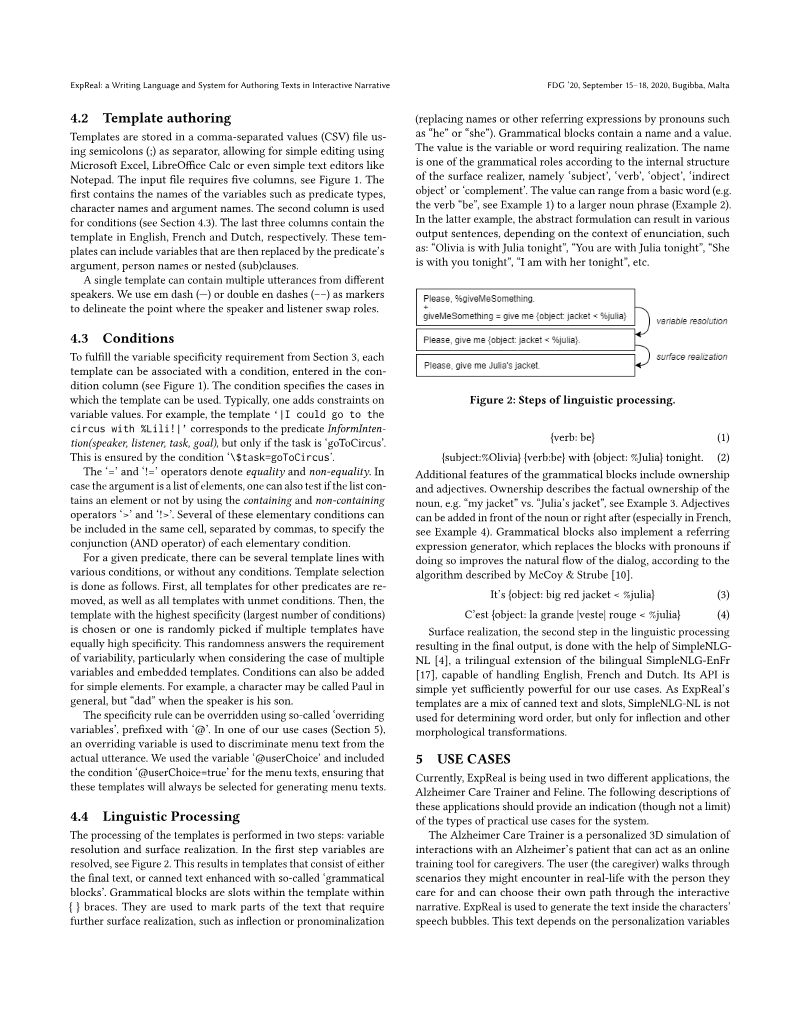
ExpReal: A Writing Language and System for Authoring Texts in Interactive Narrative
ExpReal functions as a surface realizer and templating language designed to bridge the gap between generic natural language generation and manual, canned text authoring in interactive narratives.

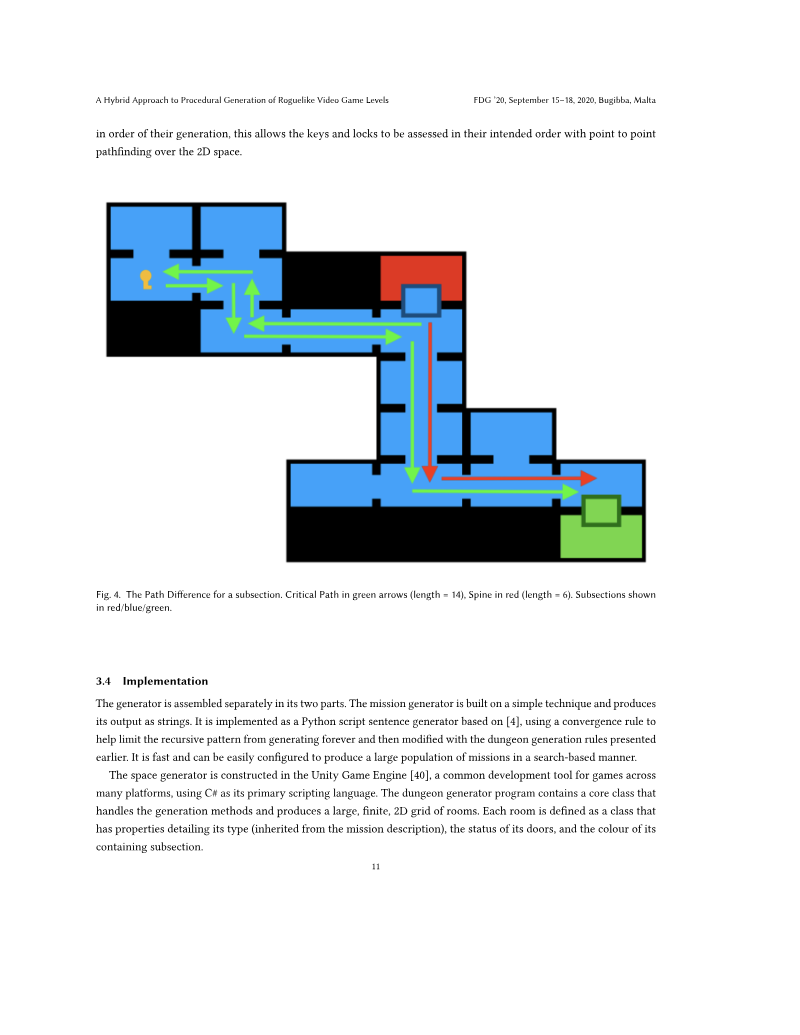
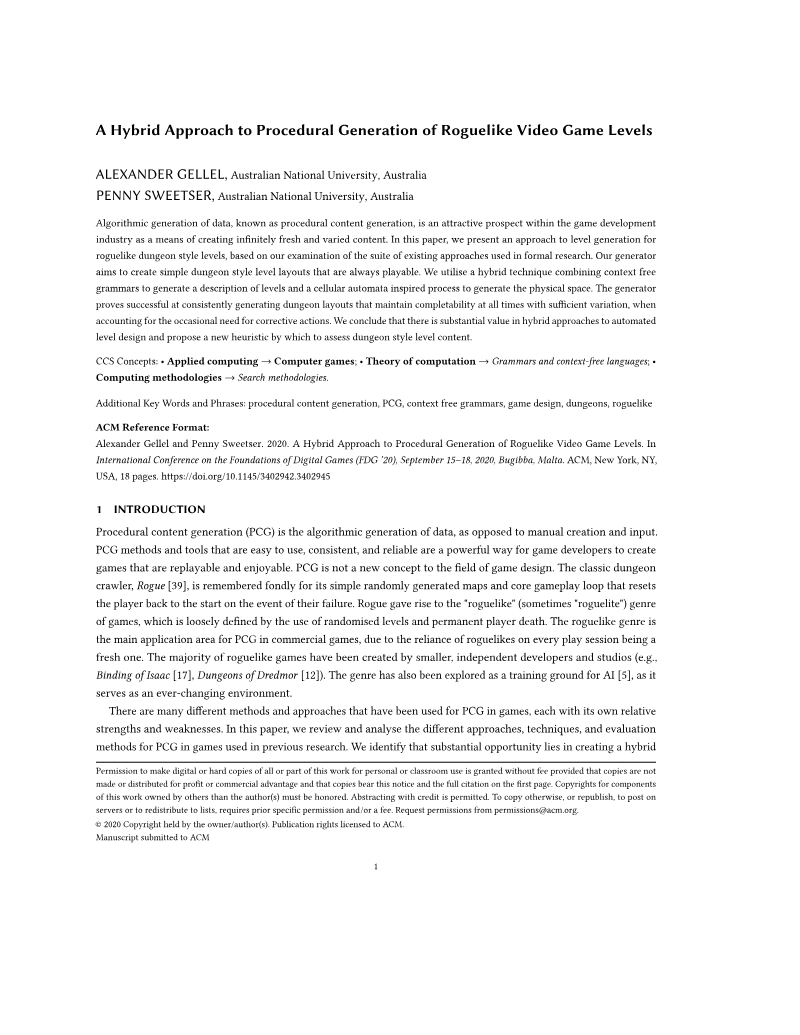
A Hybrid Approach to Procedural Generation of Roguelike Video Game Levels
Procedural content generation in roguelike game design often faces a trade-off between structural coherence and spatial variety.
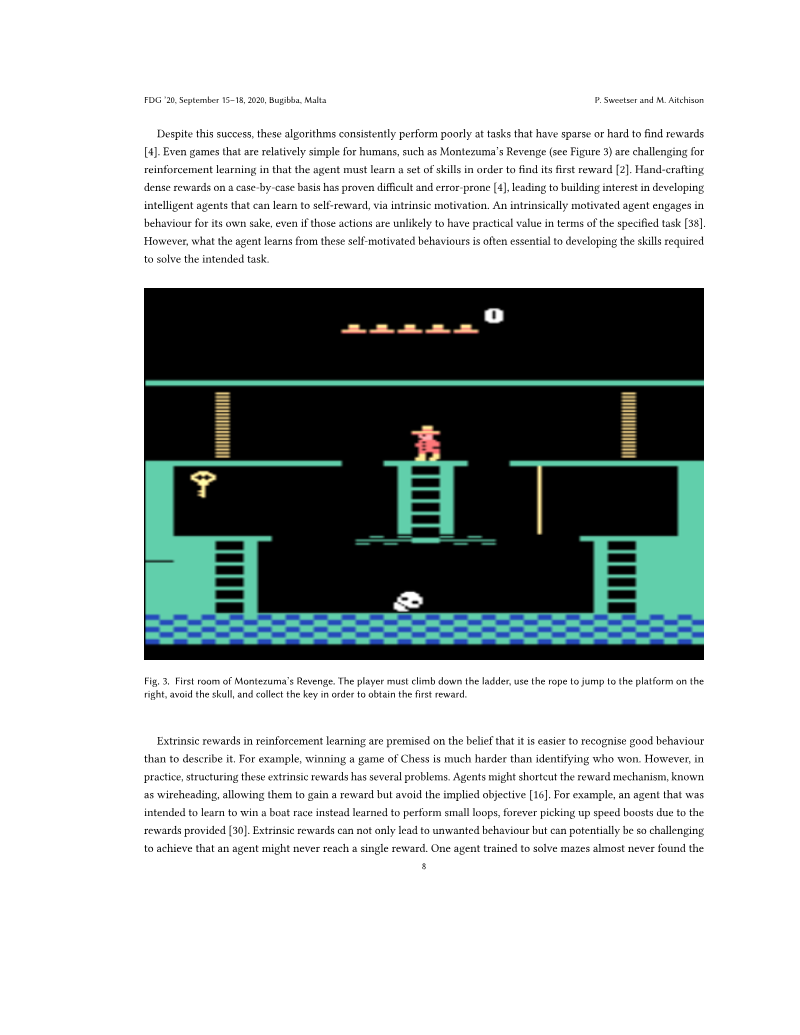
Do Game Bots Dream of Electric Rewards?: The Universality of Intrinsic Motivation
Extrinsic reward-based systems, frequently utilized in both gamification and machine reinforcement learning, suffer from fundamental limitations that undermine long-term engagement and system robustness.
Do you work at Foundations of Digital Games (FDG)? Get a free report of how these documents are read and cited here.