
DiGRA
The Digital Games Research Association: the international association of academics and professionals who study digital games. Its Digital Library holds the proceedings of the DiGRA conferences since 2002.
Documents
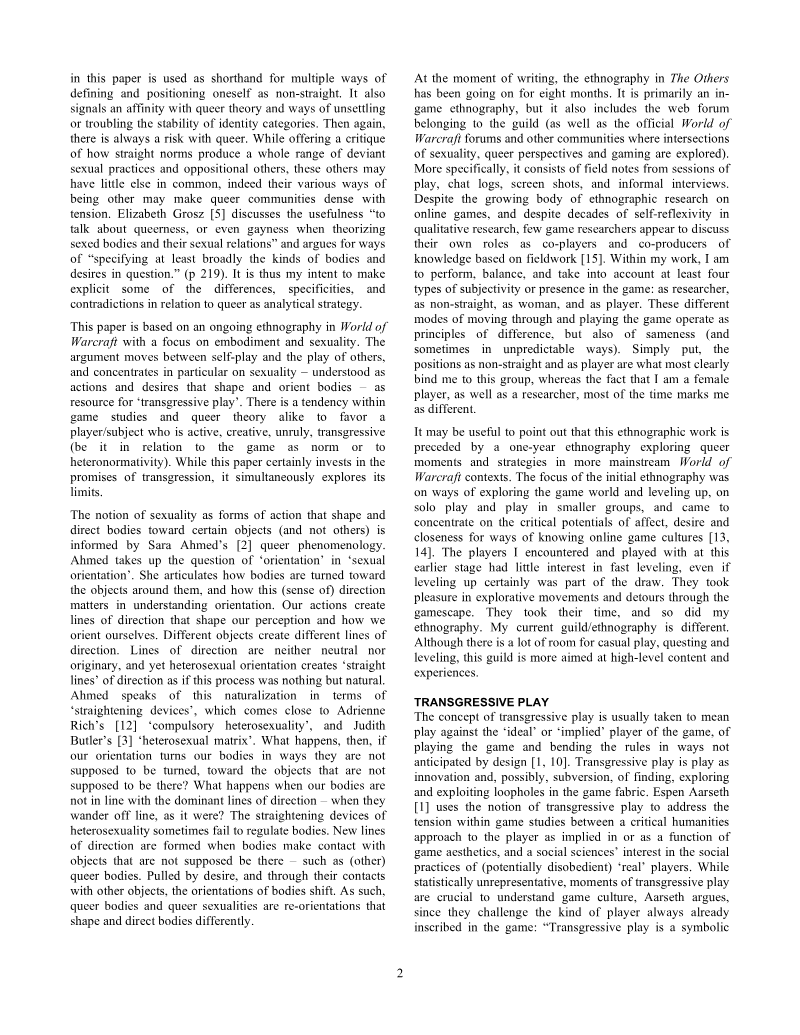
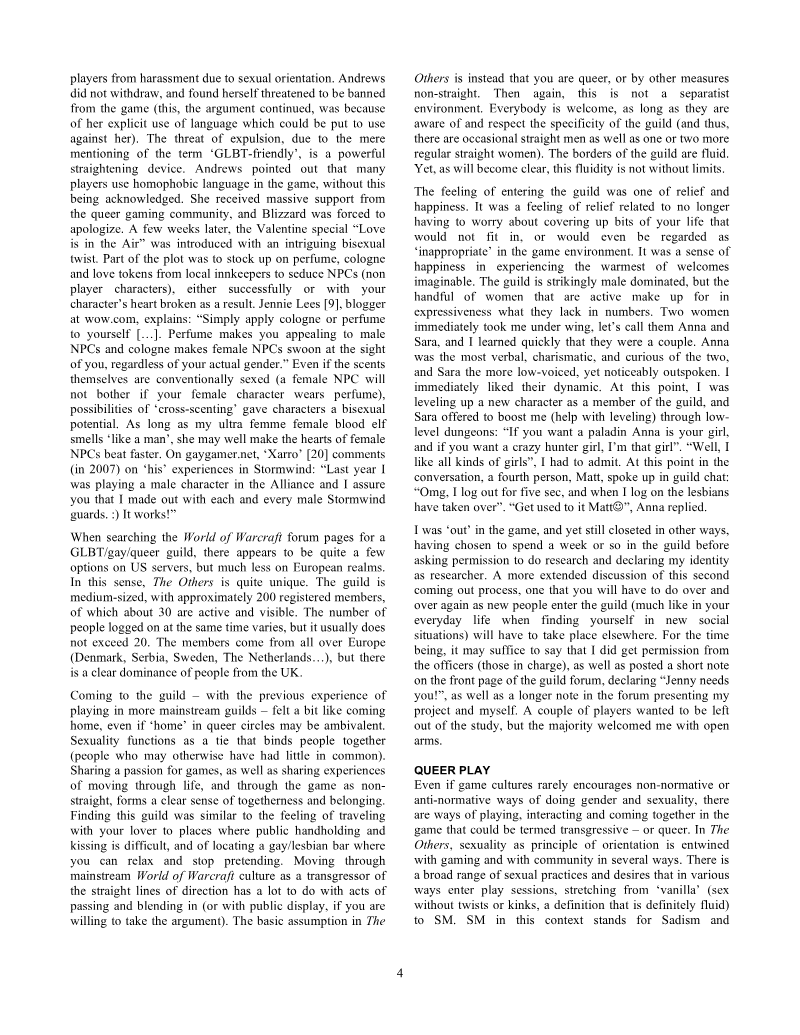
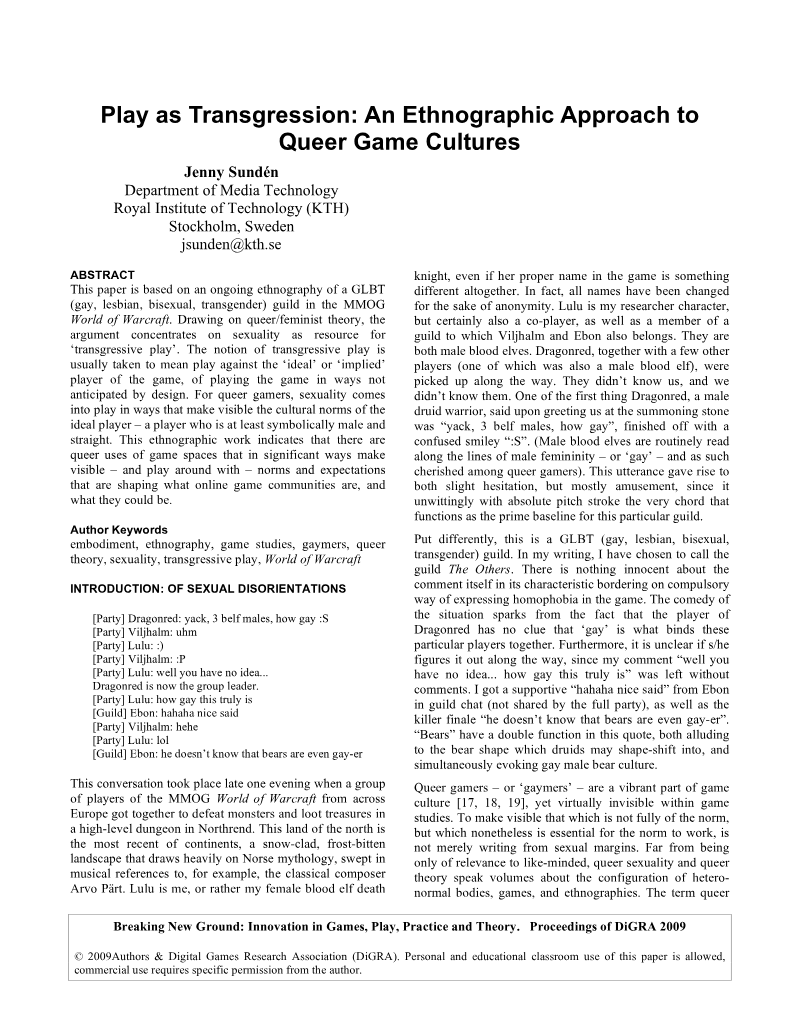
Play as Transgression: An Ethnographic Approach to Queer Game Cultures
Jenny Sundén's paper offers an ethnographic examination of queer gaming culture, centered on a GLBT guild within World of Warcraft.
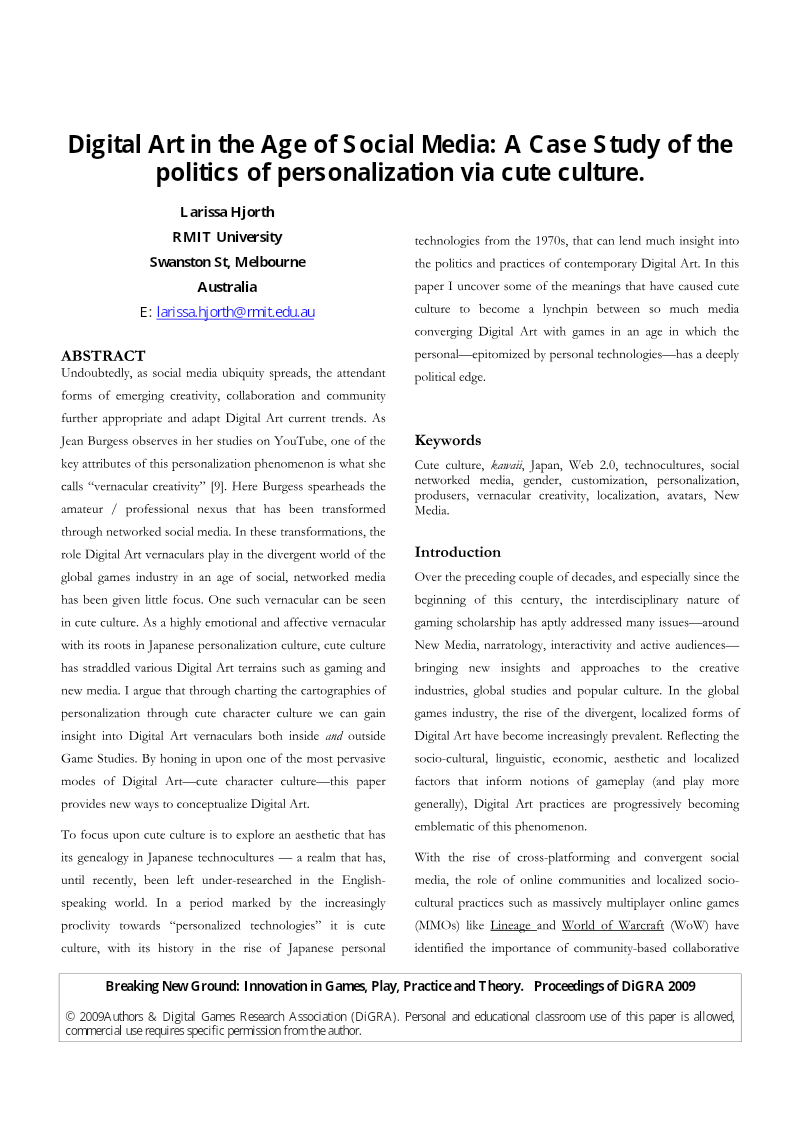
Digital Art in the Age of Social Media: The Politics of Personalization via Cute Culture
Larissa Hjorth's paper argues that "cute culture," or kawaii, offers an essential analytical lens for understanding personalization, vernacular creativity, and produsage within digital art and the global games industry.
Age Differences in Associations with Digital Gaming
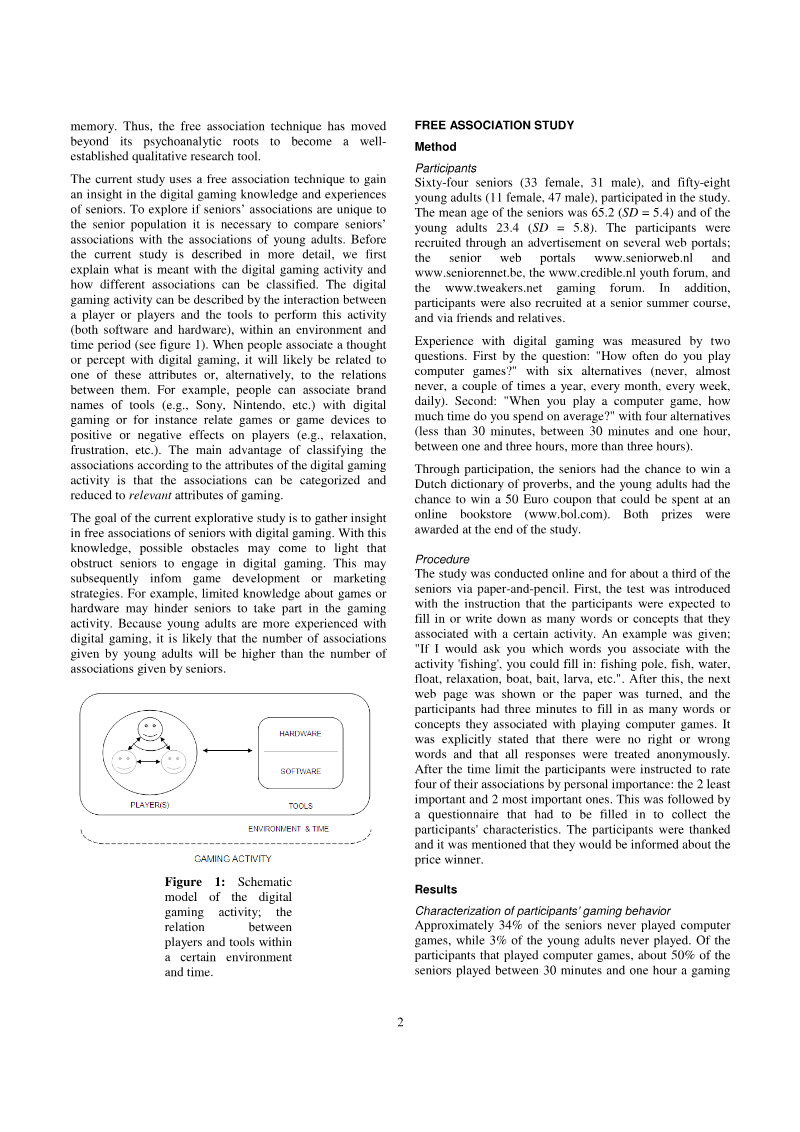
This exploratory study examines how seniors and young adults differ in their associations with digital gaming, using a free association technique to surface perceptions, experiences, and domain knowledge.
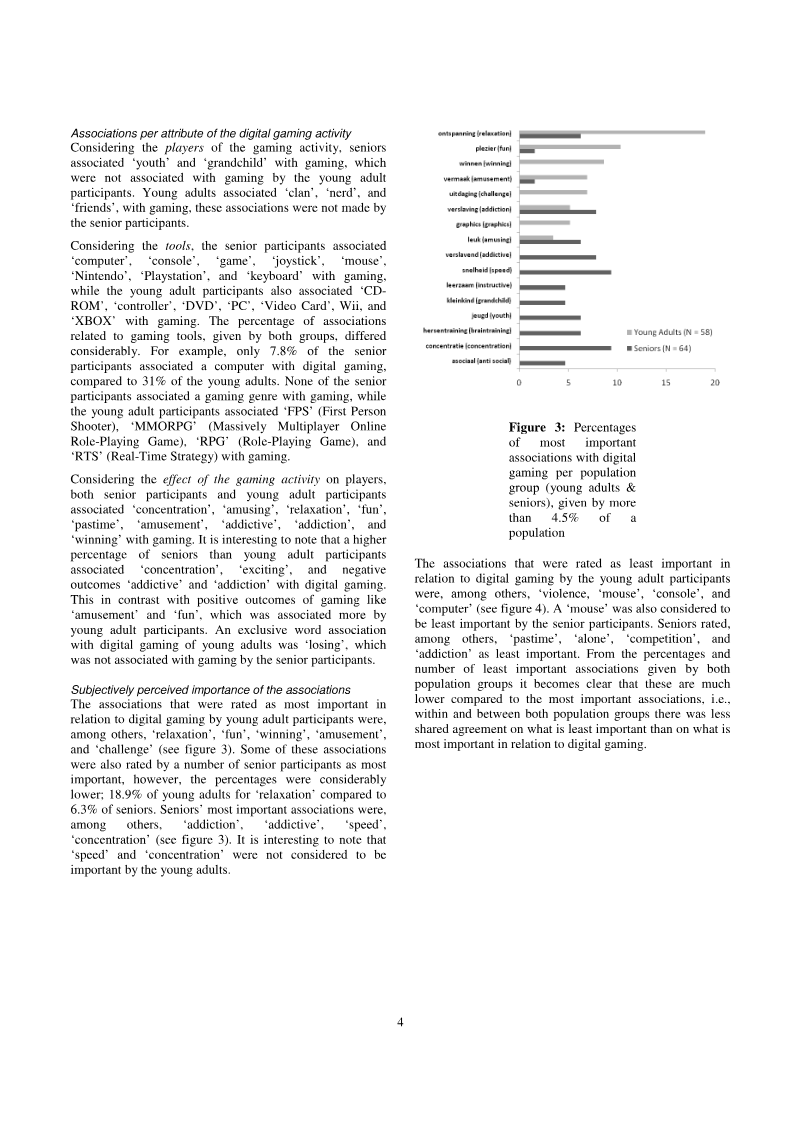
- Young adults produced nearly twice as many free associations with digital gaming as seniors (mean 19.4 versus 10.3) in this Dutch study of 64 seniors (mean age 65.2) and 58 young adults (mean age 23.4).
- Seniors' associations were more often framed around family and generations (e.g., "youth" and "grandchild"), and they rarely named gaming genres or current consoles such as the Wii or Xbox.
- Seniors placed greater weight on negative outcomes, especially addiction and addictive qualities, while young adults emphasized positive experiences such as relaxation, fun, challenge, and amusement.
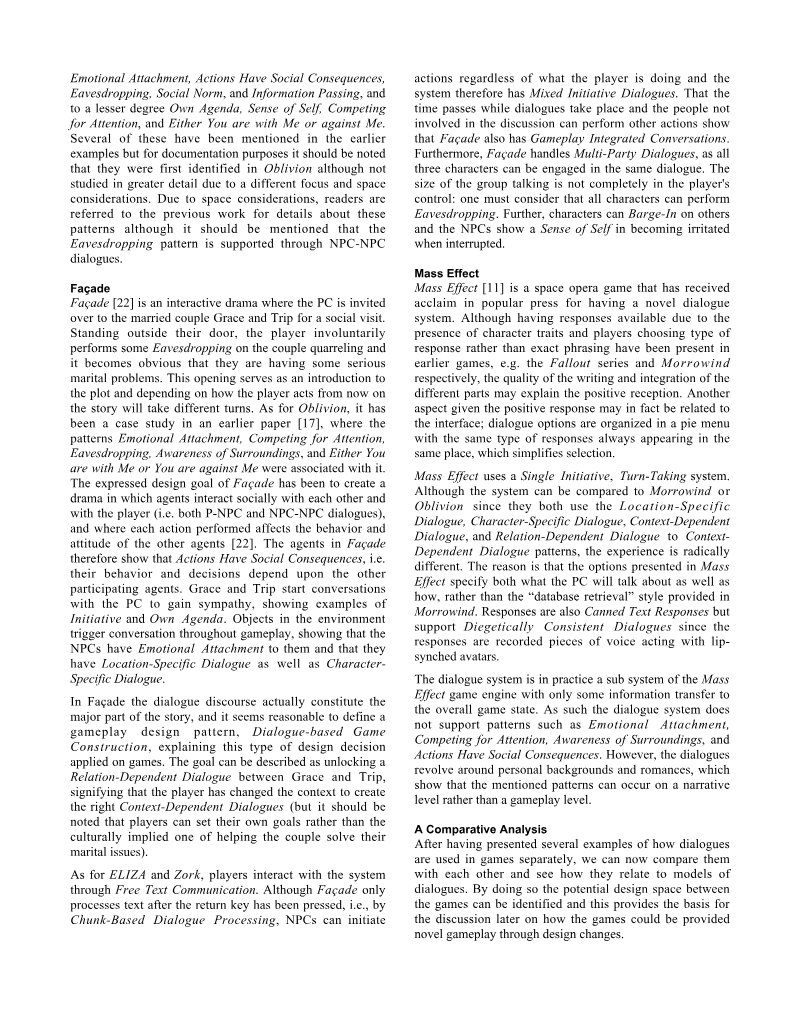
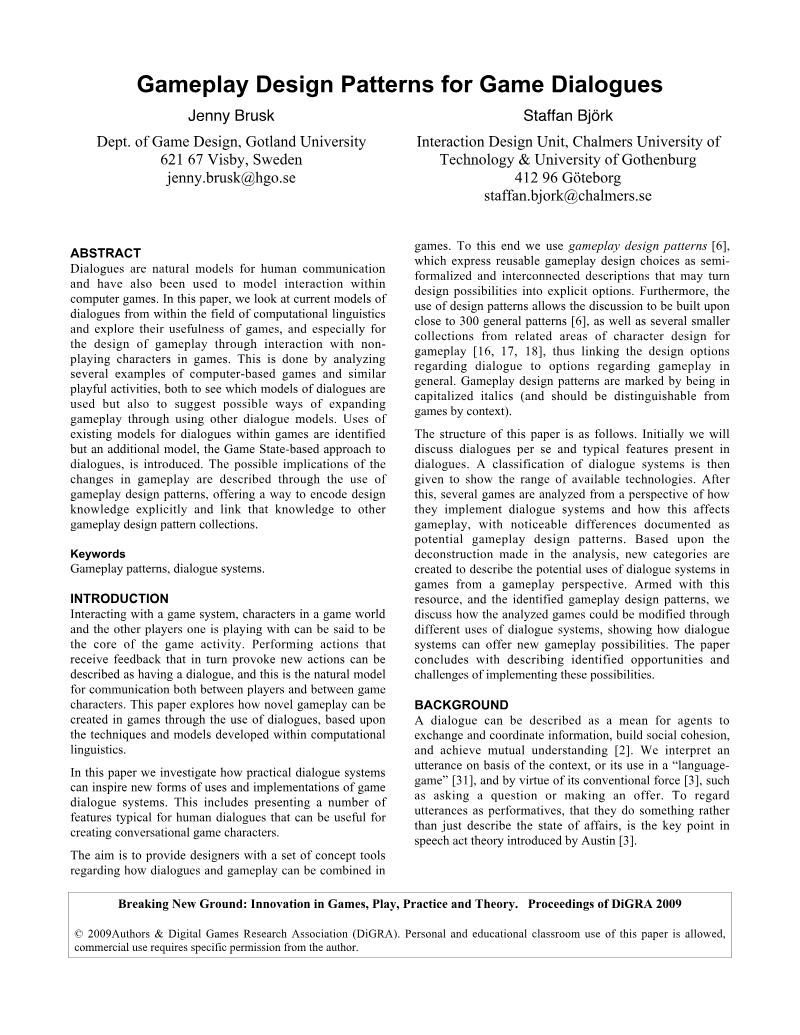
Gameplay Design Patterns for Game Dialogues
Brusk and Björk's "Gameplay Design Patterns for Game Dialogues," presented at DiGRA 2009, argues that dialogue systems drawn from computational linguistics can be translated into explicit, reusable gameplay design patterns.
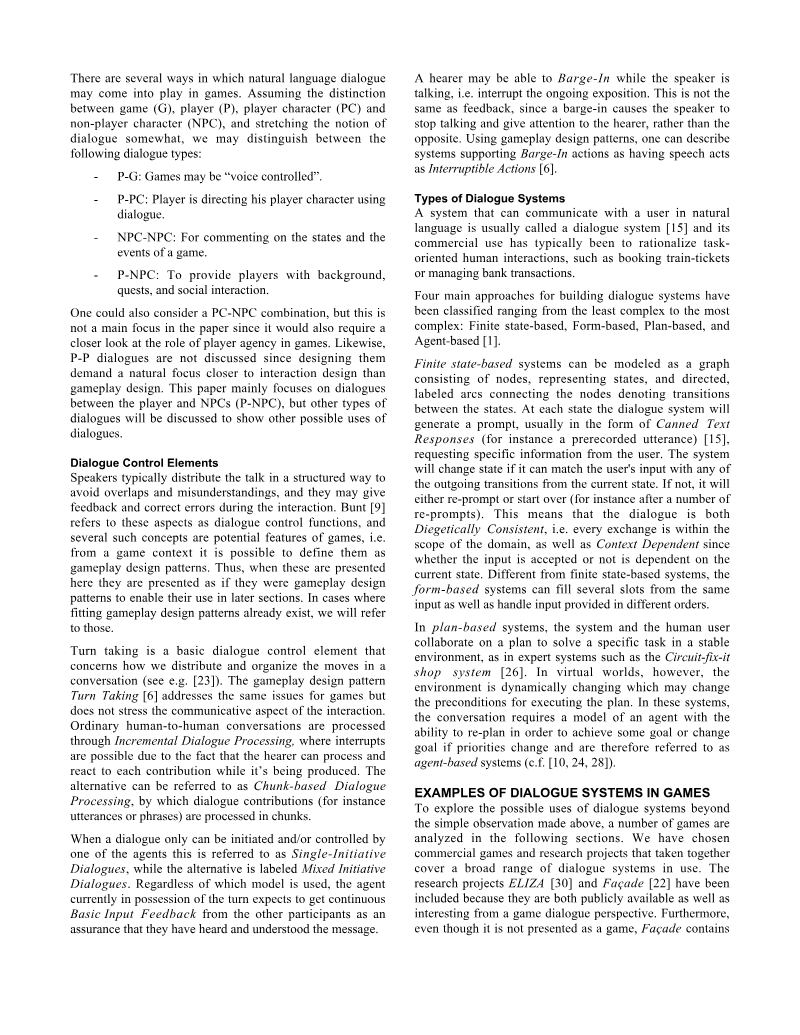
- Brusk and Björk argue that computational linguistics dialogue systems (finite state, form-based, plan-based, and agent-based) can be translated into explicit, reusable gameplay design patterns for game dialogue.
- Existing linguistic categories fit game dialogue only partially, because game dialogues serve varied purposes, from pure gameplay (ELIZA) to interface (Zork), which motivates a Game State-based approach rather than direct transfer of linguistic models.
- The authors derive named patterns including Canned Text Responses, Illocutionary Interface, Diegetically Consistent Dialogue, and Context-Dependent Dialogue, and propose speculative extensions such as Incremental Input Processing, Gameplay Integrated Conversations, and Colloquial Mastery.
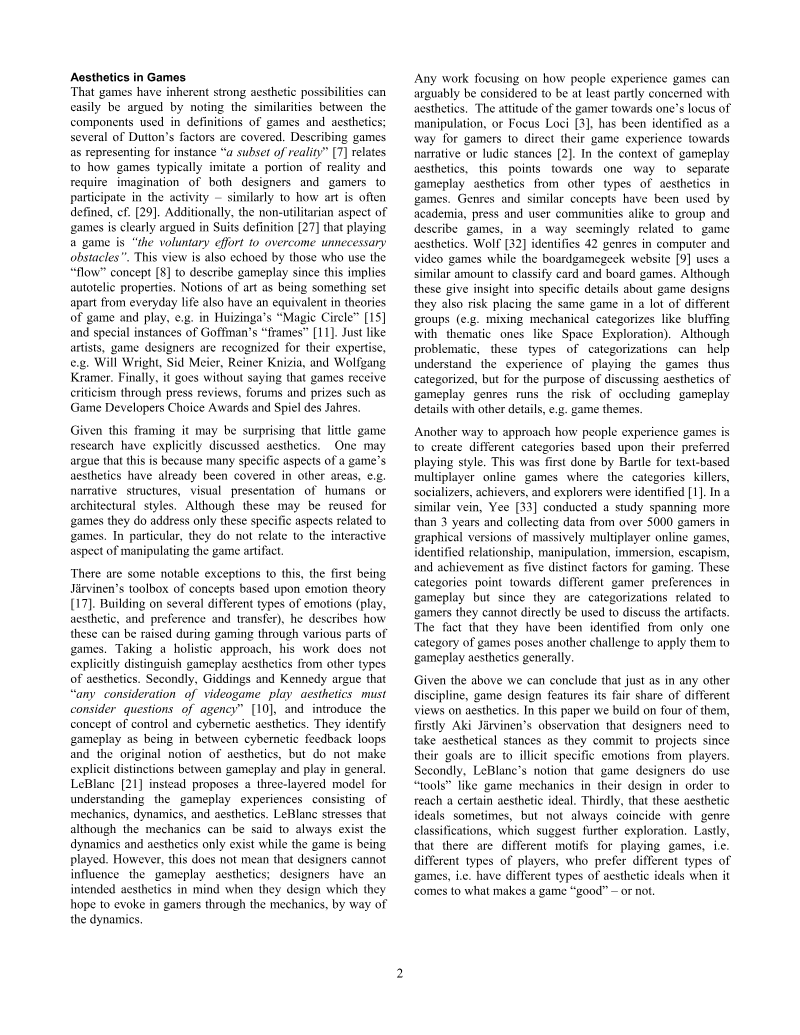
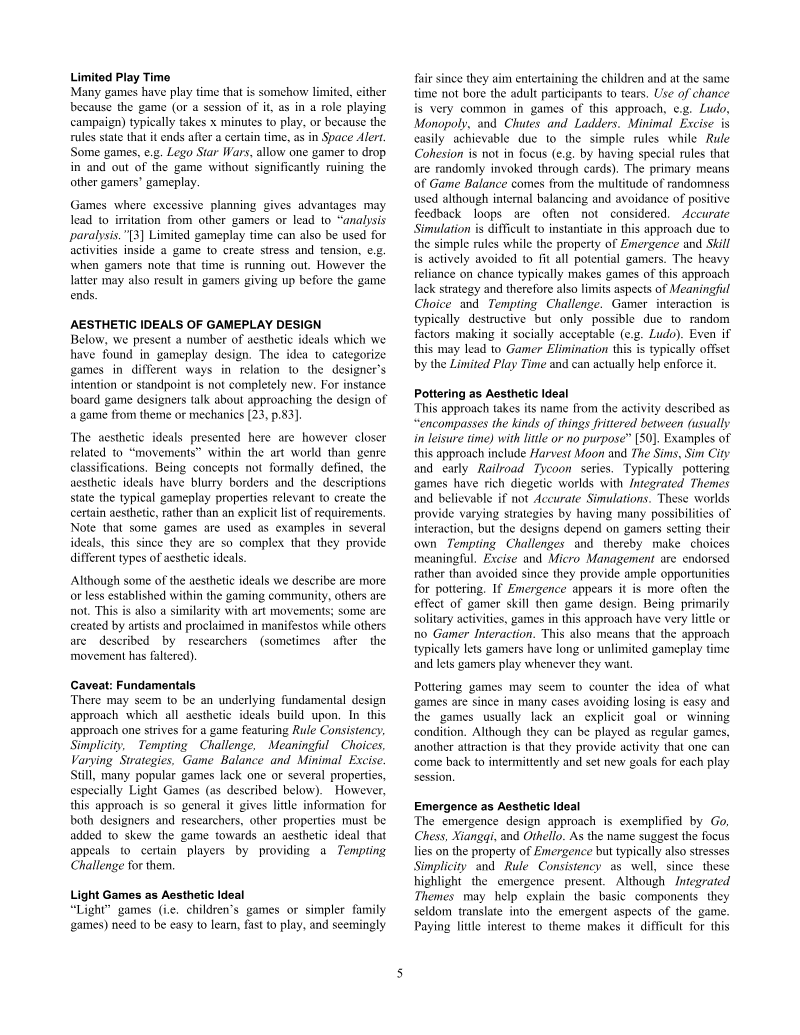
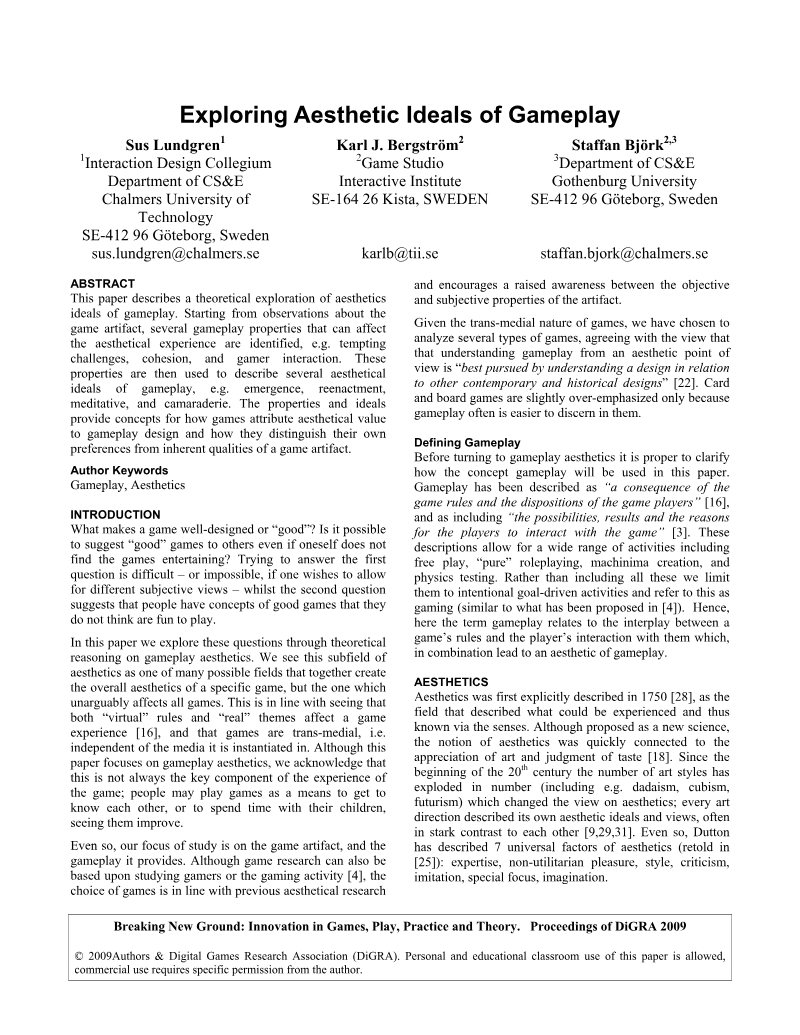
Exploring Aesthetic Ideals of Gameplay
"Exploring Aesthetic Ideals of Gameplay" develops a theoretical framework for understanding how game rules and player interaction combine to produce aesthetic experiences.
- The paper argues that gameplay aesthetics is a distinct subfield that designers can deliberately shape through rules, mechanics, and player interaction, rather than an incidental byproduct of play.
- Its main contribution is a taxonomy of seven aesthetic ideals (Pottering, Emergence, Light Games, Player Adaptability, Meditation, Reenactment, and Camaraderie), each defined by a characteristic combination of gameplay properties and illustrated with representative titles.
- The ideals are intentionally loose categories analogous to art movements rather than formal genres, and the authors acknowledge they are not exhaustive and await empirical validation.
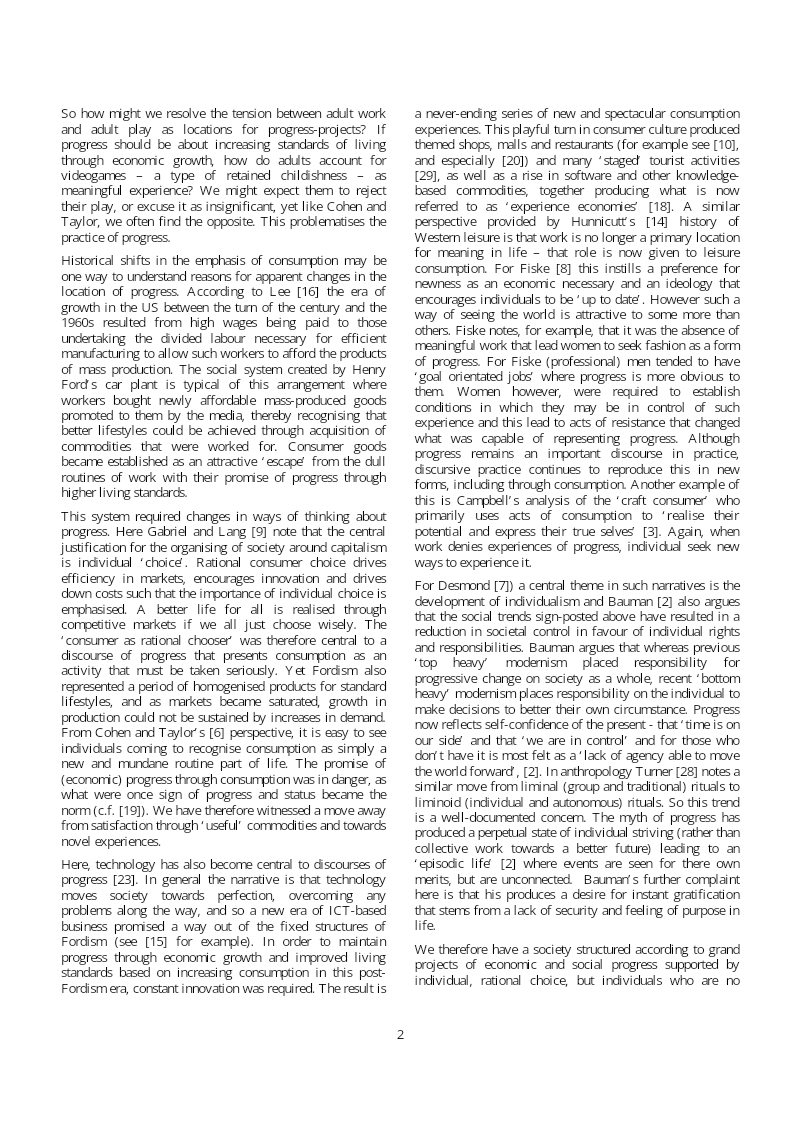
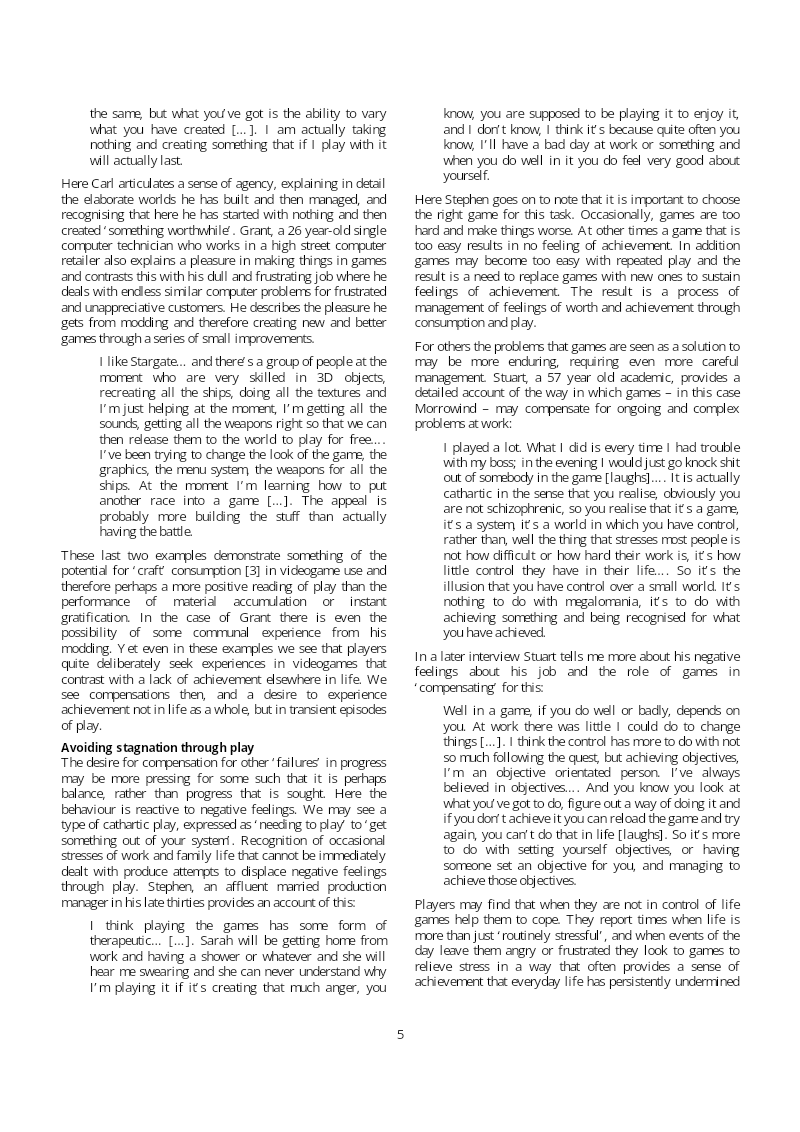
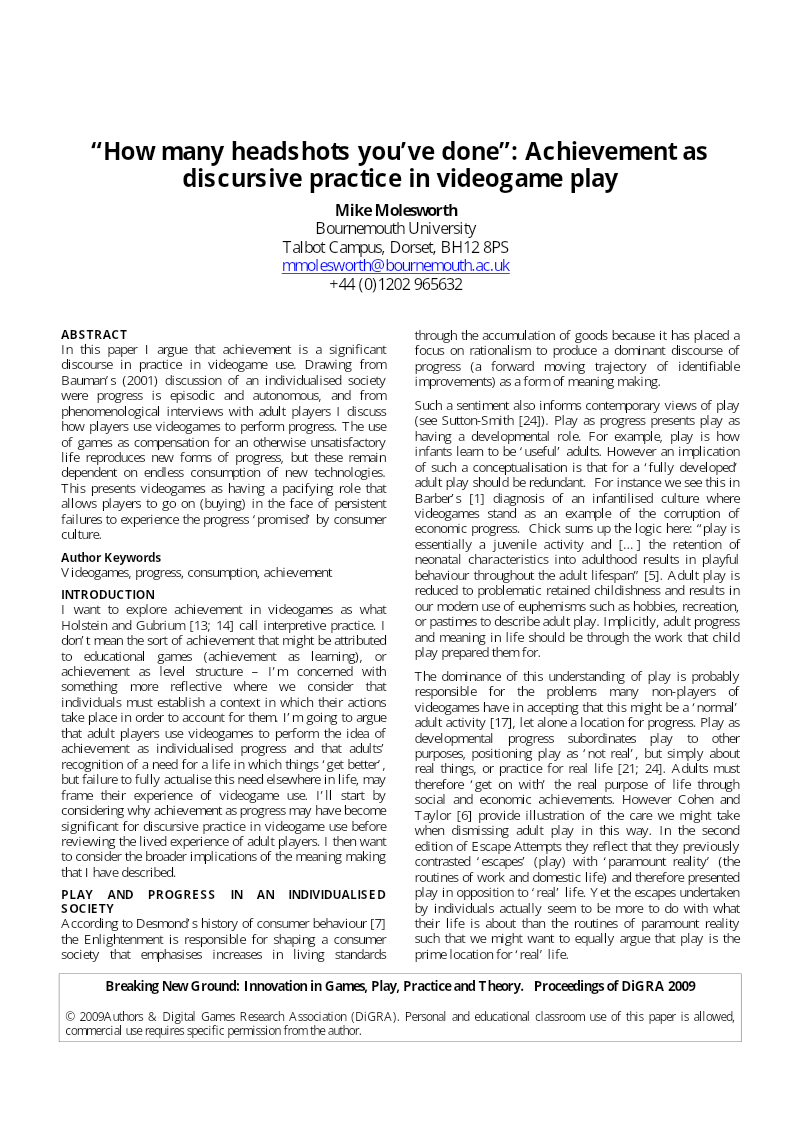
"How Many Headshots You've Done": Achievement as Discursive Practice in Videogame Play
Molesworth's paper argues that achievement in videogame play functions as a discursive practice through which adults reproduce a sense of individualised progress that is otherwise lacking in their work and consumer lives.
- The paper argues that achievement in videogame play acts as a discursive practice that lets adults recreate a sense of individualised progress missing from their work and consumer lives, drawing on Bauman's account of an episodic, individualised society.
- The study is based on 24 phenomenological interviews with adult players in southern England, conducted between June and October 2006, comprising roughly 50 hours of recordings.
- Three recurring themes emerged: anticipating new hardware and releases, experiencing progress through accumulating in-game achievements or crafting something from nothing, and using play to offset work and domestic stress and boredom.
What Sort of Fish Was It?: How Players Understand Their Narrative in Online Games
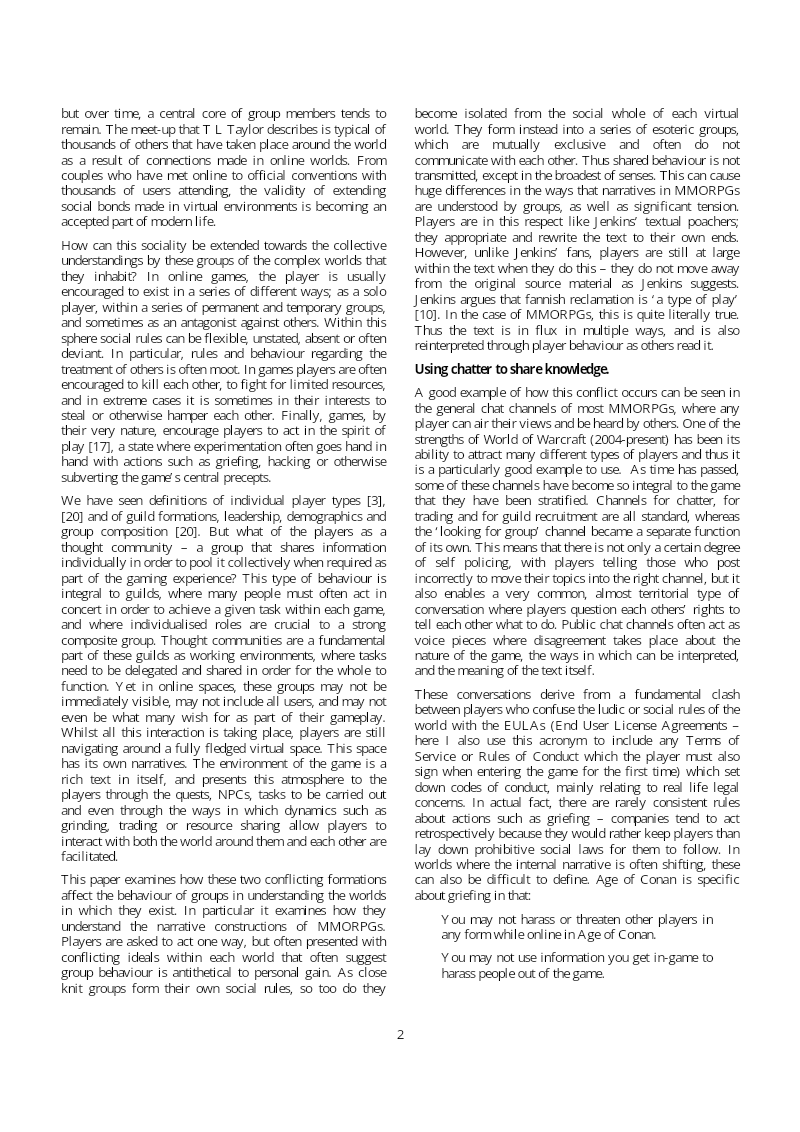
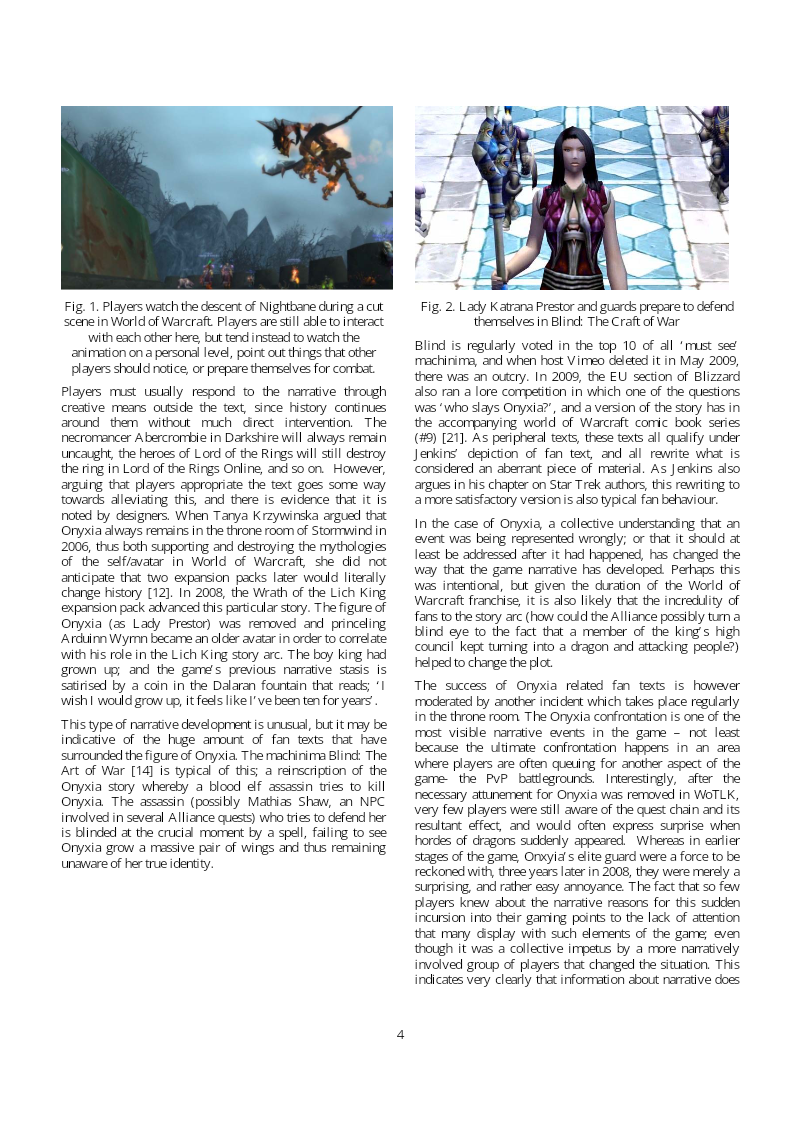
This paper examines how players of massively multiplayer online role-playing games (MMORPGs) interpret and reshape game narratives, drawing on the concept of "textual poaching" from fan studies.
- Online gaming communities are treated as legitimate, complex social entities that justify their conduct by drawing on competing rule sets: in-game norms, end-user license agreements, and informal community codes.
- Players in MMORPGs such as World of Warcraft operate within a text they simultaneously critique and rewrite, a condition the paper calls 'narrative flux', drawing on fan-studies concepts of 'textual poaching'.
- In the Onyxia case, a narratively engaged minority of players altered the game's storyline while most players remained largely unaware of the underlying quest chain and its consequences.
Effects of Peripheral Visual Information on Performance of Video Game with Hemi-Spherical Immersive Projection Screen
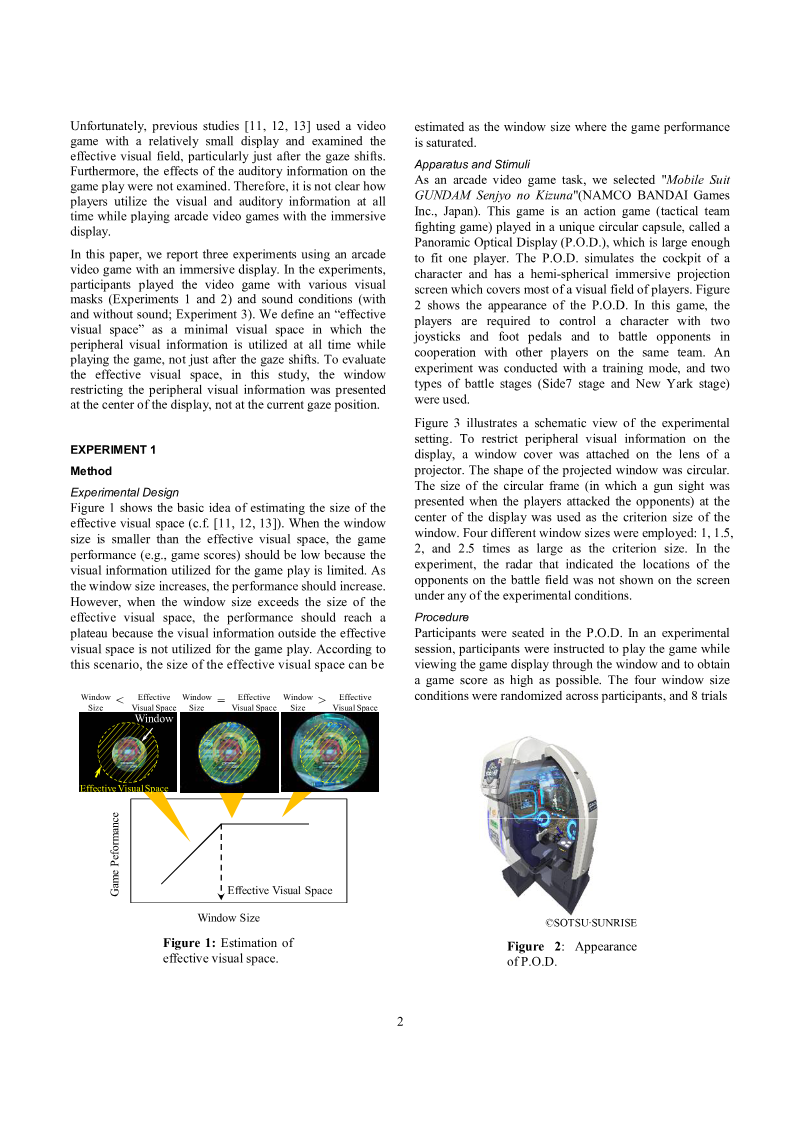
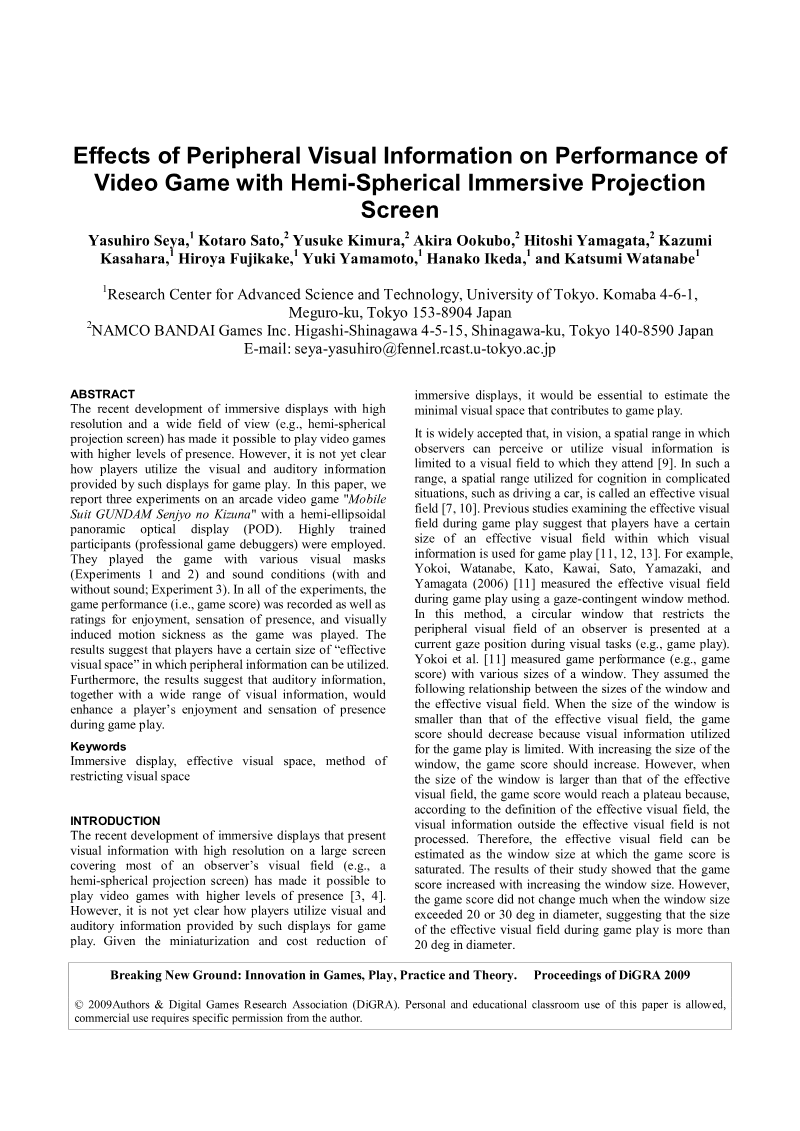
This study examines how players of an arcade action game, "Mobile Suit GUNDAM Senjyo no Kizuna," use peripheral visual and auditory information when playing on a hemi-spherical immersive projection screen inside a Panoramic Optical Display cockpit.
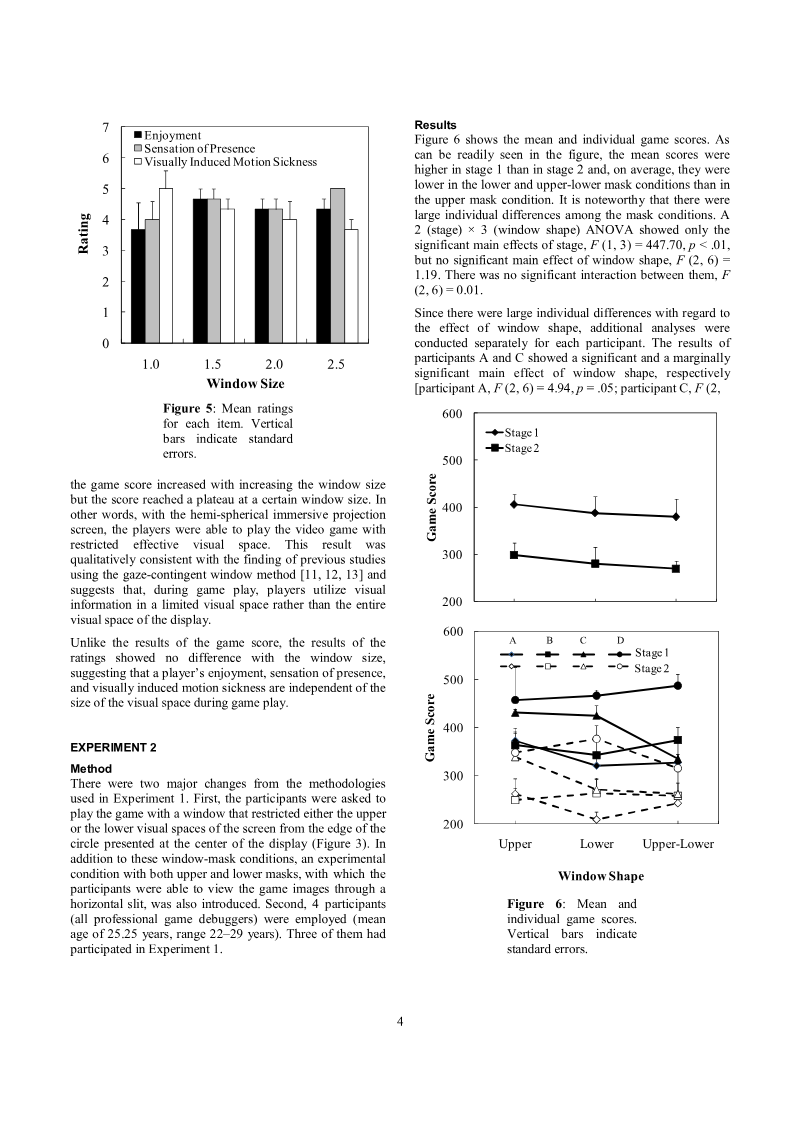
- Players of the arcade action game "Mobile Suit GUNDAM Senjyo no Kizuna" on a hemi-spherical immersive screen used a limited effective visual space: game scores rose with visual window size and plateaued at roughly 2 to 2.5 times the criterion size.
- Enjoyment, sensation of presence, and visually induced motion sickness ratings did not differ significantly across the different visual window sizes, so subjective comfort did not track the performance gains from a larger view.
- Masking the lower visual field tended to reduce scores, but effects varied considerably across individuals and may reflect game-specific strategies, such as using opponents' ground shadows as cues.
On the Edge of Reality: Reality Fiction in 'Sanningen om Marika'
"Sanningen om Marika" (2007–2008) was a Swedish alternate reality game built around a public broadcaster's television series and debate program, and this study examines how its deliberate blurring of fact and fiction shaped audience interpretation.
- The 2007–2008 Swedish alternate reality game "Sanningen om Marika," built around a public broadcaster's TV series and debate program, deliberately blurred fact and fiction, producing sharply divided audience interpretations.
- In a survey of 385 participants, about 30% judged the production to be real, 24% pretended it was real, 29% did not believe it, and 17% made no distinction between fact and fiction.
- A "Pretend that it is real" game rule combined with an "Orson Welles effect" led some viewers to accept the content as genuine despite explicit disclaimers, while experienced larpers often embraced the rule as a marker of play.
Understanding Empathy in Children through 3D Character Design
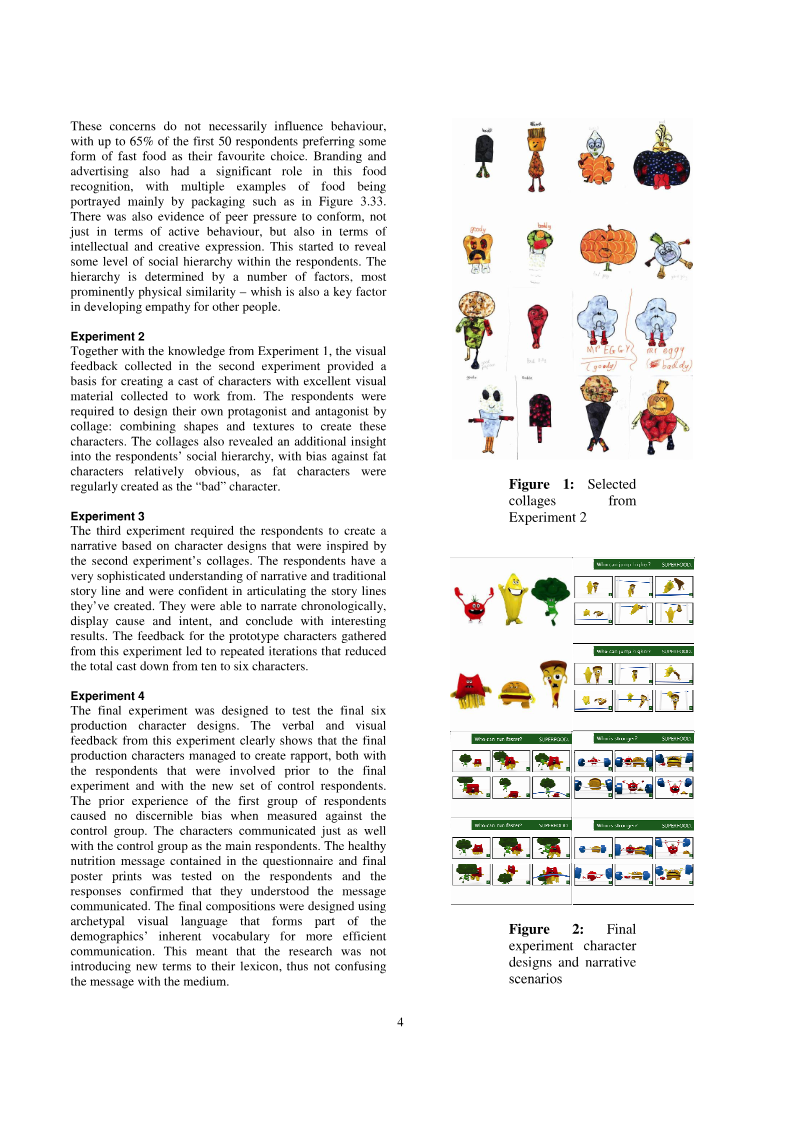
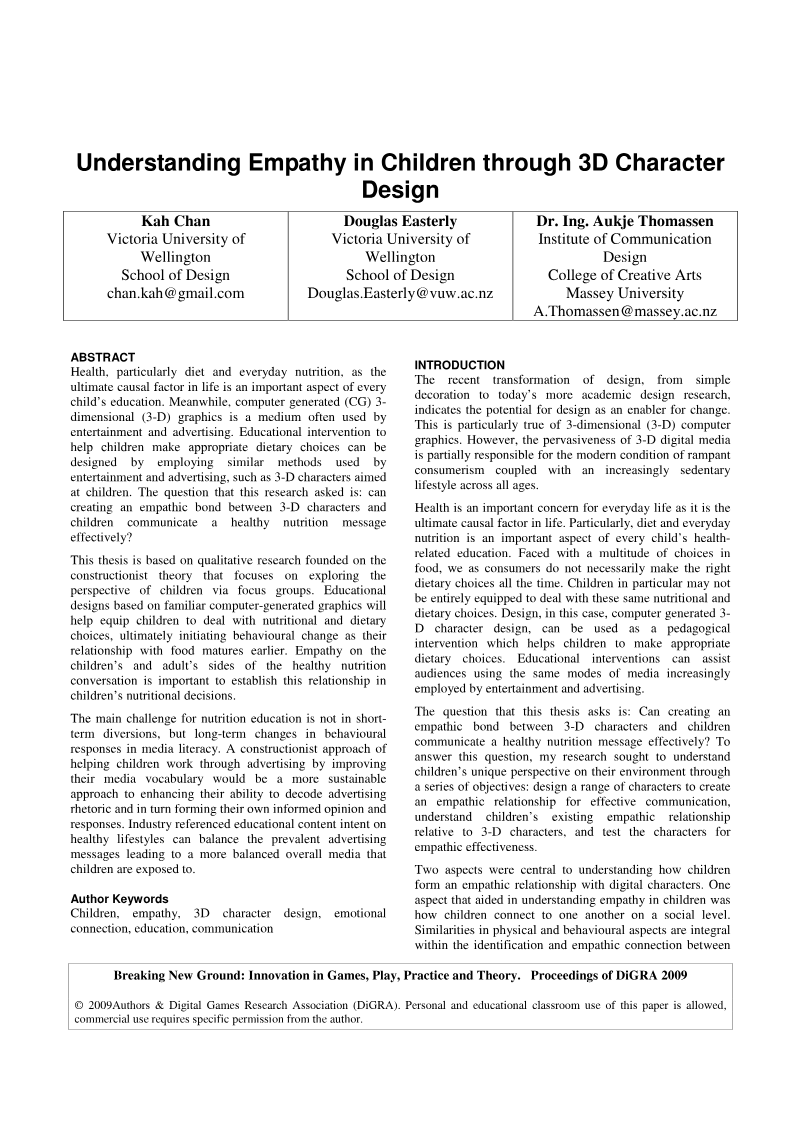
This study investigates whether an empathic bond between computer-generated 3-D characters and children can effectively communicate a healthy nutrition message.
- Empathic 3-D characters can communicate nutrition messages to children, with the research engaging about 75 children aged seven to nine from two primary schools in Wellington, New Zealand.
- Children expressed adult-like concerns about nutrition, but these stated concerns rarely translated into changes in dietary behaviour.
- Similarity in physical appearance and a social hierarchy among peers strongly shaped how much children empathised with characters.
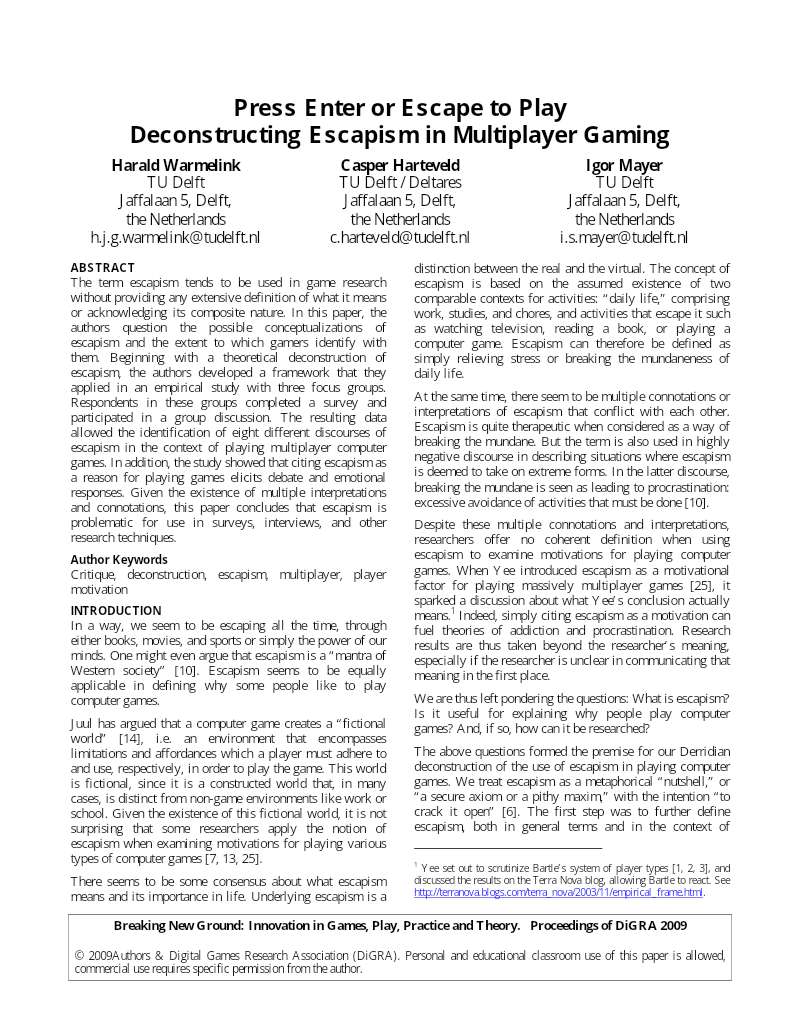
Press Enter or Escape to Play: Deconstructing Escapism in Multiplayer Gaming
This study examines escapism in multiplayer gaming, arguing that the concept is widely used in game research yet remains loosely defined and unevenly evaluated, with its negative connotations often treated as the default.
- Escapism in multiplayer gaming is loosely defined and unevenly evaluated in research, with its negative connotations often treated as the default, though the authors argue it carries both healthy and unhealthy meanings.
- The authors propose a framework distinguishing four escapist motivations (mundane breaking, stress relief, pleasure seeking, and imagination conjuring) from activity types ranging from evasive and passive to active and extreme.
- In focus-group research with clan and guild gamers, pleasure seeking was the most important escapist motivation (4.54 on a 5-point scale), while imagination conjuring ranked lowest (2.71).
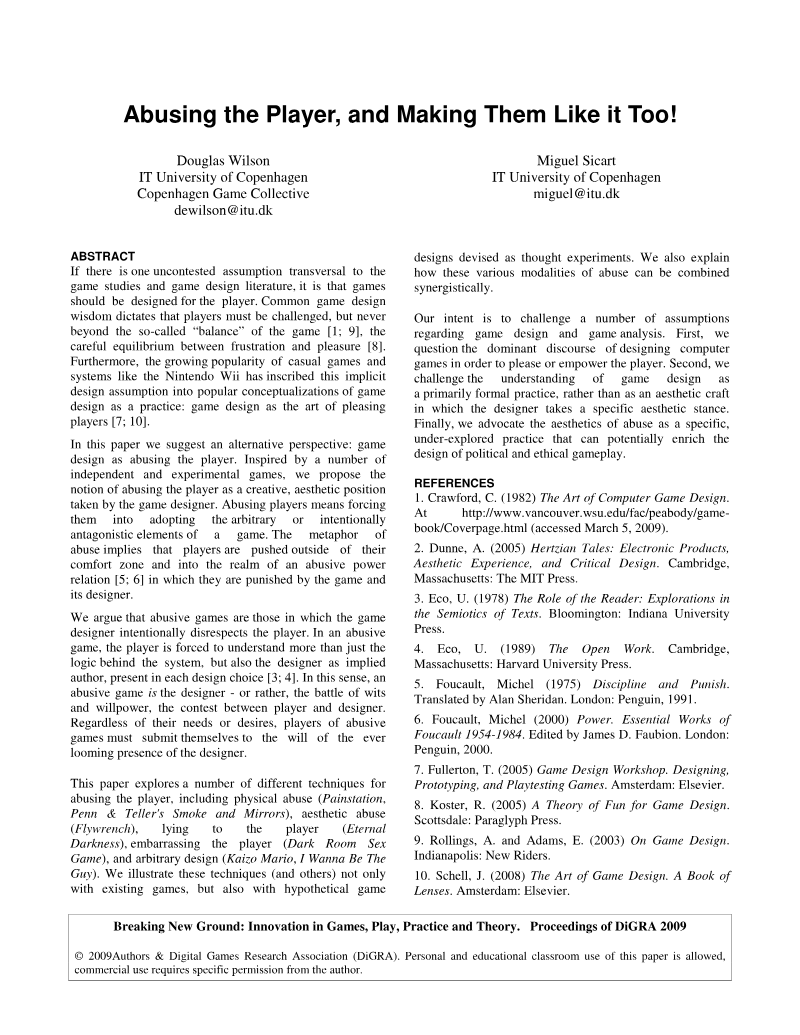
Abusing the Player, and Making Them Like it Too!
This paper, co-authored by Douglas Wilson and Miguel Sicart of the IT University of Copenhagen, argues against the prevailing assumption in game studies and design that games should be built for the player's pleasure, empowerment, and comfort.
- The paper argues that 'abusing the player' (intentionally disrespecting, antagonizing, or punishing players) is a legitimate, under-explored creative and aesthetic practice that can enrich the political and ethical dimensions of gameplay.
- Authors Douglas Wilson and Miguel Sicart of the IT University of Copenhagen challenge the dominant view that games should be built for player pleasure, empowerment, and comfort, and that design is primarily about balancing frustration and pleasure.
- The authors reframe game design as an aesthetic craft in which the designer becomes a visible implied author whose intent the player must contend with alongside the system's logic.