1 free read left. Create a free account for unlimited reading + AI research.
Create free accountWhitepaper DiGRA
1 free read left. Create a free account for unlimited reading + AI research.
Create free accountWhitepaperDiGRA
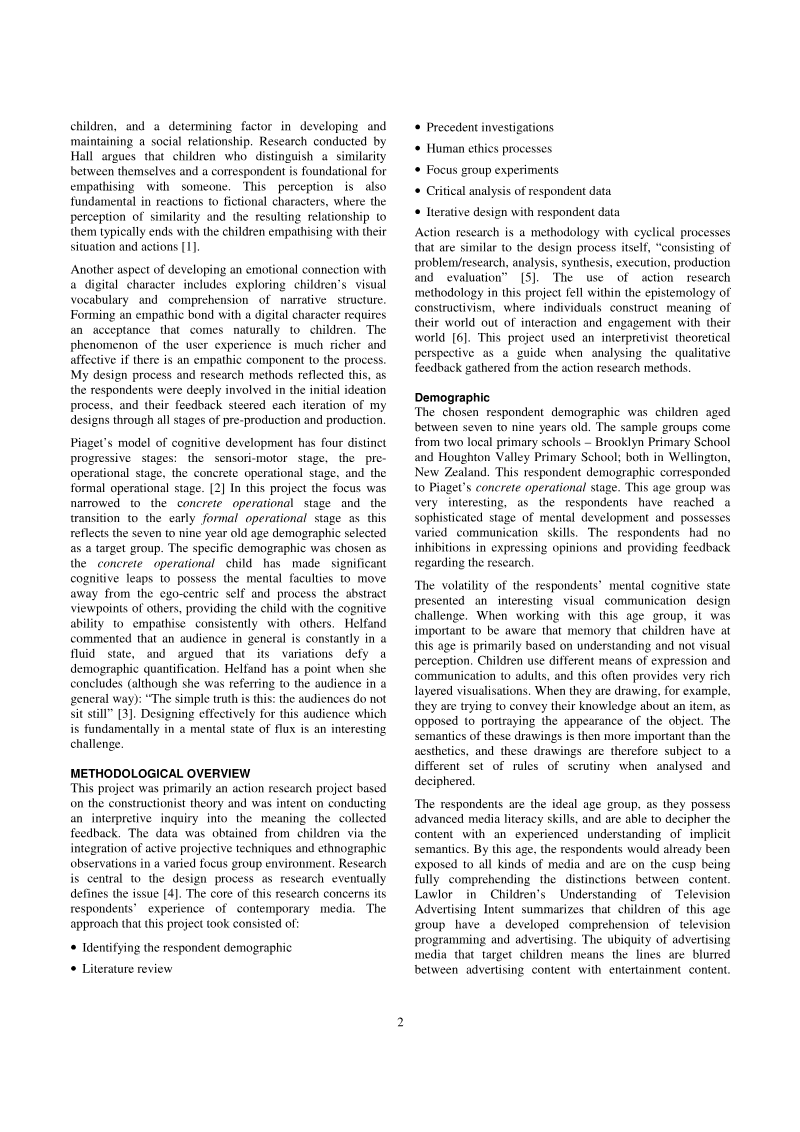
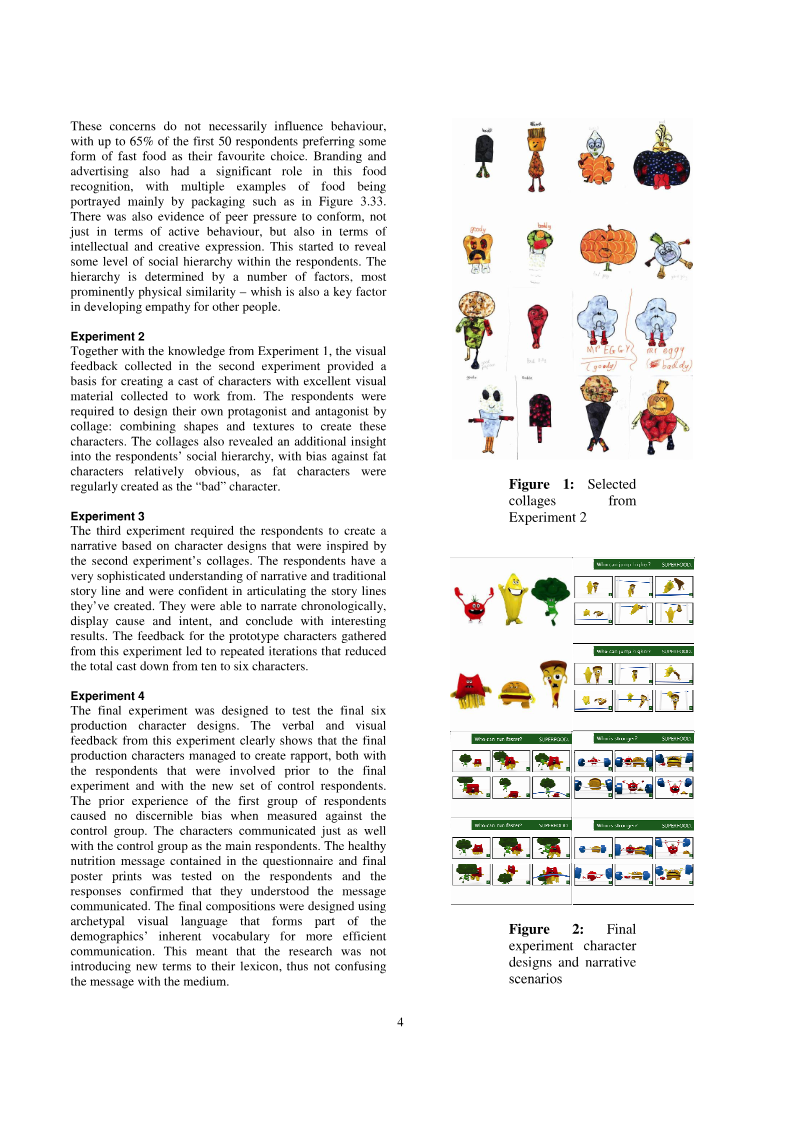
The research tested whether an empathic bond between computer-generated characters and children could communicate a healthy nutrition message.
This study investigates whether an empathic bond between computer-generated 3-D characters and children can effectively communicate a healthy nutrition message. Grounded in constructionist theory and conducted through action research, the project aimed to design educational characters that could counterbalance the prevalent advertising children encounter. Its central premise is that educational interventions employing the same media modes as entertainment and advertising can help children develop media literacy and make more appropriate dietary choices over the long term rather than producing only short-term effects.
The research engaged approximately 75 children aged seven to nine from two primary schools in Wellington, New Zealand, corresponding to Piaget's concrete operational stage. Data were gathered through four iterative focus group experiments combining projective techniques, ethnographic observation, and interviews, yielding over 400 drawings and accompanying written responses from 70 children. Analysis was qualitative, guided by criteria for engagement with characters and recognition of emotion. Key findings included that children held adult-like concerns about nutrition yet their stated concerns rarely translated into altered dietary behaviour, that similarity in physical appearance and a social hierarchy among peers strongly shaped empathy, and that the final six characters created rapport equally well with a control group, indicating the designs communicated the intended message without requiring prior exposure.
The author concludes that empathic engagement is an effective vehicle for communicating nutrition education to children, and that design grounded in an understanding of children's cognitive development, social structures, and visual vocabulary can influence attitudes toward food. Limitations include the small, localised sample and the qualitative nature of the evidence, which does not measure long-term behavioural change directly.

DiGRA · 2016

DiGRA · 2016

DiGRA · 2016



DiGRA · 2016



DiGRA · 2016



DiGRA · 2016



DiGRA · 2016



DiGRA · 2016



DiGRA · 2016

DiGRA · 2015



DiGRA · 2015



DiGRA · 2015












Comments