Association for Computing Machinery
50 reports, presentations and talks by Association for Computing Machinery in the Game Industry Library, the newest “How Multidisciplinary Is Gamification Research: Results from a Scoping Review” (2017).
Documents
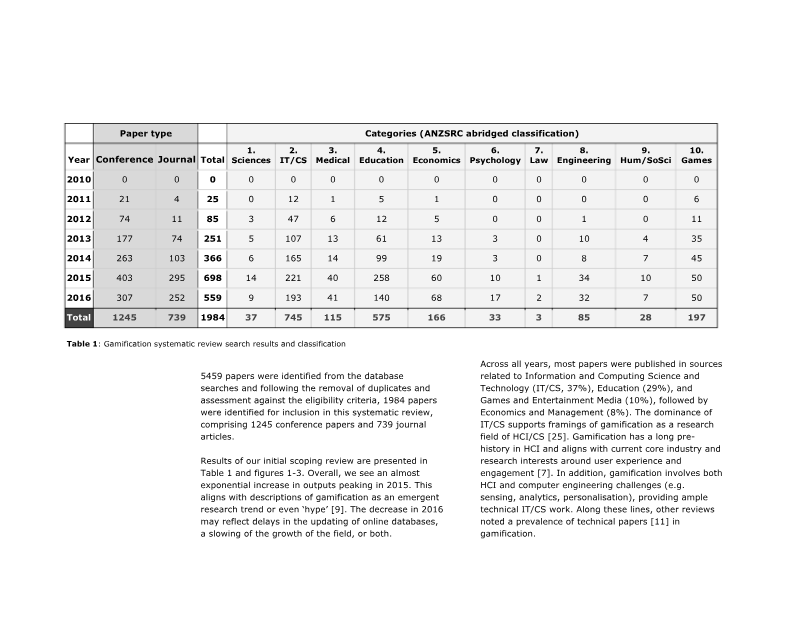
How Multidisciplinary Is Gamification Research: Results from a Scoping Review
This scoping review investigates the extent to which gamification has evolved into a multidisciplinary research field.
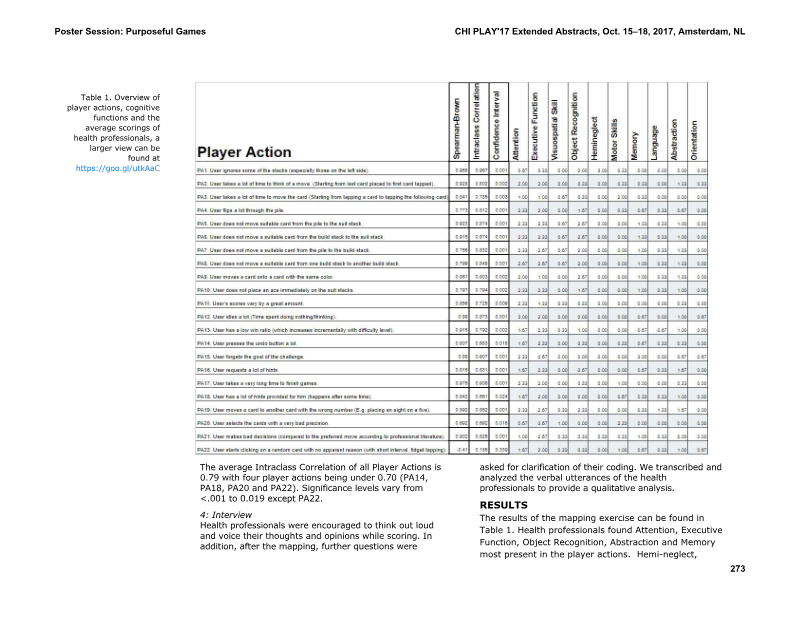
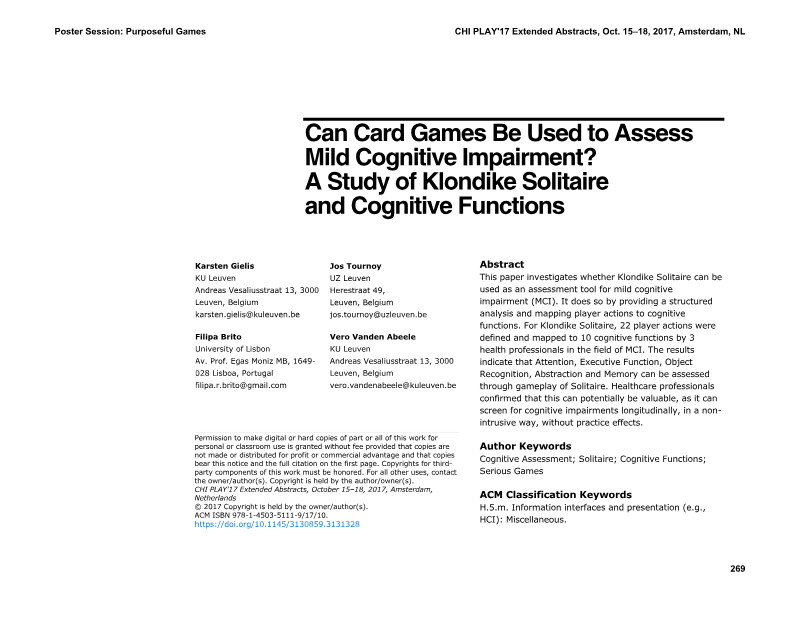
Can Card Games Be Used to Assess Mild Cognitive Impairment?: A Study of Klondike Solitaire
This research investigates the potential of Klondike Solitaire as a nonintrusive, longitudinal screening tool for mild cognitive impairment (MCI).
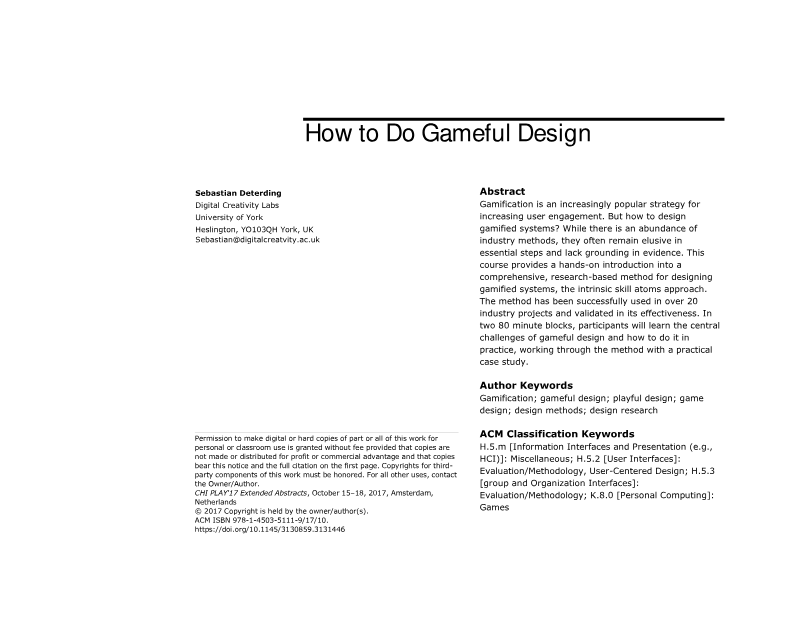
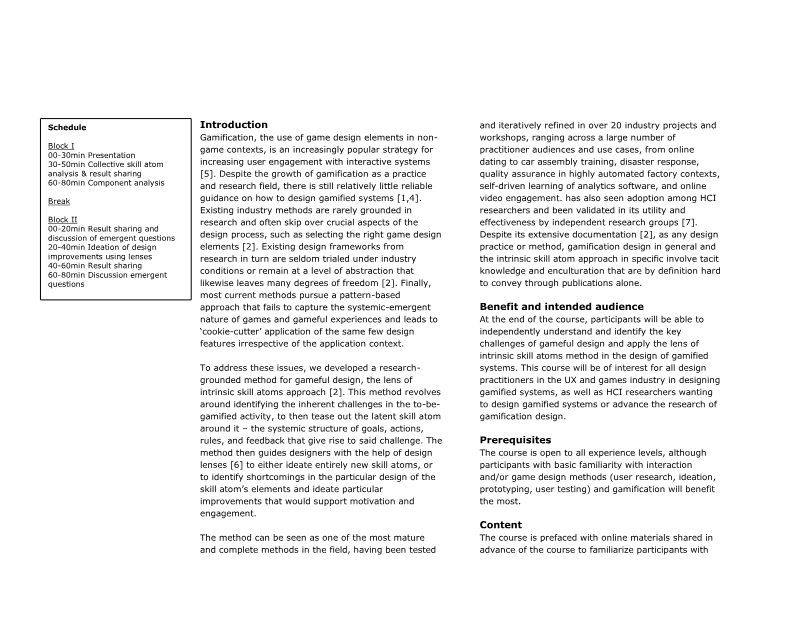
How to Do Gameful Design
The intrinsic skill atoms method provides a research-grounded framework for designing gamified systems, addressing the common industry reliance on superficial, pattern-based approaches.
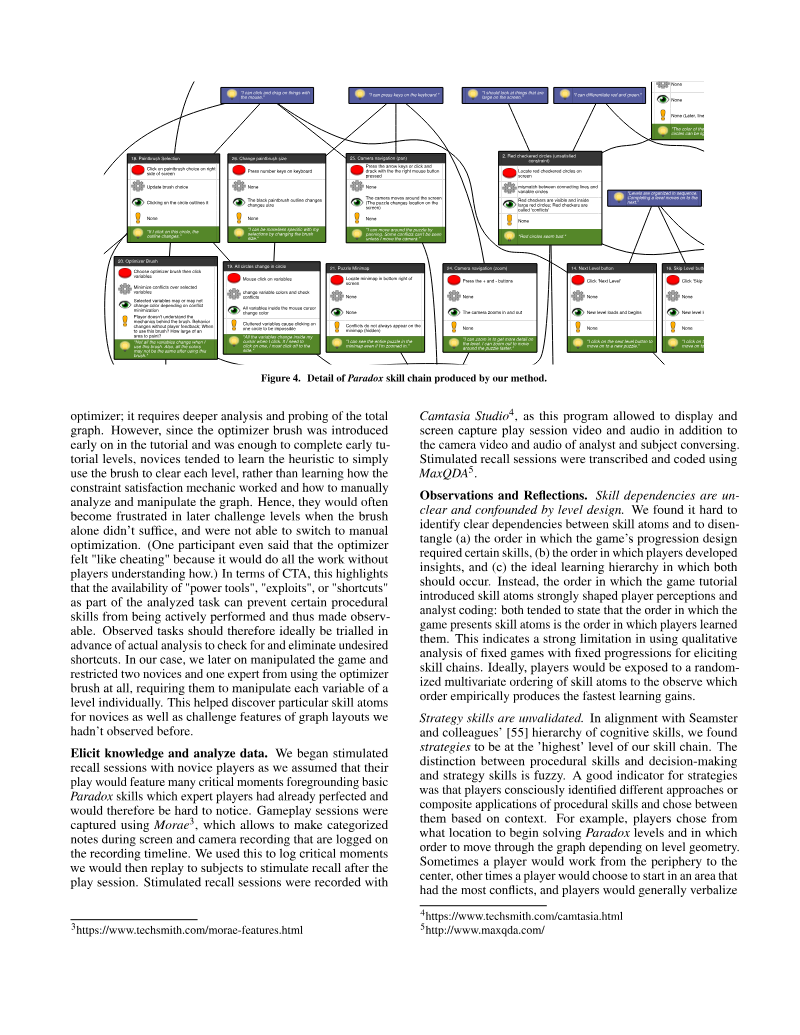
Adapting Cognitive Task Analysis to Elicit the Skill Chain of a Game
Cognitive Task Analysis provides a robust, empirical framework for mapping the skill chains of video games, shifting the industry focus from designer-led assumptions to the actual cognitive processes players employ.
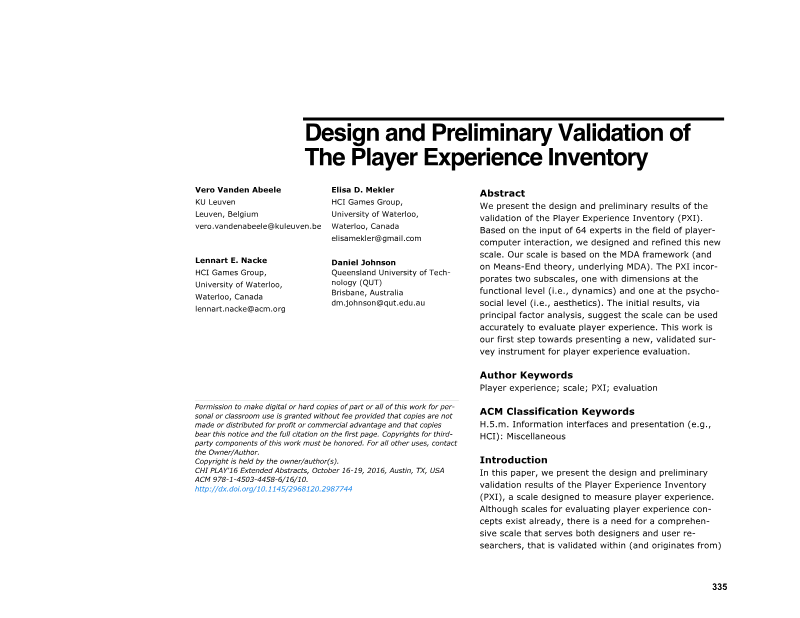
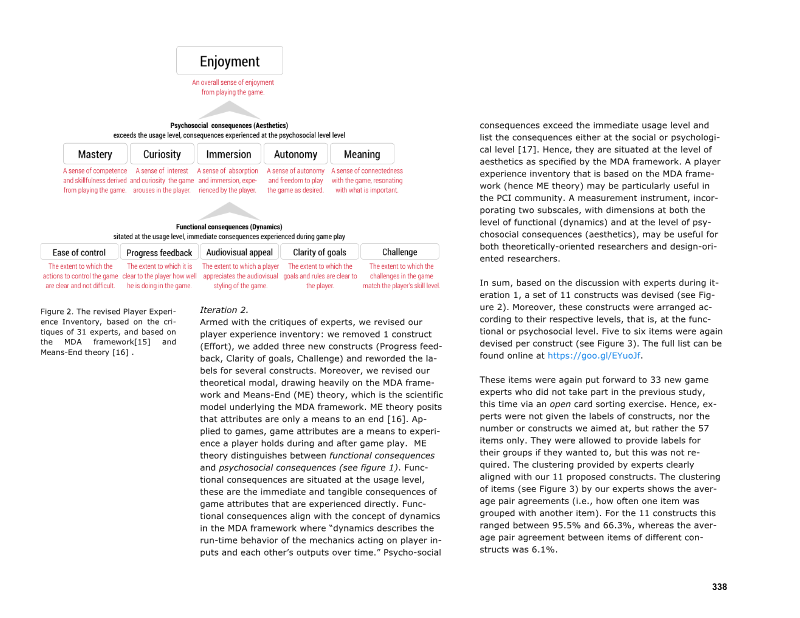
Design and Preliminary Validation of the Player Experience Inventory
The Player Experience Inventory (PXI) is a proposed standardized, freely available survey instrument designed to measure player experience across both academic and industry contexts.
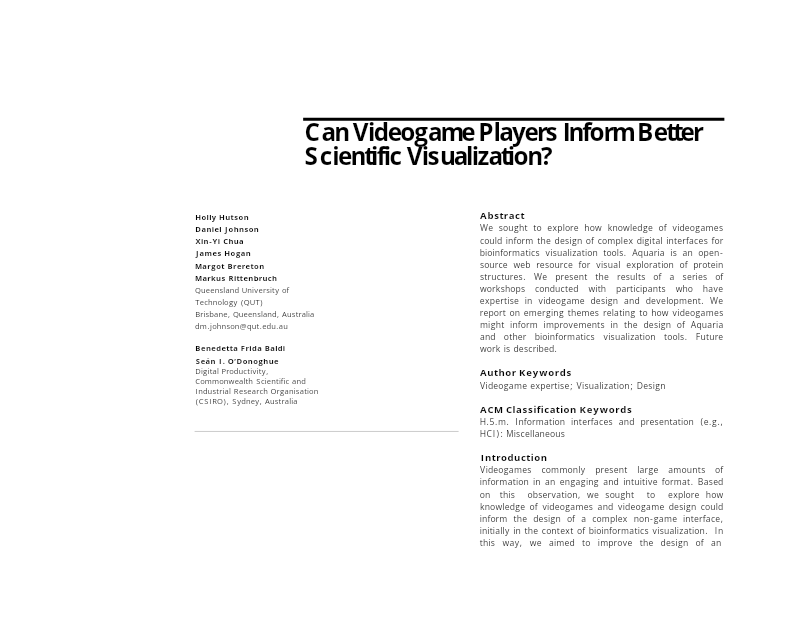
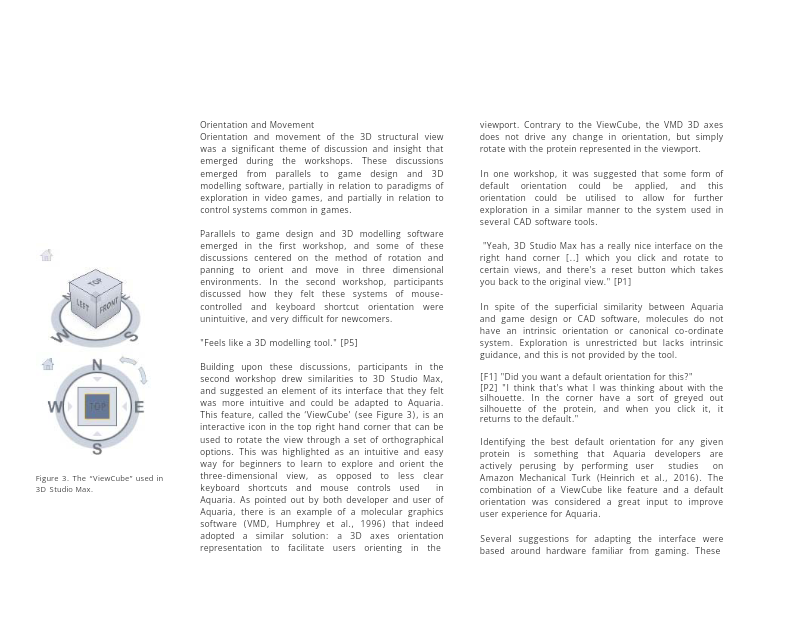
Can Videogame Players Inform Better Scientific Visualization?
This research explores how principles of videogame design can enhance the usability and interface of complex scientific visualization tools, specifically focusing on the bioinformatics platform Aquaria.
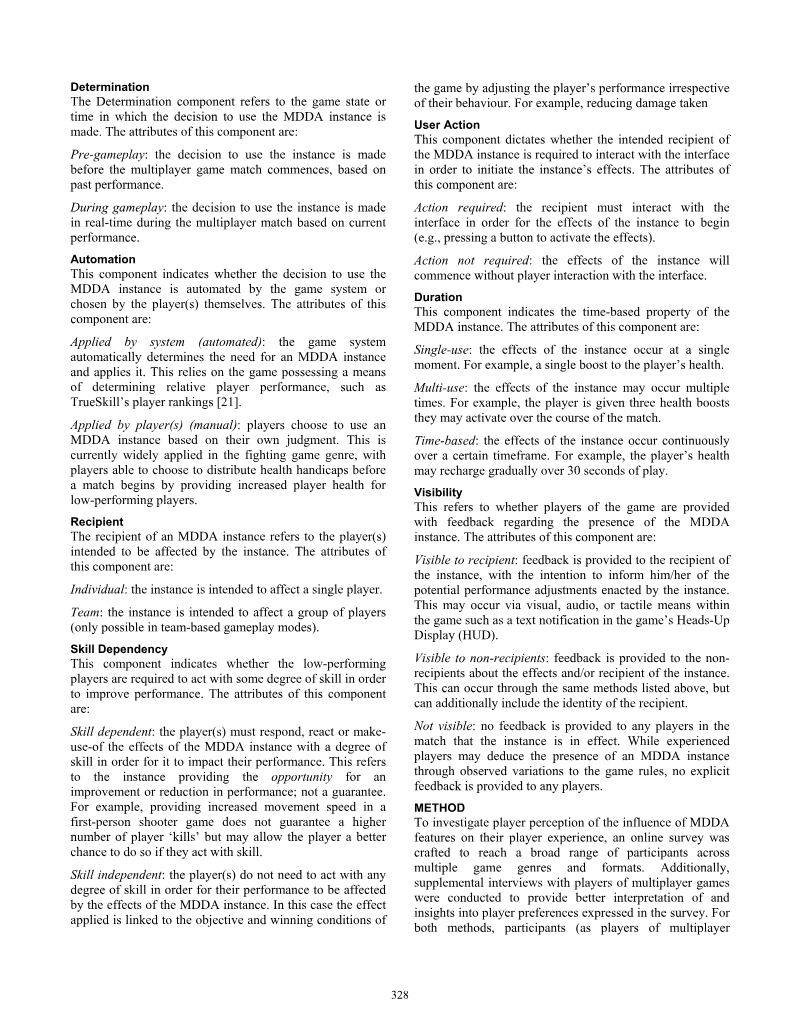
Crowd-Pleaser: Player Perspectives of Multiplayer Dynamic Difficulty Adjustment in Video Games
Multiplayer Dynamic Difficulty Adjustment (MDDA) serves as a critical mechanism for balancing competitive gaming environments by modulating performance variables between participants of disparate skill levels.
Playing Alone, Playing With Others: Differences in Player Experience and Indicators of Wellbeing
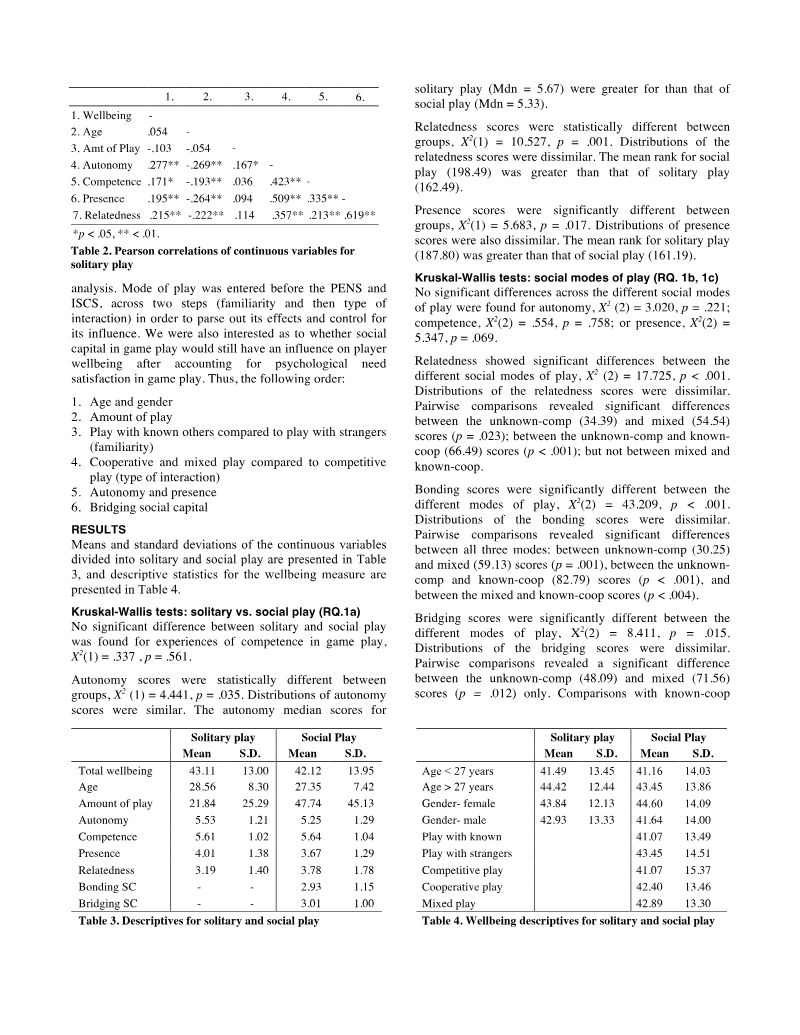
Video games serve as distinct psychological environments where the mode of engagement—solitary or social—fundamentally alters the pathways to player wellbeing.
- Gaming impacts wellbeing through two distinct pathways: solitary play functions as a restorative tool for autonomy and competence, while social play acts as a mechanism for social integration and relatedness.
- Cooperative play with known individuals provides the highest levels of social bonding, whereas interactions with strangers are effective for building bridging social capital.
- Excessive play time is consistently associated with a decline in overall psychological health, regardless of the gaming mode.
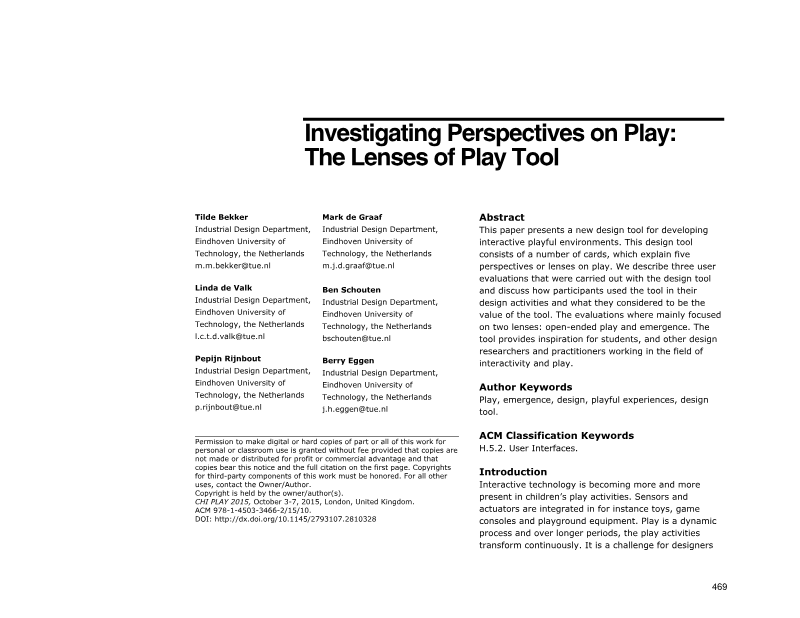
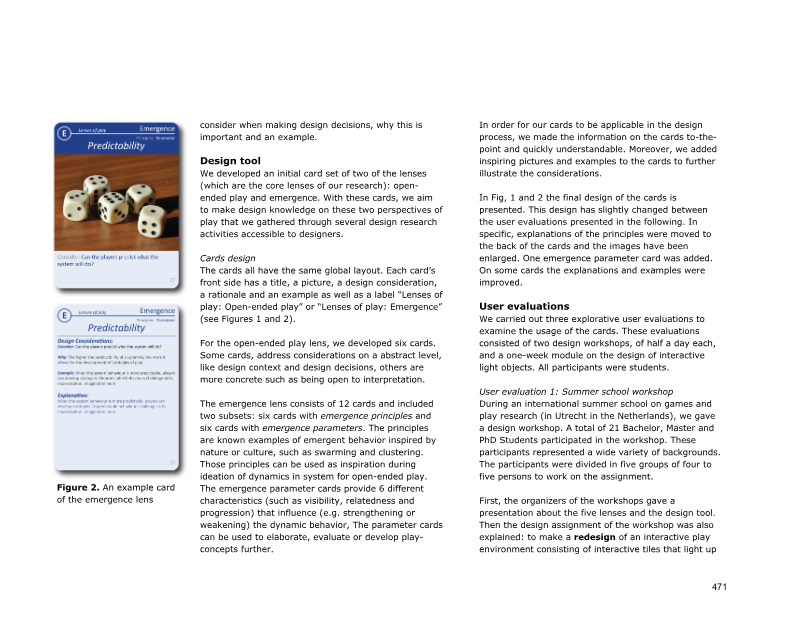
Investigating Perspectives on Play: The Lenses of Play Tool
The Lenses of Play tool is a card-based design instrument developed to assist practitioners and students in creating interactive, playful environments.
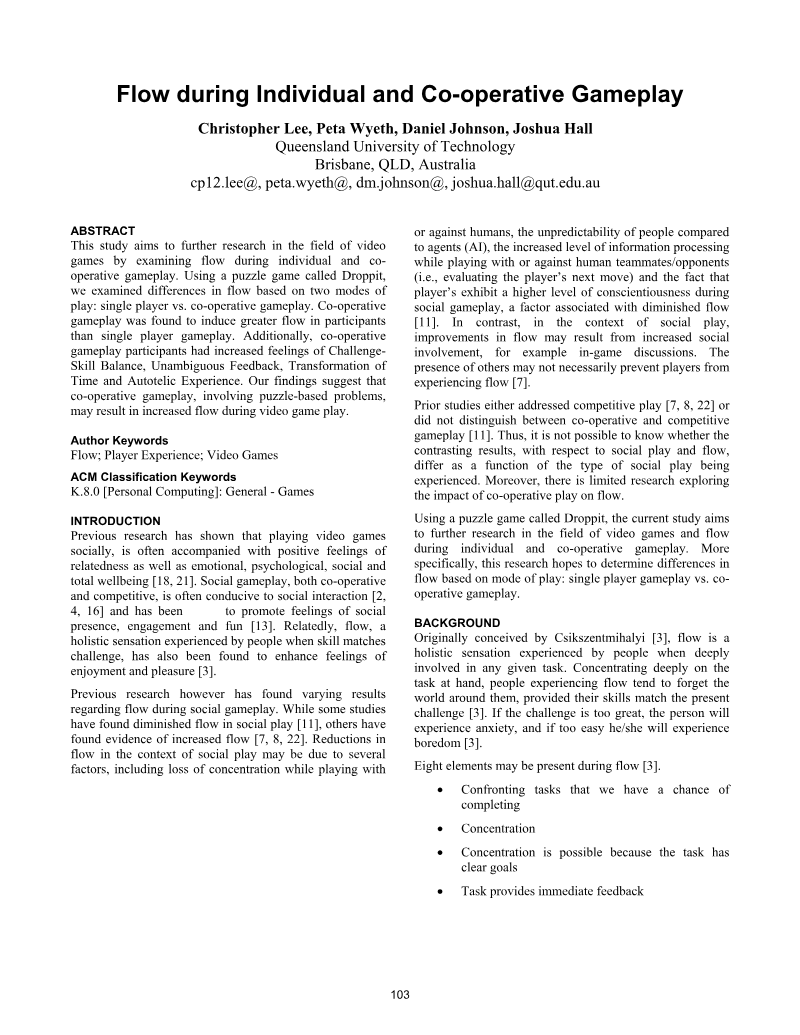
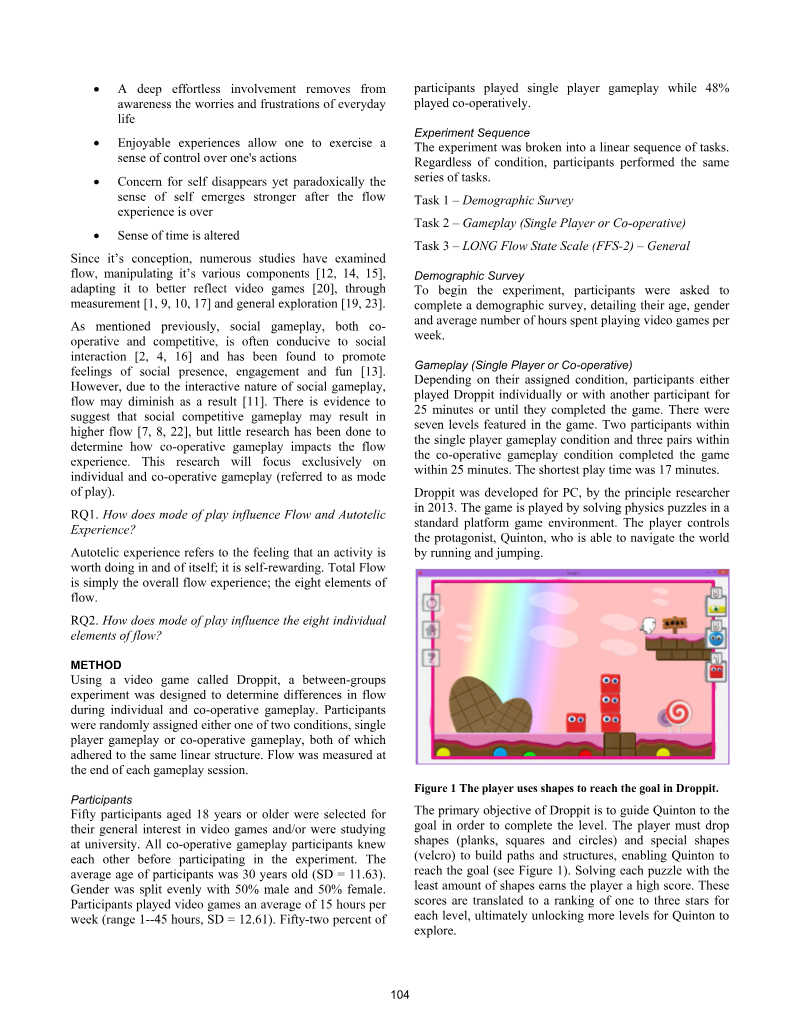

Flow during Individual and Co-operative Gameplay
This study investigates the impact of social interaction on player experience by comparing flow states during individual versus co-operative gameplay.
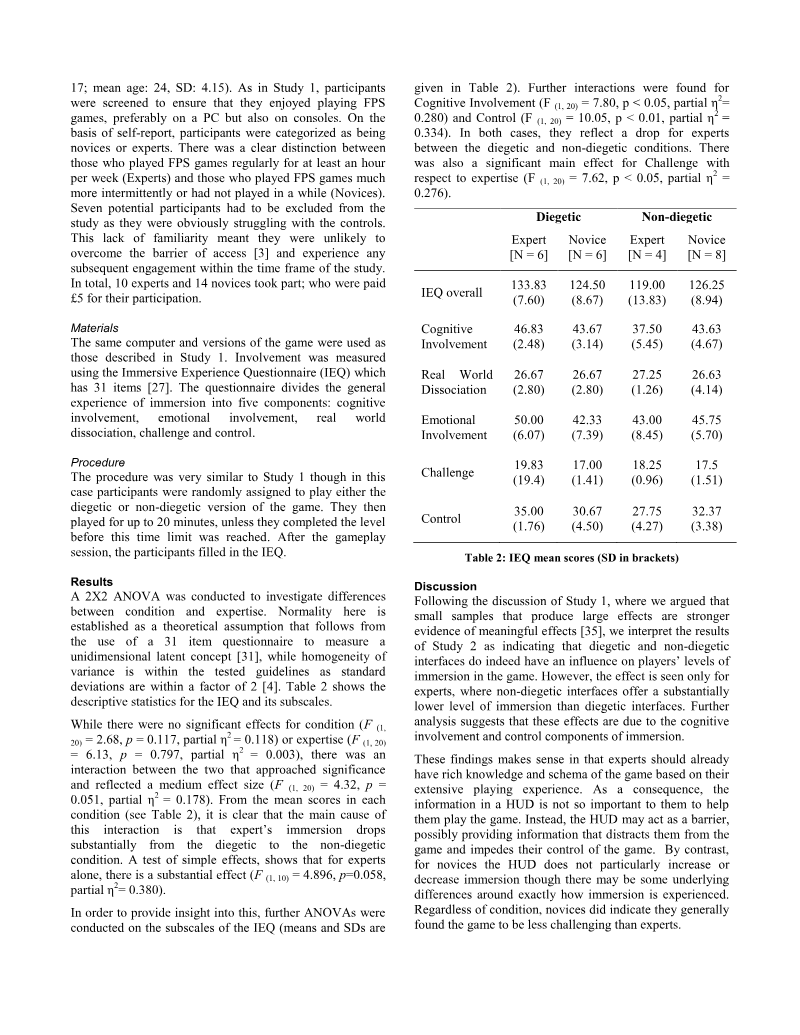
Removing the HUD: The Impact of Non-diegetic Game Elements and Expertise on Player Involvement
The removal of non-diegetic interface elements, such as heads-up displays, serves as a critical design lever for modulating player immersion and cognitive engagement.
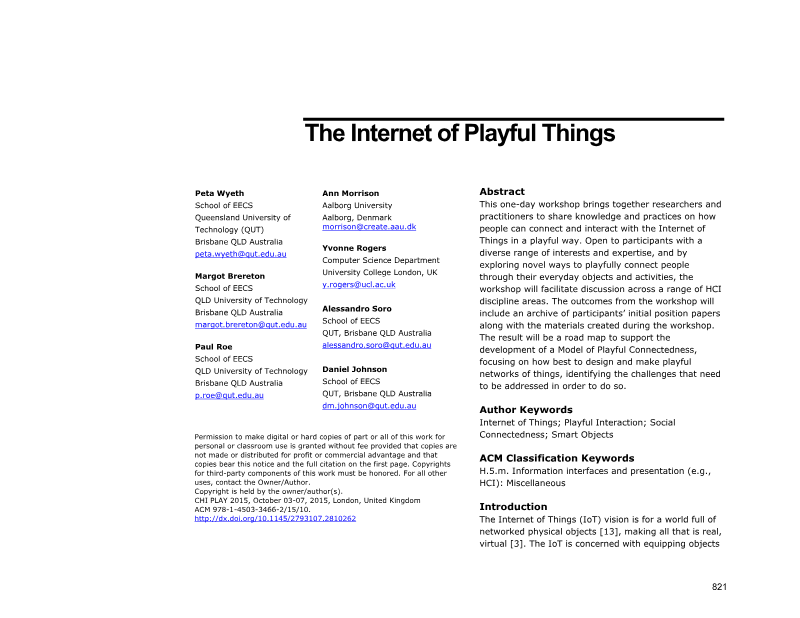
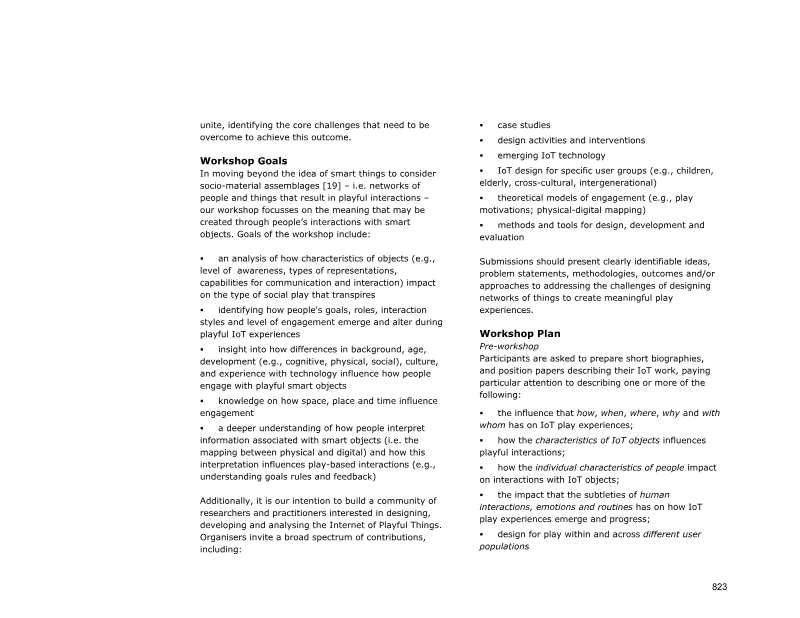

The Internet of Playful Things
The Internet of Playful Things addresses the research gap in the Internet of Things (IoT) field, which has historically prioritized utilitarian applications such as supply chain management and home automation over user experience and social interaction.
Do you work at Association for Computing Machinery? Get a free report of how these documents are read and cited here.