Association for Computing Machinery
50 reports, presentations and talks by Association for Computing Machinery in the Game Industry Library, the newest “Pokémon GO as an Advertising Platform: The Case for Locative Advertising in Location-based Games” (2024).
Documents
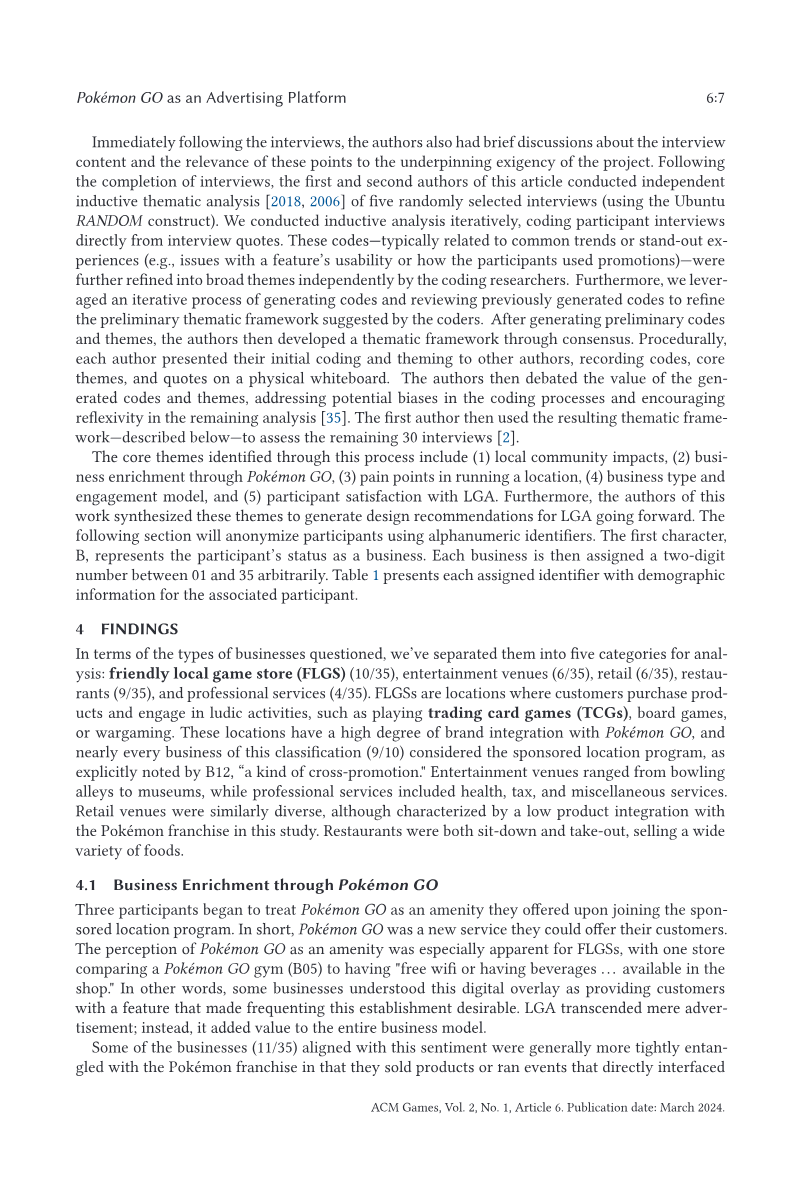
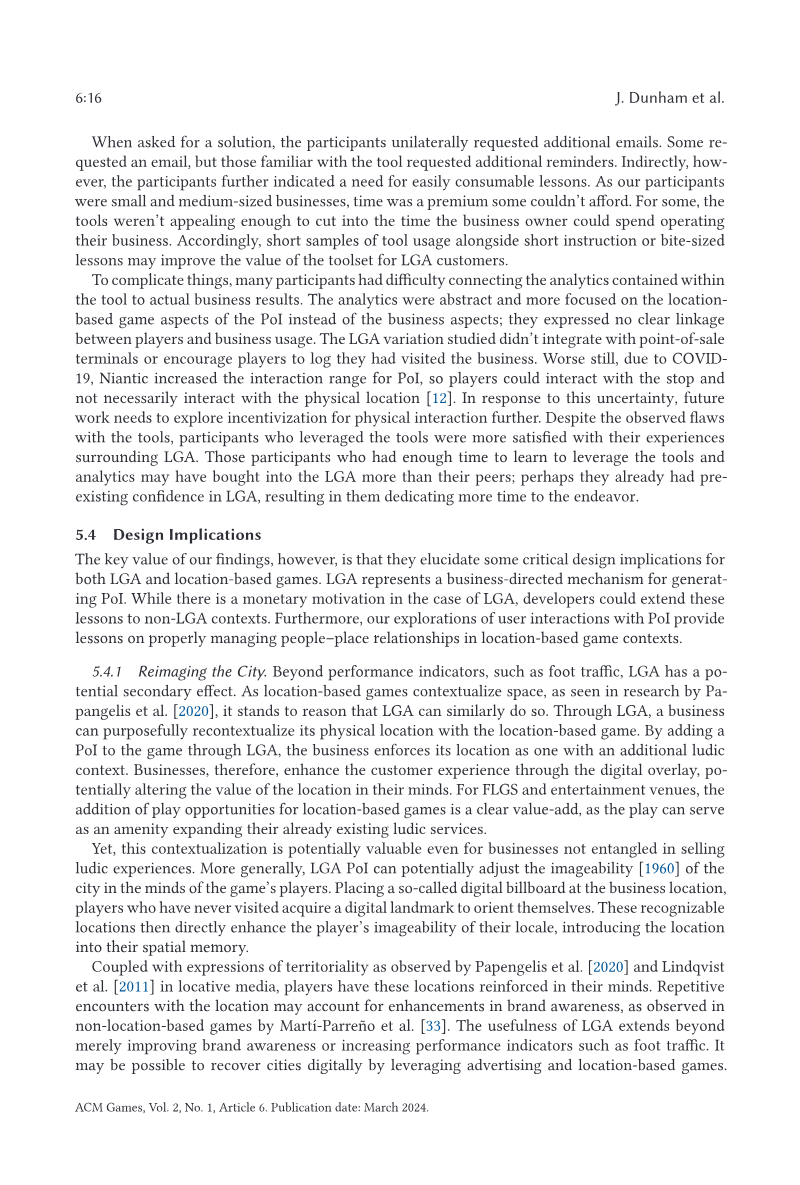

Pokémon GO as an Advertising Platform: The Case for Locative Advertising in Location-based Games
Location-based advertising within Pokémon GO functions as a potent tool for small and medium-sized enterprises to enhance brand recognition and foster local community engagement.
- The efficacy of Pokémon GO advertising is primarily driven by a business owner’s proactive engagement with the local gaming community rather than the platform’s native features.
- Current sponsored location programs suffer from a lack of sophisticated analytics, preventing business owners from making data-driven decisions or accurately quantifying return on investment.
- High costs of entry relative to the limited feature set create significant barriers for small and medium-sized enterprises attempting to use the platform.
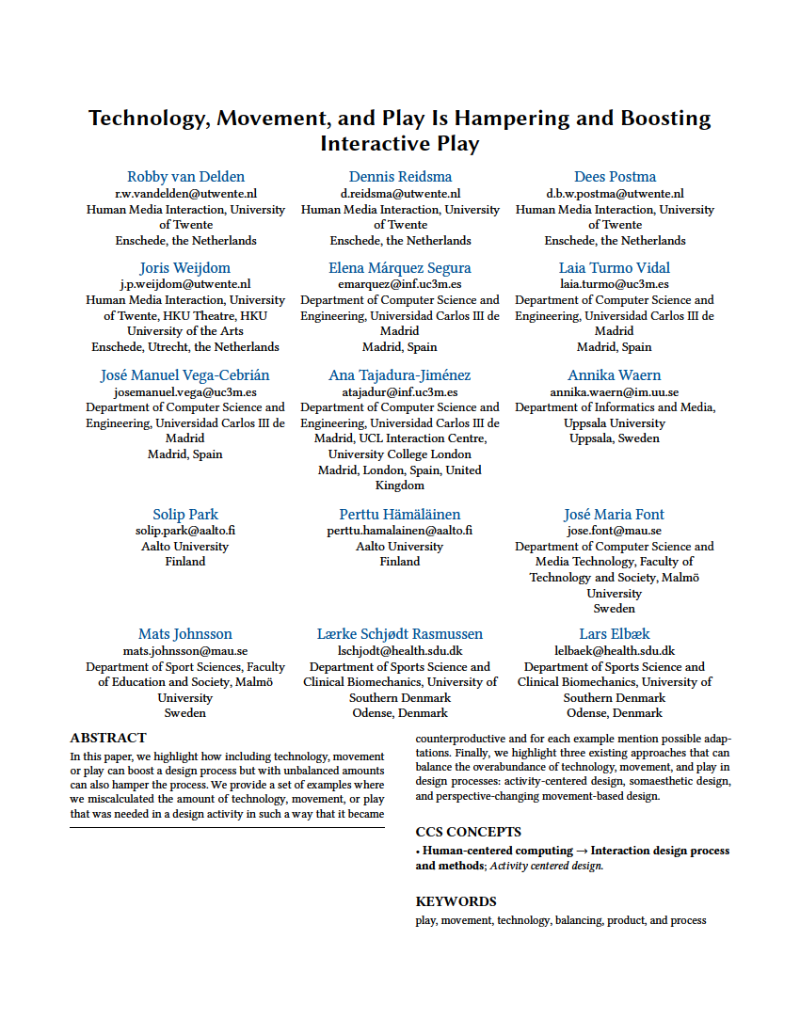
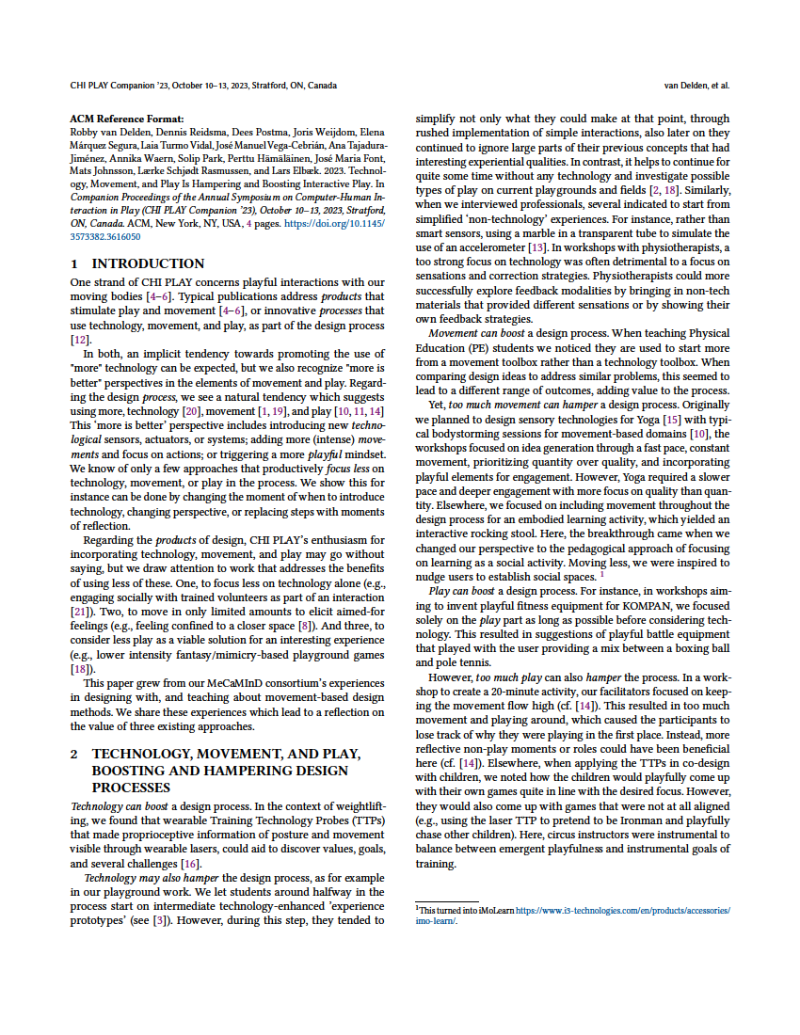
Technology, Movement, and Play Is Hampering and Boosting Interactive Play
The design of interactive, movement-based play often suffers from an implicit bias toward the "more is better" philosophy, where designers reflexively incorporate excessive technology, physical movement, or playful elements.
- Designers often fall into a 'more is better' trap, where excessive technology, movement, and playful elements obscure core experiential and pedagogical goals.
- Over-reliance on technology frequently results in superficial interactions that sacrifice depth for complexity.
- Prioritizing the quantity of physical movement often undermines the quality of user engagement.

Conversations with Pigeons: Capturing Players' Lived Experience of Perspective Challenging Games
Perspective-challenging games function as powerful catalysts for cognitive engagement by systematically subverting player expectations and genre conventions.
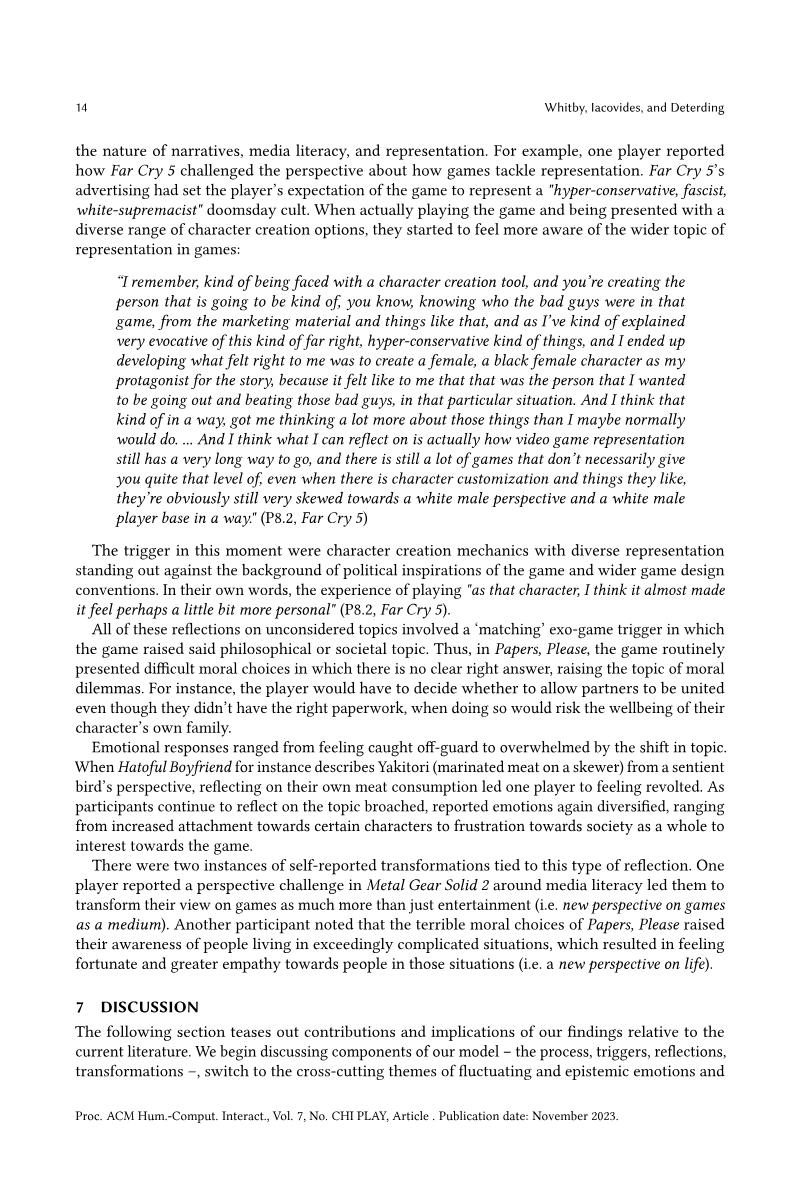
- Perspective-challenging experiences (PCEs) in games follow a three-stage sequence: a trigger event that contradicts player expectations, a period of reflection, and a potential, though rare, transformation of perspective.
- Endo-game triggers—such as failure states, revealed mechanics, or subverted genre tropes—are the most common, accounting for 34 of the 52 observed triggers.
- When games successfully prompt reflection, they most frequently cause players to think about the medium of gaming itself (endo-game reflection) rather than external societal or philosophical topics (exo-game reflection).
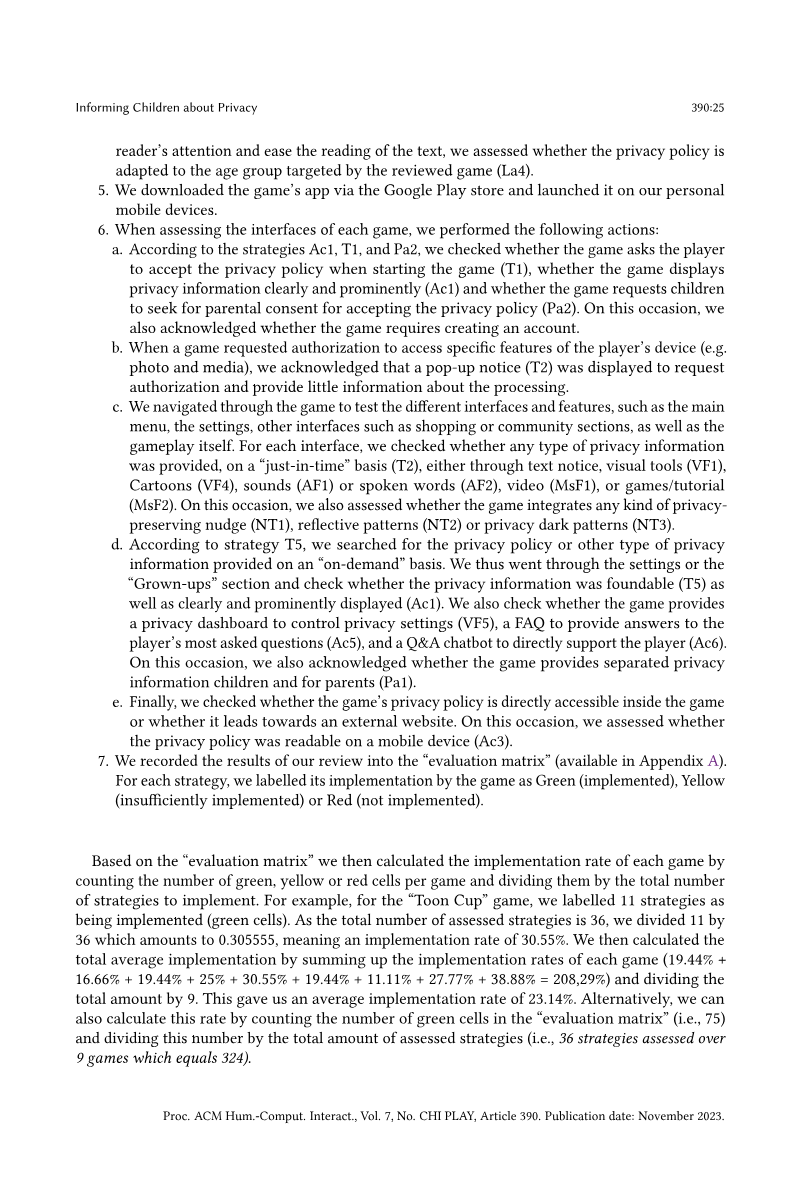
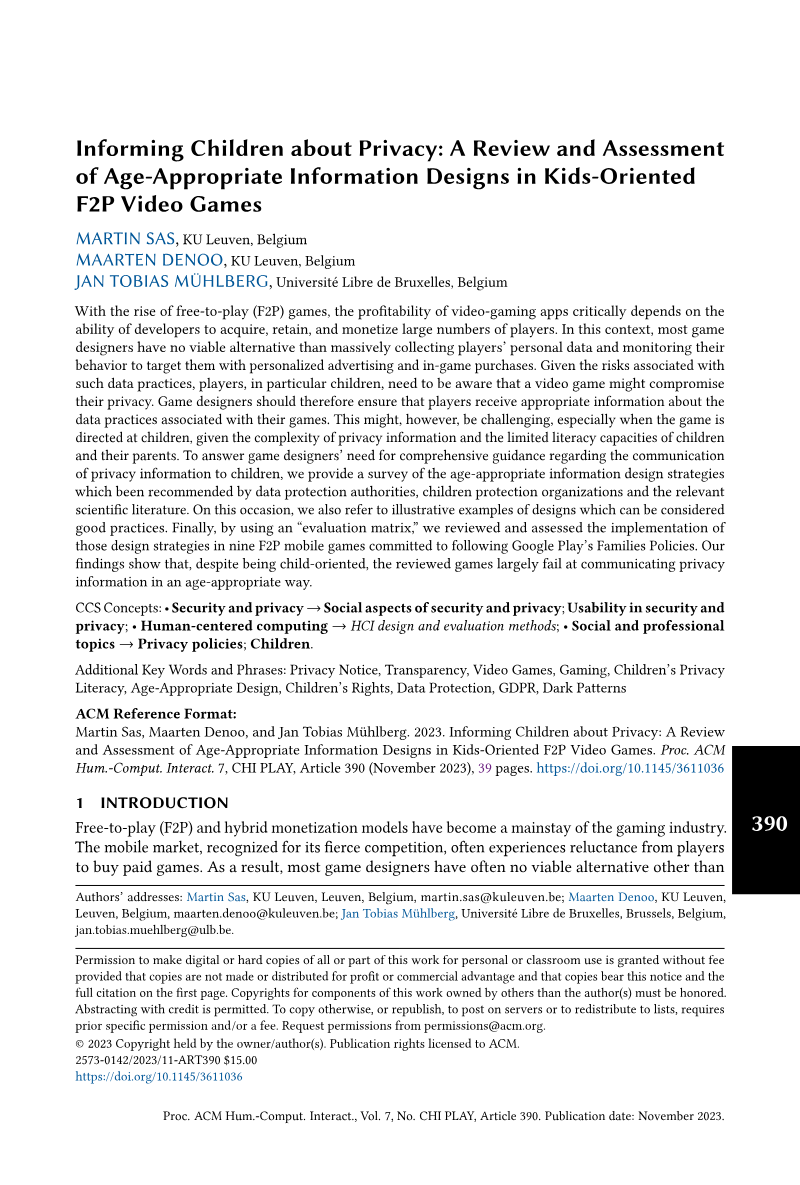
Informing Children about Privacy: A Review and Assessment of Age-Appropriate Information Designs in Kids-Oriented F2P Video Games
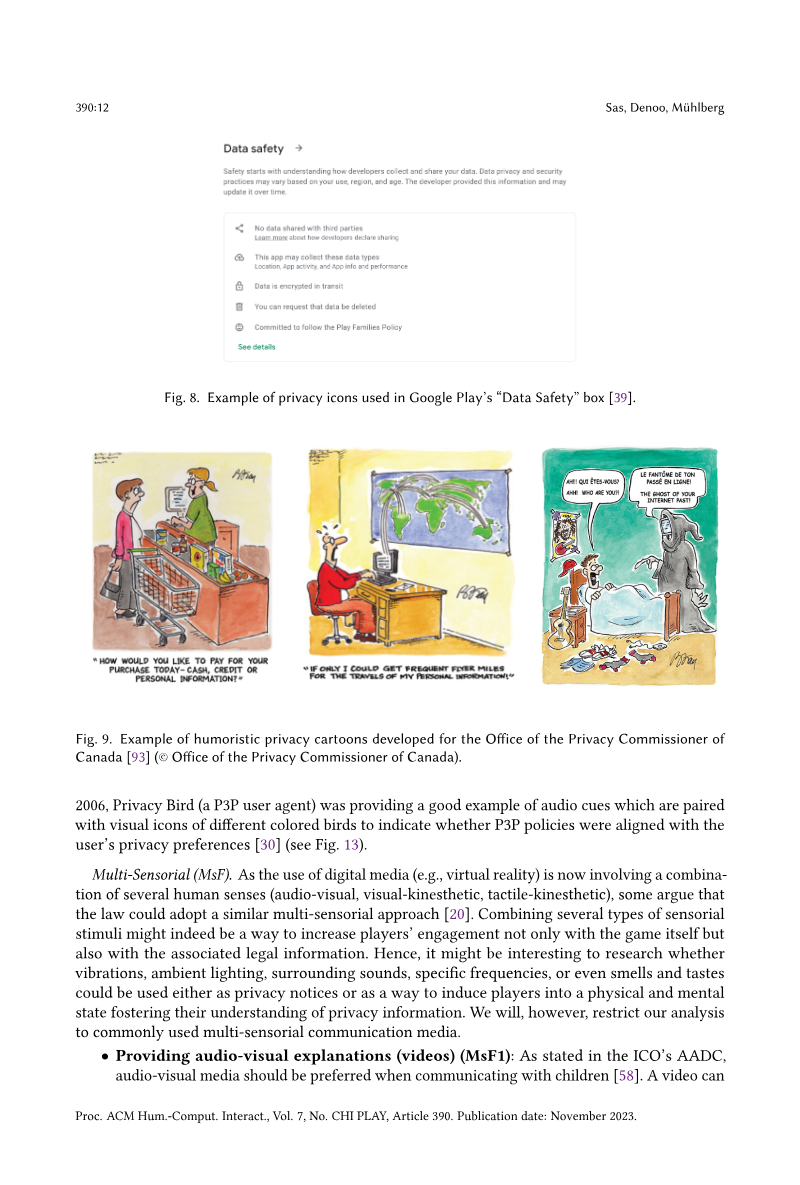
Free-to-play mobile games marketed toward children frequently fail to provide transparent or accessible privacy information, prioritizing aggressive monetization over the developmental needs of young users.
- Despite targeting children, nine major free-to-play mobile games—including titles from Babybus, Toca Boca, and Cartoon Network—largely fail to communicate privacy information in an age-appropriate manner.
- Reviewed games overwhelmingly rely on complex, text-heavy privacy policies that utilize unclear language and high ratios of legal terminology, directly contradicting recommendations to simplify communication for younger audiences.
- Non-textual communication methods are severely underutilized; zero of the nine reviewed games implemented timelines, privacy dashboards, audio cues, or gamified privacy experiences.
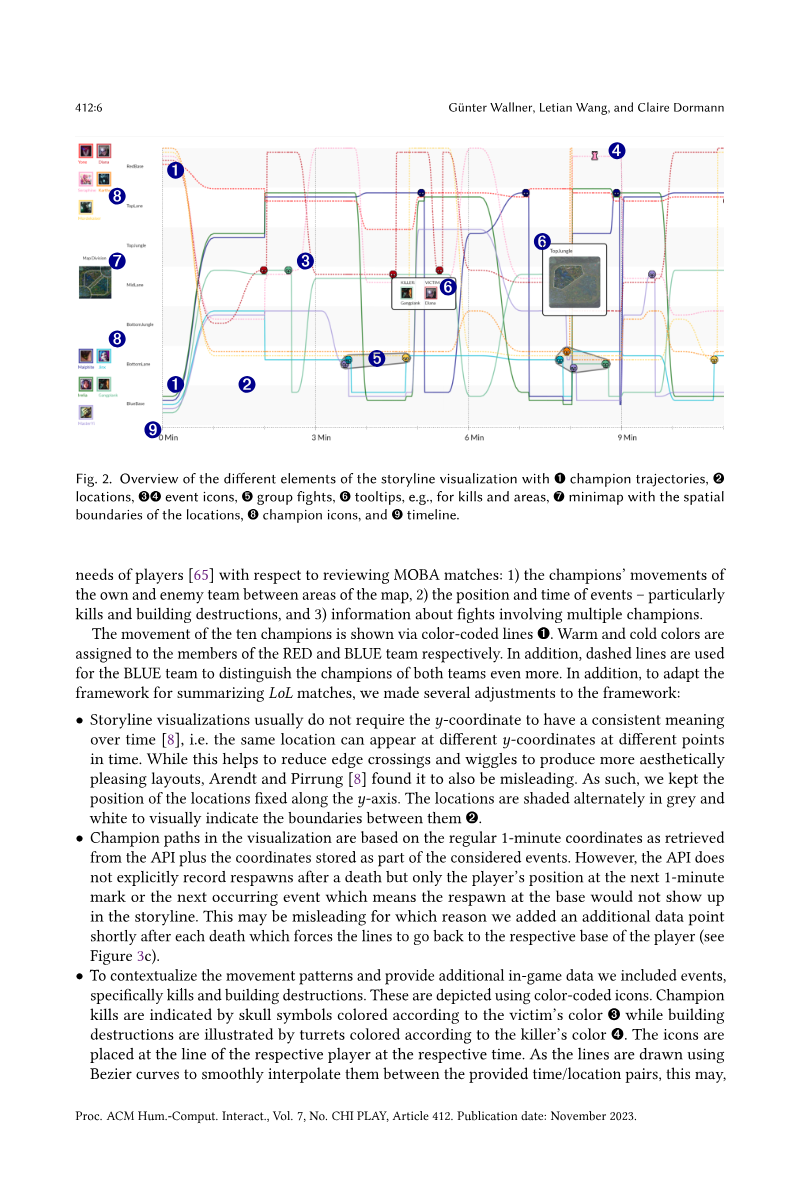
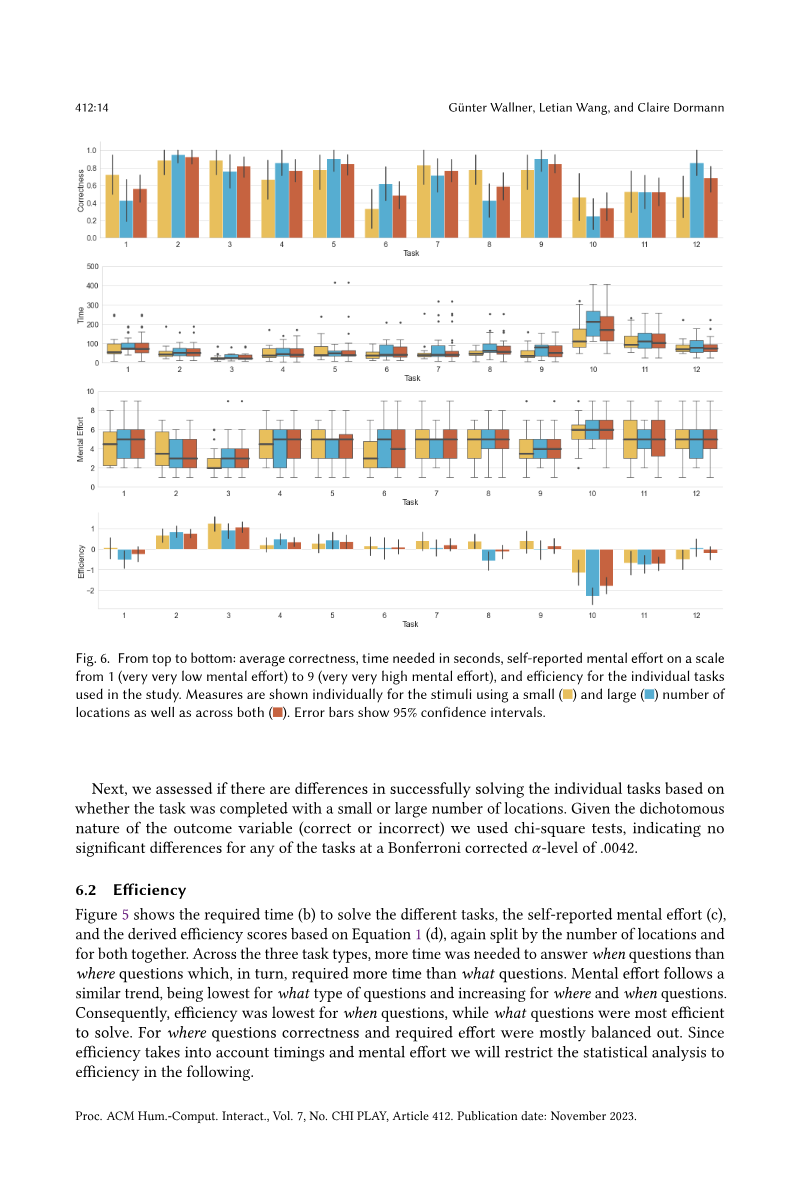

Visualizing the Spatio-Temporal Evolution of Gameplay using Storyline Visualization: A Study with League of Legends
Storyline visualization serves as a robust framework for analyzing the complex spatio-temporal dynamics inherent in League of Legends.
- Storyline visualization effectively integrates spatio-temporal gameplay data into a single view, allowing users to track entity relationships and movement across specific map locations without relying on animation or multiple windows.
- The visualization technique translates raw geospatial trajectories into 'semantic trajectories,' mapping player movement across pre-determined in-game locations to summarize match events.
- In a study of 39 League of Legends players, participants successfully solved four out of 12 analytical tasks with over 80% accuracy, demonstrating the tool's utility for reviewing team fights and champion movement.
Investigating Social Emotional Learning at Primary School through Guided Interactive Storytelling
Interactive digital storytelling serves as a powerful pedagogical framework for fostering social-emotional learning among primary school students.
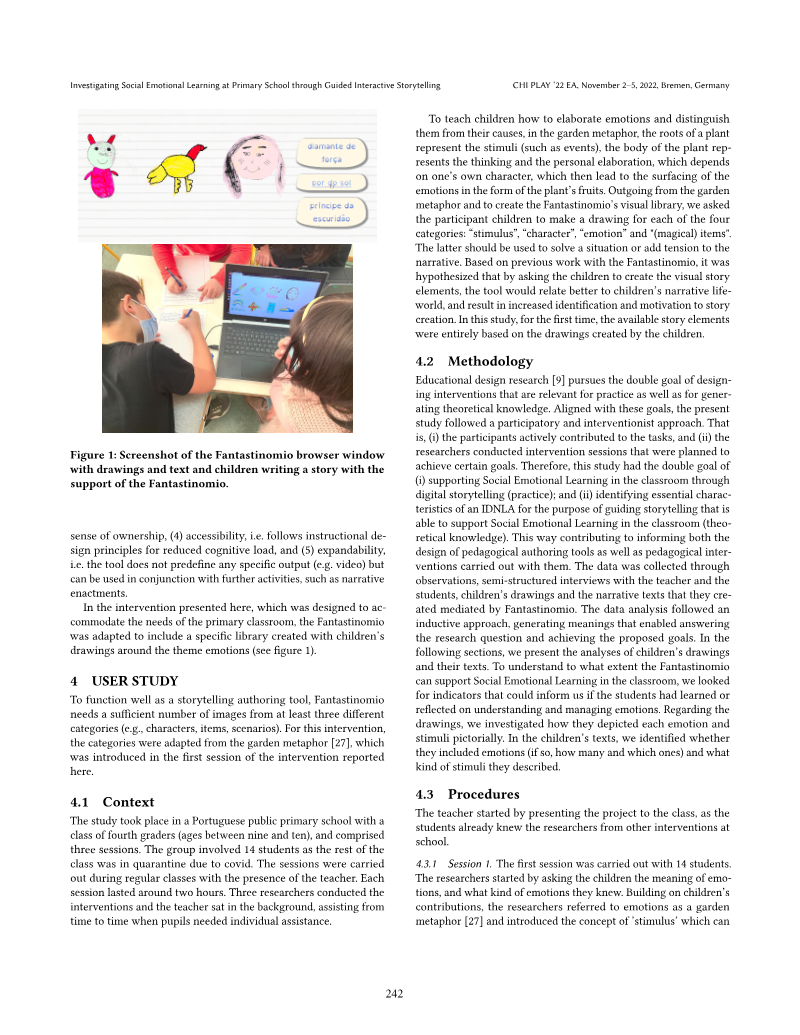
- Interactive digital learning tools can effectively guide classroom storytelling toward Social Emotional Learning (SEL) goals when children are empowered to author their own content libraries.
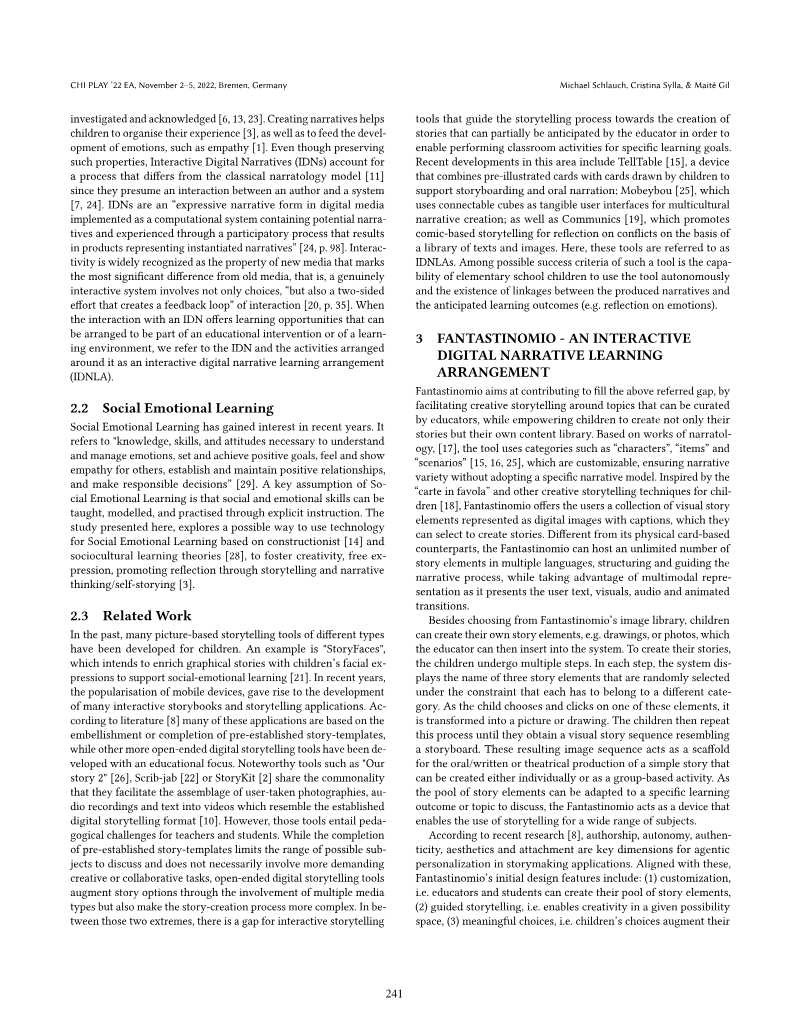
- In a study of 14 fourth-grade students, the 'Fantastinomio' tool facilitated the creation of 65 original drawings—including emotions, characters, and stimuli—which were then used as the foundational library for student storytelling.
- The intervention demonstrated that allowing students to curate the visual elements of a narrative increases engagement and ownership, as evidenced by students choosing to continue their creative work outside of school hours.
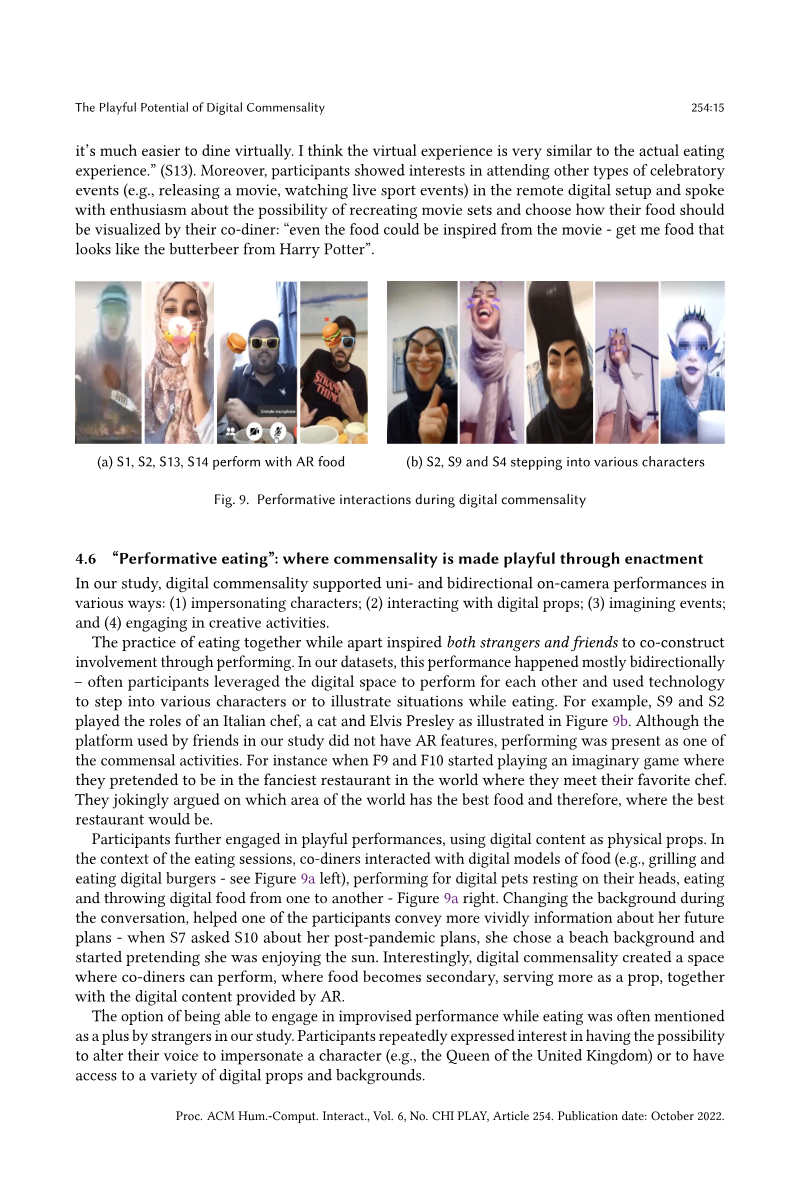

The Playful Potential of Digital Commensality: Learning from Spontaneous Playful Remote Dining Practices
Digital commensality serves as a vital mechanism for mitigating social isolation, particularly when individuals are separated by physical distance.
- Digital commensality—the act of eating together remotely—can mitigate the negative health and social impacts of isolation by leveraging ludic (playful) behaviors to foster connectedness.
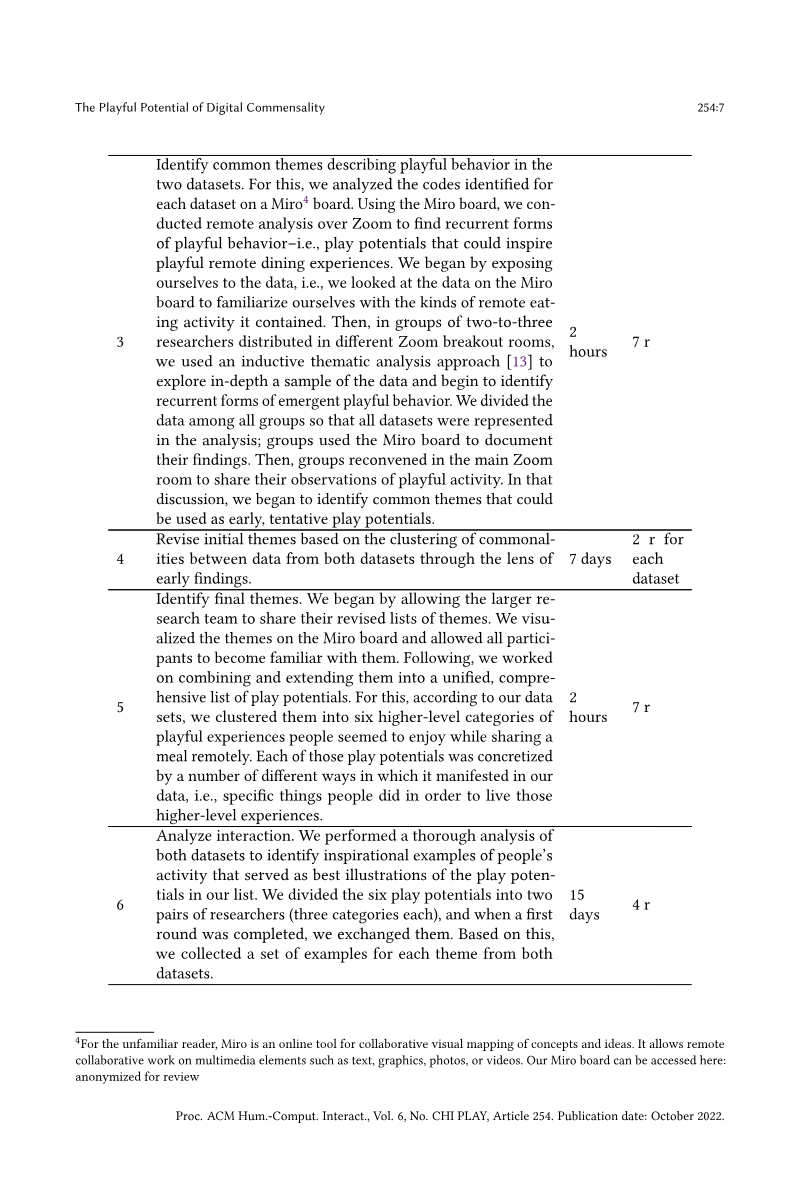
- Spontaneous playful interactions in remote dining emerge through six core categories of 'play potentials,' which include multisensory engagement, self-disclosure through personal space, and performative acts.
- Augmented Reality (AR) filters and digital props serve as effective tools for overcoming social awkwardness, allowing participants to 'reinvent' themselves and engage in virtual dress-up or character impersonation.

Shoulder-to-Shoulder: How Pinball Supports Men's Wellbeing
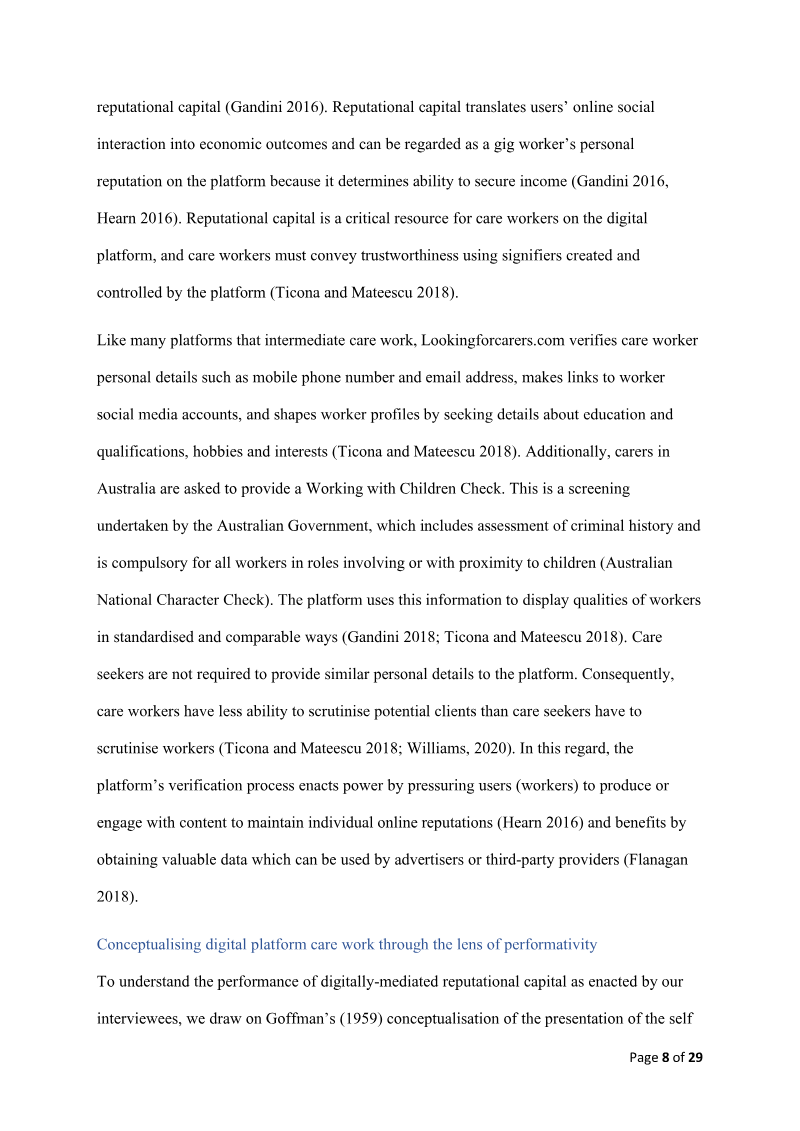
Digital care platforms are fundamentally transforming the landscape of informal labor by formalizing childminding and domestic care through algorithmic infrastructure.
- Digital care platforms like Lookingforcarers.com replace traditional agency-based vetting with a subscription-based model that requires workers to perform 'impression management' to secure employment.
- The study analyzed 15 interviews with women aged 19 to 34 who primarily provided childminding services via a digital platform.
- Platform verification processes often force a 'context collapse' by requiring workers to link social media profiles, blurring the boundaries between their private lives and professional identities.
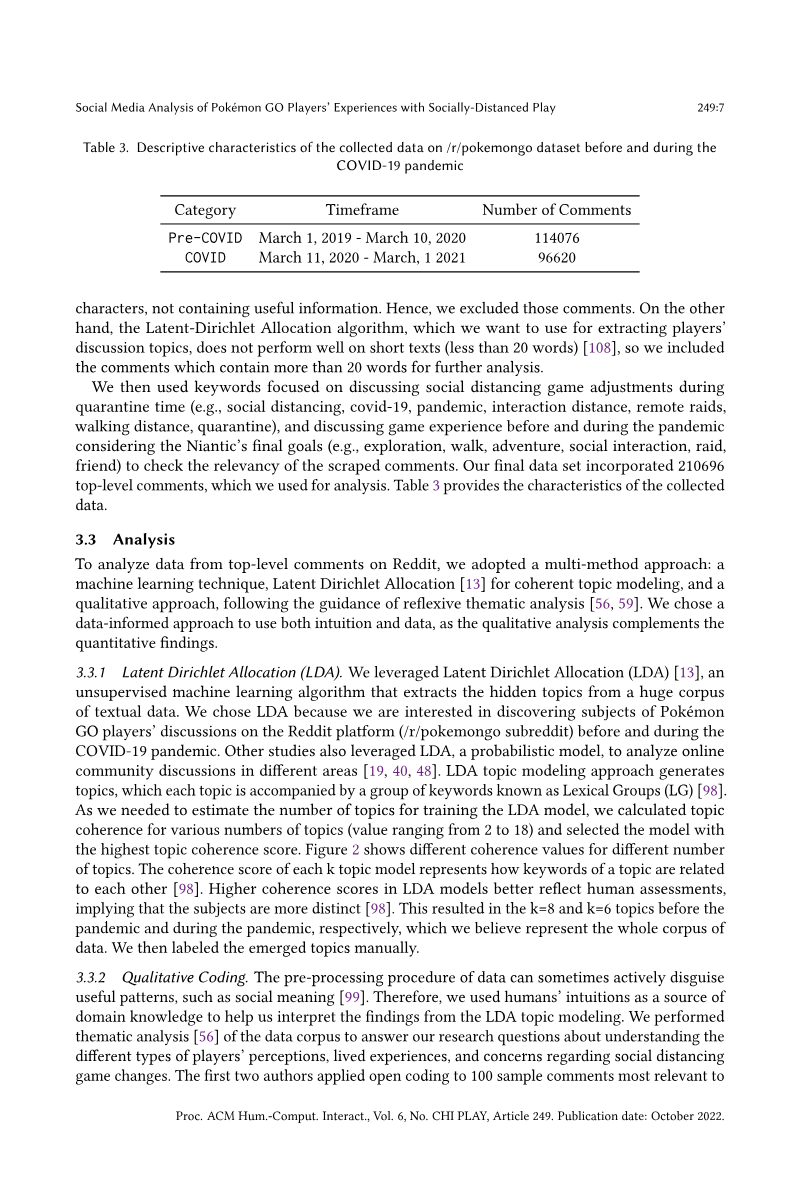
Pokémon GO with Social Distancing: Social Media Analysis of Players' Experiences
The COVID-19 pandemic necessitated a fundamental transformation in the design of location-based mobile games, specifically regarding how developers balance physical activity with accessibility.
- Niantic implemented significant pandemic-era adjustments between March and April 2020, including increasing interaction distances for Gyms and Pokéstops from 40 to 80 meters, removing walking requirements for the GO Battle League, and introducing Remote Raid Passes.
- The shift to remote play features, such as Remote Raids and improved Incense duration, drove a significant revenue spike for Pokémon GO during the pandemic.
- While remote features increased accessibility for rural players and those with disabilities, they simultaneously reduced physical activity and the sense of exploration, which are core pillars of location-based games.

Learning by Doing: Intrinsic Integration Directs Attention to Increase Learning in Games
Intrinsic integration serves as a foundational design principle for educational gaming, functioning primarily through the strategic direction of player attention rather than through motivational enhancement.
- Intrinsic integration—where learning content is essential to game mechanics—significantly increases learning outcomes compared to non-integrated designs where content is peripheral to the game task.
- The primary mechanism driving learning in games is attentional selection, not motivation; players learn features that are directly required to complete game tasks while ignoring irrelevant information.
- When learning content is not integrated with gameplay, players often split their attention between the game and the content, which increases extraneous cognitive load and reduces overall learning efficacy.
Videogame Rewards and Prosocial Behaviour
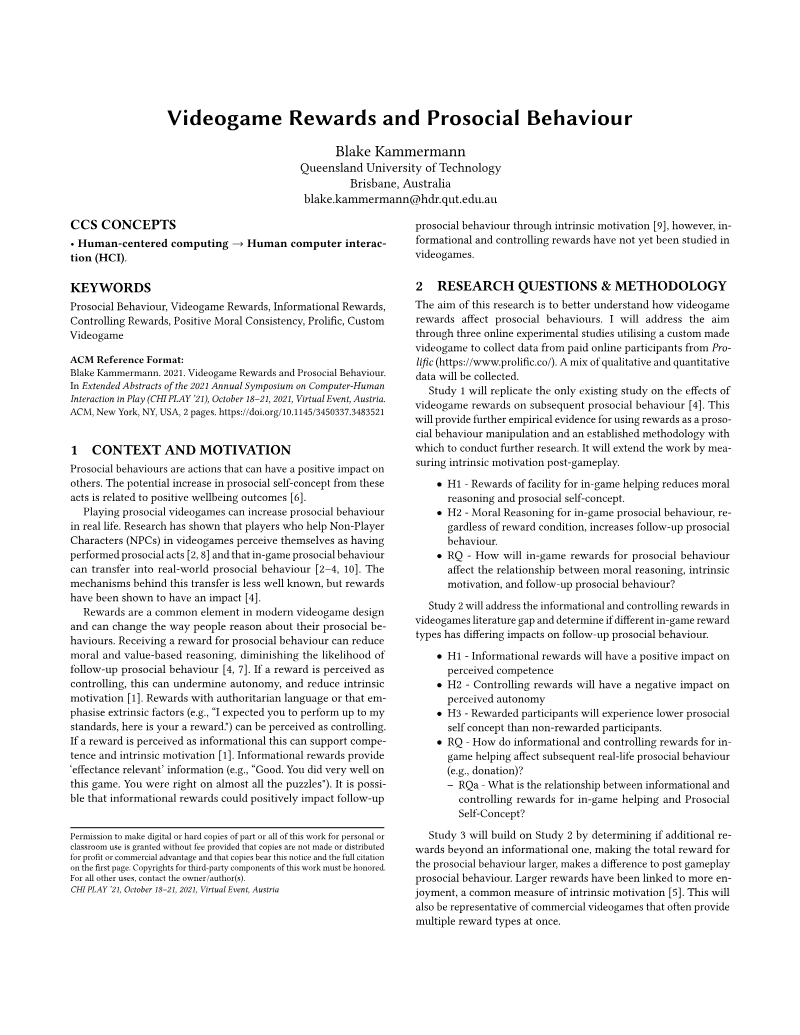
This research investigates the complex relationship between in-game reward structures and the subsequent manifestation of prosocial behavior in real-world settings.
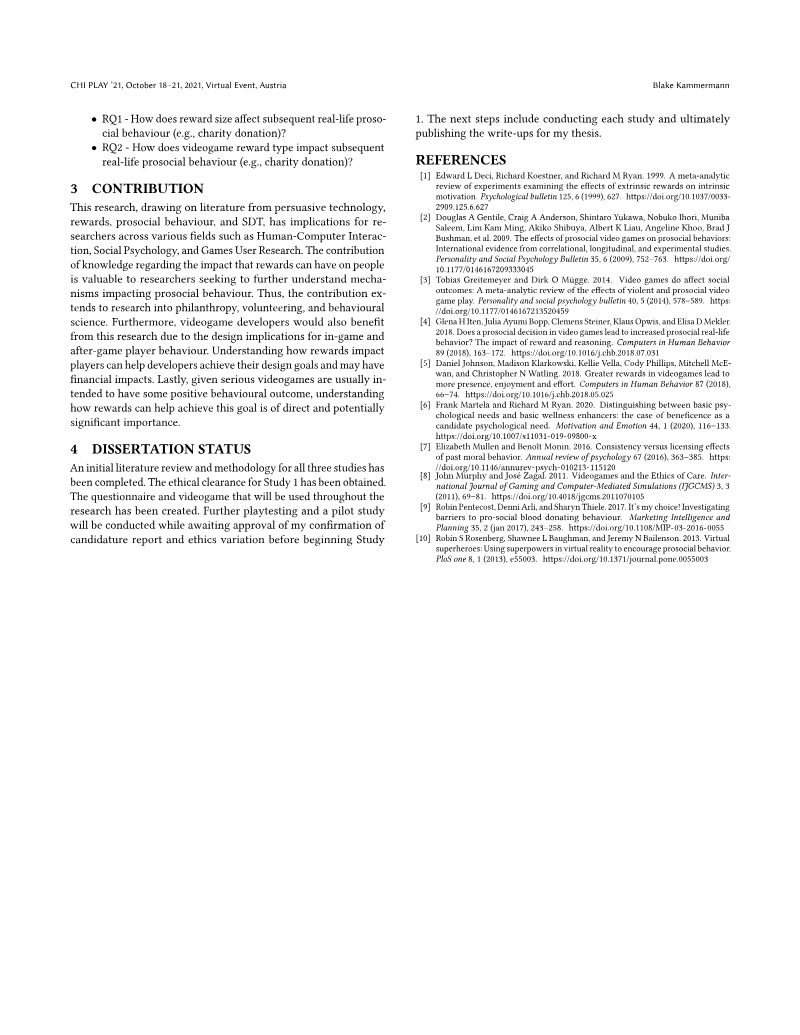
- In-game rewards for prosocial behavior can influence real-world behavior, but their impact depends on whether they are perceived as 'informational' (supporting competence) or 'controlling' (undermining autonomy).
- Controlling rewards, which often use authoritarian language or emphasize extrinsic factors, may reduce a player's intrinsic motivation and prosocial self-concept.
- Informational rewards, which provide feedback on performance and competence, have the potential to positively influence follow-up prosocial actions like real-world charity donations.
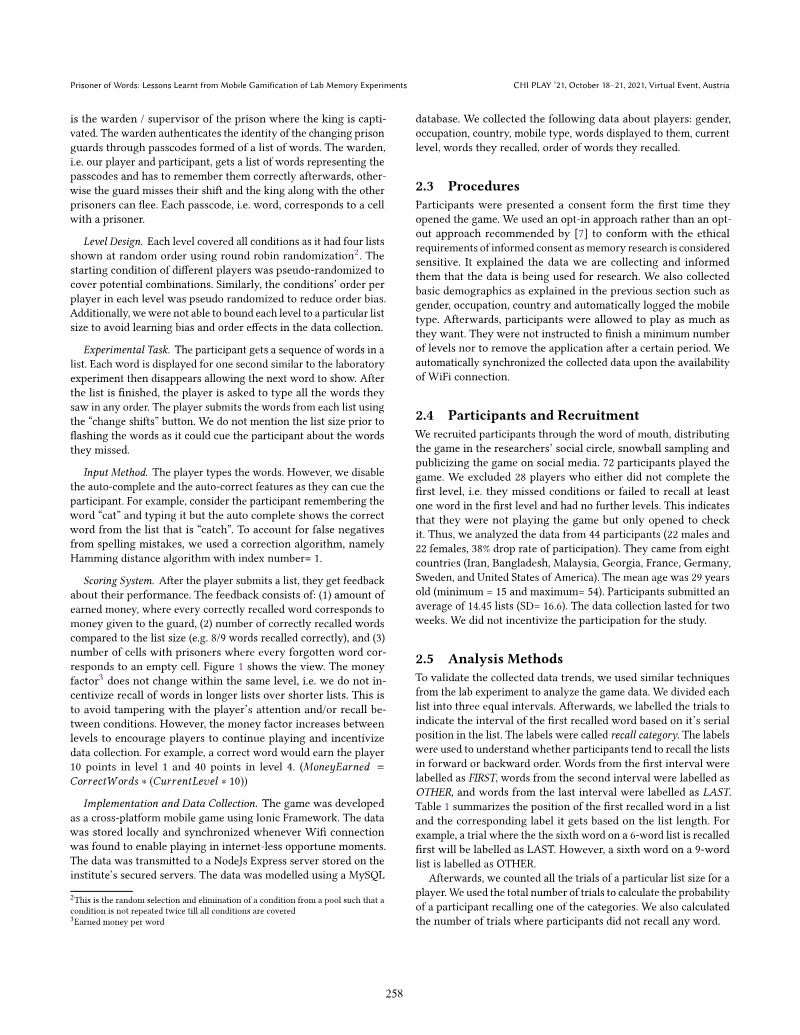
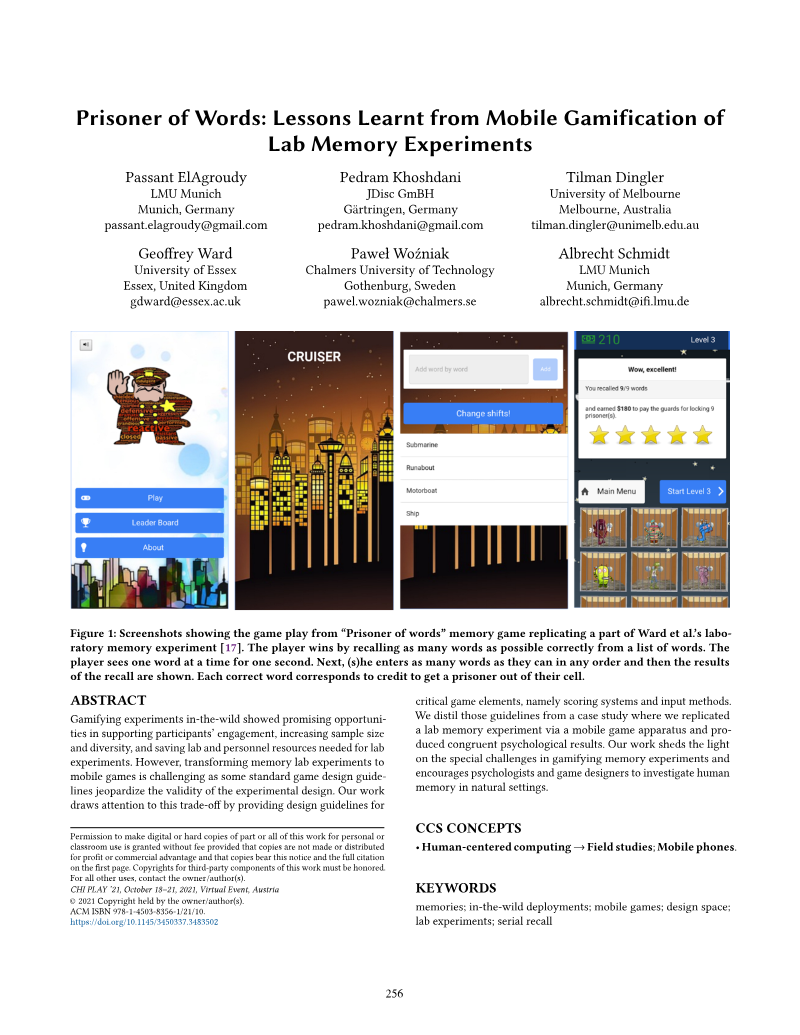
Prisoner of Words: Lessons Learnt from Mobile Gamification of Lab Memory Experiments
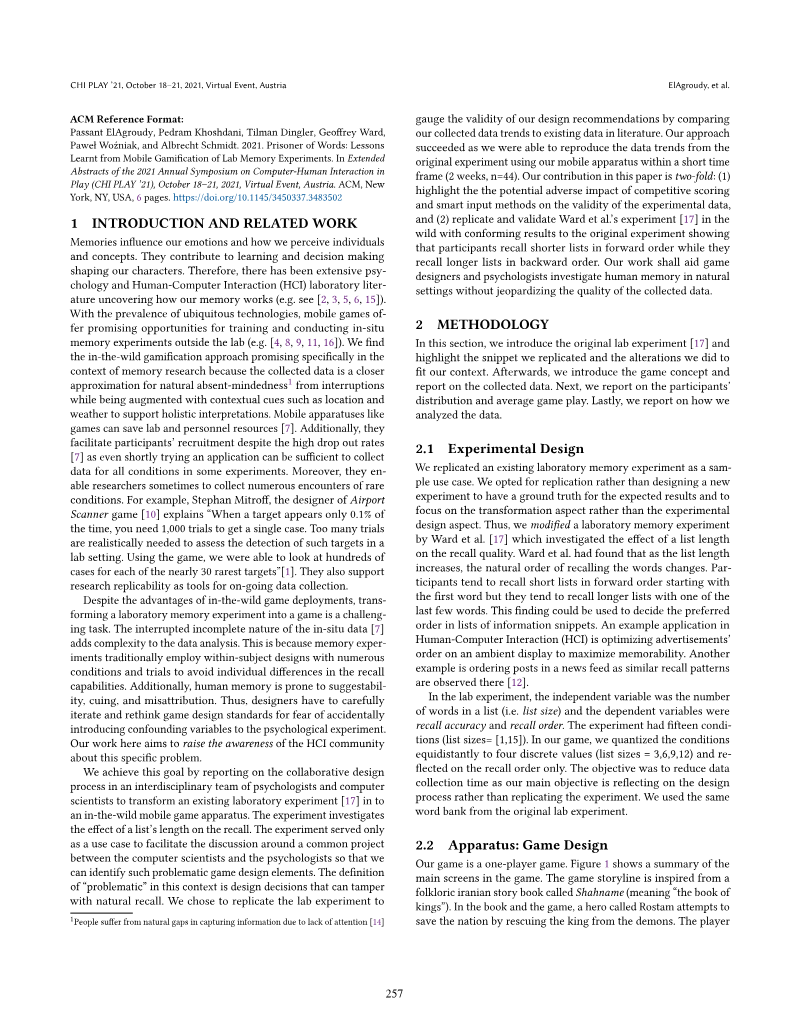
This analysis examines the challenges and opportunities of gamifying laboratory memory experiments for mobile platforms.
- Mobile gamification can successfully replicate laboratory memory experiments, as demonstrated by the 'Prisoner of Words' study which confirmed established serial recall trends across 44 participants in eight countries.
- Standard game design features like autocomplete and predictive text act as confounding variables that provide unintended cues and interfere with the validity of psychological data.
- Competitive scoring systems can incentivize artificial participant strategies, potentially biasing results and threatening the scientific integrity of in-the-wild research.
Do you work at Association for Computing Machinery? Get a free report of how these documents are read and cited here.