Puzzle-Platformer
8 documents·1 publishers
Documents
Video79 min
Integrating Narrative into Game Design: A Portal Post-Mortem
Game Developers ConferenceFeb 2020
Video52 min
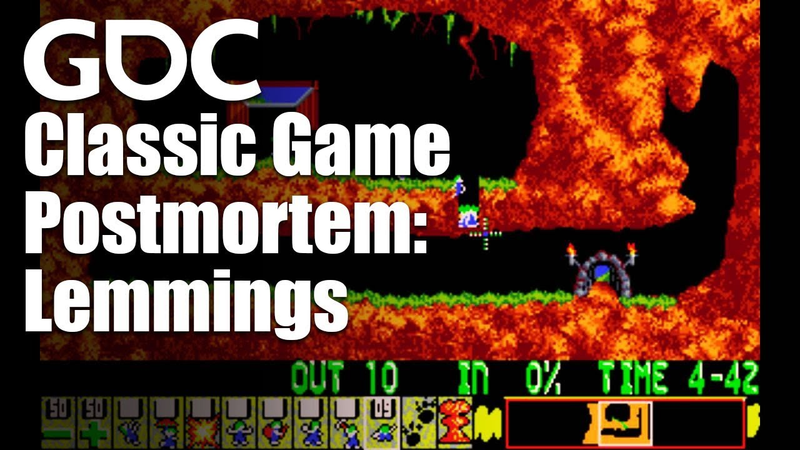
Classic Game Postmortem: Lemmings
- The core gameplay loop of Lemmings was built around the ability to manipulate terrain in real-time, allowing players to use brushes to edit bitmaps and create paths for characters to navigate.
- The game's broad appeal was driven by a carefully tuned difficulty curve, which allowed players of all ages—from five-year-olds to adults—to engage with the content at their own skill level.
- Technical constraints necessitated the 'nuke' feature, a point-cloud animation explosion, which served as a functional way to abort levels while providing a satisfying visual reward for the player.
- The developers achieved high performance on the Amiga by optimizing for 100 on-screen characters, a target number that filled the screen while remaining within the hardware's memory and processing limits.
- The level editor was a critical development tool that allowed the team to fine-tune gameplay by testing and adjusting terrain interaction, collision detection, and skill usage iteratively.
Game Developers ConferenceMay 2019
![Cover of Huddle up! Making the [SPOILER] of INSIDE](https://files.gameindustrylibrary.com/thumbnails/31496/page-1.png)
Video60 min
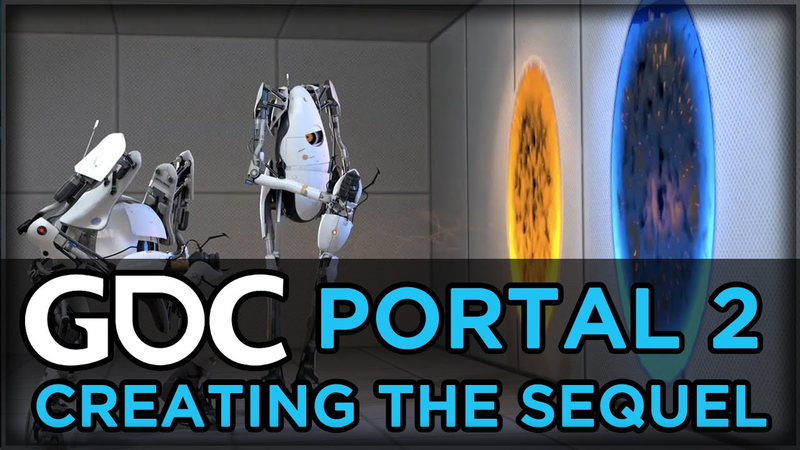
Portal 2: Creating a Sequel to a Game That Doesn't Need One
- Valve prioritized the player's relationship with GLaDOS as the central narrative anchor, ensuring all new characters and events served to deepen that specific dynamic.
- To maintain player engagement with a silent protagonist, the writing team enforced a rule that all dialogue must be directed at or about the player to keep them at the center of the experience.
- The team streamlined puzzle design by allowing players to control the pace of mechanics, such as replacing automated portal movement with button-activated triggers to improve comprehension.
- Playtesting revealed that players did not miss the ability to drop the companion character Wheatley, proving that developers often hold onto unnecessary mechanics due to false assumptions about player needs.
- Co-op modes were found to be an effective solution for comedy in games, as playtesters naturally projected social norms and humor onto the characters even without voice communication.
Game Developers ConferenceSept 2016