Investment reports and market data
Documents
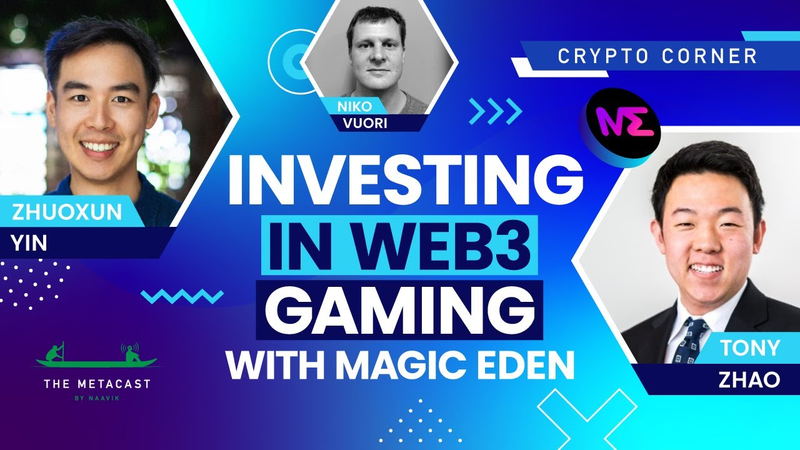
Investing in Web3 Gaming with Magic Eden - The Metacast by Naavik
Magic Eden has transitioned from a niche Solana-based NFT marketplace into a comprehensive gaming infrastructure provider, leveraging a $1.6 billion valuation to bridge the gap between traditional gaming and decentralized ecosystems.
- Magic Eden has evolved from a Solana-focused NFT marketplace into a comprehensive gaming infrastructure provider, currently valued at $1.6 billion.
- The platform aims to solve industry-wide distribution and discovery challenges by providing developers with launchpads, secondary market tools, and direct equity investments.
- The industry is shifting toward a 'Web 2.5' model that prioritizes fun, content-driven gameplay over the volatile, financialized 'play-to-earn' structures of the past.

Why Meta’s Stock Crashed and VR Gaming Predictions - The Metacast by Naavik
The gaming industry is currently navigating a period of significant financial recalibration, characterized by rising development costs, shifting consumer demand, and the cooling of post-pandemic growth.
- Meta has committed $39 billion to its Reality Labs division, a high-stakes investment aimed at securing platform independence from third-party ecosystems like Apple’s iOS.
- Sony reported a 49% decline in profit despite revenue growth, highlighting the industry-wide challenge of margin compression caused by rising development costs.
- Microsoft has failed to meet its aggressive growth targets for the Game Pass subscription service, signaling a struggle to scale traditional console-based models.
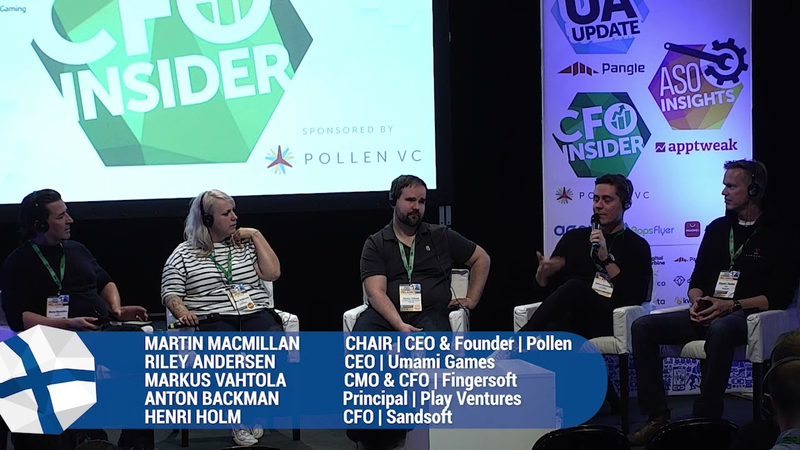
Panel: Weathering the Storm Insights From Mobile Gaming CFOs
The mobile gaming industry is currently undergoing a significant transition, moving away from experimental growth models toward a framework defined by operational rigor and fiscal discipline.
- Investors have shifted priorities from rapid, speculative expansion to companies that demonstrate financial resilience, sufficient cash runways, and measurable returns on ad spend.
- Rising user acquisition costs, driven by macroeconomic pressures and privacy regulations, have forced a transition toward operational rigor and fiscal discipline.
- Studios must now prioritize shorter payback periods and provide realistic, data-backed roadmaps to secure capital in a cautious market.
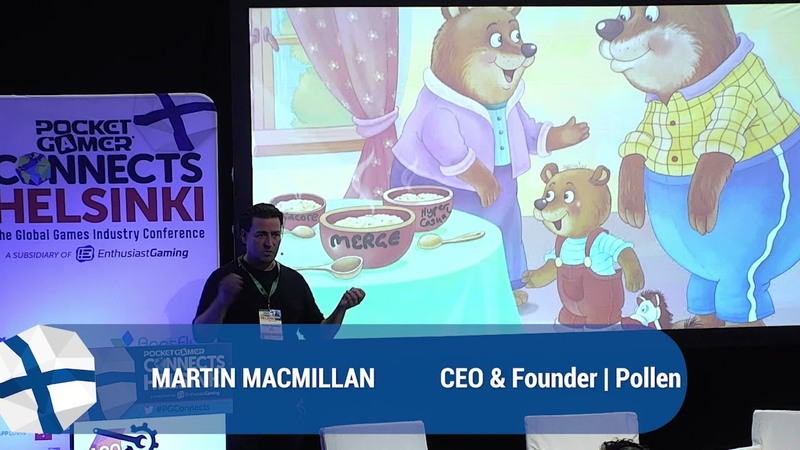
How To Measure & Compare Financial Returns on UA Spend - MARTIN MACMILLAN, Pollen VC
The primary objective of this analysis is to improve the financial literacy of gaming studios by establishing a standardized framework for measuring and comparing the financial returns of user acquisition (UA) investments.
- Studios should adopt a monthly Return on Investment (mROI) framework, calculated by dividing lifetime profit (LTV minus CAC) by acquisition cost and annualizing based on the time required to reach break-even.
- UA strategies vary significantly by genre, with hyper-casual games achieving break-even within 30 days, while mid-core and merge titles may require 270 to 400 days to recover initial investment.
- Relying on third-party publishers for UA funding is negatively correlated with acquisition potential, making self-publishing a vital milestone for long-term business viability.
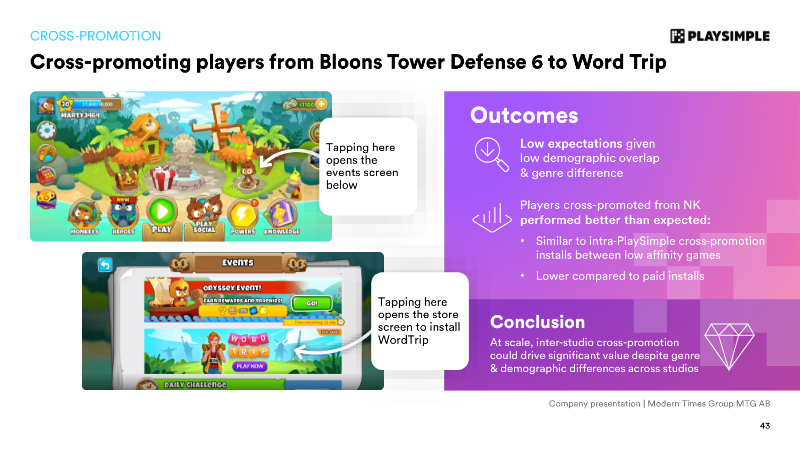
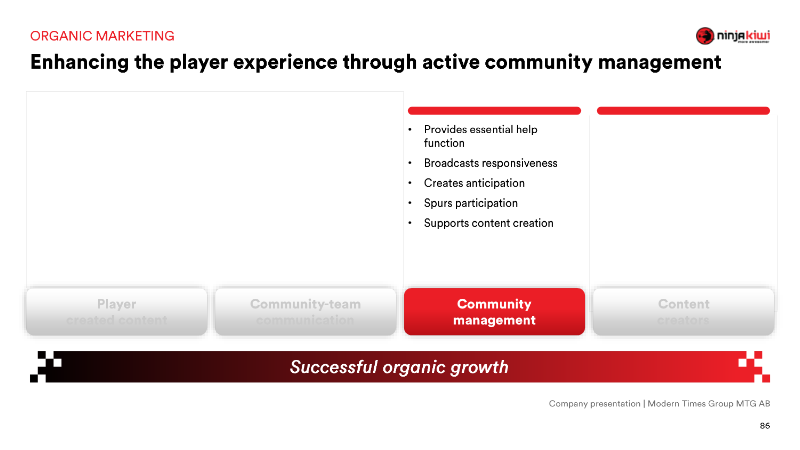

MTG Game Makers Day 2022
MTG has successfully transitioned into a pure-play mobile gaming group, shifting from a diversified holding company to an integrated acceleration platform.
- MTG has completed its transition into a pure-play mobile gaming group, operating as an integrated platform rather than a diversified holding company.
- The 'Flow Platform' serves as the central ecosystem for sharing data, marketing technology, and monetization tools across all portfolio studios to drive growth above market averages.
- PlaySimple drives revenue through a proprietary ad-tech stack focused on word games, while InnoGames utilizes AI-driven CRM and LiveOps to maintain long-term player retention.

Best Practices for Young Game Start-ups to Rise Private Investments: A Case Study for the City of Helsinki
The Finnish game industry has reached a stage of significant professionalization, necessitating a strategic shift for early-stage startups seeking private capital.
- Startups must demonstrate a scalable business model capable of delivering a minimum 3x return on investment to attract private capital.
- Investors prioritize teams that balance creative technical expertise with rigorous business acumen, specifically requiring a clear growth trajectory and a realistic exit strategy.
- Founders should position their ventures as robust growth companies rather than development studios by emphasizing corporate governance and meticulous documentation to streamline due diligence.
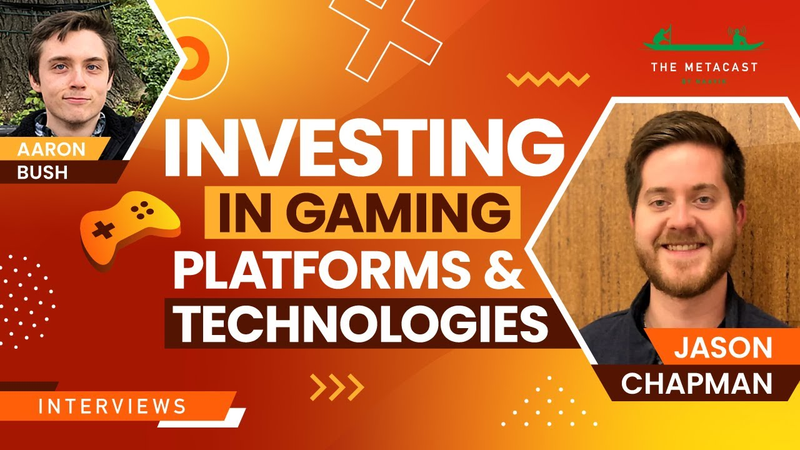
Jason Chapman: How Konvoy Ventures Invests in Gaming
Konvoy Ventures operates as a thesis-driven investment firm focused on the foundational infrastructure of the global gaming industry.
- Konvoy Ventures manages approximately $270 million across three funds, focusing exclusively on gaming infrastructure rather than content studios.
- The firm maintains a consistent investment pace of roughly 11 deals per year, screening approximately 700 potential deals per quarter.
- Investment strategy prioritizes 'picks and shovels' technology that supports the global population of 3 billion gamers.

Panel: Funding & Financing: How To Accurately Value Your Studio
Valuing a game studio is a multifaceted strategic exercise that requires balancing immediate capital requirements with long-term operational autonomy.
- Valuation should be treated as a strategic partnership tool rather than a static financial figure, as unrealistic early-stage valuations can create long-term hurdles for future growth and exit planning.
- Founders should aim for a threefold increase in studio valuation between funding rounds, contingent upon demonstrating consistent proof of concept and operational execution.
- Early-stage valuation is primarily driven by subjective assessments of the development team and the total addressable market, whereas mature studio valuation relies on data-driven metrics like player retention, revenue, and lifetime value.
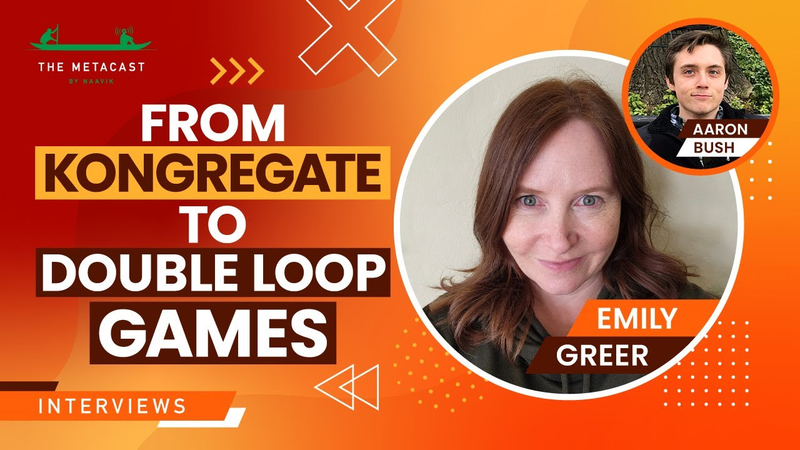
Emily Greer: Lessons in Entrepreneurship, Scaling, and Culture
The modern gaming industry has transitioned from a volatile, hit-driven landscape into a mature ecosystem defined by sustainable games-as-a-service models and robust venture capital support.
- Modern game development requires applying e-commerce-style analytical rigor to game design to move from volatile hit-driven models to predictable, sustainable games-as-a-service revenue streams.
- Scaling a studio successfully requires transitioning from centralized decision-making to a model of autonomous units to maintain operational integrity and creative execution.
- Administrative organization and deliberate communication structures are core components of a studio's ability to execute its creative vision, rather than mere back-office functions.
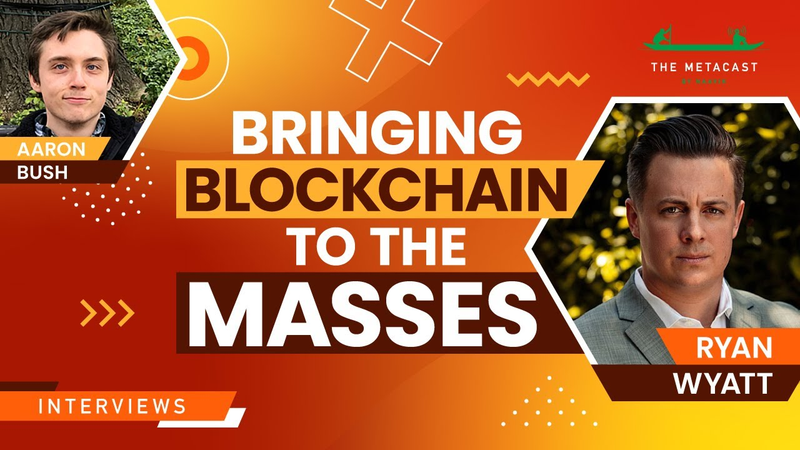
Ryan Wyatt: Polygon’s Quest for Scale
Polygon Studios serves as the primary business and operational engine for the Polygon ecosystem, dedicated to scaling Ethereum through advanced infrastructure and strategic enterprise partnerships.
- Polygon Studios is transitioning from a startup model to a mature infrastructure layer by adopting operational rigor from established tech giants like Google and YouTube.
- The core strategy focuses on making blockchain technology invisible to end users by prioritizing frictionless gaming experiences and digital ownership over technical jargon.
- The organization is heavily investing in ZK-EVM technology and supernets to provide the high-performance infrastructure required for complex game economies and large-scale corporate loyalty programs.

Rise of The Mega-Investors: Tencent & Savvy Gaming Group - The Metacast by Naavik
The global gaming industry is currently undergoing a period of intense consolidation and strategic realignment, driven by the emergence of mega-investors such as Saudi Arabia’s Savvy Gaming Group and the international expansion efforts of Tencent.
- The gaming industry is shifting toward a centralized model driven by mega-investors like Tencent and Saudi Arabia’s Savvy Gaming Group, which prioritize large-scale asset accumulation over traditional competitive dynamics.
- The failure of Google Stadia demonstrates that massive financial backing cannot overcome a fundamental lack of alignment with gaming-specific consumer behaviors and technical ecosystem requirements.
- Supercell maintains a high-threshold development culture that prioritizes multi-billion dollar hit potential, strictly abandoning projects that fail to meet extreme user retention standards.


Gaming Industry Report: Q4 2022
The analysis presents a comprehensive overview of the global gaming market in 2022 and its projected trajectory to 2027, emphasizing a modest expansion of the sector’s revenue base and a shifting investment landscape.
- The global gaming market reached $184.4 billion in 2022, a 2.3% year-over-year increase, with projections estimating growth to $283 billion by 2027.
- Mobile gaming remains the primary revenue driver, accounting for 64% of total industry spend, or $116 billion in 2021.
- Venture capital funding for the gaming sector contracted significantly in 2022, falling from $8.8 billion to $5.3 billion, with web3 gaming experiencing a global downturn and an 83% funding collapse in Latin America.