Updated Mar 23, 2026 by PCF Group
Report
Published by PCF Group
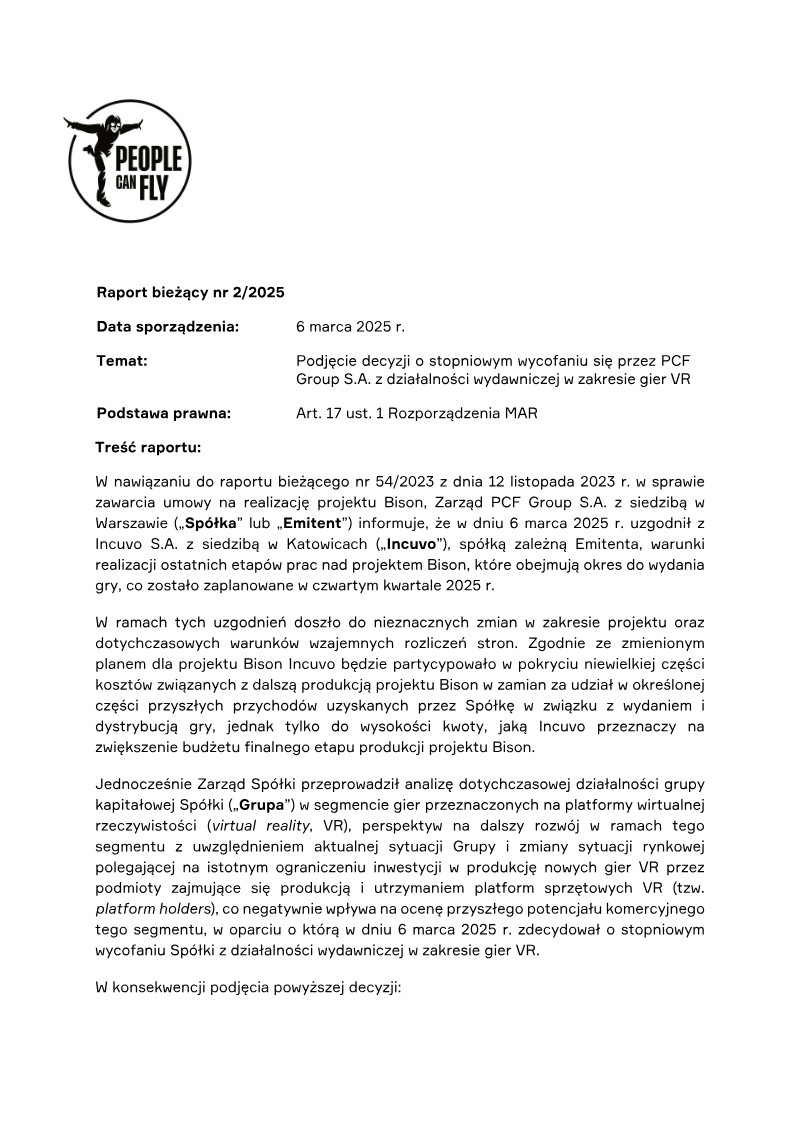
PCF Group S.A. has officially announced a strategic shift away from the virtual reality (VR) gaming publishing sector. This decision follows a comprehensive internal analysis of the group’s current market position and broader industry trends. The primary catalyst for this withdrawal is a significant decline in investment from major VR platform holders, which has diminished the commercial viability and growth prospects of the VR segment. Consequently, the company will cease all business development and competency building related to VR publishing, effectively narrowing its operational focus. The transition concludes with the finalization of Project Bison, the last VR title to be published by the company. Under revised terms with its subsidiary, Incuvo S.A., the final stages of Project Bison are scheduled for completion and release in the fourth quarter of 2025. Incuvo will contribute to the remaining production budget in exchange for a capped share of future revenues generated by the game. Following this release, the company will no longer commission Incuvo for new VR development projects. Moving forward, the group will concentrate its resources exclusively on the production of AAA and compact-AAA video games for personal computers and consoles. This strategic realignment emphasizes a dual-track business model, encompassing both self-publishing initiatives and work-for-hire or co-development partnerships with external publishers. By exiting the VR market, the organization aims to streamline its operations and prioritize its core competencies in high-budget, traditional gaming platforms.

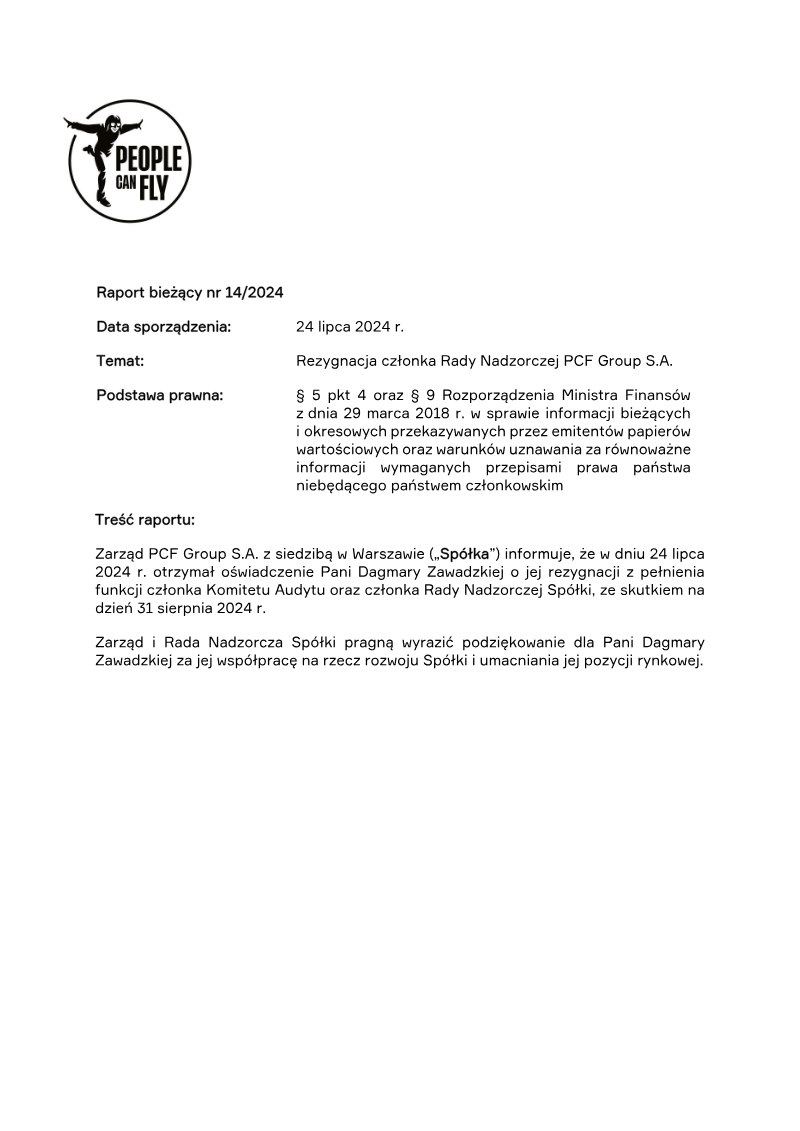
PEOPLE CAN FLY Raport bieżący nr 2/2025 Data sporządzenia: 6 marca 2025 r. Temat: Podjęcie decyzji o stopniowym wycofaniu się przez PCF Group S.A. z działalności wydawniczej w zakresie gier VR Podstawa prawna: Art. 17 ust. 1 Rozporządzenia MAR Treść raportu: W nawiązaniu do raportu bieżącego nr 54 /2023 z dnia 12 listopada 2023 r. w sprawie zawarcia umowy na realizację p rojektu Bison , Zarząd PCF Group S.A. z siedzibą w Warszawie („ Spółka” lub „ Emitent”) informuje, że w dniu 6 marca 2025 r. uzgodnił z Incuvo S.A. z siedzibą w Katowicach („Incuvo”), spółką zależną Emitenta, warunki realizacji ostatnich etapów prac nad projektem Bison, które obejmują okres do wydania gry, co zostało zaplanowane w czwartym kwartale 2025 r. W ramach tych uzgodnień doszło do nieznacznych zmian w zakresie projektu oraz dotychczasowych warunków wzajemnych rozliczeń stron. Zgodnie ze zmienionym planem dla projektu Bison Incuvo będzie partycypowało w pokryciu niewielkiej części kosztów związanych z dalszą produkcją projektu Bison w zamian za udział w określonej części przyszłych przychodów uzyskanych przez Spółkę w związku z wydaniem i dystrybucją gry , jednak tylko do wysokości kwoty, jaką Incuvo przeznaczy na zwiększenie budżetu finalnego etapu produkcji projektu Bison.
osztów związanych z dalszą produkcją projektu Bison w zamian za udział w określonej części przyszłych przychodów uzyskanych przez Spółkę w związku z wydaniem i dystrybucją gry , jednak tylko do wysokości kwoty, jaką Incuvo przeznaczy na zwiększenie budżetu finalnego etapu produkcji projektu Bison. Jednocześnie Zarząd Spółki przeprowadził analizę dotychczasowej działalności grupy kapitałowej Spółki („Grupa”) w segmencie gier przeznaczonych na platformy wirtualnej rzeczywistości ( virtual reality , VR ), perspektyw na dalszy rozwój w ramach tego segmentu z uwzględnieniem aktualnej sytuacji Grupy i zmiany sytuacji rynkowej polegającej na istotnym ograniczeniu inwestycji w produkcję nowych gier VR przez podmioty zajmujące się produkcją i utrzymaniem platform sprzętowych VR (tzw. platform holders), co negatywnie wpływa na ocenę przyszłego potencjał u komercyjnego tego segmentu , w oparciu o którą w dniu 6 marca 2025 r. zdecydował o stopniowym wycofaniu Spółki z działalności wydawniczej w zakresie gier VR. W konsekwencji podjęcia powyższej decyzji:
− Spółka nie będzie zlecała Incuvo prac deweloperskich nad produkcją nowych gier VR, a Projekt Bison będzie ostatnią grą VR wydaną przez Spółkę jako wydawcę; − Grupa (z wyłączeniem Incuvo) nie będzie prowadziła dalszych działań związanych z rozwojem biznesu i kompetencji w obszarze wydawania gier VR. Działalność Grupy (z wyłączeniem Incuvo) skoncentruje się na produkcji gier wideo z segmentu AAA oraz compact -AAA, przeznaczonych na komputery osobiste oraz konsole, zarówno w modelu produkcji i wydawnictwa gier własnych (self-publishing), jak również w modelu produkcji gier na zlecenie zewnętrznych wydawców ( work-for-hire), zarówno w pełny m zakresie (tak jak projekt Gemini) jak i w modelu koprodukcji (codevelopment, tak jak projekt Maverick).
People Can Fly presents a strategic pivot toward cash flow optimization and a refined production focus as of April 2025. The primary thesis centers on transitioning away from the virtual reality segment to concentrate exclusively on AAA and compact-AAA video games. This shift is driven by changes in the global VR business model, specifically the cessation of platform subsidies. Consequently, the company will conclude its VR publishing activities following the release of Project Bison in late 2025. Financial data for the 2024 fiscal year shows cumulative revenue of PLN 190.4 million, an increase from PLN 150.1 million in 2023. This growth was supported by work-for-hire contributions from Project Maverick and Project Echo, alongside the launches of Bulletstorm VR and Green Hell VR Co-op. However, the group reported a significant net loss of PLN 175.3 million, largely attributed to one-off write-offs for Project Red, Project Bifrost, and the impairment of the Incuvo subsidiary. The strategic roadmap emphasizes securing new work-for-hire contracts, including a recently signed project with Sony Interactive Entertainment, with a target of adding two more projects this year. In the self-publishing segment, Lost Rift is scheduled for early access in 2025. Notably, Krafton Inc. has waived its right of first refusal for Projects Bifrost and Victoria, granting the company freedom to seek new publishing partners. Operational efficiency measures include optimizing team structures and office spaces while limiting disbursements to critical investments. As of late 2024, the group maintained a workforce of 756 employees across global studios in Warsaw, Montreal, Newcastle, and other locations. The company is currently evaluating various scenarios to secure additional financing to support its revised development pipeline.
The analysis outlines a strategic pivot toward cash‑flow optimization for the company, driven by recent shifts in the VR market and a need to secure additional financing. Revenue growth in 2024 reached PLN 190.4 million, largely supported by the launches of Project Maverick and Project Echo, as well as the January 2024 release of Bulletstorm VR. However, profitability suffered due to write‑offs of the Red and Bifrost projects and a decline in 2Q revenues linked to Gemini negotiations, resulting in an EBITDA of PLN 12.9 million and a net loss of PLN 175.3 million. Operationally, the organization is trimming non‑essential spend and restructuring office space and team composition to reduce overhead. The workforce, which expanded from 612 employees in 2020 to 756 by the end of 2024, is being realigned with a focus on critical projects. The company has ceased further investment in VR development following the 2024 platform subsidy withdrawal, redirecting resources toward AAA and compact‑AAA titles. Future initiatives include two new work‑from‑home projects with Sony Interactive Entertainment, the self‑publishing of Project Bison (the final VR title from PCF Group) slated for Q4 2025, and an early‑access release of Lost Rift in 2025. Krafton’s waiver of ROFO/ROFR rights for Bifrost and Victoria frees the company to seek external publishers. Scenario analysis is underway to identify additional funding sources, ensuring liquidity while maintaining a lean operational model across global studios in Warsaw, Montreal, Newcastle, Dublin, Katowice, and Rzeszów.
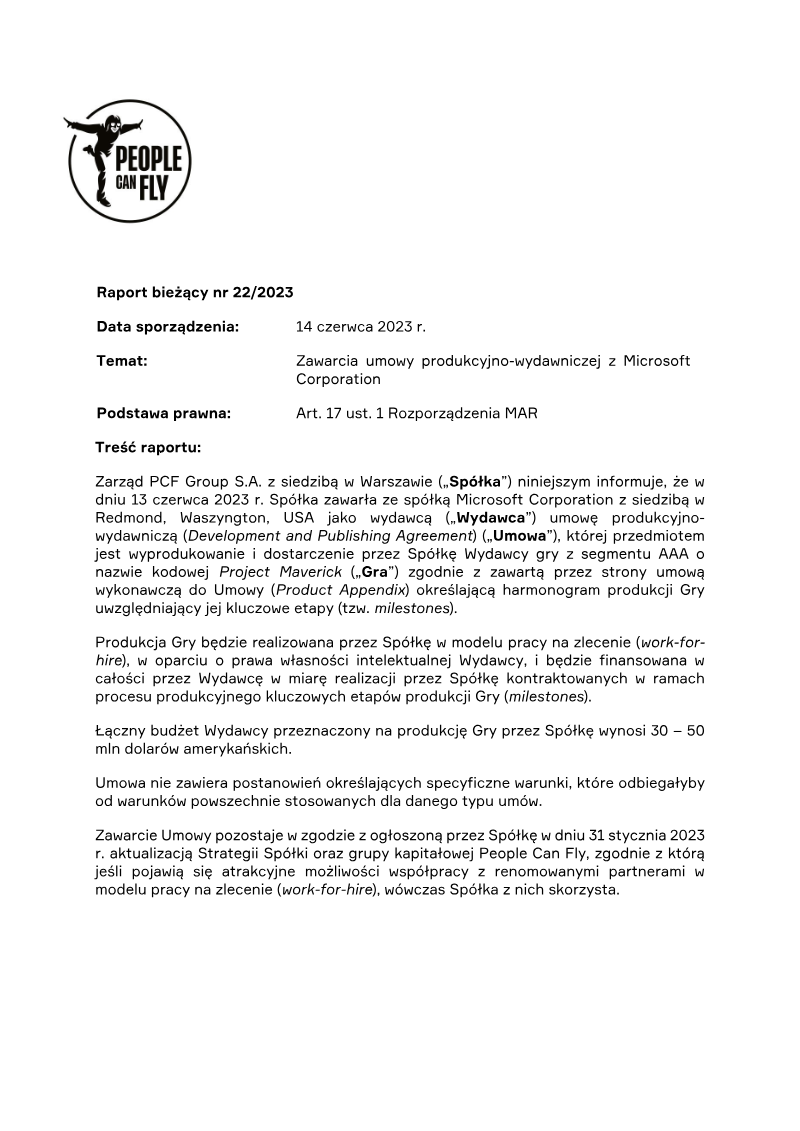
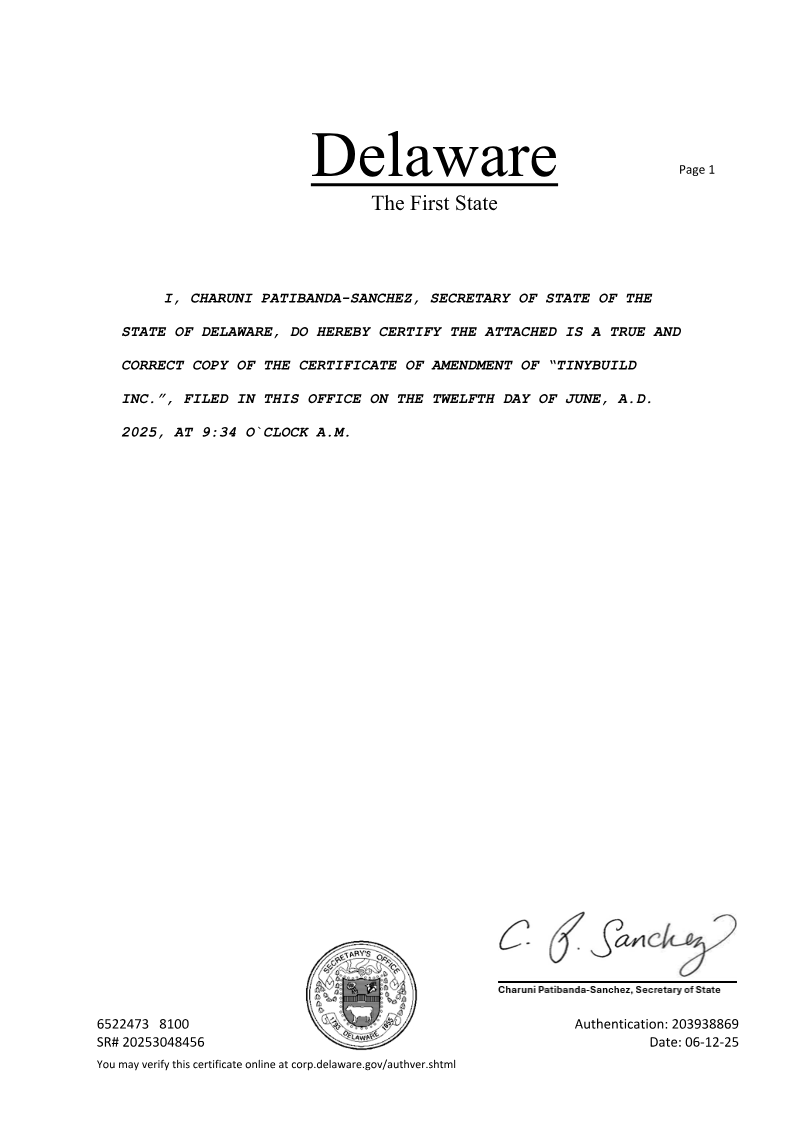
TinyBuild Inc., a Delaware-incorporated video game publisher, enacted significant structural changes to its corporate governance through a Certificate of Amendment filed on June 12, 2025. This legal filing formalizes a shift in the company’s internal leadership framework, specifically transitioning the Board of Directors toward a declassified structure. Under these new provisions, all directors will serve one-year terms expiring at the subsequent annual meeting of stockholders, effectively ending any previous multi-year staggered terms by the 2026 annual meeting. The amendments further centralize control over board composition within the board itself. The number of directors is now fixed exclusively by board resolution, and any vacancies or newly created positions must be filled by a majority of the remaining directors rather than by stockholders. While stockholders retain the power to remove directors with or without cause via a majority vote, the board maintains the sole authority to appoint replacements. Additionally, the company expanded its liability protections, stipulating that directors and officers are not personally liable for monetary damages resulting from breaches of fiduciary duty to the fullest extent permitted by the Delaware General Corporation Law. Geographically and legally, the scope of these changes establishes Delaware as the primary jurisdiction for corporate disputes. The amendment mandates that federal district courts serve as the exclusive forum for Securities Act of 1933 claims, while the Delaware Court of Chancery or the federal district court for the District of Delaware are designated as the sole venues for derivative claims under the Securities and Exchange Act of 1934. These updates, signed by CFO Gjasone Salati, align the company’s governing documents with modern Delaware corporate standards regarding executive indemnification and jurisdictional exclusivity.
This financial report details Capcom’s consolidated performance for the third quarter of the fiscal year ending March 31, 2026. The findings indicate significant year-on-year growth in both revenue and profit across all business segments, driven primarily by the sustained performance of catalog titles and strong results in the amusement equipment division. Net sales reached 115.3 billion yen, a 30% increase over the previous year, while operating profit rose 75% to 54.3 billion yen. These results place the company on a favorable trajectory to meet its full-year targets of 190 billion yen in net sales and 730 billion yen in operating profit. The Digital Contents segment remains the primary driver of growth, with unit sales reaching a record 9-month high of 34.6 million units. Catalog titles accounted for 96.4% of these sales, underscoring the long-term value of core franchises such as Resident Evil, Monster Hunter, and Street Fighter. Notably, Monster Hunter Wilds surpassed 11 million cumulative units, while Resident Evil 4 and Street Fighter 6 continued to show steady growth. Digital sales now represent 94.1% of total units, with PC platforms alone accounting for over 55% of the volume. Geographically, overseas markets dominate the business, representing nearly 90% of total unit sales. Beyond software, the Arcade Operations and Amusement Equipments segments reported double-digit growth. Arcade sales rose 12% following the opening of new stores and the expansion of specialty formats, while Amusement Equipments saw a 74% surge in net sales due to the strong performance of smart slot titles like Shin Onimusha 3. The company’s strategic outlook remains focused on leveraging its leading brands through upcoming releases such as Resident Evil Requiem and Monster Hunter Stories 3, alongside cross-media expansions including a new Devil May Cry anime and a live-action Street Fighter film.