Hyper Casual Puzzle
Documents
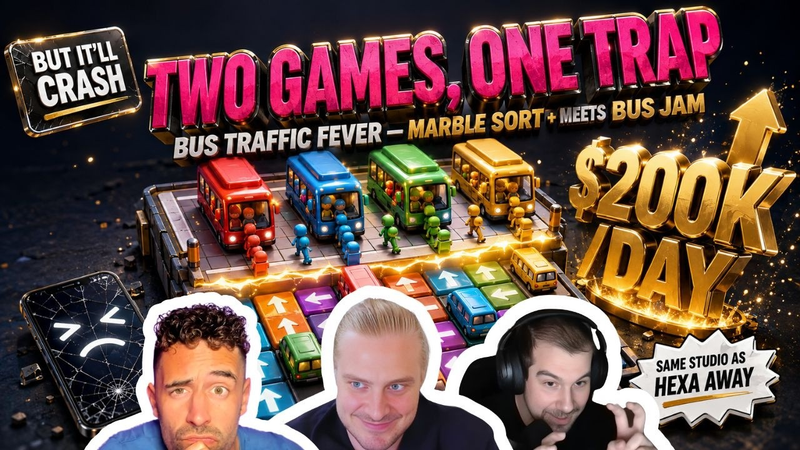
🚌 Marble Sort Meets Traffic Jam: Bus Traffic Fever Review!
Bus Traffic Fever, a puzzle title developed by the Japanese studio Goodroid, has emerged as a significant market force since its March soft launch. By blending the mechanics of marble sorting with traffic jam puzzles, the game has scaled to approximately 400,000 daily downloads and nearly 2 million daily active users. This engagement is driven by intentionally punishing, slow-paced gameplay that extends level durations to 30 or 40 minutes, effectively leveraging the sunk-cost fallacy to encourage player retention and monetize through frequent revives and reward multipliers.
The title generates between $200,000 and $500,000 in daily revenue, with roughly 75% of these earnings derived from rewarded advertisements. Despite this robust financial performance, the game faces substantial long-term sustainability risks. The current growth strategy relies almost exclusively on AppLovin, and the creative pipeline is insufficient, producing only 20 new assets per month. This output falls well below the industry standard of hundreds of iterations required to maintain competitive user acquisition, mirroring the trajectory of the studio’s previous title, Hexa Away, which experienced a rapid decline after an initial surge.
To mitigate these risks and extend the game’s lifecycle, a shift toward a more diversified user acquisition strategy is essential. Expanding beyond a single network to include platforms such as Mintegral, Moloco, and Unity would provide a more stable distribution of traffic. Rather than expanding the development team, the studio could achieve this transition by leveraging specialized expertise to manage these additional channels, ensuring the title remains viable in an increasingly crowded and competitive mobile puzzle market.
- Bus Traffic Fever, developed by Goodroid, generates $200,000 to $500,000 in daily revenue, with 75% of earnings coming from rewarded advertisements.
- The game has scaled to 400,000 daily downloads and nearly 2 million daily active users since its March soft launch by combining marble sorting and traffic jam mechanics.
- Retention is driven by intentionally slow-paced, punishing gameplay that forces 30- to 40-minute level durations, leveraging the sunk-cost fallacy to increase revive and multiplier monetization.
- Long-term sustainability is at risk because the game relies almost exclusively on AppLovin for user acquisition and produces only 20 new creative assets per month, far below industry standards.
- The title’s current trajectory mirrors Goodroid’s previous game, Hexa Away, which suffered a rapid decline after an initial surge due to similar operational limitations.
↪️ Simple ARROW design FTW. You don't need super high-polished art to make $250k/day!
The mobile gaming landscape increasingly favors functional, minimalist design over high-fidelity aesthetics, as evidenced by the rapid ascent of Arrow Puzzle Escape. By prioritizing a hyper-simplistic, two-dimensional arrow mechanic, the title achieved four million daily active users and daily revenues reaching $250,000 within four months of its launch. This performance demonstrates that high-polish art is not a prerequisite for massive scale, provided the core gameplay remains accessible and technically lightweight enough to function across diverse global hardware, including lower-end devices.
The success of this model relies on a distribution-first philosophy where aggressive, iterative testing dictates development. By utilizing AI-assisted level design and creative generation, developers can rapidly optimize for lower cost-per-install metrics and sustained user engagement. The monetization strategy centers on a high volume of interstitial and rewarded video advertisements, which capitalize on the game’s broad appeal and low barrier to entry. This approach has proven resilient even in the face of numerous copycat competitors, allowing the title to maintain a dominant position in major markets across the United States, Japan, and Europe.
Strategic user acquisition remains a critical component of this growth, with platforms like Unity, AppLovin, and TikTok serving as the primary drivers for scaling. Conversely, the diminished role of Facebook in current acquisition strategies highlights a shift toward platforms that offer more frequent and effective monetization updates. Ultimately, the ability to maintain market share hinges on a cycle of continuous testing and the implementation of dynamic difficulty adjustments, ensuring that even simple mechanics can sustain long-term retention and lifetime value in an increasingly crowded mobile ecosystem.
- Arrow Puzzle Escape achieved 4 million daily active users and $250,000 in daily revenue within four months by prioritizing functional, minimalist 2D design over high-fidelity art.
- The game's success relies on a distribution-first model that utilizes AI-assisted level design and creative generation to rapidly optimize for lower cost-per-install metrics.
- Monetization is driven by a high volume of interstitial and rewarded video advertisements, leveraging the game's low barrier to entry to maintain profitability across the US, Japan, and European markets.
- Strategic user acquisition has shifted away from Facebook toward platforms like Unity, AppLovin, and TikTok, which provide more effective and frequent monetization updates.
- Technical accessibility is a core growth driver, as the lightweight design allows the game to function effectively on lower-end hardware globally.
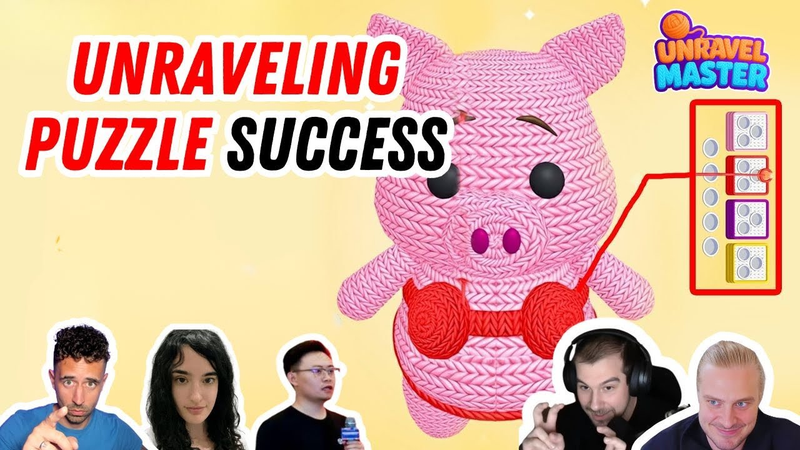
🐷🧶 Unravel Master’s success explained: 25 key insights on modern Hybrid-Casual design
Unravel Master exemplifies the modern hybrid-casual model by synthesizing hyper-casual user acquisition tactics with the deep, sustained engagement mechanics of traditional puzzle games. The core thesis centers on balancing aggressive early-stage monetization with a player-centric design that offers both zen and high-pressure gameplay modes. By implementing a personalized difficulty system and an innovative X-ray streak mechanic, the game successfully filters for highly engaged users while maintaining retention through strategic rewarded video placements rather than intrusive banner ads.
Financial performance is driven by a deliberate shift toward a balanced revenue model, targeting a 50/50 or 60/40 split between in-app purchases and advertising. This strategy relies on early difficulty spikes—a technique adapted from Chinese puzzle design—to drive Day 0 monetization and identify high-value players. To navigate the challenges of a high-CPI market, the development team prioritizes rapid iteration and ASMR-style aesthetics, which foster organic interest and provide a satisfying core loop that encourages conversion.
Operational success is underpinned by a massive, data-driven creative strategy that emphasizes high-frequency asset production. By generating hundreds of unique assets in short windows, the team mitigates revenue volatility and ensures consistent user acquisition performance across diverse formats, including playables and static imagery. Looking forward, the integration of AI into creative workflows and the experimentation with mini-games represent a commitment to long-term retention. Ultimately, the project demonstrates that sustained growth in the current mobile landscape requires a rigorous, coordinated approach to both technical design and large-scale creative output.
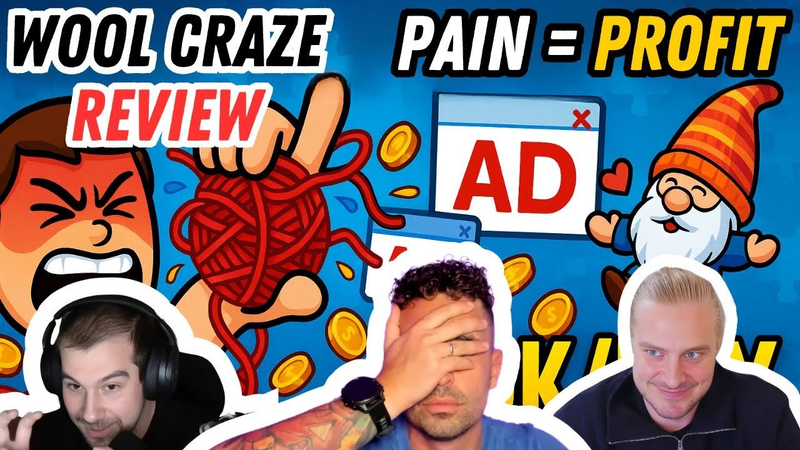
Wool Craze Story: The most annoying yet money printing game of 2025
- Wool Craze is generating approximately $100,000–$120,000 in daily revenue from a daily active user (DAU) base of roughly 140,000.
- The revenue split is estimated at $60,000/day from in-app purchases (IAP) and $30,000–$40,000/day from aggressive ad placements, including up to eight rewarded ads and three interstitials per level.
- The game’s monetization strategy relies on 'Fail Packs' and a grind-heavy design that leverages sunk-cost fallacy, forcing players to endure long 20–30 minute levels.
- The developers (HeroLinkage/SparkWish) utilize a high-volume creative strategy, deploying over 20 distinct concepts heavily reliant on AI-generated assets, including characters, interviews, and banners.
- The game’s design streamlines interaction by simplifying complex 3D objects into a 'one-click, one-yarn' mechanic, prioritizing accessibility and frustration-based engagement over traditional skill-based puzzle mechanics.