Europe reports and market data
Documents
Games Monitor: The Netherlands 2018
The Games Monitor 2018 provides a comprehensive analysis of the Dutch video games industry, tracking its evolution and maturation between 2015 and 2018.
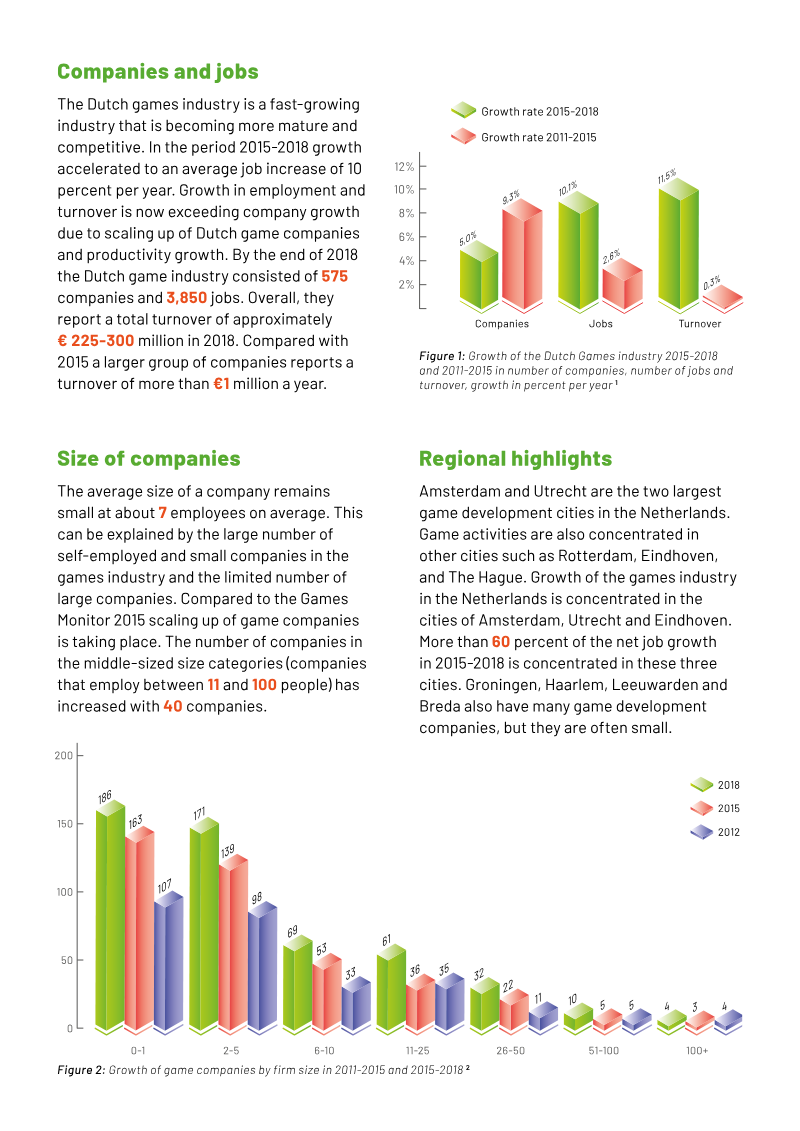
- The Dutch games industry reached 575 companies and 3,850 jobs by the end of 2018, generating an estimated annual turnover of €225–300 million.
- The sector experienced accelerated growth between 2015 and 2018, maintaining an average annual job increase of 10 percent.
- Entertainment game development expanded by 33 percent, while the applied games sector, serving healthcare, education, and government, stabilized.
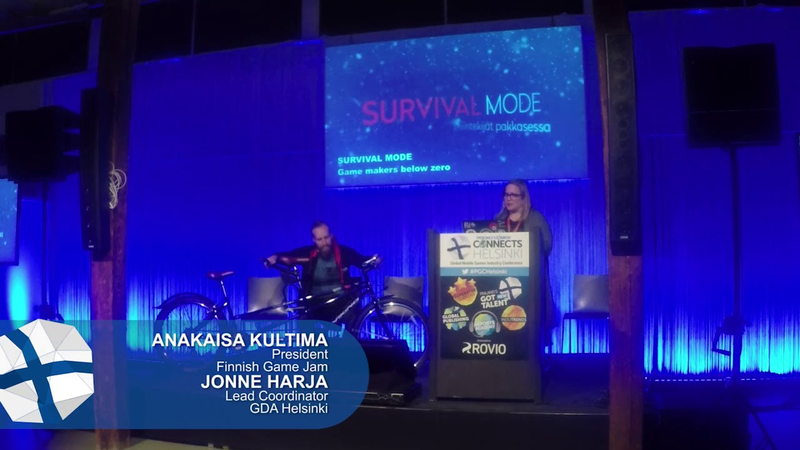
Pushing the boundaries of game development with JamBike and other experiments
Finnish Game Jam, a non-profit organization, promotes game development through experimental, high-intensity game jams that push the boundaries of traditional game creation.
- Finnish Game Jam utilizes extreme physical and environmental constraints—such as limited electricity, remote locations, and physical exertion—to catalyze innovative problem-solving and creative development.
- The organization hosts unconventional, high-intensity events like the JamBike initiative, which involved coding while cycling 660 kilometers, and the Quantum Game Jam, which pairs developers with theoretical physicists to crowdsource research.
- Finland maintains a leading global position in jamming culture, exemplified by a 2016 event that hosted nearly 1,000 participants.

Game Music Collective concert at Pocket Gamer Connects Helsinki 2017
The Game Music Collective serves as Europe’s first professional orchestra dedicated exclusively to the performance and production of video game scores.
- The Game Music Collective is Europe’s first professional orchestra dedicated exclusively to the production and performance of video game scores.
- The ensemble provides a full-service production chain for game developers, including composition, arrangement, recording, and mixing services.
- The collective bridges traditional orchestral arrangements with modern electronic production to create bespoke musical assets for interactive media.
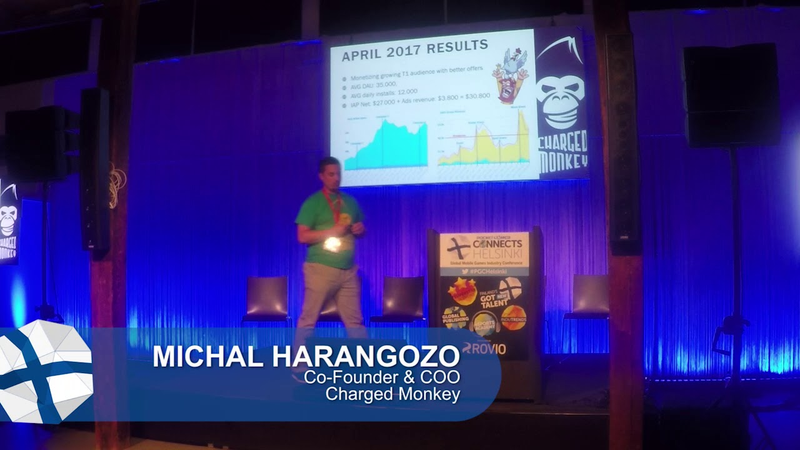
Big data case study: Self-publishing What The Hen!
The mobile game startup behind the title What The Hen! provides a case study on the challenges of self-publishing and the critical role of influencer marketing in achieving financial stability.
- Influencer marketing was the most effective acquisition channel for What The Hen!, outperforming organic, Facebook, and standard paid user acquisition in terms of retention.
- Scaling influencer campaigns is non-linear; the team learned that a successful $500 test does not guarantee a proportional return on a $20,000 investment, which resulted in significant financial losses.
- After 11 months of struggling in soft launch on iOS, the team pivoted to Android, which resulted in a significant increase in installs and positive A/B testing results.
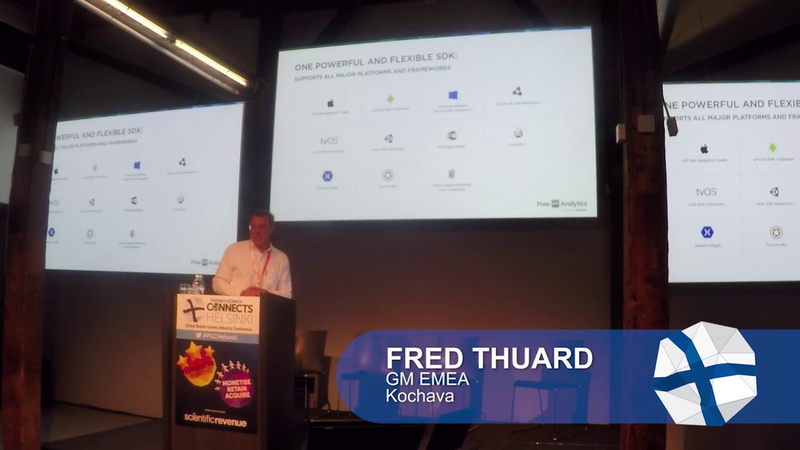
Why attribution matters for a successful game
Effective mobile game marketing relies on robust attribution, which serves as the foundational layer for all analytics and strategic decision-making.
- Attribution is the foundational layer for mobile game marketing, acting as a referee to link advertising spend to specific user actions like installs and post-install events.
- Industry data indicates that approximately 15% of clicks and 5% of installs are fraudulent, necessitating real-time detection to prevent financial losses from tactics like click spoofing and ad stacking.
- Developers should implement a lightweight, server-side SDK to enable configurable attribution without requiring frequent app updates.
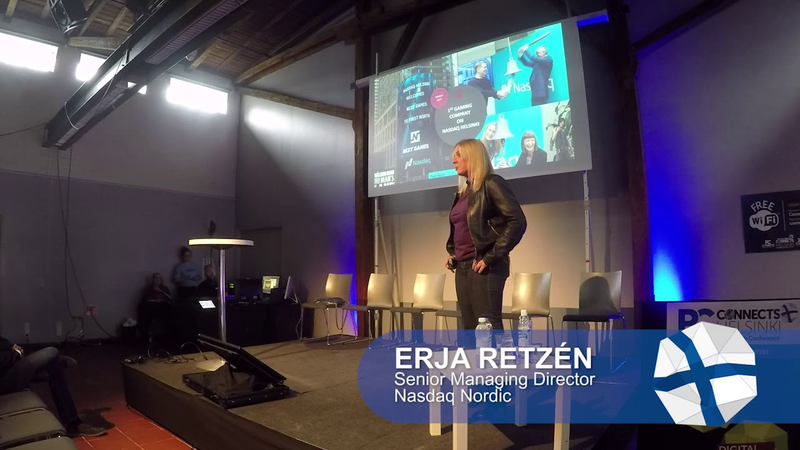
Nasdaq Nordic on access to capital and visibility for games companies
Nasdaq Nordic serves as a primary hub for gaming companies seeking capital, visibility, and international growth through public listings.
- Nasdaq Nordic has surpassed London as the leading European venue for IPOs, with companies raising nearly 8 billion euros through the exchange in the previous year.
- Gaming companies like Paradox Interactive, Remedy, and Nitro Games have successfully utilized the exchange to secure capital, with Remedy’s offering notably oversubscribed by a factor of 8.5.
- Public listing on Nasdaq Nordic provides gaming firms with a 'quality stamp' that enhances international negotiation leverage and facilitates future acquisitions.
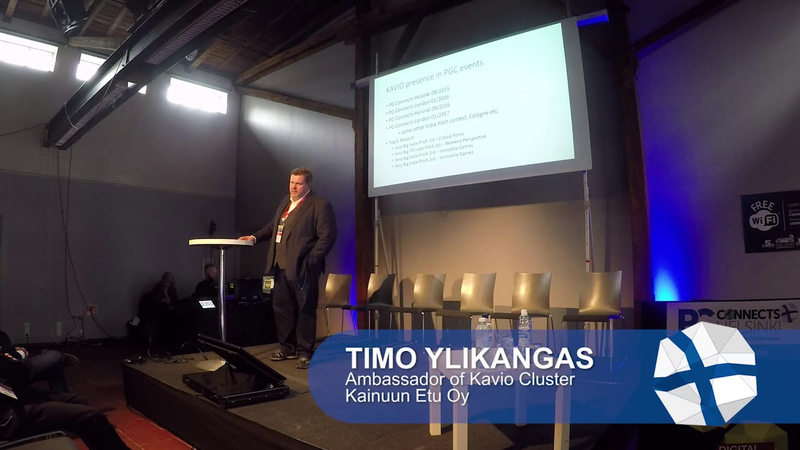
There is money to be made from attending conferences
The primary purpose of this analysis is to demonstrate the tangible financial and professional benefits for game developers who actively participate in industry conferences.
- Strategic attendance at industry conferences like Pocket Gamer Connects directly correlates with significant revenue, with one regional cluster generating over 1 million euros in combined investment and contract revenue between 2015 and 2017.
- Conference participation acts as a critical pipeline for growth, where initial networking often leads to subcontracting work that builds the operational credibility necessary to secure later seed funding or publishing deals.
- International hubs such as London and Helsinki provide essential access to global capital markets, including investors from China, South Korea, and various European nations, which compensates for limited local investment options.

It's not a place, it's a script - Making worlds that mean something
Game industry journalist and author Keith Stuart argues that successful game world-building relies on treating environments as narrative scripts rather than mere backdrops.
- Game environments should be treated as narrative scripts rather than static backdrops, functioning as active characters that reflect the core emotions of the story.
- Developers can deepen player engagement by applying the 'pathetic fallacy,' which involves imbuing landscapes with human emotion to mirror the narrative tone.
- Successful world-building often draws from non-gaming disciplines, such as 18th-century landscape gardening, 1960s urban planning, and the structured exploration paths used in IKEA retail psychology.
Critical Force Academy – Turning students into professionals
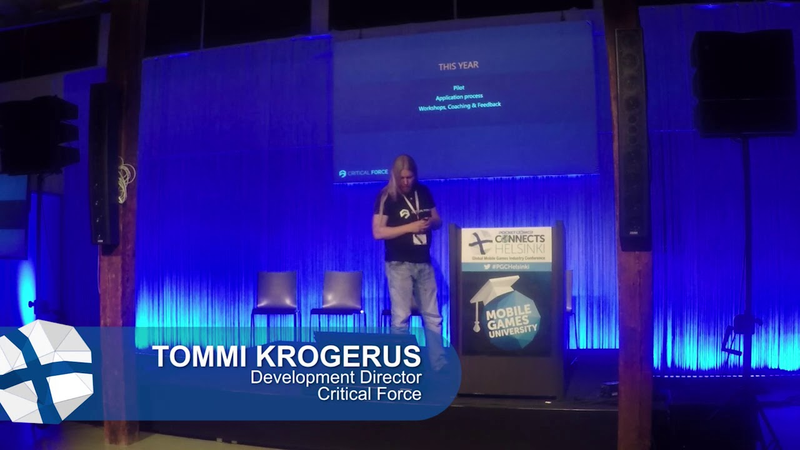
Critical Force Academy serves as a strategic bridge between academic game development education and the professional requirements of the mobile gaming industry.
- Critical Force Academy functions as a long-term recruitment and vetting pipeline, allowing the company to evaluate candidate cultural fit and learning agility over months rather than relying on brief interviews.
- The program bridges the gap between academic education and professional mobile game production by providing students at Kajaani University of Applied Sciences with industry-led coaching and workshops.
- The curriculum prioritizes commercial-grade production standards, specifically focusing on essential mobile development skills and UI/UX refinement to ensure graduates can contribute immediately to the market.

An Overview of Esports in Europe: December 2017
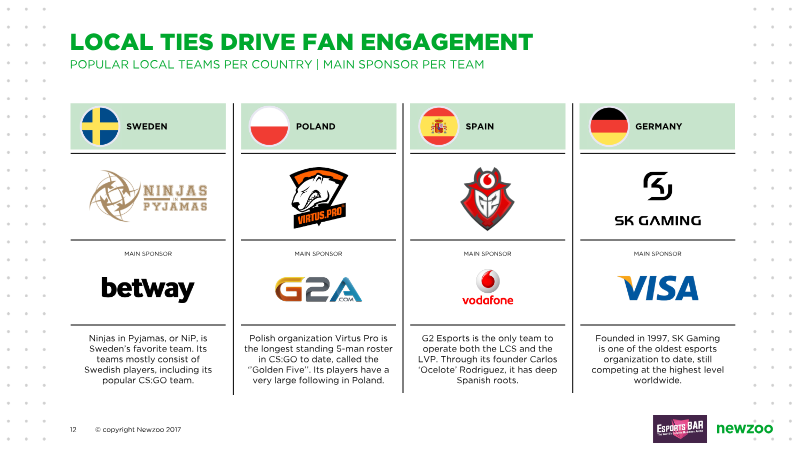
The European esports market is currently transitioning from an adolescent phase toward a mature, multi-billion-dollar industry.
- Europe is a major global esports hub, accounting for 32% of total global esports revenues and hosting over 70 million viewers in 2017.
- The European esports economy is growing rapidly, with total revenues projected to reach $403 million in 2017 and a CAGR of 32.3% expected between 2015 and 2020.
- Media rights revenue in Europe is a primary growth driver, forecasted to increase by more than 500% between 2016 and 2020.

Essential Video Game News: Market, Consumption, Use 2017
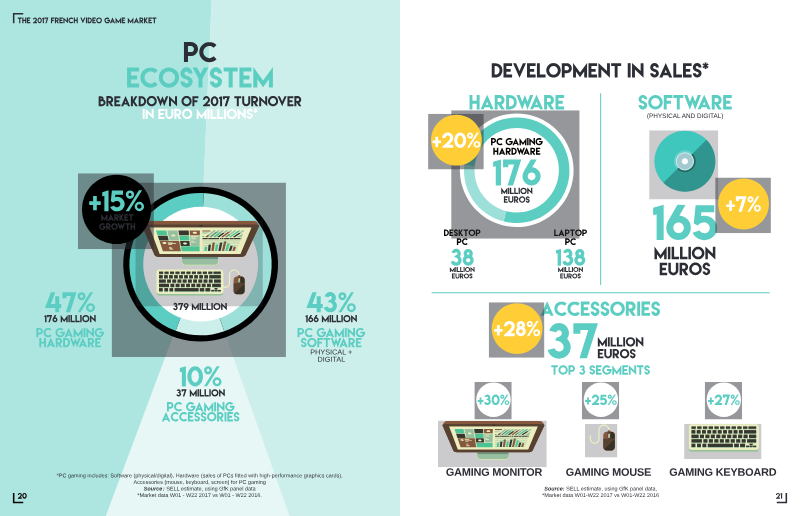
The French video game industry reached a significant milestone in 2017, solidifying its status as a cornerstone of mainstream leisure.
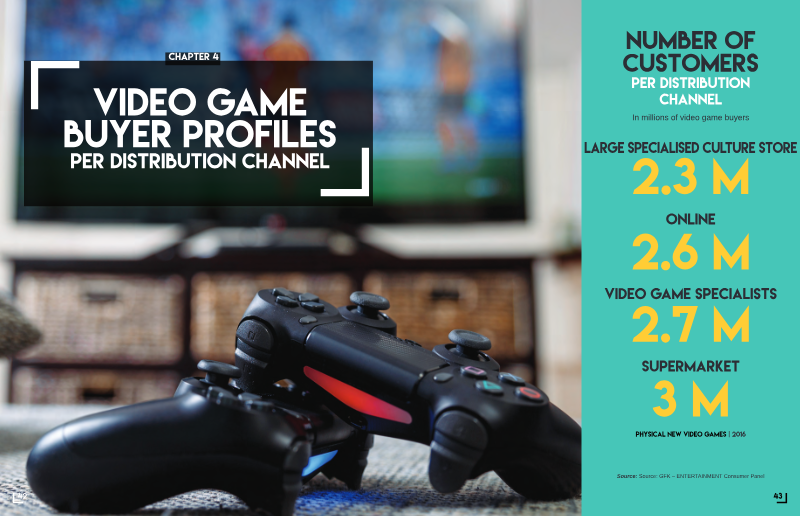
- The French video game market reached a valuation of 3.46 billion euros in 2016, followed by a 14% growth rate in early 2017.
- Gaming has achieved mass-market status in France, with 52% of the population identifying as regular gamers and an average player age exceeding 30.
- Digital platforms account for 58% of game transactions, while physical retail remains the dominant channel for families and younger demographics.
Llibre Blanc de la Indústria Catalana del Videojoc 2016
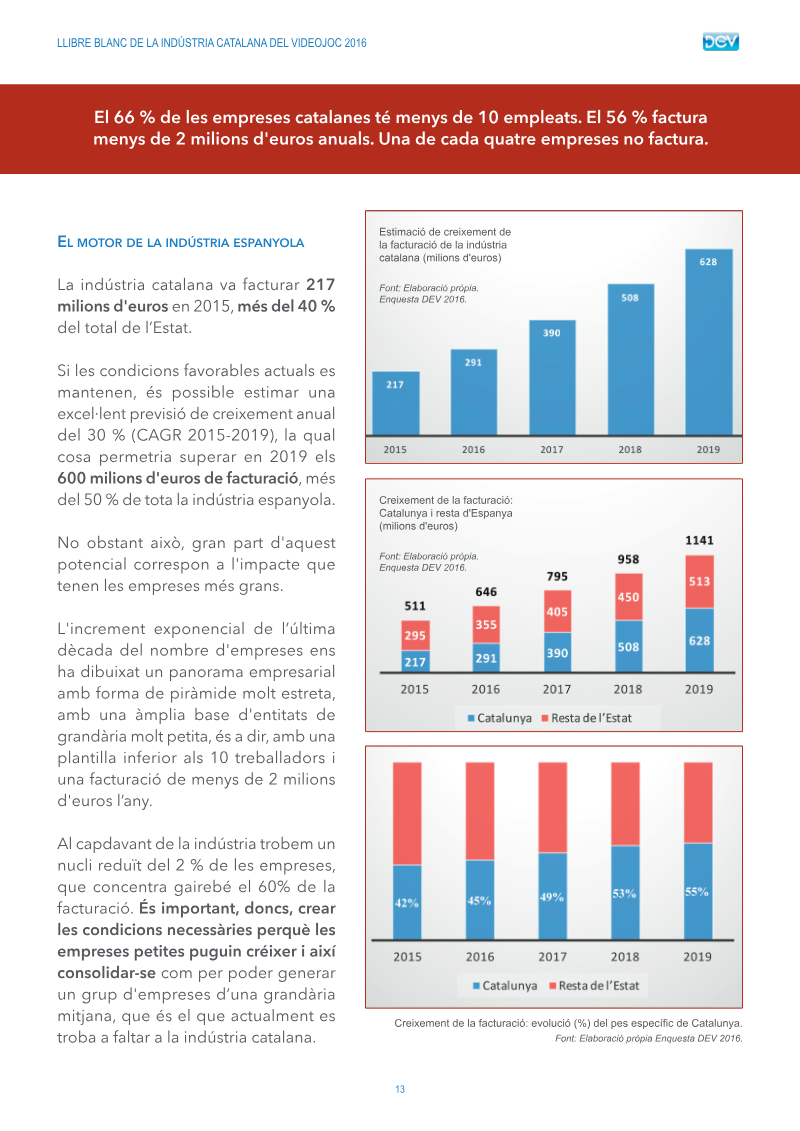
The Catalan video game industry serves as a primary economic engine within Spain, representing 25 percent of the nation’s companies and generating 42 percent of its total revenue.
- The Catalan video game industry is a dominant national force, accounting for 25 percent of Spanish companies and 42 percent of total national revenue.
- As of 2015, the sector comprised 120 firms generating €217 million in annual revenue, with 72 percent of earnings derived from international markets.
- Industry projections for 2019 target significant expansion, aiming for over €600 million in annual revenue and 4,600 direct jobs.