Square Enix Annual Report FY2006
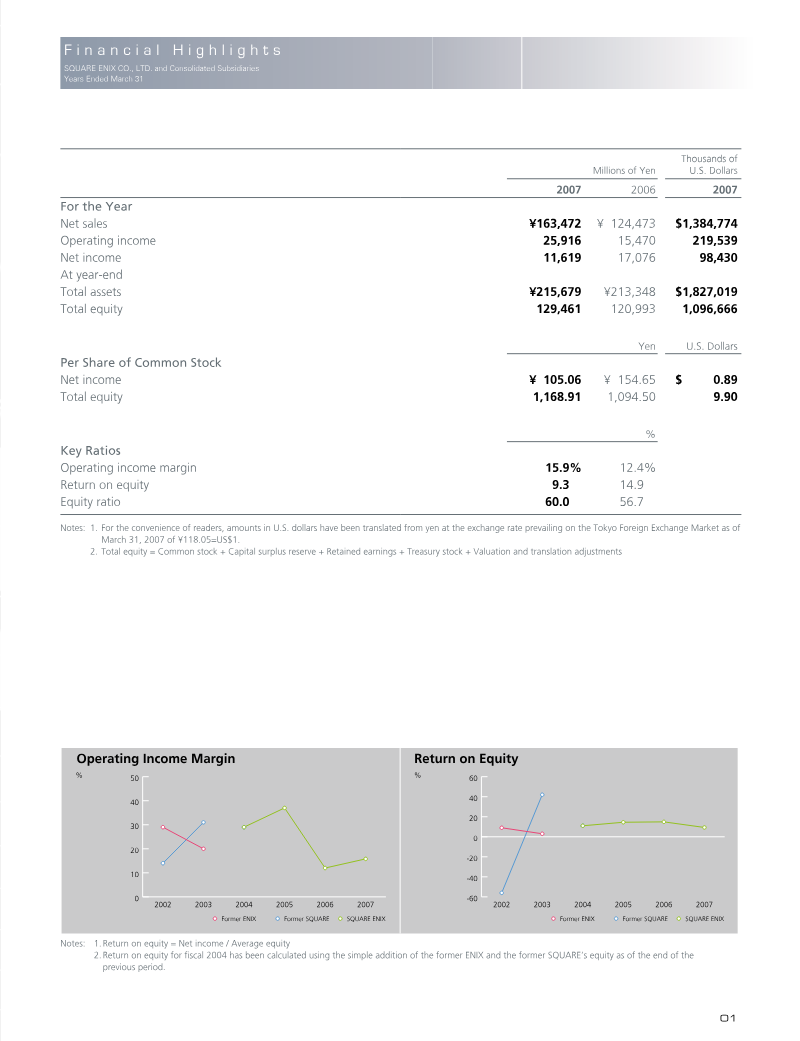
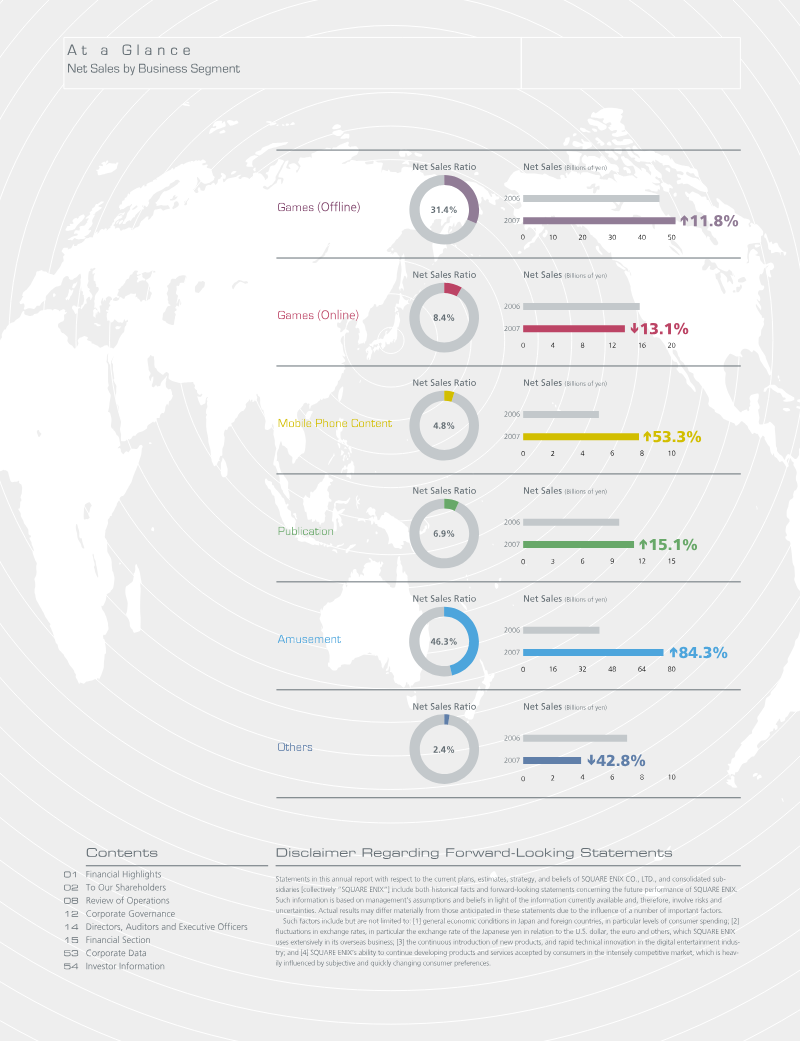
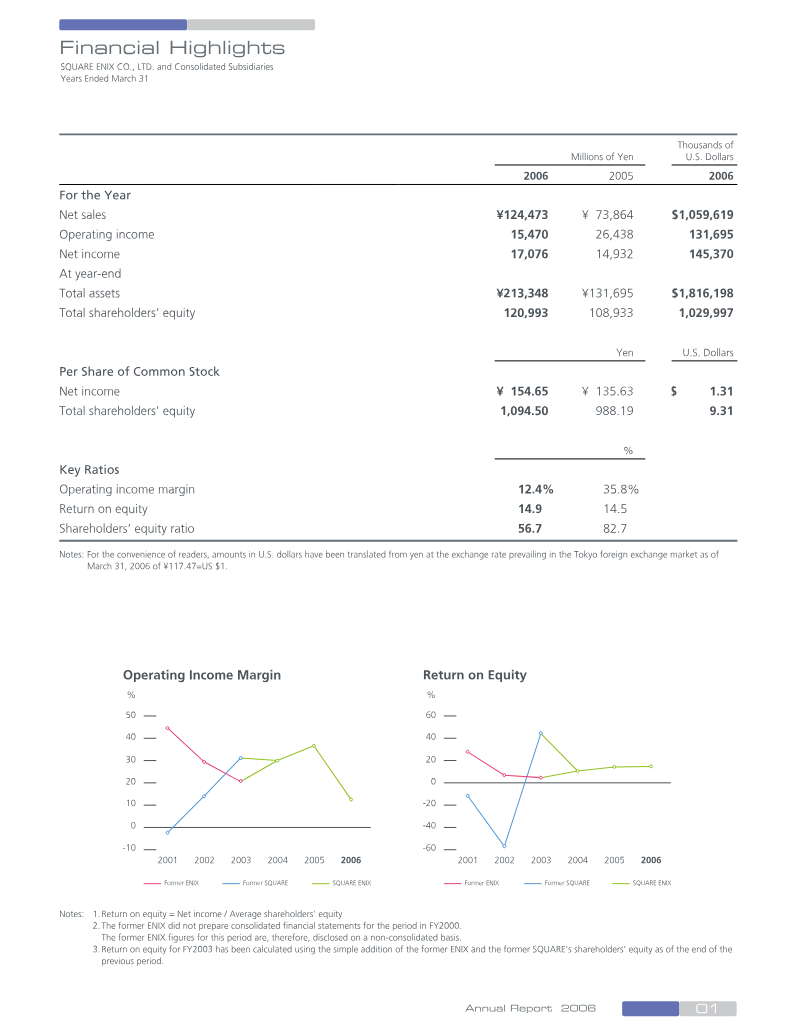
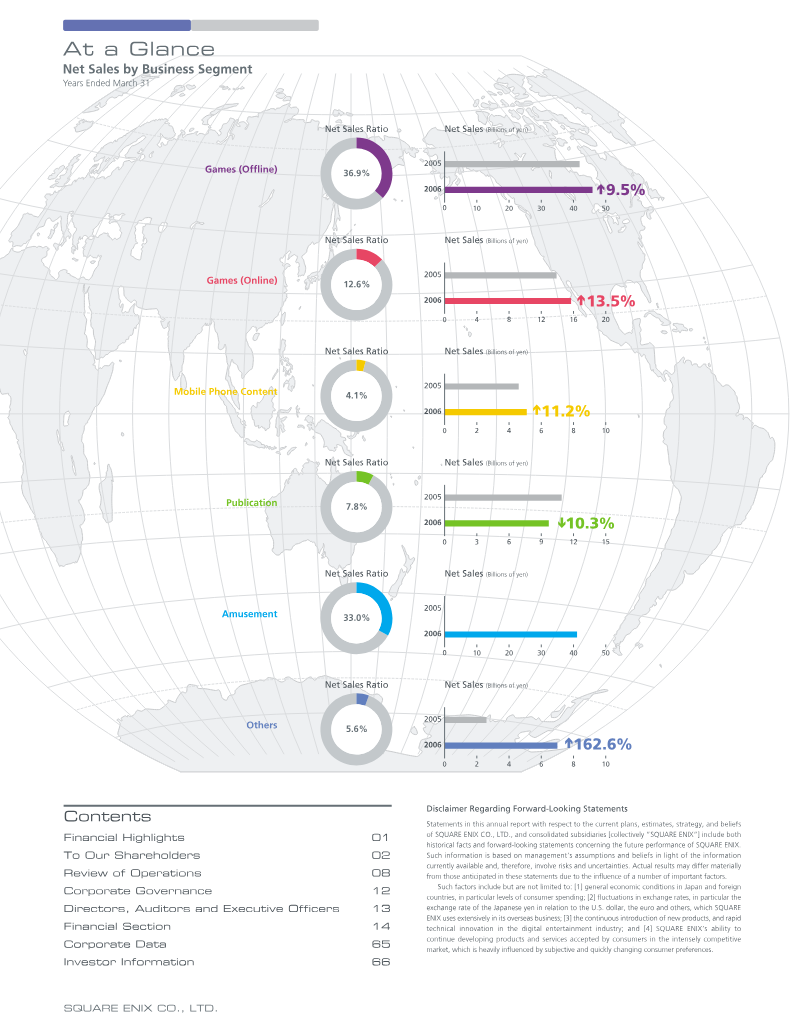
Fiscal year 2006 marked a period of aggressive structural expansion and strategic pivot for Square Enix, defined primarily by the acquisition of Taito Corporation. This consolidation drove net sales up 68.5% to ¥124.5 billion, as the company integrated Taito’s amusement and arcade operations into its traditional software portfolio. Financial performance was further bolstered by the record-setting global releases of *Final Fantasy XII* and *Kingdom Hearts II*, which shipped over 3.6 million units. However, despite record revenues, operating income fell 41.4% to ¥15.5 billion. This decline was attributed to a challenging transition in the console lifecycle, the underperformance of second-tier titles, and significant impairment hits, including a ¥3.9 billion write-down of goodwill related to the U.S. subsidiary UIEvolution.
The acquisition of Taito fundamentally altered the corporate balance sheet, increasing total assets to ¥284.3 billion and necessitating the issuance of ¥50 billion in corporate bonds. While the new Amusement segment added substantial scale, it initially faced operating losses due to high investment costs and sluggish arcade sales. To mitigate these pressures, management initiated a divestment of non-core assets, such as Taito’s karaoke-on-demand business, and implemented a strategic shift toward "community management." This vision emphasizes multi-platform content delivery, network-compliant entertainment, and the application of game technology to non-entertainment sectors like education and IPTV.
Geographically, Japan remained the primary revenue driver, accounting for 87% of sales, though the company noted significant growth in the Asian digital content market. The ownership structure also underwent a notable transformation, with foreign investment rising from 4.46% to 19.65% over a two-year period. Moving forward, the company aims to stabilize its expanded operations by targeting a 20% operating income ratio, focusing on cross-platform middleware development and the strengthening of global human resources to navigate the risks associated with next-generation hardware transitions.