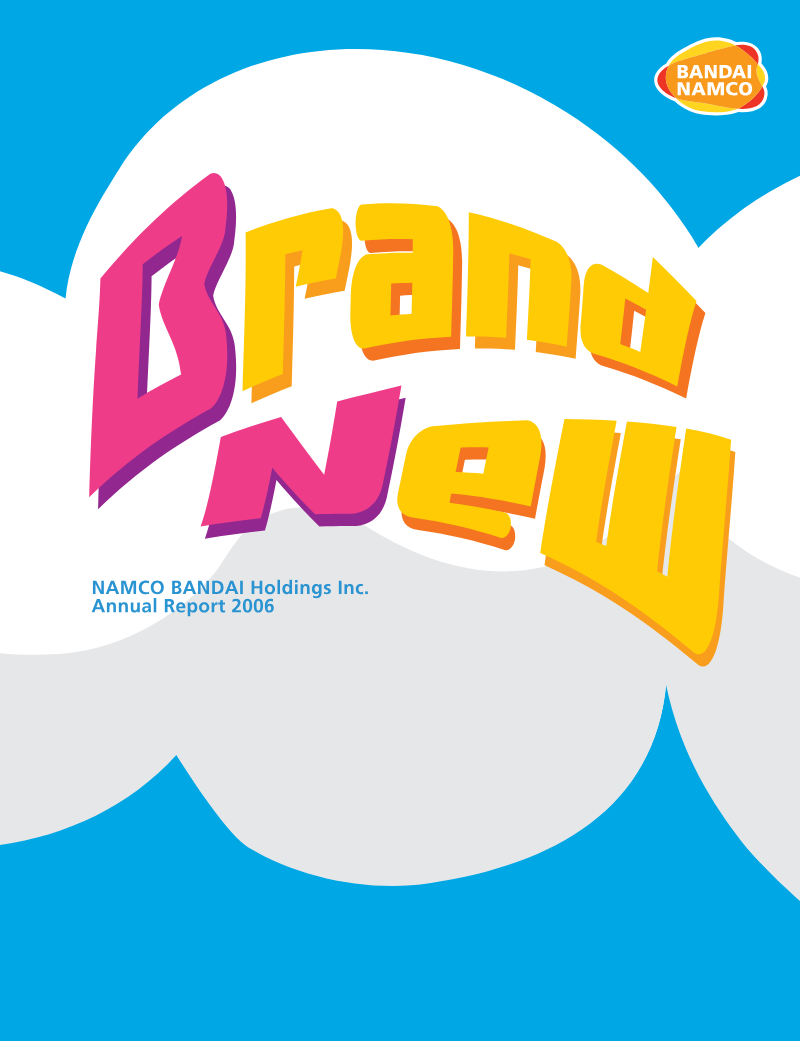
The 2006 annual report presents the first full‑year results of the joint holding company formed by the September 2005 merger of Bandai and Namco, outlining a strategy that leverages cross‑business synergies across toys, hobby products, visual media, network services, amusement facilities and game software. Financial performance for fiscal 2006 reached ¥450.8 billion in net sales, ¥35.7 billion in operating profit and ¥14.2 billion in net income, delivering earnings of ¥54.4 per share and a ¥12 dividend, while return on equity fell to 5.8 % for Bandai and 9 % for Namco. The report notes that weaker amusement‑facility and game‑software markets forced inventory write‑downs and a deferred‑tax‑asset allowance, causing the group to miss its internal targets.
Revenue concentration remained heavily Japan‑centric, with roughly 81 % of sales generated domestically and 19 % from overseas markets. The medium‑term management plan targets a rise in overseas sales to 25 % of total revenue by FY 2009 and ultimately 50 % long‑term, supported by the “Entertainment Hub” model that integrates character merchandising with technology to create and distribute content across multiple channels. Projected additions include ¥5 billion in new toys and hobby sales and ¥30 billion from new amusement‑facility formats, with operating‑margin goals of 15‑20 % across the five Strategic Business Units.
Governance is structured around a ten‑member board, a four‑member statutory auditor board and a series of standing committees that oversee strategy, personnel, CSR, compliance and crisis management, complemented by ten internal‑control policies introduced from FY 2007. The consolidated balance sheet shows shareholders’ equity of ¥243.6 billion, strong operating cash generation of ¥31.8 billion, and a year‑end cash balance of ¥113.2 billion after
Bandai Namco · 2026
Bandai Namco · 2025
Bandai Namco · 2024
Bandai Namco · 2024
Bandai Namco · 2023
Bandai Namco · 2023
Bandai Namco · 2022
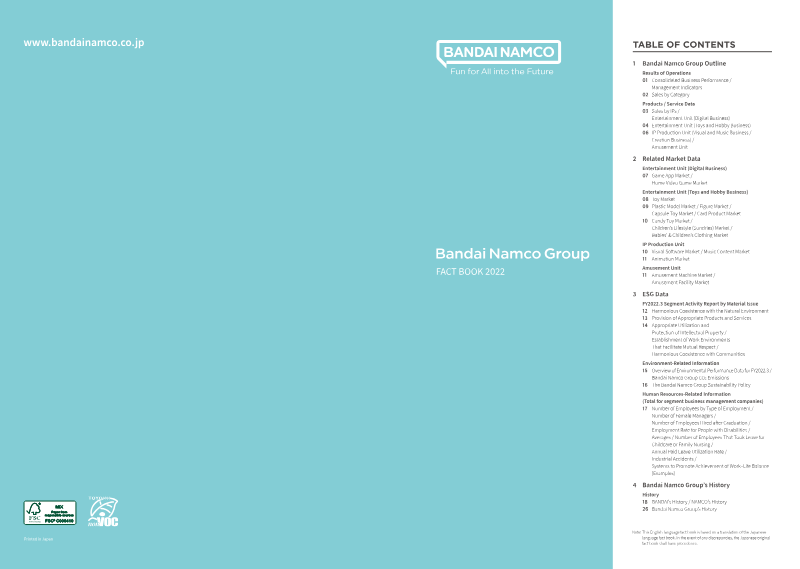
Bandai Namco · 2022
Bandai Namco · 2021
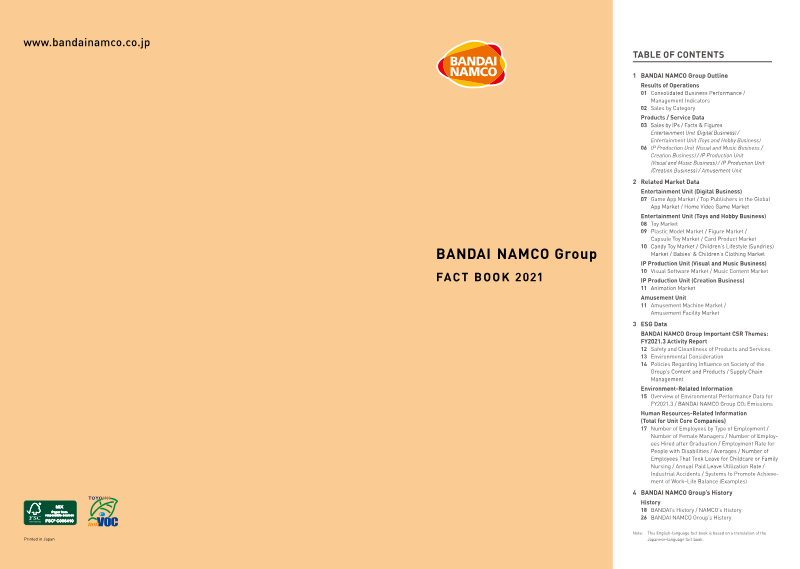
Bandai Namco · 2021
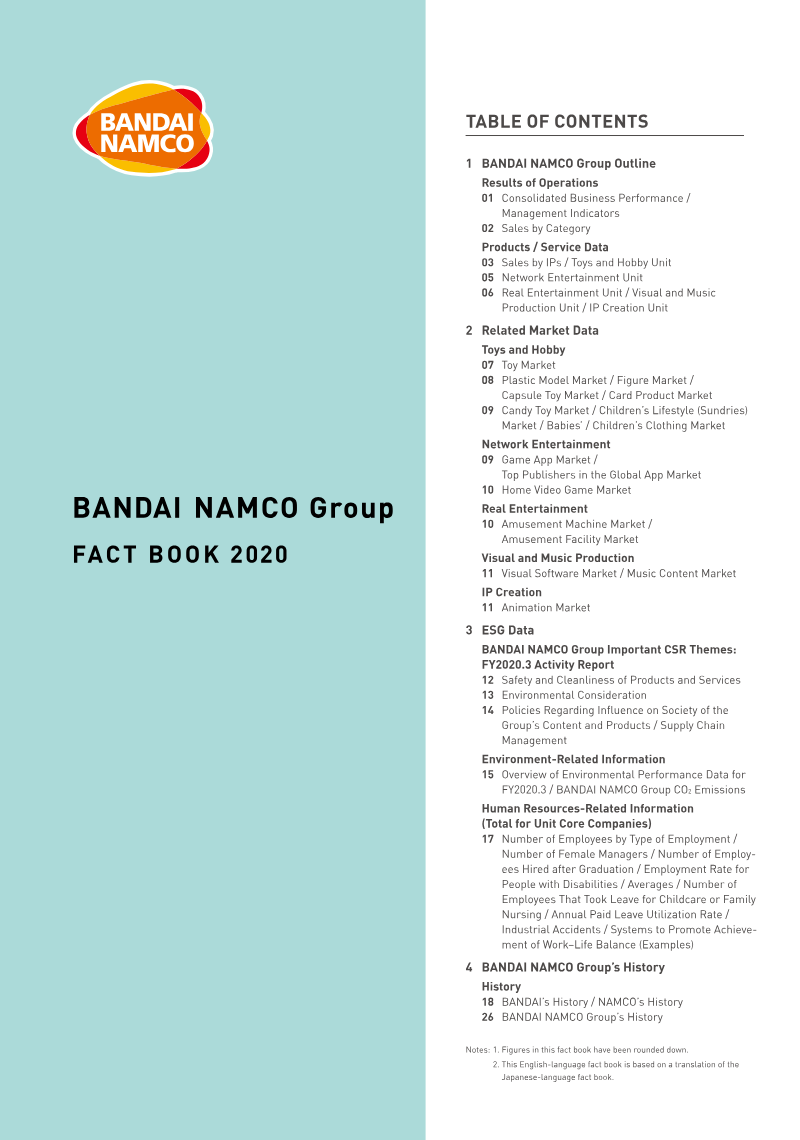
Bandai Namco · 2020
Bandai Namco · 2019
Bandai Namco · 2011

Bandai Namco · 2009
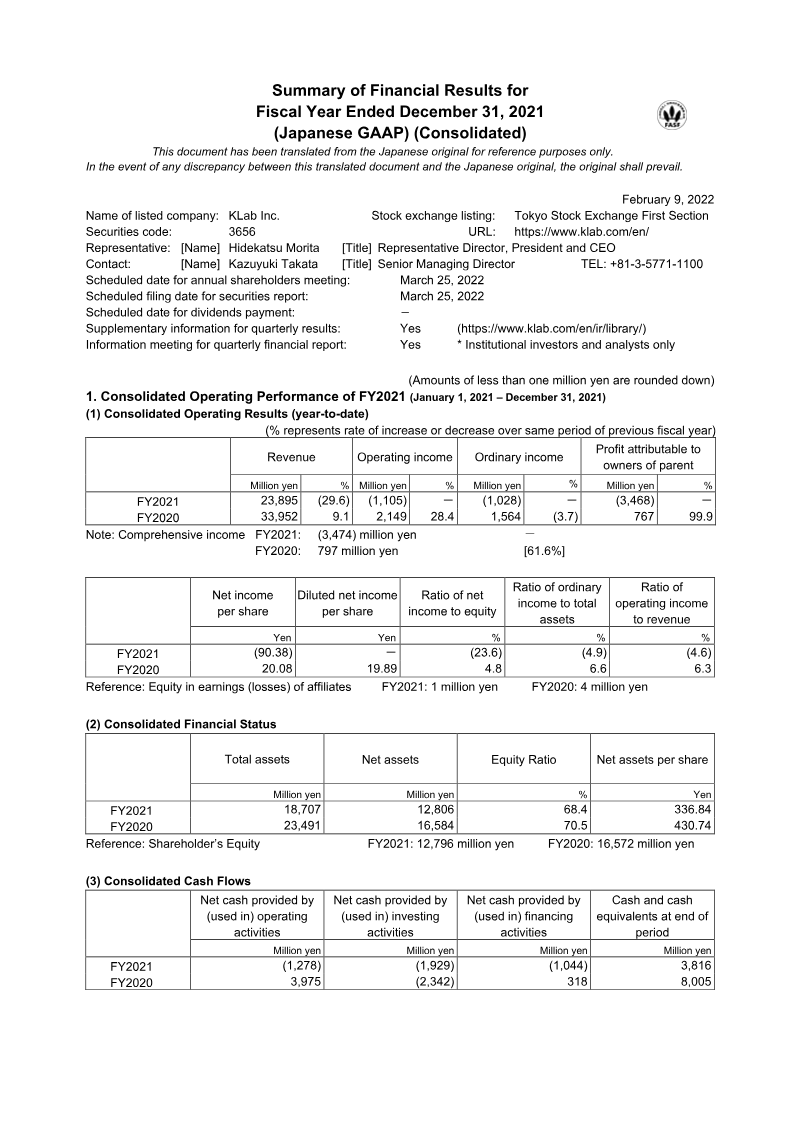
KLab · 2022
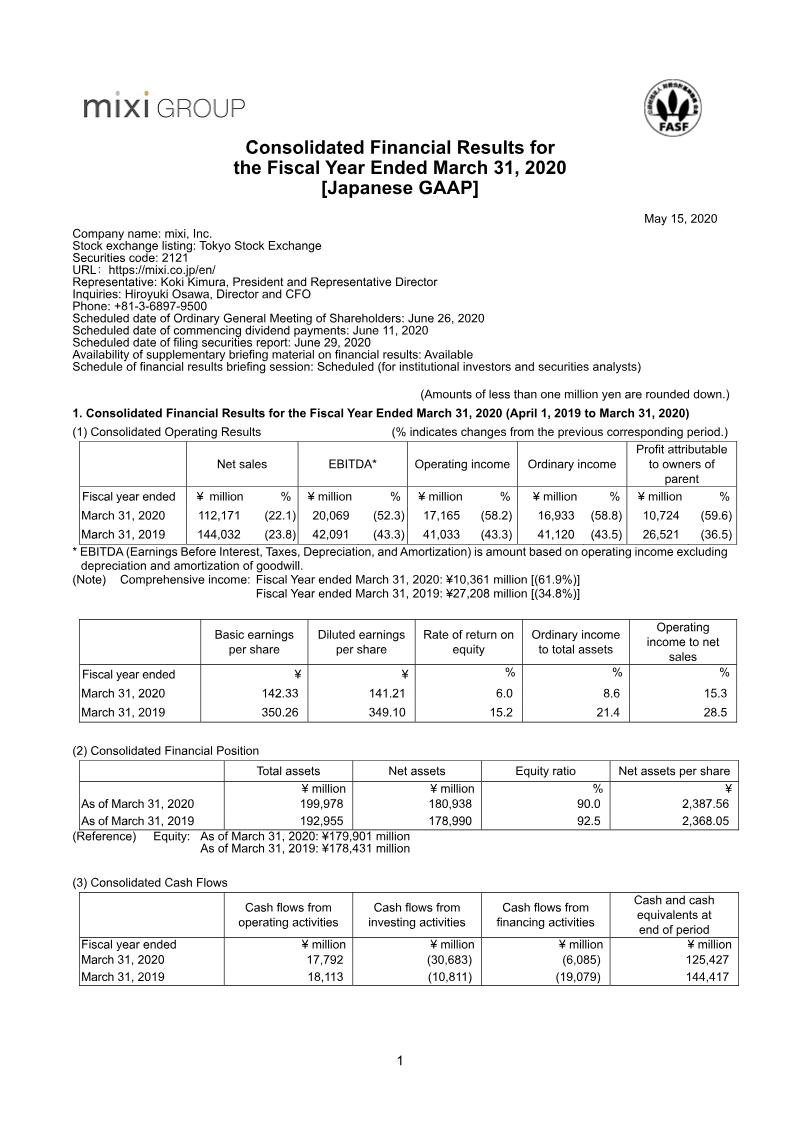
mixi · 2020
Bandai Namco · 2018
Bandai Namco · 2017
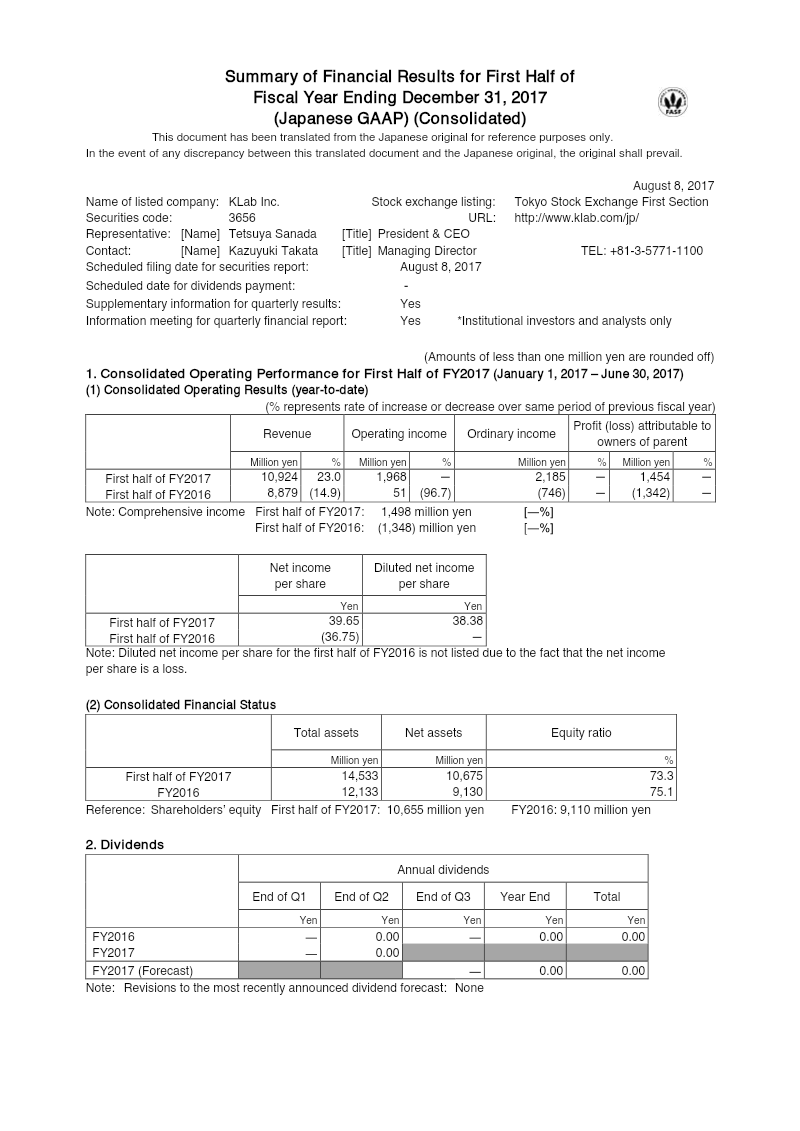
KLab · 2017
Bandai Namco · 2016
Bandai Namco · 2014
mixi · 2014
Bandai Namco · 2012
Bandai Namco · 2010