Investment
Report
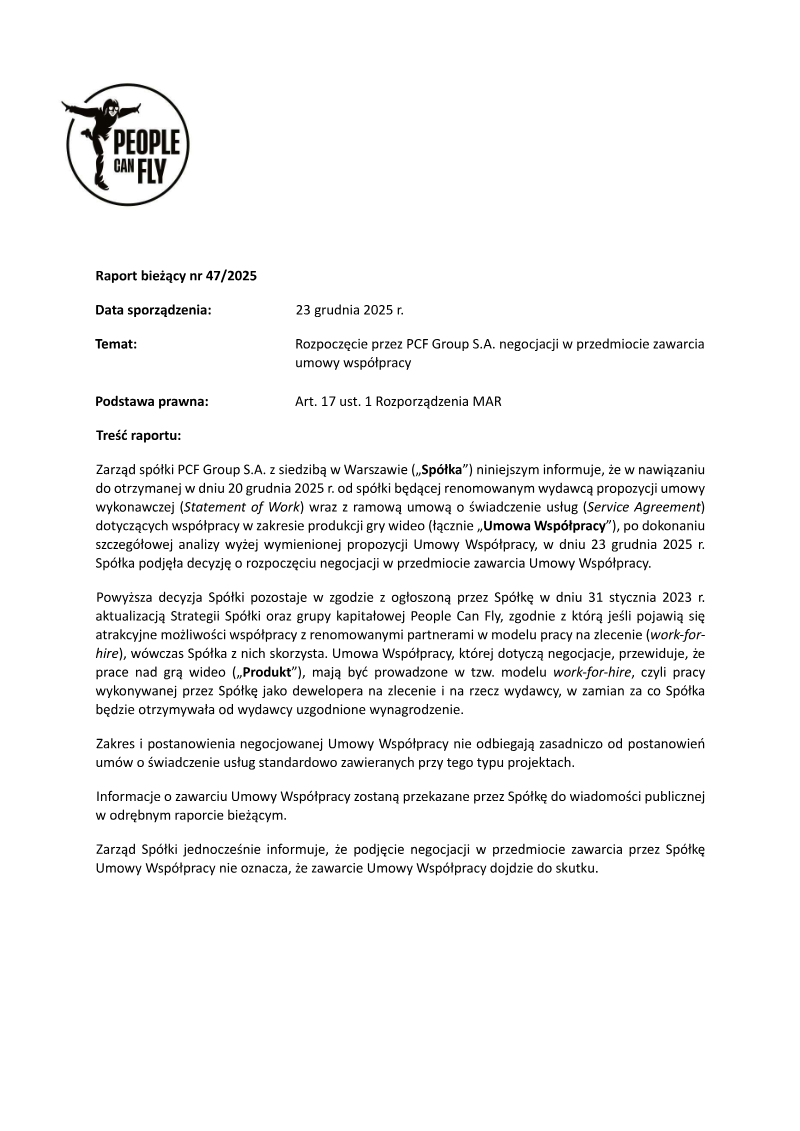
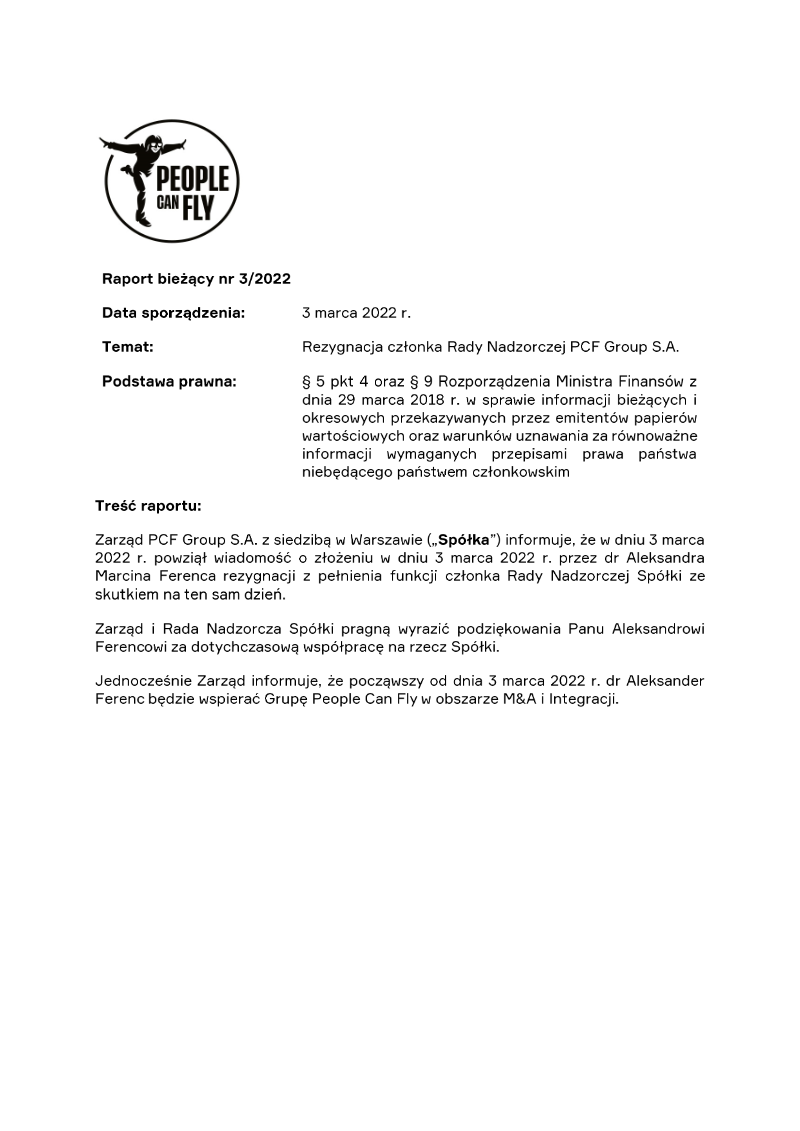
Current Report No. 3/2022: Resignation of a Supervisory Board Member of PCF Group S.A.
The report announces the resignation of Dr. Aleksander Ferenc from the Supervisory Board of PCF Group S.A., effective March 3, 2022. The board’s decision is communicated in compliance with Polish financial regulatory requirements, specifically the 2018 Minister of Finance regulation on ongoing information obligations for issuers. The announcement confirms that Dr. Ferenc’s resignation was submitted and accepted on the same day, and expresses gratitude for his contributions to the company. Simultaneously, the report states that Dr. Ferenc will continue to support PCF Group S.A.’s parent company, People Can Fly, in mergers and acquisitions (M&A) and integration activities from March 3, 2022 onward. No additional data on financial performance or strategic initiatives are provided; the focus remains strictly on governance changes and the continuity of Dr. Ferenc’s advisory role within the broader corporate group. The scope is limited to PCF Group S.A., a Warsaw‑based entity, and its parent company People Can Fly. The time frame is the specific date of resignation, March 3, 2022, with implications for ongoing M&A support. Methodology is not applicable beyond the regulatory reporting framework mandated by Polish financial law.
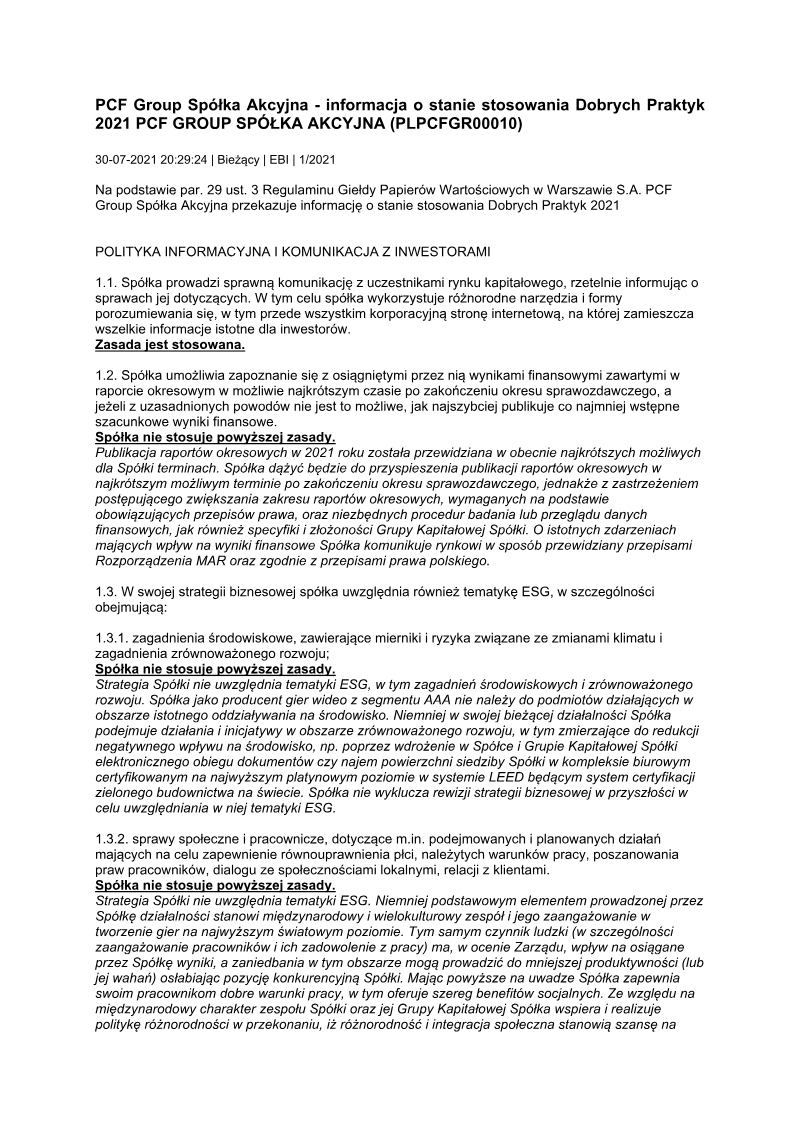
PCF Group
Report
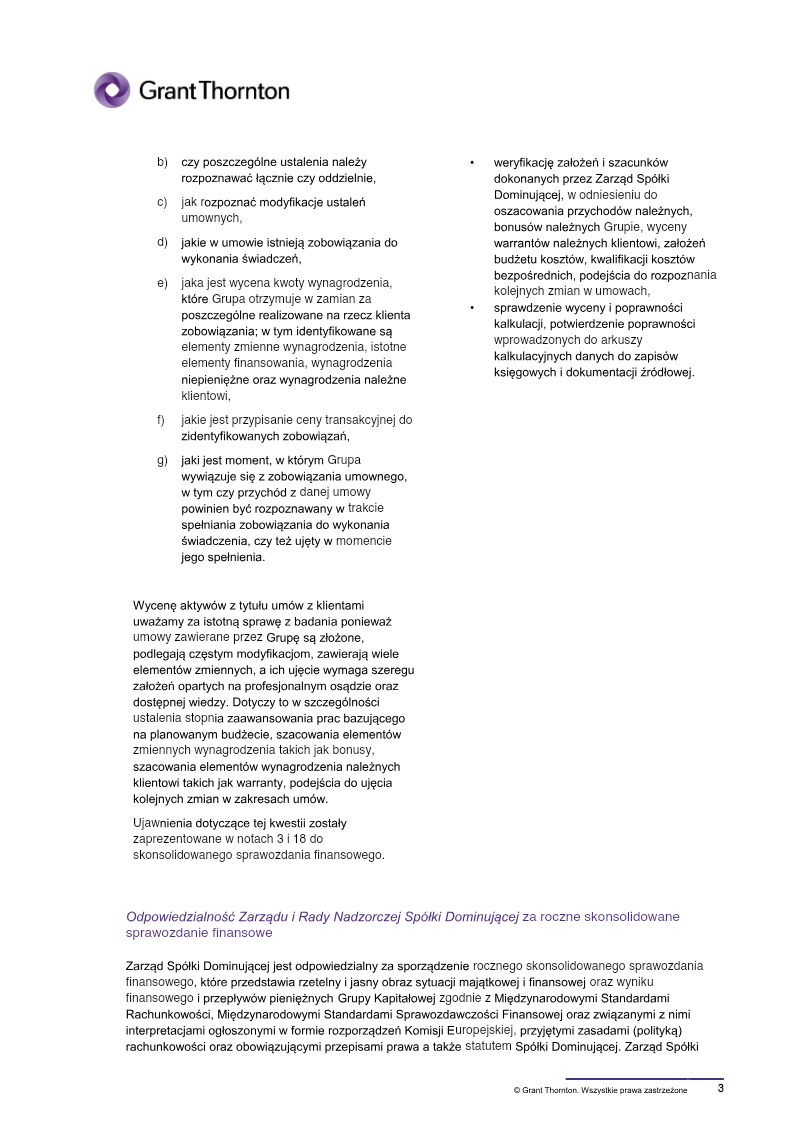
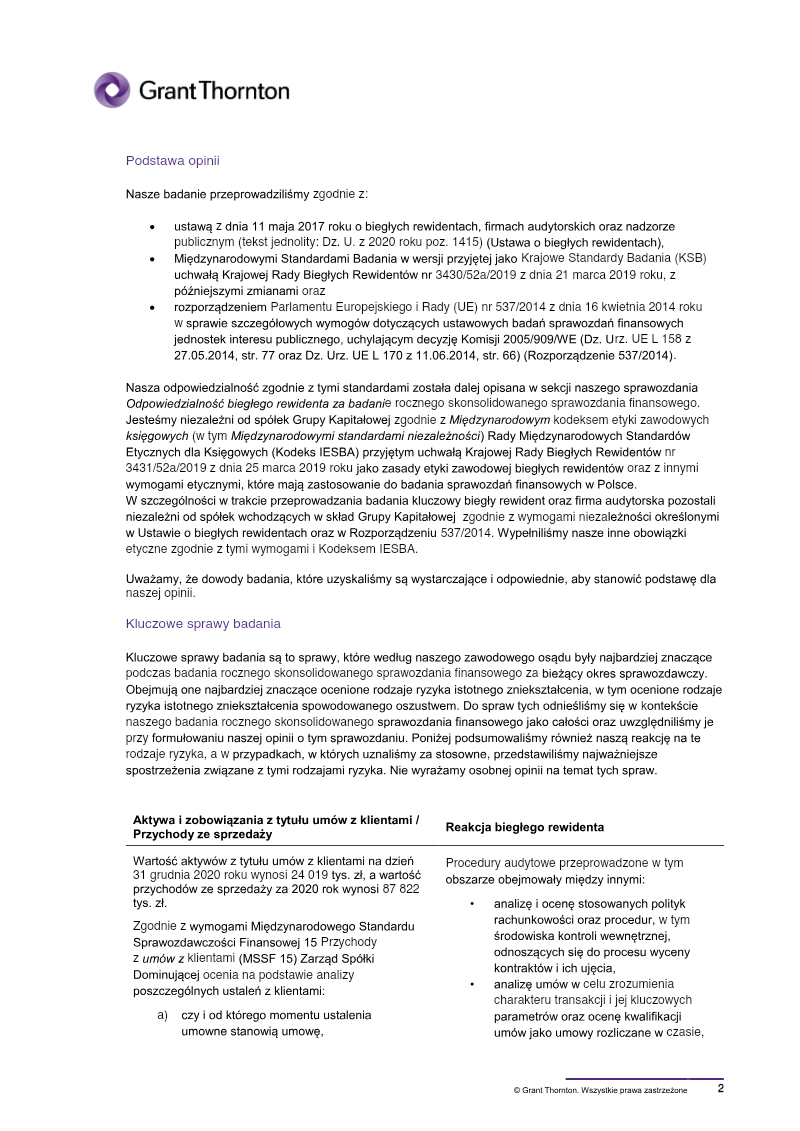
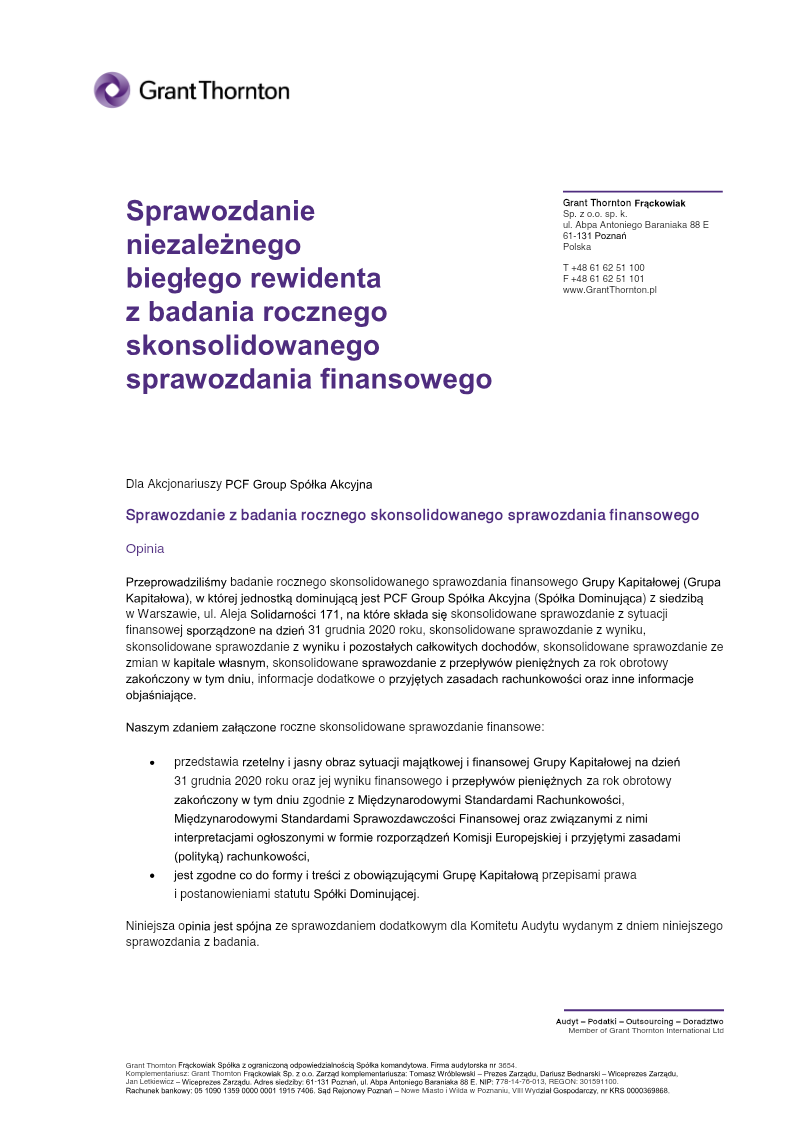
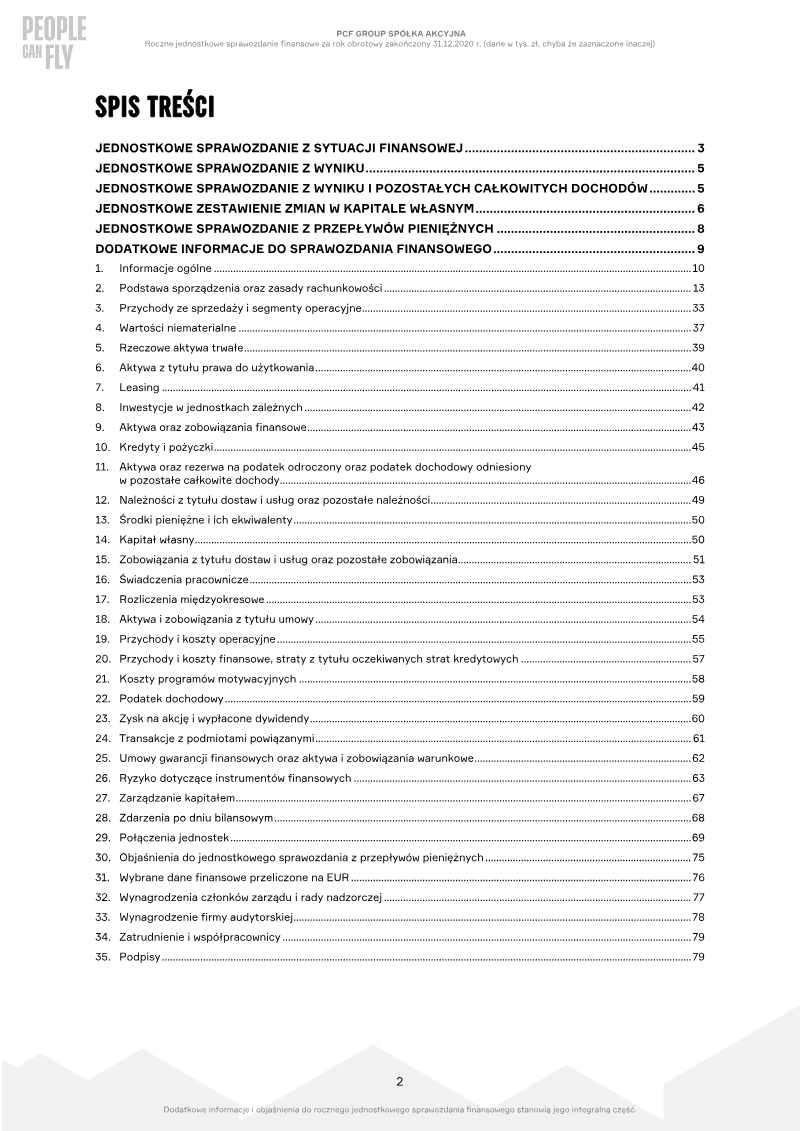
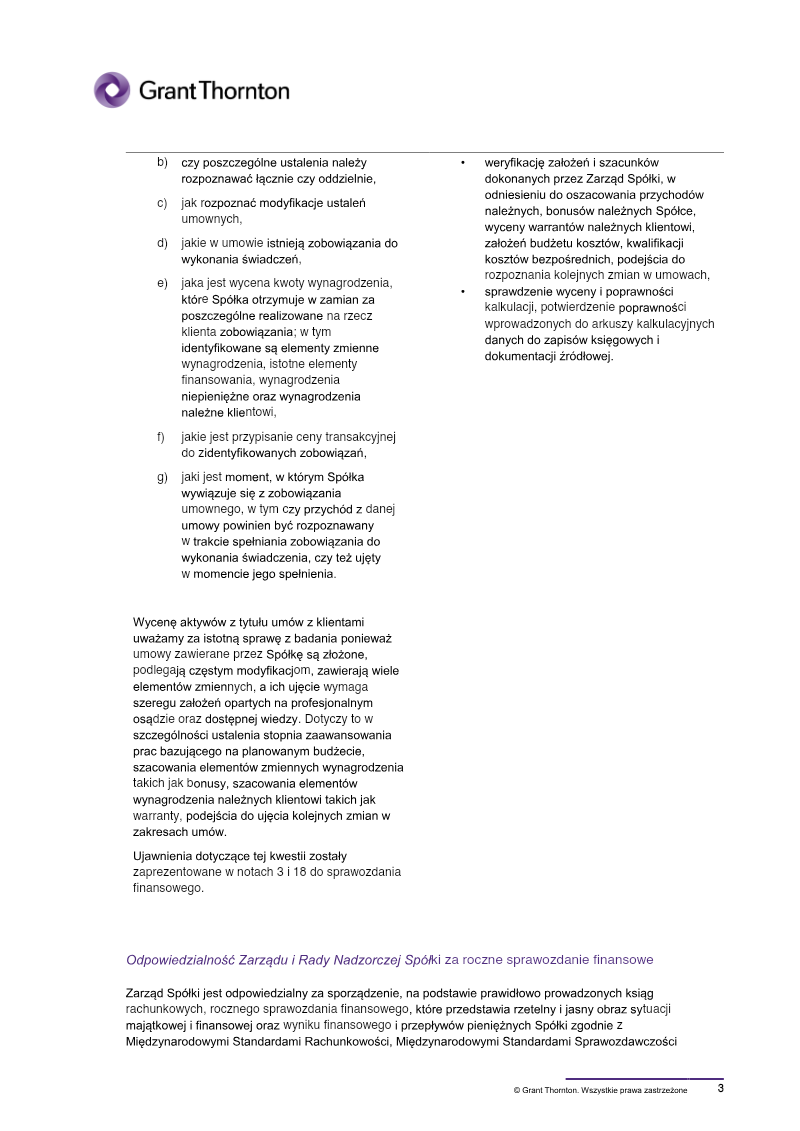
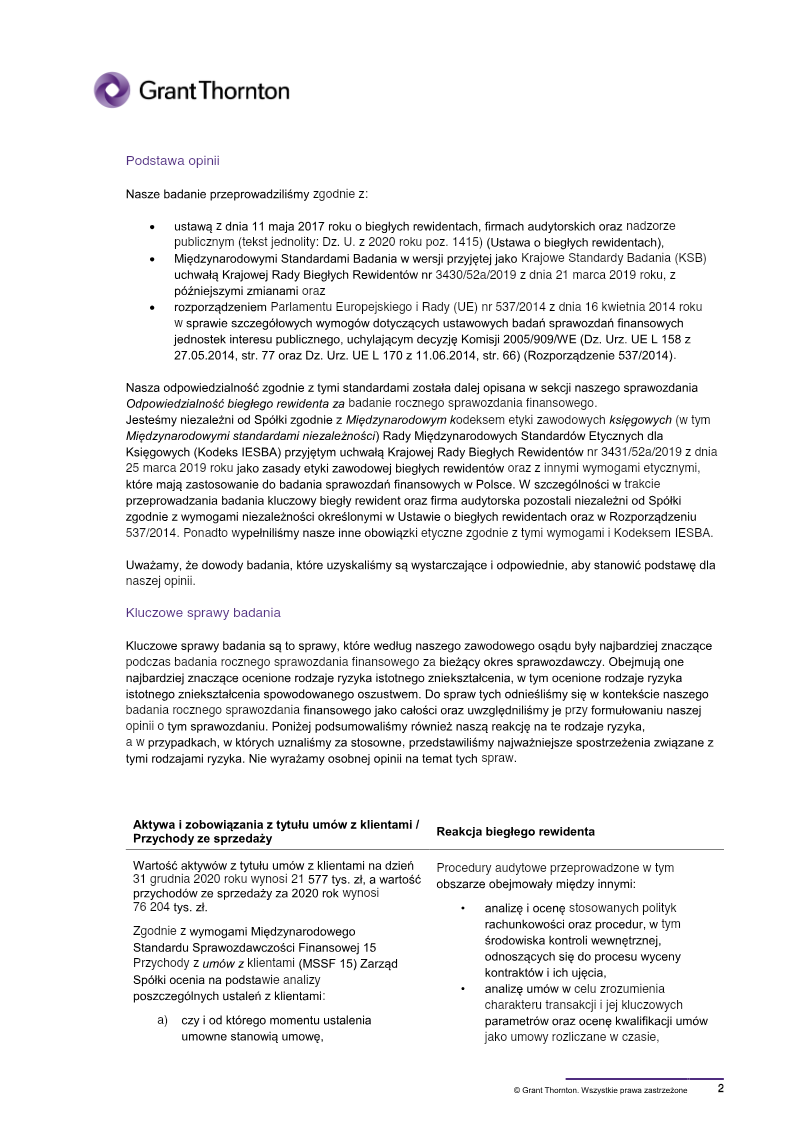
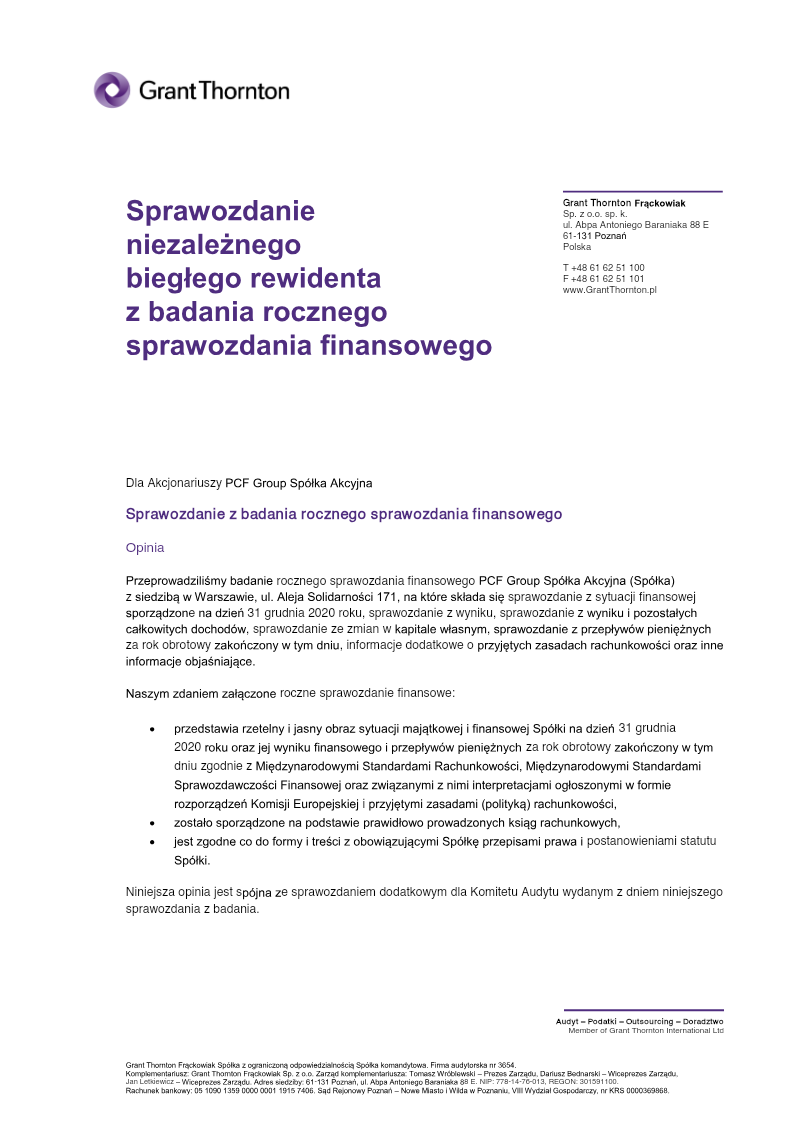
Independent Auditor's Report: Annual Financial Statement 2020
The audit opinion confirms that PCF Group’s 2020 financial statements present a true and fair view of the company’s assets, liabilities, equity, income, expenses, and cash flows as of 31 December 2020. The statements comply with International Financial Reporting Standards, IFRS, and related EU regulations, and are based on properly maintained accounting records. The auditor’s responsibility was carried out under Polish auditing law, the International Standards on Auditing (ISA), and the EU Regulation 537/2014. Independence was maintained in accordance with IESBA ethics, and the audit team performed sufficient procedures to obtain reasonable assurance that no material misstatement exists due to error or fraud. Key audit focus areas included the valuation of contract‑based receivables and obligations, where complex, frequently modified agreements required significant judgment. The auditor evaluated the company’s revenue recognition policies under IFRS 15, assessed estimates of variable consideration such as bonuses and warranties, and reviewed the allocation of transaction prices to identified performance obligations. These matters were disclosed in Notes 3 and 18 of the financial statements. The audit also covered other information, including the annual report and corporate governance statement. The auditor expressed an unqualified opinion on these disclosures, finding them prepared in accordance with applicable laws and consistent with the financial statements. No material misstatements were identified, and no prohibited non‑audit services were rendered during the engagement.
PCF Group