Report3 pages
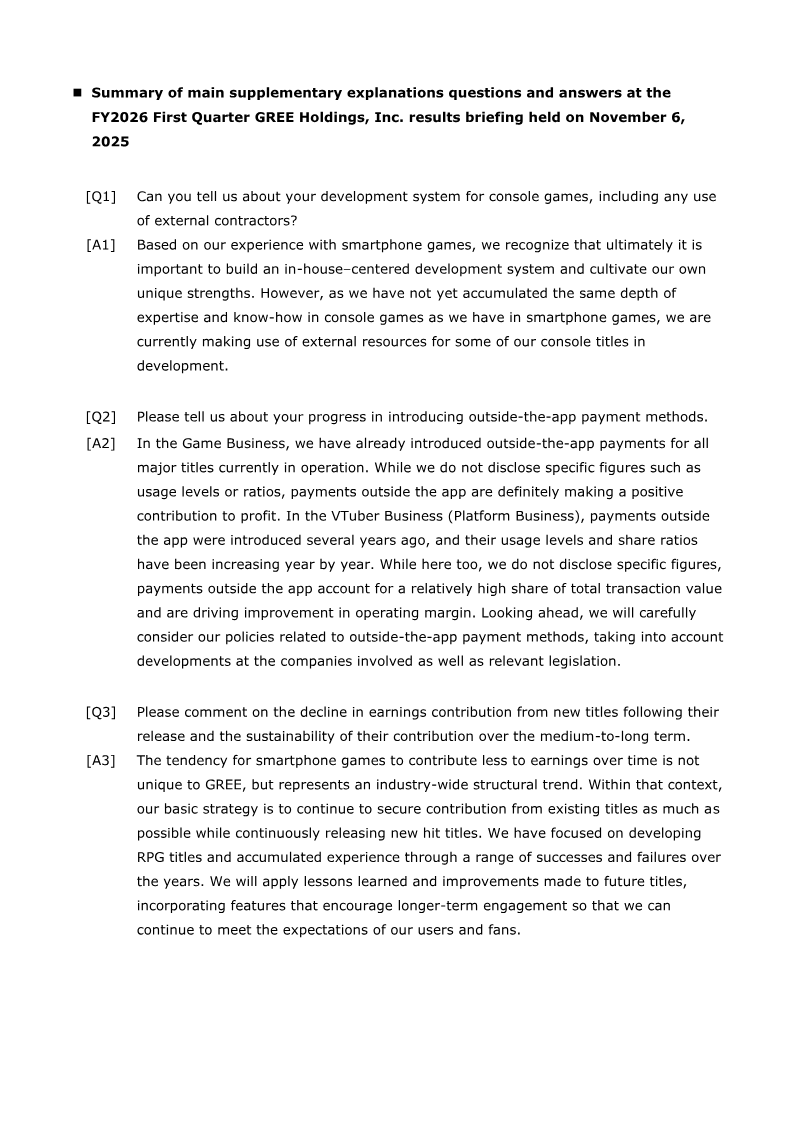
Summary of main supplementary explanations questions and answers at the FY2026 First Quarter GREE Holdings, Inc. results briefing held on November 6, 2025
GREE Holdings’ FY2026 first‑quarter briefing clarified strategic priorities across its game, VTuber, and investment divisions. The company emphasized a shift toward an in‑house development model for console titles while still leveraging external contractors to bridge current expertise gaps. In the mobile game segment, outside‑app payment methods have been fully deployed across all major titles and are contributing positively to profitability; the VTuber platform has similarly expanded its outside‑app transactions, boosting operating margins. The firm acknowledges a structural decline in earnings from new smartphone releases but plans to sustain revenue by focusing on long‑term engagement features and continuous hit title launches, particularly within the RPG genre.
Market outlooks reveal a plateau in smartphone installs but growing potential through high‑value IP and outside‑app monetization. Console gaming is viewed as a long‑term investment, with an emphasis on cultivating enduring IP series. The VTuber market is still expanding globally, especially overseas, and the company projects full‑year profitability for its VTuber production arm by FY2027 as higher‑margin merchandise and live events offset earlier talent acquisition costs.
Exit strategies for the investment business have shifted from IPOs to M&A, reflecting broader market conditions. Generative AI is being integrated across game development, VTuber content creation, and digital transformation services to enhance efficiency and service quality, though its direct earnings impact remains difficult to quantify. Overall, GREE aims to strengthen core competencies, diversify revenue streams, and adapt to evolving market dynamics while pursuing sustainable growth.
- GREE is transitioning to an in-house development model for console titles, utilizing external contractors to address current expertise gaps while focusing on long-term IP cultivation.
- Outside-app payment methods have been fully implemented across all major mobile titles and the VTuber platform, directly contributing to improved operating margins.
- The VTuber production arm is projected to reach full-year profitability by FY2027 as high-margin merchandise and live events offset initial talent acquisition costs.
- The company is shifting its investment business exit strategy from IPOs to M&A to better align with current market conditions.
- Generative AI is being integrated into game development, VTuber content creation, and digital transformation services to improve operational efficiency and service quality.
+3
GREE
Report2 pages
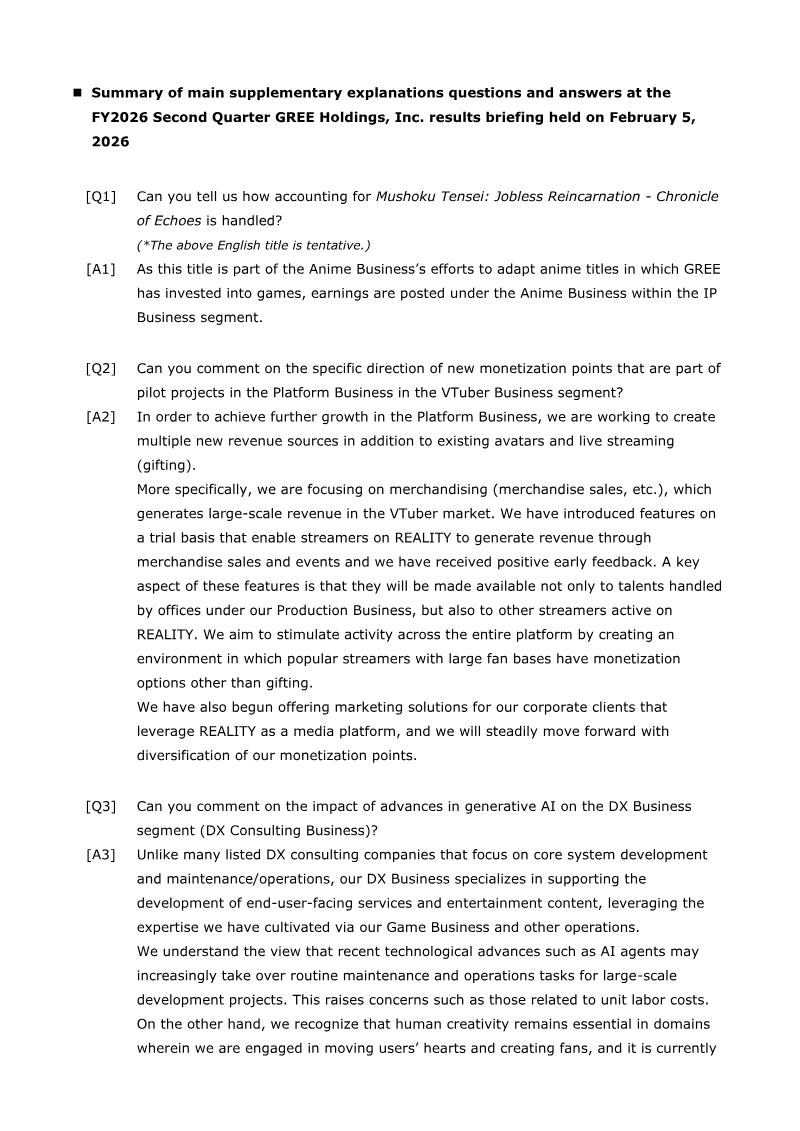
Summary of main supplementary explanations questions and answers at the FY2026 Second Quarter GREE Holdings, Inc. results briefing held on February 5, 2026
The briefing clarified GREE Holdings’ strategic priorities across its core business segments for FY2026. In the Anime Business, earnings from the newly announced “Mushoku Tensei: Jobless Reincarnation – Chronicle of Echoes” are recorded under the IP Business segment, reflecting the company’s focus on monetizing anime titles it has invested in. The Platform Business within the VTuber segment is expanding beyond traditional gifting revenue by piloting merchandise sales and event features on its REALITY platform; early feedback indicates positive reception, and the company plans to extend these monetization tools to a broader streamer base while offering corporate marketing solutions. In the DX Consulting Business, GREE emphasizes its niche in end‑user entertainment services and acknowledges that generative AI may automate routine maintenance but is unlikely to erode its creative‑driven value proposition in the short term. Regarding financial outlook, a downward revision of FY26 earnings was justified by recent softness in existing game titles; however, the company maintains confidence in its three‑year medium‑term targets (FY28) by shifting emphasis toward continuous growth businesses and reducing reliance on volatile game revenues. Finally, the Anime Business will pursue acquisition of production capabilities—through both in‑house development and M&A—within 2–3 years to secure control over high‑quality, timely anime output. These initiatives collectively aim to diversify revenue streams, strengthen creative control, and sustain long‑term growth across GREE’s entertainment ecosystem.
- GREE Holdings revised its FY26 earnings downward due to recent performance softness in existing game titles.
- The company is shifting its long-term strategy toward continuous growth businesses to reduce reliance on volatile game revenue, maintaining its medium-term targets for FY28.
- GREE plans to acquire anime production capabilities through in-house development and M&A within the next 2–3 years to secure control over output quality and timing.
- The REALITY platform is expanding its VTuber monetization model beyond gifting by piloting merchandise sales and event features, with plans to integrate corporate marketing solutions.
- Revenue from the new title 'Mushoku Tensei: Jobless Reincarnation – Chronicle of Echoes' is being categorized under the IP Business segment to reflect the company's focus on monetizing its anime investments.
+1
GREE
Report1 pages
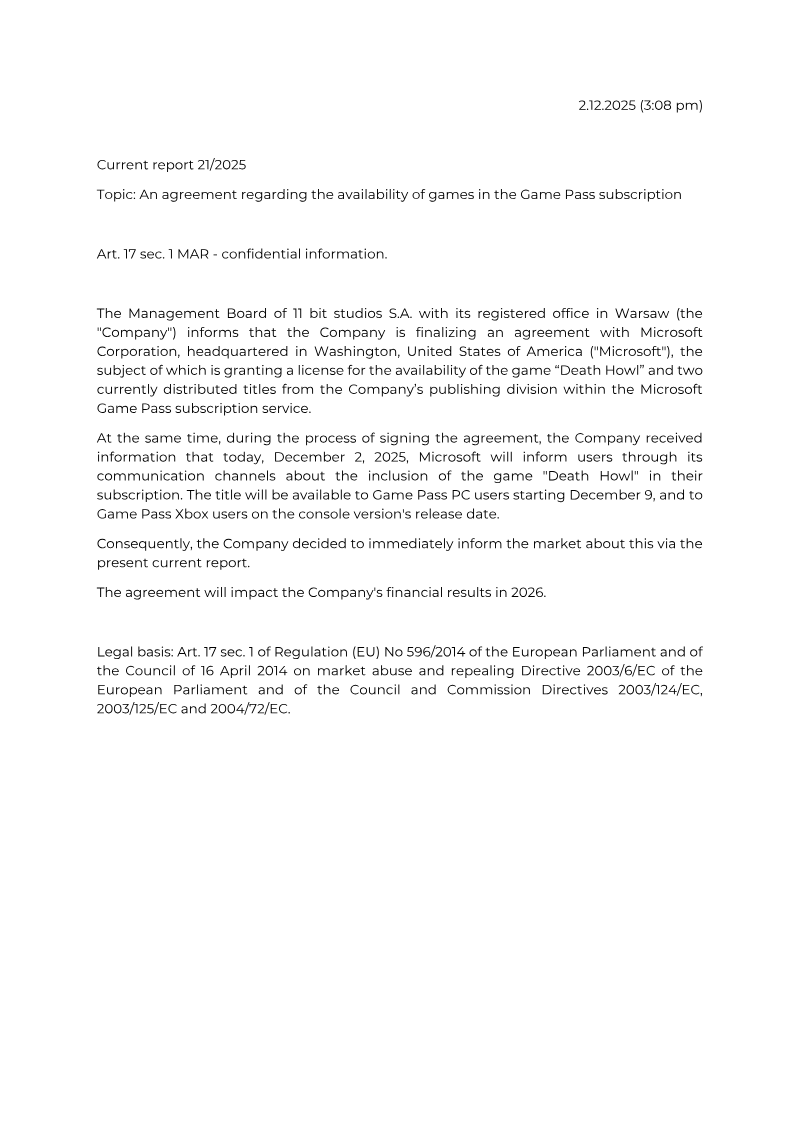
An Agreement Regarding the Availability of Games in the Game Pass Subscription
The announcement informs shareholders that 11 bit studios S.A. is finalizing a licensing agreement with Microsoft Corporation to make the game “Death Howl” and two other titles from its publishing division available on Microsoft Game Pass. The deal, governed by Article 17(1) of the EU Market Abuse Regulation, will become effective in 2026 and is expected to influence the company’s financial performance for that year. Microsoft has already communicated to users that “Death Howl” will join Game Pass for PC on December 9, 2025, with the Xbox version following upon its console release. The agreement covers both PC and Xbox platforms, expanding 11 bit’s distribution reach within the subscription service. The company’s management board deemed it necessary to disclose this development promptly, citing regulatory obligations and the potential impact on investor expectations. No specific financial figures or detailed terms of the license are disclosed, but the timing and platform scope suggest a strategic partnership aimed at increasing revenue streams through subscription-based access. The report is limited to the Polish market, with implications for European investors, and covers the period up to the end of 2025, outlining anticipated effects in the 2026 fiscal year.
- 11 bit studios S.A. has finalized a licensing agreement with Microsoft to bring 'Death Howl' and two additional publishing titles to the Game Pass subscription service.
- The 'Death Howl' PC version is scheduled to launch on Game Pass on December 9, 2025, with the Xbox console version to follow upon its release.
- The agreement covers both PC and Xbox platforms and is expected to materially influence 11 bit studios' financial performance in the 2026 fiscal year.
- The deal is officially governed by Article 17(1) of the EU Market Abuse Regulation, necessitating prompt disclosure to shareholders due to its potential impact on investor expectations.
- While specific financial terms remain undisclosed, the partnership represents a strategic move by 11 bit studios to diversify revenue streams through subscription-based distribution.
+2
11 bit studios
Report1 pages
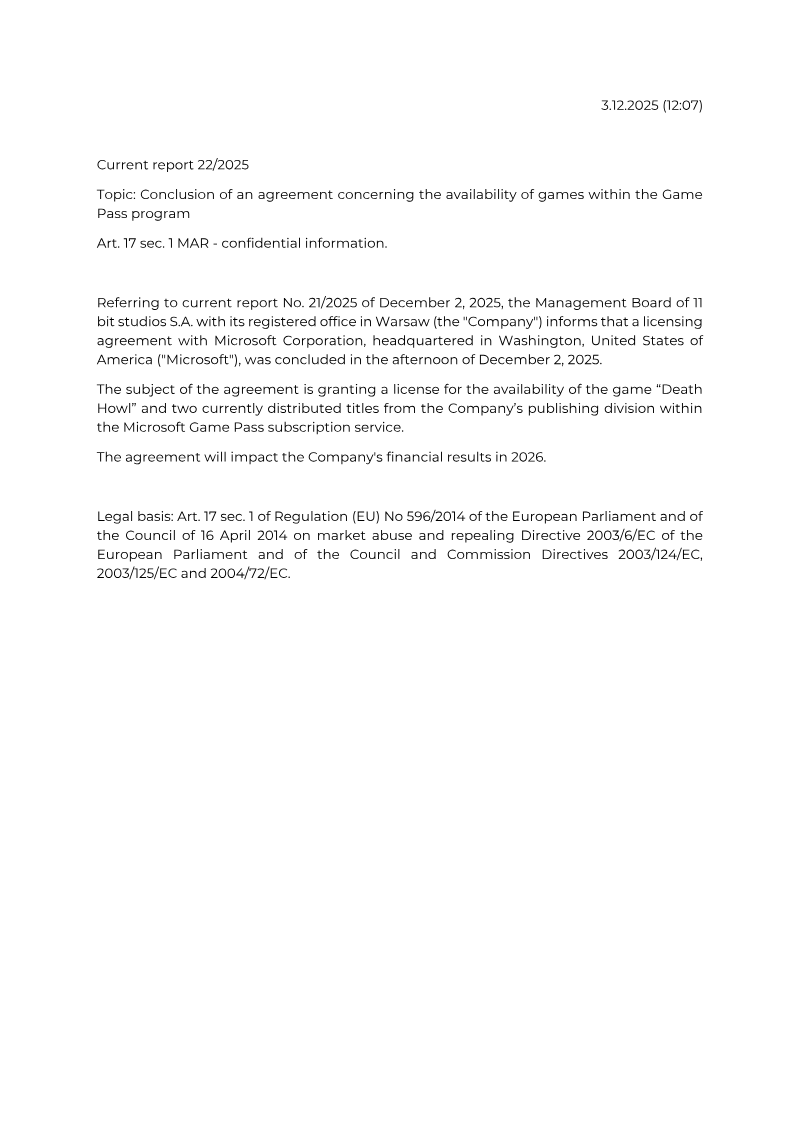
Conclusion of an Agreement Concerning the Availability of Games within the Game Pass Program
The agreement, finalized on December 2 2025 between 11 bit studios S.A. and Microsoft Corporation, grants Microsoft the right to host the game “Death Howl” and two additional titles from 11 bit’s publishing division on its Game Pass subscription platform. The licensing deal is expected to influence the company’s financial performance in 2026, as noted by the Management Board. The announcement follows a prior report issued on December 2 2025, and it is disclosed under Article 17(1) of Regulation (EU) No 596/2014, which governs market‑abuse disclosures. The agreement’s scope is limited to the specified titles and their availability on Microsoft’s Game Pass service, with no broader geographic or product implications indicated. No further details regarding revenue projections, user reach, or contractual terms are provided in the brief disclosure. The communication is directed at shareholders and market participants to ensure compliance with EU transparency requirements, emphasizing that the licensing arrangement will be reflected in the company’s 2026 financial statements.
- 11 bit studios S.A. signed an agreement with Microsoft Corporation on December 2, 2025, to include the game 'Death Howl' and two additional publishing titles in the Game Pass subscription service.
- The licensing deal is expected to impact 11 bit studios' financial performance during the 2026 fiscal year.
- The agreement is limited strictly to the three specified titles and their availability on the Game Pass platform, with no broader product or geographic scope.
- The disclosure was issued to comply with Article 17(1) of EU Regulation No 596/2014 regarding market-abuse transparency requirements.
- No specific financial terms, revenue projections, or user reach metrics were disclosed regarding the licensing arrangement.
+3
11 bit studios

Report15 pages
Q3 2022 Earnings Call: Stillfront Group AB
Stillfront Group AB<sub>(</sub>SF.SE ) Stillfront Group AB<sub>(</sub>SF.SE) Corrected Transcript Q3 2022 Earnings Call 26-Oct-2022 Chief Executive Officer, Stillfront Group AB ChiefFinancial Officer, Stillfront Group AB ..........................................................................................................................................................................................
- Stillfront Group AB's Q3 2022 earnings show a strong cash flow generation of almost SEK 500 million after net working capital adjustments, enabling continued investment in their portfolio and platform.
- The company's active portfolio consists of 77 games, with mobile games accounting for 77% of the share and ad bookings making up 14% of revenues. Casual & Mash-up games represent 43% of revenues, and Strategy games 35%.
- Stillfront Group AB invested SEK 257 million in new products and their platform, representing 14.4% of their revenues, and settled SEK 290 million in 2021 cash earn-outs this quarter, with no further 2021 earn-outs remaining.
- The company achieved growth with less User Acquisition (UA) spend by leveraging live operations (live ops) and expects increased synergies from live ops across its diversified studio and game teams.
- Stillfront Group AB reported a stable uplift in Daily Active Users (DAU), Monthly Active Users (MAU), and Monthly Paying Users (MPU) year-over-year, driven by acquisitions and strong performance in Strategy games.
+2
Stillfront

Report78 pages
Annual Report 2019
Revenue 256,574 221,304 Revenue at constant currency 255,295 221,304 Operating profit - pre-royalties receivable 69,834 64,702 Royalties receivable 11,365 9,617 Operating profit 81,199 74,319 Profit before taxation 81,296 74,270 Cash generated from operations 88,776 82,332 Earnings per share ...
- Games Workshop Group PLC reported a strong financial performance in 2019, with revenue increasing to £256,574,000 from £221,304,000 in 2018, and operating profit rising to £81,199,000 from £74,319,000.
- The company achieved a third consecutive year of record constant currency sales, profit, cash generation, and returns to shareholders, driven by its core business of producing and selling fantasy miniatures.
- Earnings per share grew to 202.9p in 2019 from 184.3p in 2018, and dividends per share declared in the year increased significantly to 155p from 126p.
- Cash generated from operations also saw a healthy increase, reaching £88,776,000 in 2019 compared to £82,332,000 in 2018.
- Despite the positive financial results, the company's return on capital decreased from 120% in 2018 to 100% in 2019, primarily due to an increase in average capital employed.
+2
Games Workshop Group
Report20 pages
Half-Yearly Report: 2022-2023
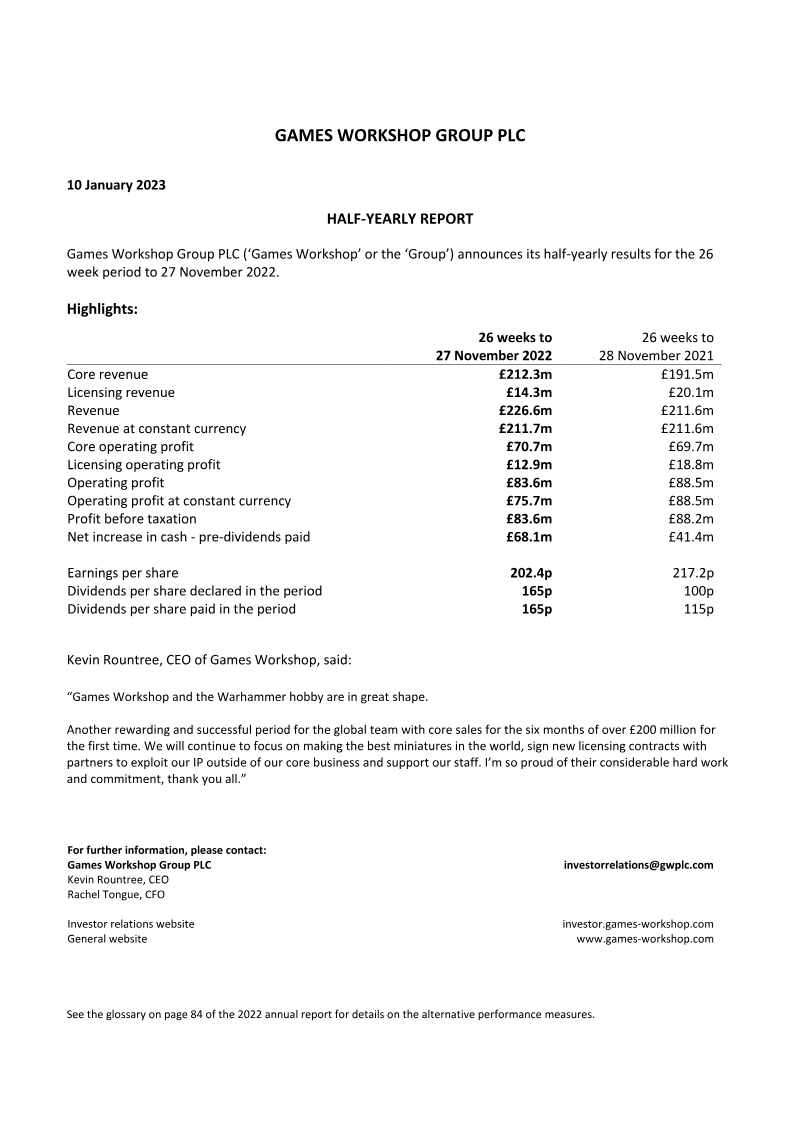
Games Workshop Group PLC (‘Games Workshop’ or the ‘Group’) announces its half-yearly results for the 26 week period to 27 November 2022. 26 weeks to 26 weeks to 27 November 2022 28 November 2021 Core revenue £212.3m £191.5m Licensing revenue £14.3m £20.1m Revenue ...
- Games Workshop Group PLC reported a half-yearly revenue of £226.6m for the 26 weeks to 27 November 2022, an increase from £211.6m in the prior year, with core revenue growing to £212.3m from £191.5m.
- Operating profit decreased to £83.6m from £88.5m in the previous year, and profit before taxation also saw a decline to £83.6m from £88.2m.
- Licensing revenue significantly decreased to £14.3m from £20.1m, largely due to a high level of guarantee income on multi-year contracts recognized in the prior year.
- The company's net increase in cash before dividends paid rose substantially to £68.1m from £41.4m, and dividends per share declared increased to 165p from 100p.
- Core sales growth was observed across Retail (+9.8%) and Trade (+3.4%), with a slight decline in Online sales (-0.5%) on a constant currency basis.
+1
Games Workshop Group
Report1 pages
Raport Bieżący Nr 38/2021: Nieosiągnięcie przez PCF Group S.A. Tantiem ze Sprzedaży Gry „Outriders”
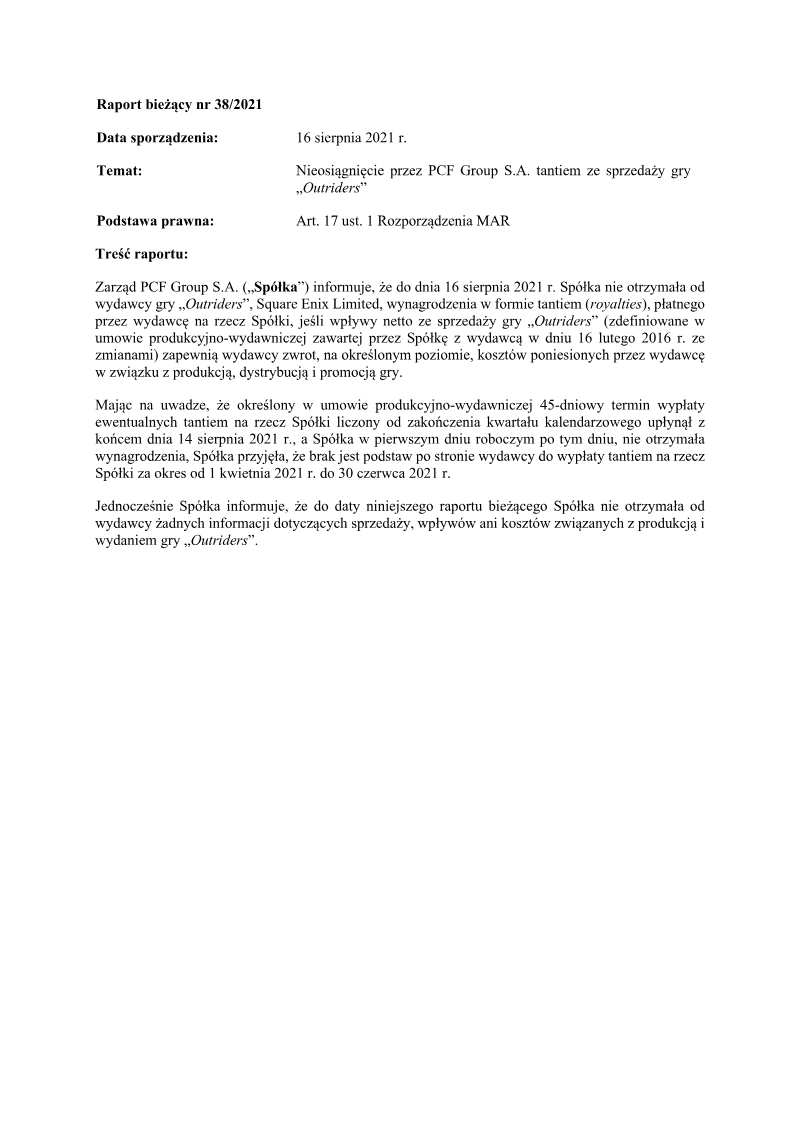
The report, dated 16 August 2021, explains that PCF Group S.A. has not received any royalty payments from Square Enix Limited for the game “Outriders.” According to the production‑and‑publishing agreement signed on 16 February 2016, royalties are payable only after the publisher recovers a specified level of production, distribution and promotion costs from net sales. The agreement also sets a 45‑day payment window following the end of each calendar quarter. That deadline expired on 14 August 2021, and PCF Group’s first working day thereafter yielded no payment. Consequently, the company concludes that the publisher has no obligation to pay royalties for the period covering 1 April 2021 through 30 June 2021. In addition, PCF Group reports that it has not received any sales figures, revenue data or cost information related to “Outriders” from the publisher up to the report’s date. The document serves as a formal notification under Article 17(1) of the MAR regulation, outlining the company’s position on unpaid royalties and lack of transparency from the publisher. No further financial or operational details are provided, and the report focuses solely on the contractual dispute over royalty payments for the specified quarter.
- PCF Group S.A. received no royalty payments from Square Enix Limited for the game 'Outriders' for the period of 1 April 2021 through 30 June 2021.
- The contractual deadline for royalty payments for the second quarter of 2021 expired on 14 August 2021 without any funds being transferred to PCF Group.
- PCF Group concluded that Square Enix has no current obligation to pay royalties, as the publisher has not yet recovered the specified production, distribution, and promotion costs required by the 16 February 2016 agreement.
- As of 16 August 2021, PCF Group has not received any sales figures, revenue data, or cost information from Square Enix regarding the performance of 'Outriders'.
- The lack of royalty payments and financial transparency prompted PCF Group to issue a formal notification under Article 17(1) of the MAR regulation.
+1
PCF Group
Report10 pages
Q4 2025 Investor Presentation
The Q4 2025 investor presentation details a period of record financial performance for the company, characterized by significant revenue growth and successful strategic integration. The primary thesis centers on the company’s transformative year, highlighted by the successful consolidation of Plarium and a shift toward a midcore gaming focus. For the fourth quarter of 2025, the company achieved net sales of SEK 3,123 million, representing an 8% organic growth rate and a 108% increase in constant currency year-over-year. Adjusted EBITDA reached SEK 717 million, maintaining a 23% margin, while unlevered free cash flow totaled SEK 878 million with a 66% conversion rate.
The scope of the report covers the global gaming operations of the company throughout the 2025 fiscal year, with specific emphasis on the fourth quarter. Key operational findings indicate that user acquisition (UA) spending rose to 38% of revenue in Q4, a 98% year-over-year increase in constant currency, largely driven by the integration of Plarium and the scaling of casual and racing franchises. Revenue streams showed a notable shift, with direct-to-consumer contributions rising 600 basis points to 32% of the total. Franchise performance was bolstered by strong results in the racing and word game segments, which saw year-over-year growth of 43% and 28%, respectively.
Methodologically, the financial data is presented on a reported basis, with constant currency adjustments applied to isolate organic growth trends. The report incorporates full-year 2025 figures and highlights the impact of the Plarium acquisition, which was integrated into the group starting in February 2025. Looking ahead, the company concludes the period with a stable leverage ratio and a new organizational structure, positioning itself for continued midcore expansion and the potential public offering of its PlaySimple division.
- The company achieved Q4 2025 net sales of SEK 3,123 million, marking 8% organic growth and a 108% year-over-year increase in constant currency.
- Adjusted EBITDA for Q4 2025 reached SEK 717 million with a 23% margin, supported by an unlevered free cash flow of SEK 878 million.
- User acquisition spending surged to 38% of revenue in Q4, representing a 98% year-over-year increase driven by the integration of Plarium and scaling of casual and racing franchises.
- Direct-to-consumer revenue contributions grew by 600 basis points to reach 32% of total Q4 revenue.
- Key franchise segments showed strong momentum, with racing games growing 43% and word games growing 28% year-over-year.
+5
Modern Times Group
Report26 pages
Q4 2025 Financial Report
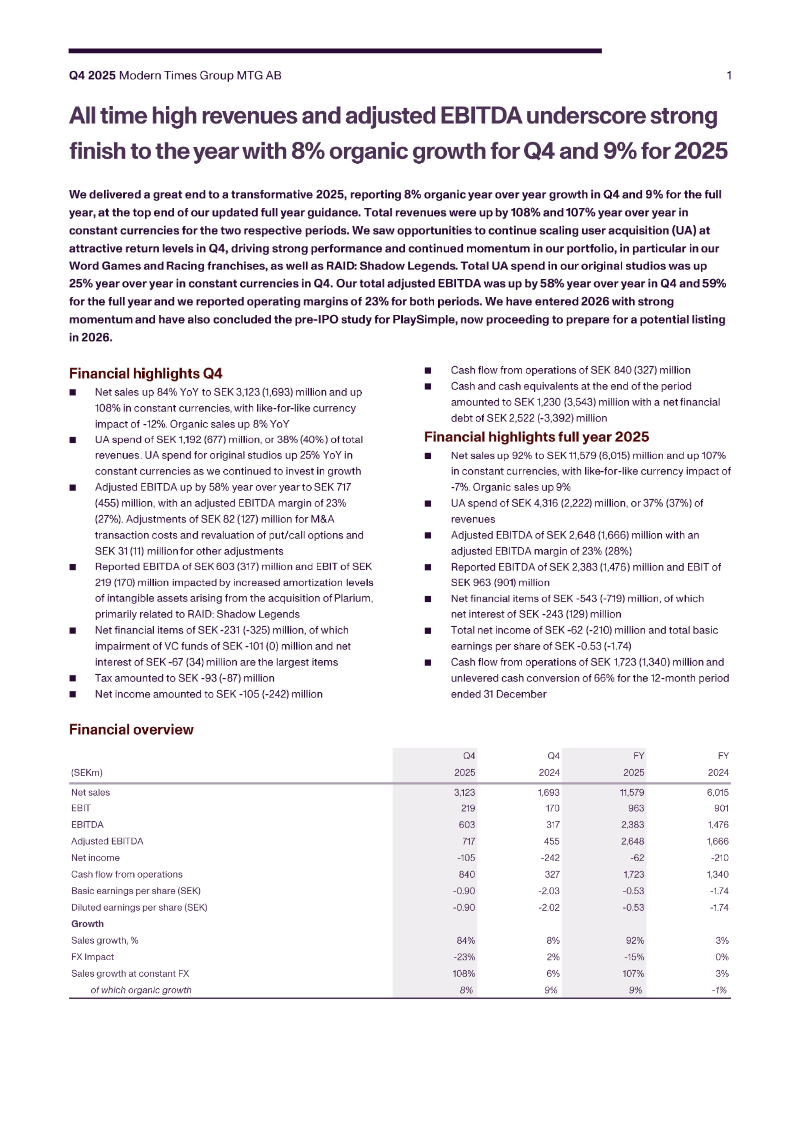
Q4 2025 Modern Times Group MTG AB 1 All time high revenues and adjusted EBITDA underscore strong finish to the year with 8% organic growth for Q4 and 9% for 2025 We delivered a great end to a transformative 2025, reporting 8% organic year over year growth in Q4 and 9 % for the full year ,at the top end of our updated full year guidance .
- MTG AB achieved all-time high revenues and adjusted EBITDA in Q4 2025, with 8% organic growth for the quarter and 9% for the full year 2025. Total revenues were up 108% in Q4 and 107% for the full year in constant currencies, while adjusted EBITDA increased by 58% in Q4 and 59% for the full year.
- Net sales for Q4 2025 reached SEK 3,123 million, an 84% increase year-over-year. Full-year net sales for 2025 were SEK 11,579 million, up 92% from 2024.
- The strong performance was driven by scaling user acquisition (UA) at attractive return levels, particularly in Word Games and Racing franchises, and RAID: Shadow Legends. Total UA spend in original studios increased by 25% year-over-year in Q4 in constant currencies.
- MTG has concluded a pre-IPO study for PlaySimple and is now preparing for a potential listing in 2026, which is seen as an opportunity to accelerate M&A ambitions in the casual gaming market.
- Plarium's consolidation from February 1, 2025, significantly impacted sales growth, contributing SEK 1,464 million to Q4 sales. The acquisition's effect on sales for the full year 2025 was SEK 5,384 million.
+1
Modern Times Group

Report10 pages
Take Rates in China
The analysis evaluates how take‑rate structures shape mobile game monetisation in China and whether higher‑quality development can outweigh the pressure of traditional distribution fees. It contrasts Apple’s uniform 30 % commission with the far steeper charges imposed by domestic Android app stores, many of which demand up to 50 % of in‑app purchase revenue, and examines the emerging shift toward direct‑to‑consumer distribution and community‑driven platforms.
Apple’s 30 % rate applies to the roughly 25 % of Chinese gamers who use iOS, who nonetheless generate about 40 % of mobile game revenue. In the Android segment, the absence of Google Play has led to a fragmented ecosystem dominated by manufacturer‑backed stores such as those from Huawei, Oppo and Vivo, and by Tencent’s MyApp. These stores justify 50 % take rates by bundling distribution, marketing and cross‑store integration, a model that yields high internet‑service margins for hardware makers—Xiaomi reports a 64.7 % gross profit on services versus 7.2 % on devices. Large publishers like NetEase and Tencent have occasionally negotiated lower fees, but most developers accept the 50 % level to reach a broad audience.
A growing number of developers are bypassing high‑fee stores, opting for direct distribution or leveraging community platforms that charge little or no commission. Duoyi’s “Shenwu” achieved a 95 % gross profit on Android by selling directly, while its iOS version retained a 70 % margin after Apple’s cut. Similar success is seen with Lilith Games’ “Rise of Kingdoms,” which generated roughly $100 million in its launch month without major Android store presence, and miHoYo’s “Genshin Impact,” which combined a $100 million development budget with fan‑driven channels such as TapTap (0 % take rate) and Bilibili to secure millions of pre‑registrations. These cases illustrate that high‑quality titles paired with intensive marketing and community engagement can sustain profitability even when forgoing traditional store exposure.
The study’s scope covers the Chinese mobile gaming market from 2020 through 2021, focusing on iOS and Android distribution channels, take‑rate policies, and developer responses. Insights draw on Niko
- Chinese Android app stores, dominated by manufacturers like Huawei, Oppo, and Vivo, typically charge a 50% commission on in-app purchases, significantly higher than Apple’s 30% rate.
- Hardware manufacturers rely heavily on these high take rates for profitability; for example, Xiaomi reports a 64.7% gross profit margin on services compared to only 7.2% on hardware sales.
- While iOS users account for only 25% of the Chinese gaming population, they generate approximately 40% of total mobile game revenue.
- High-quality titles are increasingly bypassing traditional Android stores to avoid 50% fees, with developers like Duoyi achieving a 95% gross profit on Android by utilizing direct distribution.
- Community-driven platforms like TapTap, which charge a 0% take rate, are becoming viable alternatives for major releases, as demonstrated by miHoYo’s successful launch of Genshin Impact.
Niko PartnersFeb 2026

Report21 pages
Interview with Game Expert at Line Studio: Japan Market Insights
Market Insights: Japan Prepared for Korean Game Developers & Publishers Date: March 2026
Executive Summary
Japan’s mobile gaming ecosystem is undergoing a rapid shift. While heavyweight, long‑session RPGs once dominated the charts, lighter‑weight genres—puzzle, strategy, and simulation—now account for roughly 30 % of all downloads. At the same time, 39 % of Japanese gamers are already active on two or more platforms (iOS, Android, console, PC), opening fertile ground for cross‑platform titles and ecosystem‑wide monetisation strategies.
Korean “sub‑culture” games have captured a disproportionate share of this evolving market. Collectible RPGs such as Blue Archive and Goddess of Victory: NIKKE, together with the MMORPG Lineage W, resonate because they blend moe‑style character designs, high‑polish visuals, short‑session playability, and tightly localized narratives.
Success in Japan now hinges less on raw production values and more on deep cultural localisation, storytelling that aligns with Japanese sensibilities, softer monetisation cues, and design that respects short‑session habits. Empowering local Japanese partners to co‑create content, operations, and marketing is essential.
The most promising near‑term opportunities are:
AAA‑grade mobile RPGs with cross‑platform integration (mobile ↔ console ↔ PC). Casual or hybrid titles that combine low‑barrier gameplay with collection‑progression loops.
Conversely, sports and Web3 genres face high entry barriers due to entrenched local preferences and regulatory uncertainty.
Sustained growth will require long‑term IP stewardship, fan‑centered brand building, and continuous alignment with Japanese user preferences, rather than relying solely on technical excellence.
1. Market Landscape – From Heavyweight RPGs to Light‑Weight Genres
1.1 Shift in Genre Preference
Download Share (Q4 2025): Puzzle/Strategy/Simulation: ≈ 30 % Traditional heavyweight RPGs (e.g., turn‑based, open‑world): ≈ 22 % Collectible/Idle RPGs: ≈ 18 % Other (social, casual, AR): ≈ 30 %
Drivers of the shift 1. Time‑scarcity: Japanese commuters and office workers increasingly favor games that can be enjoyed in 5‑10‑minute bursts. 2. Platform diversification: With smartphones as the primary device, developers are optimizing for quick load times and low‑memory footprints. 3. Monetisation fatigue: Players are gravitating toward titles that reward skill and collection rather than pure spend‑to‑win mechanics.
1.2 Multi‑Platform Play
Cross‑platform adoption: 39 % of gamers regularly switch between at least two devices (e.g., mobile ↔ console, mobile ↔ PC). Implications: Data continuity (cloud saves, shared progression) is now a baseline expectation. Cross‑play events and seasonal
- Japanese mobile gaming is shifting toward lighter genres, with puzzle, strategy, and simulation titles now accounting for approximately 30% of all downloads.
- Cross-platform functionality is a critical market requirement, as 39% of Japanese gamers now actively play across two or more platforms, including mobile, console, and PC.
- Korean 'sub-culture' titles like Blue Archive, Goddess of Victory: NIKKE, and Lineage W have successfully penetrated the market by combining moe-style character designs with high-polish visuals and short-session playability.
- Success in Japan requires deep cultural localization and storytelling that aligns with local sensibilities, rather than relying solely on high production values.
- The most viable near-term opportunities for developers are AAA-grade mobile RPGs with cross-platform integration and hybrid titles that blend low-barrier gameplay with collection-progression loops.
+1
KOCCA – Korea Creative Content Agency

Report31 pages
The Dual Frontier: A Retailer’s Framework for Agentic Commerce
Retailers frequently adopt LLM‑powered chat widgets without addressing the core friction points that shape shopper behavior. The analysis argues that meaningful agentic commerce emerges when AI is tailored to a retailer’s specific product categories, customer profiles, and pain points. By deploying onsite ambient intelligence that proactively surfaces assistance when shoppers display confusion, retailers can intervene before friction escalates. Off‑site agent commerce remains nascent; catalog data quality and the availability of structured attributes are critical bottlenecks that must be resolved to enable reliable recommendations and transactions.
Data quality is identified as a pivotal differentiator. In an agentic environment, insufficient data can prevent a retailer from entering a shopper’s consideration set entirely, whereas in traditional e‑commerce it merely dampens conversion rates. The framework stresses the need to provide agent platforms with enough data for accurate recommendations while protecting proprietary signals from competitors. A calibrated approach—balancing “share freely,” “share selectively,” and “protect” signals—is essential to maintain trust, enhance recommendation confidence, and drive higher conversion rates.
A quantitative readiness diagnostic offers a pragmatic path forward. Four pillars—catalog, technical infrastructure, organizational capacity, and strategic urgency—are scored on a 32‑point scale. Scores of 26–32 signal mature foundations and immediate learning loops; 18–25 require focused catalog work over 8–12 weeks; 10–17 suggest a narrow pilot with partner support; and 0–9 indicate foundational improvements are needed before any agent rollout. Building these capabilities in‑house can take 12–18 months, whereas partnering with a platform such as Moloco Commerce Media accelerates deployment through catalog normalization, real‑time decisioning, and holdout‑based incrementality frameworks.
- Retailers must prioritize high-quality, structured catalog data, as insufficient data in an agentic environment causes total exclusion from a shopper's consideration set rather than just lower conversion rates.
- A 32-point readiness diagnostic across four pillars—catalog, infrastructure, organizational capacity, and strategic urgency—determines the viability of agentic commerce, with scores of 26–32 indicating immediate readiness and 0–9 requiring foundational work.
- Retailers should adopt a calibrated data-sharing strategy, categorizing signals into 'share freely,' 'share selectively,' and 'protect' to balance recommendation accuracy with the need to safeguard proprietary competitive advantages.
- Partnering with platforms like Moloco Commerce Media can bypass the 12–18 month timeline required for in-house development by providing immediate access to catalog normalization and real-time decisioning frameworks.
- Effective agentic commerce requires shifting from passive chat widgets to proactive ambient intelligence that intervenes when shoppers display signs of confusion.
+2
InvestGameFeb 2026
Report5 pages
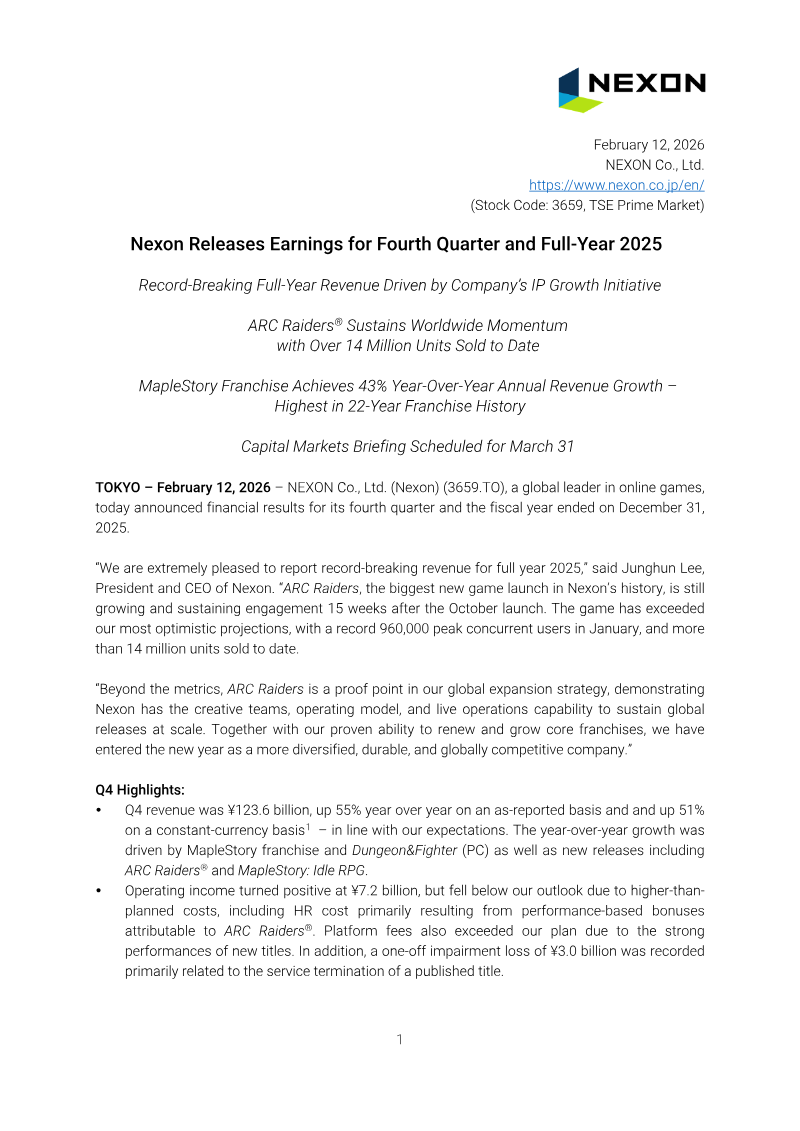
Nexon Releases Earnings for Fourth Quarter and Full-Year 2025
Nexon reported record-breaking financial results for the fiscal year ended December 31, 2025, driven by a strategic IP growth initiative that balanced the expansion of legacy franchises with successful new global launches. Full-year revenue reached ¥475.1 billion, a 6% increase year-over-year, while operating income remained stable at ¥124.0 billion. The fourth quarter saw a significant revenue surge of 55% to ¥123.6 billion, although net income declined 66% to ¥10.9 billion, primarily due to fluctuations in foreign exchange gains compared to the previous year and higher-than-anticipated costs related to performance bonuses and platform fees.
The growth was spearheaded by the launch of ARC Raiders, which sold over 14 million units within 15 weeks and achieved a peak of 960,000 concurrent users. Simultaneously, the 22-year-old MapleStory franchise delivered its highest annual revenue in history, growing 43% year-over-year. This performance offset a 21% decline in the Dungeon&Fighter franchise, despite a strong recovery in its PC segment in China and Korea. The period was also marked by a significant player trust initiative regarding MapleStory: Idle RPG; a coding error led Nexon to offer full refunds, resulting in a ¥9 billion reduction in Q4 revenue.
Geographically, the results reflect Nexon’s successful diversification beyond its traditional Asian strongholds into Western markets via console and PC platforms. Looking ahead to the first quarter of 2026, the company expects revenue growth between 32% and 44%, supported by sustained momentum from new titles and major updates to core IPs. Nexon remains committed to aggressive shareholder returns, doubling its dividend and completing a ¥100 billion share buyback program during the fiscal year.
- Nexon achieved record full-year 2025 revenue of ¥475.1 billion, a 6% year-over-year increase, with operating income holding steady at ¥124.0 billion.
- The new title ARC Raiders was a major growth driver, selling over 14 million units within 15 weeks and reaching a peak of 960,000 concurrent users.
- The 22-year-old MapleStory franchise reached record annual revenue with 43% year-over-year growth, helping to offset a 21% decline in the Dungeon&Fighter franchise.
- Q4 net income dropped 66% to ¥10.9 billion due to foreign exchange fluctuations, increased platform fees, and performance bonuses.
- A player trust initiative following a coding error in MapleStory: Idle RPG resulted in a ¥9 billion revenue reduction in Q4 due to full customer refunds.
+3
NEXON Co.Feb 2026
Report94 pages
Mobile Market Landscape 2026
The mobile ecosystem is undergoing a fundamental structural transformation as the industry shifts from a volume-based growth model to one defined by monetization efficiency and technological integration. By 2026, the market has reached a state of saturation where total app releases have surged by 25% year-over-year, yet only 10% of new titles successfully secure meaningful user attention. A pivotal milestone occurred in late 2025 when non-gaming applications surpassed gaming in total revenue for the first time, largely propelled by the explosive 273% revenue growth in generative AI and the strategic expansion of utility-based tools.
Within the gaming sector, traditional genres such as Casino and RPG have faced stagnation, forcing publishers to adopt hybridization strategies that blend deeper monetization mechanics into previously hypercasual titles. This pivot has yielded significant results, with hypercasual revenue increasing by approximately 80% as developers move toward puzzle and simulation subgenres. Meanwhile, midcore gaming revenue has plateaued at $33–34 billion, prompting a reliance on intensified LiveOps and direct-to-consumer strategies. Across the broader app landscape, the integration of generative AI into creative assets has become standard, with over half of top-grossing games utilizing these tools to scale production, despite ongoing concerns regarding creative monotony.
Geographically, growth patterns are diverging as emerging markets like Indonesia continue to drive massive download volumes, while mature Western markets focus on maximizing revenue per user. The utility and social segments are similarly prioritizing premium subscription models to combat plateauing download numbers. While tools such as antivirus and cloud storage are seeing a resurgence in demand, the industry faces a broader challenge in maintaining long-term retention. Ultimately, the market is transitioning away from hypergrowth toward a sustainable, mature phase characterized by subscription-driven monetization and the strategic application of AI to optimize both user experience and operational efficiency.
- Non-gaming applications surpassed gaming in total revenue for the first time in late 2025, driven by a 273% revenue surge in generative AI and utility-based tools.
- The mobile market has reached saturation, with a 25% year-over-year increase in app releases while only 10% of new titles successfully capture meaningful user attention.
- Hypercasual gaming revenue grew by approximately 80% as developers pivoted toward hybridization, blending deeper monetization mechanics into puzzle and simulation subgenres.
- Midcore gaming revenue has plateaued at $33–34 billion, forcing publishers to rely on intensified LiveOps and direct-to-consumer strategies to maintain performance.
- Over 50% of top-grossing games now utilize generative AI to scale production of creative assets, despite industry concerns regarding potential creative monotony.
+3
AppMagicFeb 2026
Report18 pages
Vietnam Mobile Gaming 2025: The Next Billion-Dollar Frontier in Southeast Asia
The report argues that Vietnam’s mobile gaming sector will reach a billion‑dollar valuation by 2025, driven by an expanding user base and high spending per download. In 2023, 1.1 billion mobile users and 900 million mid‑core players generated gross revenue of approximately US$1.3 billion, with a compound annual growth rate of 9.8 % across all platforms. The analysis attributes this surge to rapid mobile penetration, widespread 5G coverage (average speed 75.7 Mbps), and a growing banking‑linked payment ecosystem that facilitates in‑app purchases.
A key finding is the regulatory shift that began in 2025, when Apple introduced a mandatory license field and the Vietnamese government revoked 1,081 unlicensed titles. This crackdown reduced total downloads by 13.7 % but created a more favorable environment for compliant mid‑core games, which now dominate the market. The report’s methodology involved surveying 250 representative titles with significant download volumes, measuring D1 and D7 retention, playtime, and revenue. Data were cross‑validated with internal tools and third‑party analytics to correct discrepancies common in the local market.
Geographically, the study focuses on Vietnam but benchmarks against other Southeast Asian markets. It notes that while daily playtime is rising across the region, Vietnam’s revenue per download exceeds that of the Philippines by at least 28 %. The report concludes that early licensing and a focus on social, competitive, and narrative‑rich mid‑core experiences—particularly 4X strategy, MOBA, squad RPG, MMORPG, and battle royale genres—will be critical for publishers seeking sustainable growth in the Vietnamese market.
- Vietnam's mobile gaming market is projected to reach a billion-dollar valuation by 2025, supported by a 9.8% compound annual growth rate.
- A 2025 regulatory crackdown resulted in the removal of 1,081 unlicensed titles, leading to a 13.7% decline in total downloads but fostering a more stable environment for compliant mid-core games.
- Vietnam demonstrates strong monetization potential, with revenue per download exceeding that of the Philippines by at least 28%.
- Market growth is underpinned by robust infrastructure, including widespread 5G coverage with average speeds of 75.7 Mbps and an expanding banking-linked payment ecosystem.
- In 2023, the market supported 1.1 billion mobile users and 900 million mid-core players, generating approximately US$1.3 billion in gross revenue.
+4
InvestGameFeb 2026
Report19 pages
Southeast Asia Gaming Consumer Economy
The Southeast Asia Gaming Consumer Economy report, produced jointly by Telekom Malaysia and twimbit in Q2 2022, examines the region’s rapidly expanding gaming market. Six key economies—Indonesia, Malaysia, the Philippines, Singapore, Thailand and Vietnam—account for 85 % of SEA’s gamer population, which is projected to reach 367.8 million by 2025, representing more than half of the region’s total population. Mobile gaming dominates, with 70 % of in‑game revenue and a 13.7 % CAGR in consumer spend from 2018 to 2021, totaling US$5.57 billion. Urbanisation and a youthful demographic drive high willingness to spend, with 64 % of gamers willing to pay; average annual spend varies from US$9 in Indonesia to US$189 in Singapore.
Genre preferences skew toward action, strategy and casual titles; 86 % of players engage in the top five genres. Gender parity is notable, especially on mobile where female gamers constitute 47 % of the market and are highly spend‑active. eSports viewership is nascent but growing, with SEA tournaments ranking among the world’s most‑watched events; mobile eSports is expected to lead future growth as 5G and cloud gaming mature. Monetisation remains dominated by free‑to‑play with in‑app purchases (86 % of revenue), supplemented by hybrid and subscription models.
Methodologically, the study synthesises industry interviews, published data, annual reports, and platform analytics. The report recommends that developers adopt edge computing for low‑latency play, deliver cross‑device flexibility, and build scalable cloud architectures to meet the region’s dynamic demand.
- The Southeast Asian gaming population is projected to reach 367.8 million by 2025, with Indonesia, Malaysia, the Philippines, Singapore, Thailand, and Vietnam accounting for 85% of the total regional gamer base.
- Mobile gaming is the dominant market force, generating 70% of in-game revenue and achieving a 13.7% CAGR in consumer spending between 2018 and 2021, reaching a total of US$5.57 billion.
- Monetization is heavily reliant on free-to-play models with in-app purchases, which account for 86% of total revenue, though hybrid and subscription models are increasingly utilized.
- 64% of gamers in the region are willing to pay for content, though average annual spending varies significantly by market, ranging from US$9 in Indonesia to US$189 in Singapore.
- Gender parity is high in the mobile sector, where female gamers represent 47% of the market and demonstrate high levels of spending activity.
+2
Telekom MalaysiaFeb 2026
Report82 pages
Vietnam Gaming Outlook 2026: Building Sustainable Growth
Vietnam’s mobile gaming landscape is rapidly evolving from a download‑centric, ad‑driven model to a hybrid ecosystem that prioritizes in‑app purchases (IAP) and subscription revenue. In 2024, the country led global Google Play downloads with 6.1 billion installs yet generated only about $430 million, underscoring the profitability ceiling of pure advertising. Rising acquisition costs, privacy‑driven signal loss, and a plateauing average revenue per user (ARPU) have forced studios to adopt IAP‑first, hybrid casual titles that deliver deeper engagement and predictable cash flows. Global IAP and subscription revenue reached $150 billion in 2025, up 13%, while Vietnam’s IAP growth surged 65 %, positioning hybrids as the default blueprint for sustainable growth by 2026.
The transition hinges on data‑centric monetization strategies. AI‑driven programmatic advertising and hybrid supply‑side platforms help studios navigate privacy constraints, while sophisticated IAP systems require clean player‑behavior analytics and structured measurement frameworks. Localized pricing—using purchasing power parity tiers, local currency endings, and one‑tap tokenised payments—can lift conversion by over 20 % and reduce checkout abandonment by up to 30 %. Integrating multi‑currency settlement through a single provider such as Airwallex adds 2–5 % to net margin without altering game design.
A phased rollout model enables Vietnamese studios to pilot in core markets, expand regionally through configuration rather than new vendor projects, and scale into high‑value markets like the US for top‑line growth and FX savings. Premium ad formats on TikTok, when matched to specific spending barriers, can boost transaction values by 20–30 % and shift campaigns from cost‑per‑install to return‑on‑ad‑spend metrics. Case studies, such as Falcon Game Studio’s pivot to a hybrid model with 60–70 % day‑one retention and a 3–5 % global payer rate, illustrate the tangible benefits of this approach.
Overall, Vietnam’s mobile gaming sector is poised to compete globally by leveraging robust payment partners, privacy‑first acquisition tactics, and a disciplined IAP strategy that unlocks higher lifetime value and sustainable studio growth through 2026.
- Vietnam’s mobile gaming sector is shifting from an ad-driven model to hybrid-casual titles prioritizing in-app purchases (IAP) and subscriptions, following a 65% surge in local IAP growth in 2025.
- While Vietnam led global Google Play downloads with 6.1 billion installs in 2024, the market generated only $430 million, highlighting the profitability ceiling of pure advertising models.
- Localized pricing strategies, including purchasing power parity tiers and one-tap tokenized payments, can increase conversion rates by over 20% and reduce checkout abandonment by up to 30%.
- Integrating multi-currency settlement through providers like Airwallex can improve net margins by 2–5% without requiring changes to game design.
- Falcon Game Studio’s transition to a hybrid model demonstrates the viability of this strategy, achieving 60–70% day-one retention and a 3–5% global payer rate.
+3
InvestGameFeb 2026
Report128 pages
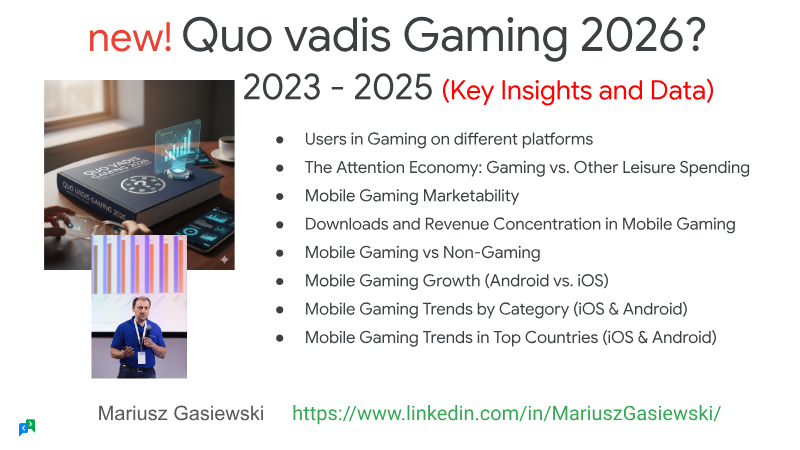
Key Insights and Data: 2023–2025
Mobile gaming drives the global industry’s growth through 2025, accounting for more than half of worldwide revenue and over eighty percent of players. Global gaming income is projected to reach $197 billion in 2025, a 7.5 % year‑over‑year rise largely powered by mobile and PC segments, while console expansion remains modest. The sector’s resilience is most pronounced in emerging markets where Android and iOS user volumes surge, yet revenue concentration persists in Western regions—particularly the United States and the United Kingdom—where iOS dominates acquisition spend.
Competitive dynamics sharpen as the top ten to fifty titles on Google Play and Apple’s App Store capture an increasing share of revenue, creating a winner‑take‑all environment. Hyper‑casual and match‑3 games concentrate U.S. spend, whereas Android strategy titles spread more evenly across Japan, Korea, and Taiwan. Sub‑genres such as chess, ludo, hidden object RPGs, and slots thrive in China, India, Brazil, and Southeast Asia, collectively commanding 15–20 % of global spend. Across most categories, day‑one retention has slipped from roughly 80 % to about 60 %, underscoring a broader challenge of sustaining early engagement.
Download patterns reveal Android’s volume advantage—about 70 % of global downloads—with the United States, India, Brazil, and Indonesia leading. iOS, though smaller in volume (30 %), delivers higher per‑download revenue, especially in China and the U.S. iOS penetration is rising in emerging markets such as Brazil and Vietnam, while Android’s share in India climbs from 18.8 % to 21.3 %. Genre‑level analysis shows modest growth (10–30 %) across most mobile categories, with occasional outliers and declines in specific niches. Overall, the landscape is characterized by rapid mobile expansion, concentrated monetization power, and shifting geographic priorities that shape strategic opportunities for developers and marketers.
- Global gaming revenue is projected to reach $197 billion in 2025, representing a 7.5% year-over-year increase driven primarily by mobile and PC segments.
- Mobile gaming remains the dominant force in the industry, accounting for over 50% of global revenue and more than 80% of the total player base.
- The mobile market is increasingly a winner-take-all environment, with the top 10 to 50 titles on Google Play and the Apple App Store capturing a growing share of total revenue.
- Android maintains a 70% share of global downloads, while iOS accounts for 30% but continues to generate significantly higher revenue per download in key markets like the U.S. and China.
- Sustaining early player engagement is becoming more difficult, as day-one retention rates have declined from approximately 80% to 60% across most categories.
+3
InvestGameJan 2026

Report45 pages
Why Chance-Based Mechanics Keep Us Hooked
Chance-based mechanics drive player engagement by prioritizing the psychological thrill of anticipation over the actual value of rewards. This engagement is rooted in the release of dopamine during the period of uncertainty, where the wait for a result creates more neurological stimulation than the prize itself. By utilizing unpredictable reward schedules and the "near-miss" effect, developers foster a persistent belief that a significant win is imminent. This strategy is exemplified by the commercial success of Monopoly GO!, which generates between $100 million and $125 million in monthly revenue through a "saw-tooth" gameplay loop that oscillates between resource depletion and sudden, event-driven recovery.
The effectiveness of these systems relies on a "pressure and release" cycle designed to maintain emotional tension without causing player burnout. High-volatility mechanics, such as digital wheels and randomized heists, are tuned to prioritize emotional impact over mathematical fairness. For instance, probabilities are often manipulated to limit low-tier prizes—sometimes to as little as 13%—while visually emphasizing jackpots to maximize excitement. Even traditionally negative outcomes are reframed as positive opportunities; in certain high-performing titles, escape rates from penalty mechanics like "Jail" are set as high as 80% to ensure the player remains within the rewarding flow of the game.
Ultimately, long-term retention is achieved through the careful management of sensory-rich animations and gacha-style collection systems that create frequent "emotional spikes." By blending live events with boosters that temporarily alter the odds, developers create a dynamic environment where the player feels a constant sense of progression. This sophisticated orchestration of risk, hope, and visual feedback ensures that the psychological journey toward a potential reward remains compelling enough to sustain high levels of monetization and daily active usage across the mobile gaming landscape.
- Monopoly GO! generates $100 million to $125 million in monthly revenue by utilizing a 'saw-tooth' gameplay loop that alternates between resource depletion and sudden, event-driven recovery.
- Player engagement is driven by the dopamine release associated with the anticipation of rewards rather than the intrinsic value of the prizes themselves.
- Developers manipulate game probabilities to prioritize emotional impact over mathematical fairness, such as limiting low-tier prize outcomes to as little as 13%.
- Penalty mechanics are often tuned to ensure player retention, with some titles setting escape rates from negative states like 'Jail' as high as 80%.
- High-volatility mechanics, including digital wheels and randomized heists, are paired with sensory-rich animations to create frequent 'emotional spikes' that sustain daily active usage.
+1
Sensor TowerJan 2026