Report35 pages
The Gaming App Insights Report: 2026 Edition
The mobile gaming industry is undergoing a fundamental strategic transition, moving away from a reliance on high-volume user acquisition toward a model centered on long-term retention and high-value player engagement. This shift is driven by a challenging economic environment characterized by a 33% increase in global cost-per-click and a 30% rise in cost-per-install throughout 2025. To mitigate these rising expenses, studios are consolidating their marketing efforts, reducing the average number of advertising partners per application to focus on high-performing channels that promise superior return on investment.
Technological innovation serves as a primary lever for this transformation, with generative artificial intelligence and machine learning now integral to creative production and audience targeting. These tools allow developers to optimize ad performance and refine engagement tactics in an era where data privacy remains a critical factor. Notably, App Tracking Transparency opt-in rates on iOS reached 39% in early 2026, providing studios with more reliable data to fuel their direct-to-consumer strategies. This data-driven approach is increasingly vital as the industry seeks to balance the dominance of hyper-casual titles, which still account for 29.1% of installs, with the superior session-to-install ratios found in action and puzzle genres.
The global landscape reflects a maturing market where session lengths and day-1 retention rates remain stable despite the broader cost pressures. While hyper-casual games maintain the largest share of installs, the industry is clearly pivoting toward hybrid monetization and cross-platform experiences to sustain growth. By prioritizing long-term progression over rapid acquisition, developers are successfully navigating a period of rising costs, ensuring that engagement remains robust even as the industry shifts toward more sustainable, value-based growth models.
- Global gaming app CPC rose 33% from $0.03 to $0.04 between 2024 and 2025, while global CPM increased 20% from $3.63 to $4.34.
- Hyper-casual games maintained the largest market share of installs at 29.1% in 2025, while action games dominated session share at 17.1%.
- Strategy games saw the most significant increase in session length, growing 18% to 37.51 minutes, and experienced a 133% surge in CPC from $0.03 to $0.07.
- Over 90% of game developers now utilize AI to automate and streamline core production tasks, including playtesting, localization, and game balancing.
- North America recorded the highest regional CPC at $0.12 in 2025, representing a 71% increase, with the U.S. market specifically rising 86% to $0.13.
+3
Adjust

Report41 pages
Mobile App Trends 2026: Japan Edition
The Japanese mobile application market maintains a robust, iOS-dominant trajectory, characterized by a 4% year-over-year increase in total installs during the first half of 2026. This growth is underpinned by a maturing digital ecosystem where mobile integration has become deeply embedded in daily life. Legislative shifts, specifically the Mobile Software Competition Act, are actively reshaping the landscape by incentivizing developers to diversify their distribution and payment strategies, thereby fostering a more competitive and sustainable environment for long-term growth.
Financial and gaming sectors serve as the primary catalysts for this expansion. Stock trading applications have experienced a 90% surge in installs, bolstered by the participation of younger investors and the influence of tax-advantaged programs like NISA. Simultaneously, gaming engagement has intensified, highlighted by a 113% increase in card game sessions. These sectors are not only attracting new users but are also achieving higher retention rates and longer session durations, indicating that users are increasingly comfortable managing complex financial and recreational activities through mobile interfaces.
The entertainment sector continues to evolve through cross-media synergy, particularly between anime, manga, and short-form content. While OTT streaming services recorded a 15% revenue increase in 2025 and maintain high engagement levels with average session lengths exceeding 36 minutes, the digital manga industry is pivoting toward low-friction content models to better capture younger demographics. Based on aggregated data from January 2024 through May 2026, these trends suggest that success in the Japanese market now requires a strategic focus on high-frequency engagement and the ability to adapt to shifting regulatory and consumer preferences.
- The Japanese mobile market saw a 4% year-over-year increase in total installs during the first half of 2026, maintaining a robust, iOS-dominant trajectory.
- Stock trading applications surged by 90% in installs, driven by younger investors and the influence of tax-advantaged programs like NISA.
- Gaming engagement has intensified significantly, evidenced by a 113% increase in card game sessions and improved user retention rates.
- The Mobile Software Competition Act is actively forcing developers to diversify their distribution and payment strategies to comply with a more competitive regulatory landscape.
- OTT streaming services achieved a 15% revenue increase in 2025, with average user session lengths now exceeding 36 minutes.
+2
Adjust

Report98 pages
La Industria del Videojuego en España: Anuario 2025
The Spanish video game industry in 2025 stands as a vital cultural and technological pillar, characterized by a maturing ecosystem that balances robust consumer engagement with complex economic and regulatory challenges. With a player base of 22.8 million individuals—spanning demographics up to 75 years of age—the sector generated 2.293 billion euros in revenue. While this represents a 3.2% decline compared to the previous year, largely attributed to a contraction in digital content spending, the market remains dominated by digital sales, which account for 61.9% of total revenue. Mobile devices lead platform preference with 18 million users, followed by consoles and PC, with an average weekly playtime of over eight hours.
Strategic growth is currently driven by international expansion, the integration of specialized academic training, and a focus on niche-oriented development. Initiatives such as the DEVIUM platform and collaborations between global publishers and local studios underscore a commitment to professionalizing the workforce and bridging the gap between emerging talent and industry requirements. Furthermore, the sector is actively navigating the ethical and legal implications of generative artificial intelligence, emphasizing the necessity of human-in-the-loop protocols to protect intellectual property and maintain the long-term capital value of creative assets.
Beyond economic metrics, the industry is prioritizing social responsibility and digital literacy. Through programs like The Good Gamer and PlayEquall, stakeholders are promoting inclusive gaming environments, accessibility, and the integration of video games into educational frameworks. As the sector faces an increasingly stringent European regulatory landscape regarding monetization and child protection, it continues to advocate for institutional support modeled after successful international frameworks, such as those in the United Kingdom and South Korea. By leveraging standardized data analytics and fostering public-private partnerships, the Spanish industry aims to solidify its position as a strategic, sustainable, and innovative contributor to the national economy.
- The Spanish video game industry generated 2.293 billion euros in 2025, a 3.2% year-over-year decline driven by a contraction in digital content spending.
- Digital sales remain the primary revenue driver, accounting for 61.9% of total market income.
- The sector serves a player base of 22.8 million people, with mobile devices being the most popular platform, reaching 18 million users.
- Average weekly playtime across the Spanish market exceeds eight hours, with a demographic reach extending up to 75 years of age.
- Industry stakeholders are prioritizing the implementation of human-in-the-loop protocols for generative AI to protect intellectual property and creative asset value.
+1
AEVI
Report104 pages
State of the Polish Video Game Industry: 2017
The Polish video game industry has matured into a globally recognized sector, characterized by a robust ecosystem of over 300 studios and a growing presence on the Warsaw Stock Exchange. While the industry experienced a temporary revenue dip in 2016 following a record-breaking 2015, it remains a vital component of the national economy, supported by institutional initiatives like the GameINN program. The sector’s primary thesis centers on its successful transition from a local market to a global powerhouse, driven by high-profile AAA titles and a burgeoning mobile development scene that increasingly targets international audiences.
Market dynamics within Poland reflect broader global trends, including a decisive shift toward digital distribution and the dominance of mobile platforms, which now account for nearly half of the domestic market value. While physical media remains resilient due to console adoption, consumer behavior is evolving toward Free-to-Play models and microtransactions. Despite this growth, the industry faces structural challenges, including a significant talent shortage for specialized roles like programming and design, as well as bureaucratic hurdles and complex tax laws. Employers report that recent university graduates often lack the practical skills required for immediate integration, forcing firms to seek foreign talent despite logistical difficulties.
Looking ahead, the industry is navigating the experimental stages of VR and AR while solidifying its status as a hub for eSports. Although Polish developers are increasingly competitive, they must contend with stiff international pressure from German and Asian firms. To sustain long-term growth, the sector is prioritizing "Games as a Service" models to mitigate piracy and enhance player engagement. Ultimately, the industry’s trajectory is defined by a move toward professionalization, where success is increasingly contingent upon effective brand management, international partnerships, and the ability to overcome domestic infrastructure and payment-trust limitations.
- The Polish video game industry comprises over 300 studios and has successfully transitioned from a local market to a global powerhouse driven by AAA titles and international mobile development.
- Mobile platforms now account for nearly half of the domestic market value, reflecting a broader consumer shift toward digital distribution, Free-to-Play models, and microtransactions.
- The sector faces a critical talent shortage for specialized programming and design roles, as university graduates often lack the practical skills required for immediate industry integration.
- Institutional support, such as the GameINN program, remains a vital component for the industry, which maintains a significant presence on the Warsaw Stock Exchange despite a revenue dip in 2016 following a record 2015.
- To ensure long-term growth and combat piracy, developers are increasingly prioritizing 'Games as a Service' models to enhance player engagement.
+1
Polish Games Association
Report9 pages
Kodeks Dobrych Praktyk w Sprawie Stosowania Ratingu Gier Wideo: Polska
The Kodeks Dobrych Praktyk w Sprawie Stosowania Ratingu Gier Wideo (Code of Good Practice for Video Game Rating in Poland), established in November 2016 by the Stowarzyszenie Polskie Gry and the Indie Games Polska foundation, serves as a self-regulatory framework for the Polish video game industry. Its primary objective is to protect minors from exposure to inappropriate content by standardizing the information provided to consumers regarding age-appropriate game classifications. The code functions as an industry-wide commitment to transparency, ensuring that producers, publishers, and distributors clearly label games regardless of the platform or distribution method.
The framework establishes five distinct age-based categories—3+, 7+, 12+, 16+, and 18+—which align closely with the established Pan European Game Information (PEGI) system. These categories define acceptable levels of violence, language, sexual content, and fear-inducing elements. By adopting these standards, participating entities agree to provide clear, legible, and accessible age ratings on all digital and physical product packaging. The code emphasizes that responsibility for accurate labeling lies with the producers and publishers, who are required to assess the effectiveness of their rating practices at least every two years.
Enforcement of these standards is managed through an internal Sąd Koleżeński (Peer Court), which oversees compliance and adjudicates potential violations. While the code is a voluntary, industry-led initiative, it is designed to complement existing Polish consumer protection laws and European Union directives regarding the protection of minors in digital environments. By formalizing these ethical and professional norms, the industry aims to foster greater social trust and ensure that consumers, particularly parents, can make informed purchasing decisions. Entities that choose to adopt the code must formally register their commitment, and any false claims of adherence are subject to scrutiny under national regulations concerning unfair market practices.
- The Kodeks Dobrych Praktyk, established in November 2016 by Stowarzyszenie Polskie Gry and Indie Games Polska, serves as the self-regulatory framework for age-appropriate game labeling in Poland.
- The framework utilizes five age-based categories—3+, 7+, 12+, 16+, and 18+—which are aligned with the Pan European Game Information (PEGI) system to standardize content warnings for violence, language, sexual content, and fear.
- Producers and publishers hold the primary responsibility for accurate labeling and are required to assess the effectiveness of their rating practices at least every two years.
- Compliance and potential violations are managed through an internal Peer Court (Sąd Koleżeński), which oversees the industry-led initiative.
- While participation is voluntary, the code complements existing Polish consumer protection laws and EU directives, with false claims of adherence subject to scrutiny under national unfair market practice regulations.
Stowarzyszenie Polskie Gry
Report1 pages
Stowarzyszenie Polskie Gry: Member Overview
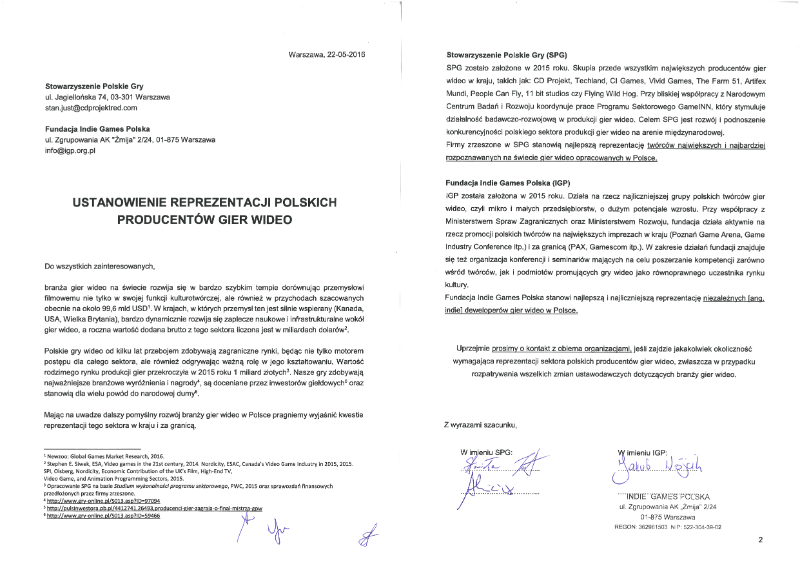
The Polish video game industry is represented by two primary organizations established in 2015: Stowarzyszenie Polskie Gry (SPG) and Fundacja Indie Games Polska (IGP). SPG focuses on the country’s largest developers, such as CD Projekt, Techland, and 11 bit studios, aiming to enhance the international competitiveness of the sector through research and development initiatives like the GameINN program. Conversely, IGP serves as the representative body for micro and small independent developers, focusing on promotional activities, industry networking, and professional development through conferences and seminars.
The sector has experienced significant growth, with the value of domestic game production exceeding 1 billion PLN in 2015. This expansion mirrors global trends, where the video game market has reached an estimated value of 99.6 billion USD, rivaling the film industry in both cultural impact and economic contribution. Countries that provide robust institutional support, such as Canada, the United States, and the United Kingdom, have successfully leveraged this industry to foster scientific and infrastructural development, resulting in billions of dollars in annual gross value added.
These organizations collectively advocate for the interests of Polish game developers, particularly regarding legislative changes and the need for a unified voice in national and international forums. By bridging the gap between large-scale commercial studios and independent creators, these entities seek to sustain the momentum of a sector that has become a source of national pride, attracting significant investor interest and earning prestigious global accolades. The collaborative efforts of SPG and IGP are intended to ensure the continued professionalization and strategic growth of the Polish gaming ecosystem.
- The Polish video game industry is supported by two primary organizations established in 2015: Stowarzyszenie Polskie Gry (SPG), representing major studios like CD Projekt, Techland, and 11 bit studios, and Fundacja Indie Games Polska (IGP), which supports micro and small independent developers.
- Domestic game production in Poland exceeded 1 billion PLN in value as of 2015.
- The global video game market has reached an estimated value of 99.6 billion USD, positioning it as a significant economic and cultural rival to the film industry.
- SPG focuses on enhancing international competitiveness through R&D initiatives such as the GameINN program, while IGP prioritizes networking, professional development, and promotional activities.
- Institutional support models from countries like Canada, the US, and the UK serve as benchmarks for Poland to leverage the gaming sector for scientific and infrastructural development.
Stowarzyszenie Polskie Gry
Report26 pages
China Steam & PC Gaming Market Report: 2025
The Chinese PC gaming market has reached a valuation of approximately $11–12 billion within a broader national gaming industry worth RMB 350.78 billion. Steam maintains a dominant position, commanding an 87% market share, though the broader distribution landscape remains highly fragmented. Developers must navigate a complex ecosystem where traditional storefront metrics are often obscured by grey-market and cross-region transactions. Consequently, pricing strategies must account for local market realities, as Steam titles in China are consistently priced 21% to 37% lower than Western benchmarks to align with regional purchasing power and consumer expectations.
Success in this market is increasingly predicated on community-led discovery rather than traditional store-page traffic. Platforms such as Bilibili, TapTap, Heybox, and Sonkwo serve as essential hubs for user-generated content, creator-driven promotion, and player engagement. The rise of a sophisticated fan economy further underscores this shift, as hit titles are now built through long-term community hype and viral social media resonance. Specialized offline events, such as WePlay Expo and G-Fusion, have proven more effective for reaching core PC and indie gaming audiences than mass-market trade shows.
International developers looking to penetrate this sector must prioritize local content ecosystems over conventional marketing funnels. Because discovery and validation are driven primarily by streamers and community influencers, go-to-market strategies require deep integration with Chinese digital platforms. Navigating these unique cultural and commercial dynamics necessitates specialized local expertise to effectively manage community engagement and optimize commercialization efforts within this distinct, high-growth environment.
- Steam dominates the Chinese PC gaming market with an 87% share, contributing to a total PC gaming valuation of approximately $11–12 billion.
- Pricing for Steam titles in China must be adjusted 21% to 37% lower than Western benchmarks to align with local purchasing power and consumer expectations.
- Market discovery is driven by community-led engagement on platforms like Bilibili, TapTap, Heybox, and Sonkwo rather than traditional store-page traffic.
- Successful market entry requires deep integration with local digital ecosystems and influencer-driven promotion rather than conventional marketing funnels.
- Specialized offline events such as WePlay Expo and G-Fusion are more effective for reaching core PC and indie gaming audiences than mass-market trade shows.
+1
Asia GameDev
Report27 pages
Rovio Sustainability Report 2025
The Rovio Sustainability Report 2025 outlines the company’s voluntary environmental, social, and governance performance for the fiscal period spanning April 1, 2025, to March 31, 2026. As a subsidiary of SEGA SAMMY Holdings, Rovio utilizes this disclosure to maintain transparency and accountability regarding its sustainability strategy, which is structured around three core pillars: Positive Play, Empowered People, and Protecting our Planet. The report aligns partially with European Sustainability Reporting Standards, though it remains a voluntary exercise for the organization.
Key findings highlight a total carbon footprint of 20,980 tons of CO2e, with Scope 3 emissions accounting for 98.6% of the total. For the first time, the company included downstream emissions from initial game downloads in its accounting, which significantly improved coverage but precluded direct year-over-year comparisons. Operationally, Rovio maintains six global locations with 508 employees, reporting a gender pay gap of 1.4% when adjusted for location, level, and role. The company continues to prioritize industry collaboration, maintaining active memberships in the Playing for the Planet Alliance and the Sustainable Games Alliance to drive collective climate action.
Strategic conclusions emphasize a pragmatic approach to sustainability, acknowledging challenges in formalizing long-term emission reduction plans due to supply chain limitations and evolving market realities. While the company successfully implemented new internal "Rovio Way" principles and improved data tracking for career progression, it faced capacity constraints that delayed the rollout of certain accessibility scorecards and carbon pricing models. Looking ahead, the organization intends to focus on integrating AI sustainability frameworks, enhancing inclusive game design, and embedding its new corporate principles into daily operations to ensure long-term, sustainable growth across its transmedia and mobile gaming portfolio.
- Rovio reported a total carbon footprint of 20,980 tons of CO2e for the fiscal period ending March 31, 2026, with Scope 3 emissions representing 98.6% of that total.
- The company expanded its carbon accounting to include downstream emissions from initial game downloads, a change that improved data coverage but prevented direct year-over-year comparisons.
- Rovio maintains a workforce of 508 employees across six global locations and reports an adjusted gender pay gap of 1.4%.
- The organization is prioritizing industry collaboration through active memberships in the Playing for the Planet Alliance and the Sustainable Games Alliance to address climate action.
- Capacity constraints caused delays in the implementation of planned accessibility scorecards and internal carbon pricing models.
+3
Rovio

Report21 pages
Mobile App Trends: Vietnam 2026
The mobile app market in Vietnam is experiencing significant expansion, driven by a digitally native population, high smartphone penetration of 84%, and near-universal 4G coverage. As of 2025, the country ranked 11th globally for app downloads, totaling 2.88 billion. The primary objective for marketers in this region is to navigate increasingly complex regulatory environments and sophisticated user behaviors to convert high engagement into sustainable revenue. This analysis utilizes aggregated, anonymized data from apps tracked by Adjust between January 2024 and March 2026 to benchmark performance across the gaming, finance, and entertainment sectors.
Gaming remains the most dominant vertical, with 1.29 billion downloads in 2025. Vietnamese studios are increasingly pivoting toward hybrid-casual and midcore titles to improve monetization, resulting in a 15% year-over-year increase in session growth during Q1 2026, which significantly outperformed global and APAC benchmarks. Finance apps are also seeing accelerated growth, with mobile payment volumes rising 34.4% in early 2026. This sector is consolidating around dominant super apps, though stricter biometric and identification regulations have raised the barrier to entry. Meanwhile, the entertainment sector is characterized by a surge in short-form drama content, which saw a 271% year-over-year increase in downloads by late 2025.
Despite strong growth in installs and session frequency, retention remains a challenge. Gaming retention in Vietnam trails global averages, and finance app session lengths have slightly decreased as users shift toward more efficient, embedded financial services. Success in the Vietnamese market now depends on balancing aggressive user acquisition with high-quality, stable digital experiences that align with local habits. Marketers are encouraged to leverage precise data measurement to navigate a non-linear user journey and comply with evolving local regulations, such as the 2024 Decree 147.
- Vietnam's mobile market is a top-tier global player, ranking 11th worldwide with 2.88 billion app downloads in 2025 and an 84% smartphone penetration rate.
- Gaming is the leading vertical with 1.29 billion downloads in 2025, while a shift toward hybrid-casual and midcore titles drove a 15% year-over-year increase in session growth during Q1 2026.
- The entertainment sector is experiencing rapid expansion, highlighted by a 271% year-over-year surge in short-form drama content downloads by late 2025.
- Finance apps are consolidating around super apps with a 34.4% rise in mobile payment volumes in early 2026, though growth is tempered by stricter biometric and identification regulations.
- Retention remains a critical challenge, as gaming retention in Vietnam currently trails global averages and finance app session lengths are declining due to a shift toward embedded services.
+2
Adjust
Report25 pages
Mobile App Trends: LATAM
The Latin American mobile app market is experiencing robust growth, driven by a highly mobile-first population and rapid economic digitalization. With smartphone penetration projected to reach 93% by 2030, the region’s app development sector is forecast to reach $56.1 billion by 2034. This growth is particularly pronounced in the finance and e-commerce sectors, where the adoption of super apps, buy-now-pay-later models, and real-time payment systems like Brazil’s Pix have fundamentally altered consumer behavior.
Data collected between January 2024 and March 2026 indicates that user engagement remains high, with regional App Tracking Transparency (ATT) opt-in rates reaching 49% in Q1 2026, significantly outpacing the global average of 38%. Brazil leads the region in opt-in rates at 54%. Overall app performance in the region showed consistent year-over-year gains, with Q1 2026 seeing notable spikes in session activity, particularly in Peru and Chile. Finance apps, in particular, saw a 34% year-over-year increase in sessions during Q1 2026, while e-commerce apps benefited from strong seasonal shopping events that drove significant install and session volume.
Methodologically, the analysis utilizes aggregated, anonymized data from a subset of 5,000 top-performing apps alongside a broader dataset tracked by Adjust across 45 to 250 countries. While the region shows strong growth, the report emphasizes that success is not uniform across countries. Marketers are encouraged to move beyond last-click attribution models, instead adopting cross-platform, cross-device measurement and deep-linking strategies to navigate non-linear user journeys. By focusing on personalized, data-driven engagement, developers can better optimize retention and maximize lifetime value in this complex, high-growth mobile ecosystem.
- The Latin American mobile app market is projected to reach a valuation of $56.1 billion by 2034, supported by a smartphone penetration rate expected to hit 93% by 2030.
- User privacy opt-in rates in the region reached 49% in Q1 2026, significantly outperforming the 38% global average, with Brazil leading at 54%.
- Finance apps experienced a 34% year-over-year increase in session activity during Q1 2026, driven by the adoption of super apps and real-time payment systems like Brazil’s Pix.
- E-commerce and finance sectors are the primary drivers of regional growth, bolstered by the integration of buy-now-pay-later models and seasonal shopping events.
- Peru and Chile exhibited notable spikes in mobile session activity during Q1 2026, highlighting that market growth and performance are not uniform across the region.
+2
Adjust

Report43 pages
Video Game Market Update: Q2 2026
The global video game industry experienced a period of divergent performance during the second quarter of 2026, characterized by a resilient PC sector and a stagnant console market. While Steam sustained a 13 percent year-over-year growth trajectory, console revenues remained flat as the successful launch of the Nintendo Switch 2 balanced out declines in PlayStation and Xbox hardware sales. Conversely, the mobile gaming segment faced significant headwinds, marked by a 4 percent contraction in gross revenue and a 12 percent decline in new installs. This mobile stagnation is compounded by a lack of innovation in top-grossing charts, which remain dominated by legacy titles released more than four years ago.
Financial activity within the sector showed signs of a robust recovery, with 54 merger and acquisition transactions deploying $2.3 billion in capital. Private investment experienced a dramatic sixfold year-over-year surge, totaling $3.1 billion, driven largely by mega-rounds focused on artificial intelligence, adtech, and immersive hardware. This shift in investment strategy reflects a broader trend where capital is increasingly concentrated in infrastructure and enabling technologies rather than traditional content-focused development.
Despite this transactional health, public gaming equities remain under significant pressure, suffering from double-digit year-to-date declines and compressed valuation multiples. Investors are prioritizing profitability and sustainable growth, favoring large-cap publishers that demonstrate resilience in a volatile equity environment. While early-stage venture activity persists, the industry continues to undergo widespread consolidation through strategic divestments and M&A, signaling a transition toward a more mature, efficiency-focused market landscape.
- Private investment in the gaming sector surged sixfold year-over-year to $3.1 billion, with capital increasingly shifting away from content development toward infrastructure, AI, adtech, and immersive hardware.
- The PC sector remains a primary growth driver with Steam recording a 13 percent year-over-year revenue increase, while the console market remains stagnant as Switch 2 gains offset declines in PlayStation and Xbox hardware.
- Mobile gaming is facing a downturn, evidenced by a 4 percent contraction in gross revenue and a 12 percent decline in new installs, with top charts remaining stagnant due to a reliance on legacy titles.
- Financial activity remains robust with 54 M&A transactions totaling $2.3 billion, signaling a broader industry trend toward consolidation and efficiency-focused market maturity.
- Public gaming equities are under significant pressure with double-digit year-to-date declines, forcing investors to prioritize profitability and large-cap publishers over speculative growth.
+1
Aream & Co
Report23 pages
Essential Facts About the U.S. Video Game Industry: 2026
The 2026 Essential Facts About the U.S. Video Game Industry report provides a comprehensive analysis of the American gaming landscape, illustrating that video games have become a primary form of entertainment across all demographics. With 212.3 million Americans playing at least one hour per week, the industry now reaches 67% of the population. The average player is 37 years old, and the gender distribution is nearly equal, reflecting a broad, inclusive shift in gaming culture that spans from Generation Alpha to the Silent Generation.
The findings highlight that gameplay is increasingly social and integrated into family life. Approximately 75% of parents play video games, with 81% of those parents engaging in the activity alongside their children. Beyond entertainment, players report significant personal benefits, including stress relief, mental stimulation, and the development of skills such as problem-solving and teamwork. Social connectivity is a core driver, as 70% of players interact with others, and many report that gaming helps them maintain relationships or build new communities.
Economically, the industry remains a robust driver of the U.S. economy, with consumer spending on content, hardware, and accessories reaching significant levels in 2025. Players generally view games as a high-value entertainment investment compared to other media. The report also underscores the importance of safety and oversight, noting that 84% of parents check ESRB ratings when acquiring games for their children, and 79% utilize parental controls.
The data is derived from a 2026 survey conducted by YouGov, which utilized a sample of 13,545 respondents, including both gamers and non-gamers. The methodology employed weighting to ensure the results are representative of the U.S. population across age, gender, ethnicity, and geographic regions, providing a reliable snapshot of current player attitudes, behaviors, and industry trends.
- The U.S. video game industry reaches 212.3 million Americans, representing 67% of the total population.
- The average American gamer is 37 years old, with a gender distribution that is nearly equal across all generations.
- Gaming is a primary social activity, with 70% of players interacting with others and 81% of gaming parents playing alongside their children.
- Parents maintain high levels of oversight, with 84% checking ESRB ratings and 79% utilizing parental controls for their children.
- Players report significant personal benefits from gaming, specifically citing stress relief, mental stimulation, and the development of teamwork and problem-solving skills.
+1
Entertainment Software Association
Report17 pages
Direct-to-Consumer: A $17 Billion Market for Mobile Gaming
The mobile gaming industry is undergoing a fundamental structural shift toward direct-to-consumer (DTC) distribution models, a transition that has already established a $17 billion market. By bypassing traditional app store ecosystems, publishers are successfully reclaiming profit margins previously lost to platform fees while simultaneously securing ownership of first-party player data. This evolution represents a strategic pivot from passive reliance on third-party storefronts to the active cultivation of proprietary, data-driven player relationships that foster long-term retention and competitive differentiation.
While the transition presents significant hurdles regarding technical infrastructure and player acquisition, the industry is increasingly adopting a hybrid model. This approach balances internal, player-facing strategies with specialized external partnerships for payment processing and regulatory compliance. Early adopters of these DTC frameworks are already demonstrating superior revenue growth and improved engagement metrics, creating a widening performance gap between firms that have integrated these channels and those that remain tethered to traditional distribution methods.
Looking toward the next decade, the broader digital economy is poised to mirror the success of mobile gaming, with the global in-app purchase market projected to reach $721.4 billion by 2034. DTC strategies are no longer the exclusive domain of large-scale enterprises; they have become a scalable imperative for developers of all sizes. By leveraging personalized experiences and sophisticated marketing analytics, firms can achieve higher year-over-year growth and greater valuation stability. Ultimately, the ability to control the end-to-end user experience has emerged as the primary driver of economic sustainability and long-term success in the modern mobile landscape.
- The mobile gaming direct-to-consumer (DTC) market has reached a valuation of $17 billion as publishers shift away from traditional app store ecosystems to reclaim platform fees.
- The global in-app purchase market is projected to grow to $721.4 billion by 2034, signaling a long-term shift toward DTC distribution across the digital economy.
- DTC models allow publishers to secure ownership of first-party player data, which is being used to drive long-term retention and competitive differentiation.
- Early adopters of DTC frameworks are currently outperforming competitors by demonstrating superior revenue growth and improved engagement metrics.
- Developers are increasingly adopting hybrid models that combine internal player-facing strategies with specialized external partnerships for payment processing and regulatory compliance.
+2
Appcharge

Report14 pages
Gamescom Awesome Indies Show: 2025 by the Numbers
The Gamescom Awesome Indies Show serves as a premier international platform for independent developers, studios, and publishers to debut new titles, gameplay, and trailers. By highlighting creative and emerging projects, the event functions as a high-visibility showcase within the broader Gamescom ecosystem. The 2025 iteration successfully engaged a global audience, demonstrating the significant reach of indie-focused programming through a combination of live streaming and on-demand content.
Performance metrics for the 2025 event underscore its substantial digital footprint. The showcase featured 24 indie titles and generated 36,500 hours of watch time during the live broadcast. Audience engagement remained strong, peaking at 44,000 concurrent viewers, while the event was supported by 116 co-streams. Furthermore, the program achieved 57,800 views on video-on-demand (VOD) platforms, confirming sustained interest in the showcased content beyond the initial live window.
To sustain and expand these efforts, the event offers structured sponsorship opportunities for the 2026 cycle. These commercial tiers range from $10,000 for spotlight trailers to $50,000 for official product partnerships, which include product placement and custom content integration. The sponsorship model is designed to integrate brands directly into the broadcast through branded snipes, developer interviews, and booth tours. By leveraging IGN Entertainment’s production capabilities and established digital channels, these partnerships provide brands with direct access to a dedicated gaming audience, ensuring that the showcase remains a viable and professional vehicle for industry promotion.
- The 2025 Gamescom Awesome Indies Show featured 24 independent titles and reached a peak of 44,000 concurrent viewers during its live broadcast.
- The event generated 36,500 hours of live watch time and secured 57,800 views on video-on-demand platforms, indicating strong sustained interest.
- The broadcast achieved significant distribution through 116 co-streams, amplifying the reach of the indie-focused content.
- Sponsorship tiers for the 2026 cycle range from $10,000 for spotlight trailers to $50,000 for official product partnerships.
- Commercial partnerships for 2026 include integrated brand opportunities such as product placement, branded snipes, developer interviews, and booth tours.
+1
IGN EntertainmentJul 2026
Whitepaper23 pages
The Esports Generation: Who They Are, and Why They Spend
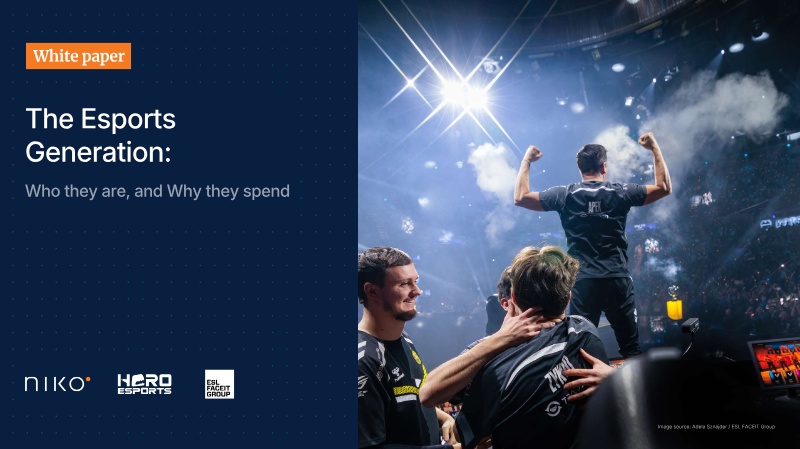
The global esports industry has matured into a significant economic force, reaching an estimated 640 million fans and generating $3 billion in annual revenue by 2026. This ecosystem functions as a primary cultural touchpoint for Generation Z, a digitally native demographic that views competitive gaming with the same level of emotional investment and community identity traditionally reserved for professional sports. Because this audience is currently in a formative stage of brand loyalty, the industry represents a critical environment for companies seeking to establish long-term relationships with high-value consumers.
Engagement within this space is driven less by the games themselves and more by social connectivity, the influence of professional players, and high-quality production standards. Fans demonstrate a high propensity for commercial activity, with over 76 percent having made esports-related purchases within the past year. This demographic is particularly receptive to brand integration, as 85 percent of fans actively notice esports branding, and nearly three-quarters report that these sponsorships directly influence their purchasing decisions. The effectiveness of this channel extends across diverse sectors, including electronics, fashion, and food and beverage, proving that esports serves as a highly efficient gateway for cross-industry marketing.
Ultimately, the esports landscape offers a unique opportunity for brands to leverage the intersection of gaming, music, and streaming to capture a highly engaged audience. By prioritizing authentic engagement strategies that respect the publisher-driven nature of the ecosystem, brands can successfully convert digital interest into tangible loyalty. As these fans continue to prioritize in-game spending and subscription-based services, the industry remains a proven, high-value environment for sustained commercial growth and brand association on a global scale.
- Gen Z esports fans represent a massive, high-value demographic of 400 million potential global viewers, with 76.3% of fans having made an esports-related purchase in the past year.
- The esports industry generates $3 billion in annual revenue, driven by a global audience of 640 million and high engagement from a cohort that is largely employed and well-educated.
- Esports fans are highly receptive to brand partnerships, with 47.1% of fans stating that brand collaborations with teams or athletes positively influence their purchase behavior.
- Digital items like skins and cosmetics are the most popular esports-related purchase (50%), followed by physical merchandise (40.9%) and branded peripherals (33%).
- YouTube (81.8%) and TikTok (56.6%) are the primary international broadcast platforms for esports, while China relies on domestic giants like Bilibili (48.1%) and Douyu (36.2%).
+2
Niko PartnersJul 2026
Report37 pages
Brands in Gaming 101: Virtual Worlds
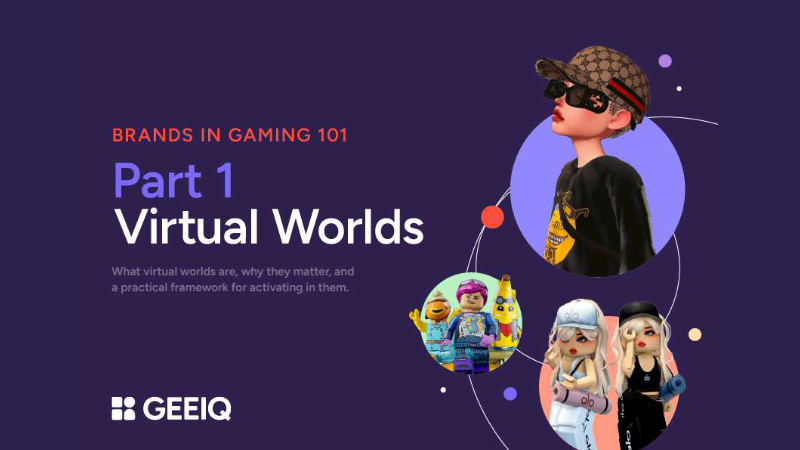
Virtual worlds have emerged as a critical marketing frontier, fundamentally reshaping how brands engage with younger demographics. As Gen Z increasingly prioritizes immersive gaming platforms over traditional social media, these environments offer a unique opportunity to capture sustained, high-level attention. This shift necessitates that brands transition from viewing gaming as a peripheral experiment to integrating it as a core component of their broader omnichannel marketing strategies.
The current landscape is defined by rapid expansion, with over 2,800 brand experiences launched to date and a notable trend toward high-impact, lower-commitment integrations. While activity is heavily concentrated within Roblox and Fortnite, success depends on selecting platforms that align with specific audience demographics rather than pursuing scale alone. By moving away from standalone owned worlds toward more agile, targeted activations, brands can better navigate the complexities of these digital ecosystems while maintaining consistent engagement levels.
Effective participation in virtual worlds requires a rigorous, data-driven approach that bridges the gap between on-platform interaction and tangible business outcomes. Brands must implement comprehensive measurement frameworks that track performance across the entire marketing funnel, linking virtual engagement to off-platform metrics such as sales uplift and brand search volume. When executed through bespoke strategies and strategic partnerships, these activations move beyond mere visibility, delivering measurable value that justifies the investment in immersive digital experiences. This evolution reflects a broader industry maturation, where the focus has shifted from simple presence to the strategic optimization of virtual environments as high-performing commercial channels.
- Virtual worlds command higher user attention than other channels, with 73% of players in a focused state compared to 57% for video streaming and 40% for social media.
- Gaming is a primary social space for Gen Z, as 92% of women and 93% of men aged 16 to 24 play video games, and 17.7% have engaged with a branded game in the past month.
- The virtual world market is dominated by four platforms: Roblox (380 million monthly active users), Minecraft (200 million), Fortnite (130 million), and ZEPETO (33 million).
- Brand activity is highly concentrated, with 88% of all brand activations occurring on Roblox and Fortnite.
- Integrations are currently more common than owned worlds (337 vs 252) because they offer a faster, lower-cost entry point that can be launched in weeks rather than quarters.
+2
GEEIQJul 2026
Report13 pages
Farming Sims: Cultivating Long-term Engagement
Farming simulation games have established themselves as a dominant and enduring genre within the global mobile gaming market. By analyzing data from a survey of 1,000 US mobile gamers aged 18 to 55, it is evident that these titles possess significant staying power, with 60% of mobile gamers having played at least one of the top ten farming sims. The genre’s success transcends casual demographics, attracting a broad audience that includes players of complex genres like RPGs, shooters, and strategy games, as well as those who primarily play on PC and consoles.
The core appeal of farming sims lies in their ability to satisfy fundamental human motivations defined by Self-Determination Theory: autonomy, competence, and relatedness. Unlike many other genres, farming sims excel at providing players with a sense of control through farm layout planning, a feeling of mastery via task completion and progression, and social connection through cooperative play and community interaction. These psychological drivers, combined with the "work-as-play" trend, foster long-term engagement through daily rituals, creative expression, and the evolution of virtual spaces.
To maintain this momentum, developers must navigate a saturated market by prioritizing consistent live-ops, community-driven content, and user-generated features. While the genre offers high accessibility and flexible session lengths, it faces challenges regarding content cadence and the risk of undermining the low-pressure experience through aggressive monetization. Ultimately, the longevity of farming sims serves as a blueprint for other genres, demonstrating that combining low-stress gameplay with deep, meaningful progression and social mechanics is a highly effective strategy for cultivating a dedicated, long-term player base.
- Farming simulation games maintain high long-term engagement by satisfying core human motivations defined by Self-Determination Theory: autonomy, competence, and relatedness.
- The genre appeals to a broad demographic, with 60% of mobile gamers having played a top farming title, including 73% of RPG players and 65% of console gamers.
- Farming sims demonstrate exceptional longevity, as evidenced by titles like Township, Hay Day, and FarmVille 2, which were released in 2012 and continue to command massive player bases with over 100 million to 500 million downloads each.
- Players prioritize building, experimentation, and daily rituals, with 36% of farming sim players citing 'building and evolving my farm' as a top motivation compared to only 7% in other genres.
- The 'work-as-play' trend is expanding beyond traditional farming, with job-based simulators like Truck Simulator and My Supermarket Simulator achieving over 100 million downloads each.
+3
BryterJul 2026

Report20 pages
Mobile Matters: The Impact of Mobile Games for Europe
The European mobile games sector functions as a critical pillar of the continent’s digital and creative economy, serving as a primary driver of both technological innovation and employment. By leveraging free-to-play models that democratize access to interactive entertainment, the industry has established a robust economic footprint, contributing €5.89 billion in Gross Value Added and supporting over 63,000 jobs as of 2025. This economic influence extends beyond direct financial output, as the sector fosters essential digital skills and advances developments in artificial intelligence, positioning Europe as a competitive global hub for creative talent.
The industry’s reach spans 32 jurisdictions, with key operational centers concentrated in the United Kingdom, Sweden, and Spain. Projections indicate that revenue within the European Single Market will climb to €6.13 billion by 2028, reflecting sustained growth despite intensifying international competition and rising operational expenditures. Beyond commercial performance, the sector increasingly integrates social impact initiatives, utilizing mobile platforms to facilitate advancements in health research and environmental awareness, thereby embedding the industry into the broader societal fabric.
Analytical assessments of this sector rely on a rigorous methodology that prioritizes tangible operational spending over raw revenue figures to ensure a conservative and accurate evaluation of economic contributions. By measuring direct, indirect, and induced impacts across more than 1,170 validated companies, the data underscores the necessity of a stable regulatory environment. To maintain its current trajectory and global competitiveness, the industry requires balanced digital policies that encourage long-term investment, support infrastructure development, and nurture the specialized talent pool essential for continued innovation in an evolving digital landscape.
- In 2025, the global video games industry generated €167.26 billion, with mobile games accounting for over half of that total at €91.25 billion.
- European mobile games studios contributed an estimated €5.89 billion in Gross Value Added (GVA) and supported 63,340 full-time equivalent jobs in 2025.
- Mobile games are the most common way to experience video games in Europe, with over 300 million players and 61% of monthly active users playing on smartphones or tablets.
- The European mobile games sector is forecast to grow its GVA by 4.8%, reaching €6.17 billion by 2028.
- European mobile games publishers are highly competitive, with 97% of the 320 million European mobile gamers playing free-to-play titles, a model that requires studios to spend 41% of annual expenditure on player acquisition and retention.
KingJul 2026

Report23 pages
Vietnam Game Industry Monthly Report: May 2026
The Vietnam Game Industry Monthly Report for May 2026 provides a comprehensive analysis of the mobile gaming landscape, highlighting a shift in market dynamics from pure volume-based acquisition to a focus on operational depth and regulatory compliance. The report synthesizes quantitative data from AppMagic with internal insights to evaluate performance across various subgenres, emphasizing that while overall market demand remains stable, success is increasingly contingent upon localized content, strong community management, and adherence to evolving government policies.
Market data for May 2026 indicates a recovery in total mobile game downloads, which rose to 121 million, a 3.98% increase over April. However, this growth was uneven; midcore segments experienced a 4.69% decline in downloads, underscoring a reliance on consistent launch pipelines and recognizable themes. Conversely, total in-app purchase (IAP) revenue grew by 3.13% month-over-month, with midcore revenue rising by 4.44%. This revenue expansion was driven primarily by long-lifecycle titles in genres such as Battle Royale, MOBA, and Sim Sports, which leverage established communities and recurring live-ops rather than relying solely on new user acquisition.
The report identifies cultural familiarity as a critical driver for success, noting that titles featuring wuxia, xianxia, or established IP consistently outperform generic Western fantasy products. Furthermore, the industry is undergoing a structural transition toward greater professionalization. Vietnam is increasingly positioning itself as a regional hub for esports, evidenced by the formalization of tournament calendars and hosting of major international events. Simultaneously, the introduction of Decree 174/2026/NĐ-CP, effective July 2026, mandates stricter compliance regarding account verification and data management. These regulatory requirements necessitate that publishers integrate operational and legal safeguards directly into their product design, favoring those who partner with experienced local entities capable of navigating the increasingly complex Vietnamese market environment.
- Vietnam's mobile IAP revenue grew by 3.13% MoM in May 2026, driven by strong monetization in long-lifecycle genres like Battle Royale, MOBA, and Sim Sports rather than new user acquisition.
- Midcore total revenue reached its highest level between January and May 2026, rising 4.44% MoM as established titles like Free Fire MAX, Liên Quân Mobile, and Roblox VN leveraged recurring Live-Ops and event-based spending.
- New game success in Vietnam is increasingly dependent on cultural fit, with titles featuring wuxia/xianxia settings, football fandom, or nostalgic IP—such as Giang Hồ Kỳ Ngộ and Total Football VNG—outperforming generic Western fantasy products.
- Effective July 1, 2026, Decree 174/2026/NĐ-CP mandates that all online games must verify player accounts using Vietnamese mobile phone numbers, with non-compliance risking fines of up to 60 million VND (approx. $2.3K).
- While MMORPG, Team Battle, and 4X Battle remain among the largest revenue pools, these segments saw revenue declines of 8.91%, 13.39%, and 6.87% respectively in May due to weaker Live-Ops intensity.
+2
GamotaJun 2026

Report16 pages
Rewarded UA Handbook: 2026
Rewarded user acquisition (UA) has evolved into a foundational component of the mobile marketing mix, serving as a critical solution to the industry’s ongoing challenges of rising acquisition costs and high user churn. As the global mobile gaming market matures and user growth plateaus, rewarded UA provides a mechanism to drive long-term engagement and retention by incentivizing users to reach specific in-game milestones. The practice is now standard, with 93% of surveyed developers across 10 tier-1 markets currently utilizing rewarded channels, and 61% planning to increase their budget allocations in 2026.
The methodology behind this analysis involved an online survey of 912 mobile game developers conducted between December 2025 and January 2026, supplemented by performance data from over 1,200 advertisers on the Freecash platform. Findings indicate that successful campaigns are no longer treated as experimental, with 31% of studios classifying rewarded UA as an always-on, core channel. High-performing studios typically allocate between 11% and 50% of their total UA budget to these efforts, often managing a portfolio of four or more channels to optimize reach and performance.
Strategic implementation requires a shift toward long-term event architecture. Data shows that campaigns optimizing for multiple, layered events—such as daily streaks, VIP tiers, and repeat purchases—consistently outperform single-event models. By extending reward structures to 90 or 180 days, developers can significantly improve retention and return on ad spend (ROAS). Furthermore, the industry is increasingly adopting automated bidding technologies, such as dynamic ROAS-based bidding, to replace fixed cost-per-install models. While gaming remains the primary sector, the model is rapidly expanding into non-gaming verticals like fintech and e-commerce, where gamification features are being leveraged to drive similar habit-forming behaviors and sustainable user value.
- Rewarded UA is now a core marketing channel, with 61% of surveyed studios planning to increase their budget in 2026 and 65% of studios allocating between 11% and 50% of their total UA spend to the channel.
- Extending reward structures beyond traditional short-term windows is critical for retention; for example, Candivore increased their Match Masters reward structure from 50 to 90 days, resulting in a 50% increase in D60 retention and a 70% uplift in D90 ROAS.
- Campaigns that layer multiple event types outperform single-event campaigns, with IAP/hybrid games utilizing an average of 3.25 distinct event types per campaign to drive long-term engagement.
- Automation is a primary industry focus, as evidenced by Almedia’s MaxROAS system, which has delivered up to a 35% ROAS uplift and a 100% increase in spending for participating advertisers since December 2025.
- Rewarded UA is increasingly viewed as a go-to-market strategy, with 93% of studios launching rewarded campaigns within the first year of their game's lifecycle and 46% implementing them within the first three months of global launch.
+3
AlmediaJun 2026