Outer Wilds
5 documents in the library are about Outer Wilds, from writers such as Game Developers Conference, Extra Credits and Game Maker's Toolkit, the newest from 2025. Each has a summary and key insights with the page they come from.

Outer Wilds is a critically-acclaimed and award-winning open world mystery about a solar system trapped in an endless time loop. The newest member of the space program in a small village on the planet Timber Hearth, the player navigates a space shuttle and travels across their solar system to get to the bottom of its mysteries by exploring the cosmos and gathering the knowledge hidden within each of the system's planets, left behind by another civilization in the distant past.
- Released
- May 28, 2019
- Developer
- Mobius Digital
- Publishers
- Annapurna Interactive, Limited Run Games
- Genres
- Puzzle, Simulator, Adventure, Indie
- Platforms
- Xbox Series X|S, PlayStation 4, PC (Microsoft Windows), PlayStation 5, Xbox One, Nintendo Switch
- Links
- Wikipedia
Game data from IGDB.com
Documents about Outer Wilds
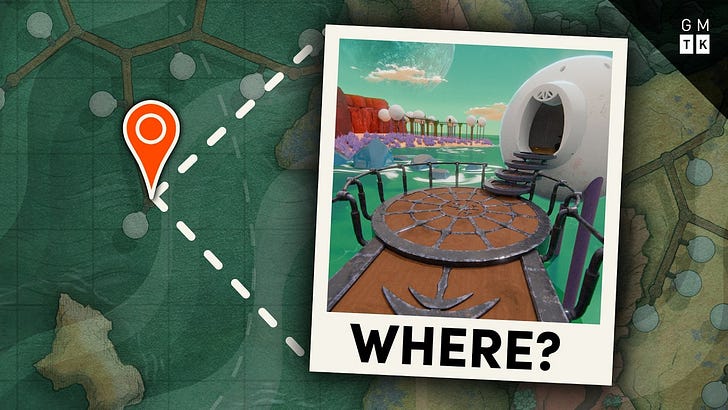
A Detective Demo Inspired by Geoguessr
The indie game Locator serves as a compelling case study in how core mechanics from the web-based geography game Geoguessr can be adapted into a narrative-driven, sci-fi detective experience.
- Empty Exhibit Games’ title Locator adapts Geoguessr-style mechanics into a sci-fi detective experience where players triangulate positions on an alien planet using astronomical and navigational data.
- To eliminate trial-and-error gameplay, the developer requires players to submit three correct location pins simultaneously, a mechanic inspired by the deductive structure of Return of the Obra Dinn.
- The game integrates narrative directly into puzzle-solving by ensuring every piece of text serves the dual purpose of advancing the story and providing essential navigation clues, a design choice influenced by Outer Wilds.
Sparking Curiosity-Driven Exploration Through Narrative in 'Outer Wilds'
Outer Wilds functions as a masterclass in curiosity-driven game design, prioritizing player-led discovery over traditional linear progression.
- Outer Wilds uses a non-linear narrative structure to support its core design goal of curiosity-driven exploration, ensuring that no game content is permanently gated and players can freely investigate the world at their own pace.
- The game utilizes a 22-minute time loop to encourage experimentation and failure as a form of progression, allowing players to revisit information infinitely without the pressure of needing to memorize every detail.
- To make the long-dead Nomai alien species relatable, the narrative team iterated extensively on their voice and personality, creating distinct character arcs that provide emotional stakes for the player.

Why Time Loops Work Best in Video Games - Extra Credits
Video games provide a uniquely effective medium for time loop narratives because they align the player’s experience of trial and error with the protagonist’s in-game reality.
- Time loops uniquely align the player’s real-world trial-and-error process with the protagonist’s in-game experience, turning failure into a narrative-integrated tool for discovery.
- Unlike traditional games where death is a disconnected failure state, time loop mechanics transform repeated resets into a core pillar of character growth and progression.
- The genre fosters deep world mastery by requiring players to learn schedules and character behaviors, as demonstrated in titles like Majora’s Mask, Elsinore, and Outer Wilds.

Spending $20,000 On My Indie Game! (XXL Devlog)
This report details the development progress and financial challenges of the indie platformer Will You Snail, a solo project spanning three years of development.
- The developer incurred $20,000 in direct expenses and $85,000 in foregone salary, bringing the total three-year investment to $105,000.
- With a net profit of $4.30 per unit, the project requires 24,400 copies sold to reach the break-even point.
- Failure to secure formal licensing agreements for community-sourced translations resulted in the loss of hundreds of hours of work, forcing a complete restart of the localization process for 50 languages.
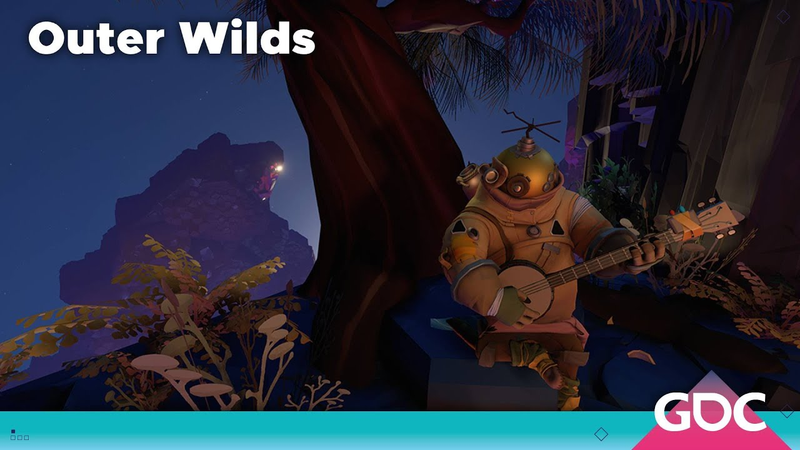
GDC Plays GDCA Nominee Outer Wilds with Loan Verneau and Wesley Martin
Outer Wilds centers on a design philosophy that prioritizes curiosity-driven exploration over conventional gaming tropes such as combat, character progression, or traditional collectibles.
- The developers intentionally removed traditional game rewards like upgrades and collectibles, ensuring that knowledge is the only currency players gain through exploration.
- The game's core design relies on a full-scale physics simulation where all celestial bodies and objects are constantly in motion, requiring the team to build custom internal tools to overcome limitations in standard 3D modeling software.
- The project originated as a student project in 2013 and gained early recognition by winning an award at the 2015 Independent Games Festival before being fully developed by Mobius Digital.