Key insights
5 slides
The premise
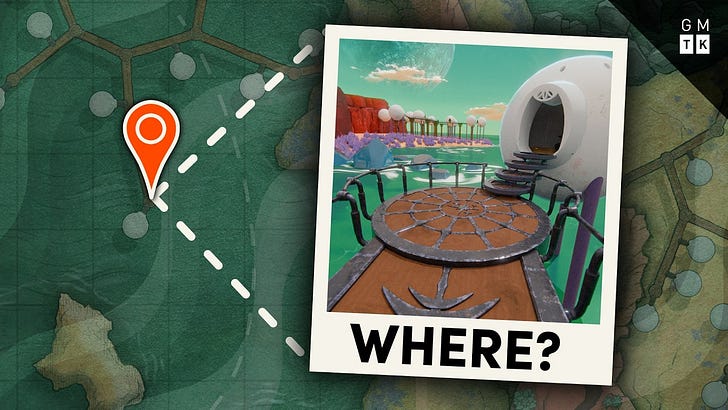
Locator adapts Geoguessr mechanics into a sci-fi detective experience.
Players identify a missing archaeologist on an alien planet. They analyze photographs and cross-reference in-game journal data.
The rule
Players must submit three correct location pins simultaneously.
This requirement prevents brute-force guessing. It mirrors the deductive structure of Return of the Obra Dinn.
three
Correct location pins required simultaneously
The design choice
Every piece of text advances the story and provides clues.
The game integrates narrative directly into puzzle-solving.
The pacing fix
Extraneous emotional diary entries were removed to improve pacing.
Playtesters previously found purely emotional or character-focused diary entries distracting. The game now focuses on environmental storytelling.
The current state
The current demo provides approximately one hour of gameplay.
The demo centers on the core loop of analyzing photographs. It also includes cross-referencing in-game journals.
one hour
Approximate gameplay length of the current demo
1 / 5
Ask AI about this report