Karateka
Game
Documents about Karateka

The Game Business45 min
“It was amazing to have PlayStation behind us”
Innovation and team culture serve as the primary drivers of success in the gaming industry, outweighing the influence of rigid business models or hardware specifications.
- The gaming industry should shift from a AAA-focused model toward a double-A development approach, prioritizing small, agile teams to foster innovation and creative ownership.
- Studio closures are frequently caused by a misalignment between a team's creative identity and the shifting strategic demands of large corporate partners like PlayStation and Meta.
- The industry's reliance on hire-fire staffing models and commoditized development cycles is actively undermining the collaborative environments required for long-term stability and genuine innovation.
The Game BusinessJul 2025
Game Developers Conference62 min
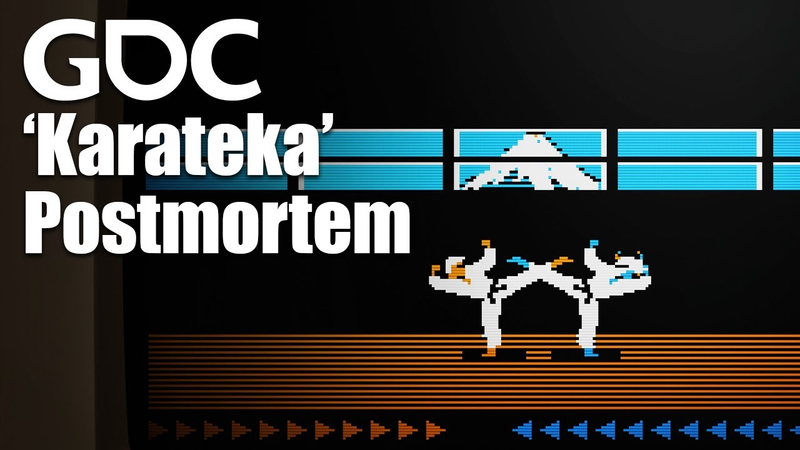
Classic Game Postmortem: 'Karateka'
The development of the 1984 title Karateka represents a pivotal moment in early home computer gaming, marking a transition from rudimentary arcade-style action to cinematic, narrative-driven experiences.
- Jordan Mechner developed the 1984 hit Karateka by combining the large sprite design of the game Swashbuckler with the smooth, fast animation style of Choplifter.
- To achieve fluid character movement on the Apple II, Mechner used a VersaWriter graphics tablet to rotoscope live-action film frames, tracing them manually into the computer.
- Mechner implemented a cinematic 'leitmotif' musical approach, where his father composed distinct themes for the hero and villain to help tell the story through limited audio channels.
Game Developers ConferenceJun 2024