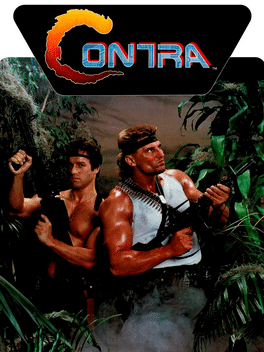
Contra
GameBy Konami · Released Feb 1, 1987
Documents about Contra
Article
Reaganoludography: The 1980s Japanese Digital Games in the Service of the United States
Reaganoludography defines the strategic alignment of 1980s Japanese video games with the neoconservative cultural agenda of the United States.
- During the 1980s, Japanese game developers adapted their content to align with American neoconservative values to successfully export products to the U.S. market following the 1982 industry crash.
- The term 'Reaganoludography' describes how Japanese games were modified or selected to mirror the themes of 1980s American action cinema, such as the hyper-masculine, one-man-army tropes found in films like Rambo.
- Nintendo of America enforced strict censorship policies on imported titles, including a 'No Religion' mandate that prohibited symbols related to religious, nationalistic, or ethnic groups.
Replay. The Polish Journal of Game StudiesJul 2026
Article
Arcade Soldiers: Early Japanese Shooters in Dialogue with Hollywood Militarism
This analysis argues that early Japanese arcade shooters from the 1970s and 1980s, featuring human protagonists and settings like jungles, engaged in a dialogue with American Cold War-era social imaginaries and Hollywood militarism, rather than solely reflecting financial motivations for international market appeal (mukokuseki).
- The paper argues that 1980s Japanese arcade shooters such as Front Line, Commando, Ikari Warriors, Contra, and Metal Gear were not merely market-driven mukokuseki (culturally odorless) products, but engaged in an ideological dialogue with Cold War American culture and post-Vietnam Hollywood ambivalence toward militarism.
- Japanese developers, lacking a domestic tradition of celebratory war narratives after the 1945 defeat, drew on American war films introduced during the postwar Occupation, especially Hollywood action films set in Southeast Asia and Central America.
- Rambo was a key model: his disillusioned, retributive hero, victimized by his own government, offered Japanese audiences a template for processing a 'bad' war in which flawed protagonists are betrayed by the state.
Thompson River UniversityJun 2026
Companies behind it

As the documents state it.