1 free read left. Create a free account for unlimited reading + AI research.
Create free account
Why US games can't copy their own success in China – And how to fix this
Key insights
6 takeaways- 01Successful entry into the Chinese market requires deep cultural adaptation rather than simple localization, as the region demands high-intensity gameplay, complex UI, and extensive content volume that contrasts with Western minimalist design.
- 02Regulatory compliance is mandatory and requires partnering with a local Chinese entity to secure a publication number and provide source code for integration across hundreds of fragmented local app stores.
- 03The Chinese gaming landscape is dominated by a younger demographic that primarily utilizes mobile Android devices, necessitating a focus on mobile-first development strategies.
- 04Monetization strategies must shift from Western fairness models to aggressive systems that embrace 'pay-to-win' mechanics, as Chinese players frequently view high spending as a status-based badge of honor.
- 05Game progression systems must be tied strictly to active participation rather than the Western-style 'catch-up' bonuses, catering to a demographic that prioritizes long-term, high-intensity engagement.
- 06Developers must build local server infrastructure to bypass the 'Great Firewall' and strictly adhere to censorship guidelines, which include specific visual restrictions like blood color and prohibitions on security-sensitive features like augmented reality.
Ask AI about this video
Transcript
[Music] so another non Asian guy talking about Asia so yeah I will give you a different perspective I'm going to talk about how your game must be changed from the game design perspective and how you should design games for Chinese market okay so I guess this is the camera so I will try not to move so yeah I can move okay yeah okay today's topic why u.s. gains cannot copy their own success in China
and hopefully I will give you some ideas how to fake this first like one minute to tell more about my company it's the biggest game production studio in Bulgaria self-sustained it self-funded located in no small red dot eastern part of Europe part of Europe since 2017 and 7 so we are a hundred and eighty-five people right now those are the awards that we value the most in 2014 we took the fourth prize in Central Europe for revenue growth of nine four hundred ninety eight percent in 2015 14 plays with revenue growth 592 percent we have
two spin-offs in our company first spin-off is school for developers it actually produced 20% of the industry growth of human resources and the second spin-off we have is a outsourcing company started in 2050 so we so far we one blow before sync association in London last year so this is our recent title it's specially designed for the MENA region it uses our own engine it's an MMO title you can see the steps it was featured by Apple and Google on 2nd of February so far this is the biggest success on the reading side that we have it's actually the number is right 62 euro per daily active user per month
so what I do and the chief operating officer of the company also a lead producer of the our internal engine seven years executive roles 20-plus lectures worldwide and the last question why I'm talking about Asia and especially China I was a jury member at the first international mobile game Awards in China and of course not to forget I was a mentor at game founders Malaysia having a chance to work with 15 of the brightest talents in the indie developers there so let's get back to the question why US games can copy their own success in China and the simple answer you can see it because we are different you cannot sell one product
worldwide and to expect to have the same results so I will start with the bad news and the bad news is that going west is easier than going east so why is that it's because to reason two reasons first is extreme government regulation of publishing your game in China and the second reason is that there are hundreds of store so far hundreds of stores means that you have to give your source code that means that there would be a local team that will be responsible for integrating your game on every single store there some of them already has a one hdk that works the whole the whole job but they still want your source code so to be able to modify your games and
to be able to do business there and to sign the contract and to find the right person there you have to start with the cultural differences I my advice is to start reading some books this is my favorite really short 101 stories for foreigners to understand Chinese people I bought it at the airplane in Shenzhen it was like amazing experience for me the other one you can find it on Amazon it east-meets-west a young artist from china yang Liu who is representing graphically the differences between between both countries so two unsuccessful again there you have to
know what is your target audience right so in the past they people in China had near to zero access to consoles it's the same as Eastern Europe for example where I came from so our first experience with games was on PC in Internet coffee shops where people were playing online and they are playing together so that means that the average Chinese gamer wants multiplayer game doesn't want to compete with the computer so another thing is that because of that other Chinese gamer is a yoke is a lot younger than the u.s. one and prefer to place on the Android smartphone Android smartphone and love
hardcore MMO games 60% of the gamers are male and also spend more than six hours per day so I was looking in my phone to find a picture I took in the Chinese Metro but almost everyone has like this big battery under the form and they're constantly under and their smartphones so what to do in order to be successful there first of all the game must be free-to-play it's a mandatory with the piracy and with all the stores and all the competitors that you have premium titles are just unable to have success there you need a multiple progression system in every game you have to make them to play as much as possible and to reward them for every day for their
everyday dedication to it to your game so other thing is that similar to a mini region you can really make it pay to win so actually it's something it's a must to make it pay to win so remove all the things that you already put in your game guided by your concept of fairness so you have to remove fight matching system you have to remove growth and booster limit you have to remove attack rules the restrictions everything implements black market alone allows people to buy resources and army from the day one if they want so this is a quick representation of how
the concept of fairness actually affects our game designer decisions so in u.s. also in Europe if you are a way of the game from one day you receive a welcome back bonus for let's say ten thousand gold if you are two days away from the game you received fifty thousand gold bonus as a welcome back gift so why is that this is because we don't want you we don't want to lose the tempo of your competitors because you were off the game and your competitors was online so they already progressed so to be able to compete with them we just give you bonuses to make you more stronger and to get back to the competition in China China is like in real life when living the game your production stops so it's
like going you're not going to jobs there is no paycheck not going to school there is you didn't learn anything right so you can progress in the game only if you're in the game so this is the major differences other different things you hide how much your your Wales spent as much as possible of course because we know here in the West being proud of using money in the game is like being proud of using doping cat sport in sport [Music] so your competitors are going to laugh at you say hey I know you're a weak player but because of your big pockets you can beat me without money it's going to be a different story so this is how
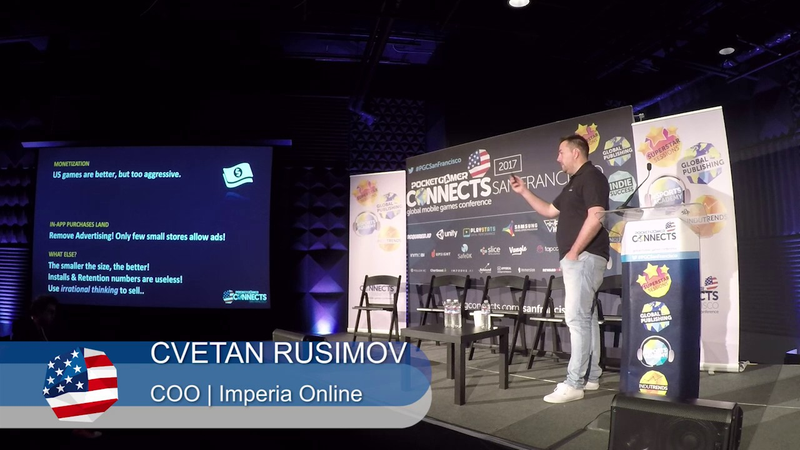
we think here in US and Europe in China I'll high-rollers actually has their names written in golden they have big crowns and they have custom-made avatars and everyone knows that they spend a lot of money so you have to create a high status for those players it's a mandatory otherwise they are going to leave your game because they don't get their VIP status so talking about monetization hmm actually your us games are better European one as well but we are too aggressive so I have a chance to play more than 100 titles and I never saw someone trying to sell me something after I finish the tutorial or after
logging on the second time here we are super aggressive so my advice is to reconsider how aggressive you promote your in-app purchases the second important thing is that you have to depend on the inner purchases in China only one store support from [Music] advertisement and the opinion was when we started discussing with the the biggest mobile operator is that they don't like us because us actually could Lu allow people to jump from one store to other so they have their reasons to keep their players to play in this particular game on this particular store so at its not going to be like a big boom in the next year for sure so what else the smaller size
the better because internet connection installs and rotation numbers are useless when you are negotiated deal with Chinese guys don't rely on minimal guarantees for example I want two million installs it's not going to work they will they will fake the numbers and you won't get the players so use clever stuff to monetize using rational thinking what is the rational thinking this is a really simple concept same price better offer so you have to make them to think that you're stupid and they're clever so this is how it works to your brain so when your brain sees that there is another award for the same price but better offer your brain just focusing on it and
just forget the small packages so this is really creative and working there so talking about UI UI complexity over simplicity here in us we say simple is better the thing is that in China is completely the opposite so here is the here is something that I took from the book young glue set in the traditional Chinese painting the reduction of visual tools and elements is the highest level of art you know what yeah I know you know the answer it's absolute so they just don't follow this advice this is how our user interface looks like simple and clean as possible even if we
could remove one of the fish we will do it like when I enter in the shower two days ago in my hotel here in San Francisco there is only one turning club the first 15 degrees was just put on and off and the other degrees was how hot and cold I want so in Europe we at least have two clubs like one is for the temperature one is for the up or the pressure of the water and here they even remove it like only one knob this is how the Chinese games look like so the fishes are elements of the UI so we are working on a title for Korean market right now which is pretty much the same about art and they asked us to put 16 shortcuts on the main screen 16 so
imagine that the ship is your game so almost there is no place to see the actual game so [Music] I was I was really confused when I first time when I start reading about Chinese games and Chinese market I wanted to prepare myself being judge there so I saw they have this book which is amazing book in every artist in our studio loved it by heart so when I saw it's published in Chinese I said yeah they they follow the same rules but it's not the truth so in the book it says get rid of half of the words on each page then get rid of half of what's left so this is how we do
it here simplicity / complexity we remove everything this is how they do it look familiar so both are like conversation that can go for like ages and you just click next next next next and actually if you want to to publish again there you have to have a story line which is wide and big and involves a lot of characters and eat a lot of text inside so be prepared to have a lot of text so what else we jump to classic metagaming this is something that they laugh I personally don't love someone to completely change my game after a week
but actually they do it we use like mini games like you have your main game and then some other mini games just to spend more time online they do it like the opposite way they start with a mini game and if you spend like a week collecting goats with your finger they just give you said hey this is the reward you just unlock the real game talking about content you have to triple quadruple the content if you have only 100 levels it's not enough you have to have 500 levels they will play it and they will say hey this game it's too easy to beat so that's it they consume a lot of content because they spent a lot of hours online so you have to show them that your game has like sometimes is better if you
don't have time to create content just make the last level impossible to beat and just lock them there and buy some time to create another content this is the game I personally recommend if you want to go to China just play it and analyze it this is the classic example of metagaming it's called gumballs and dungeons amazing game it starts only as a clicker then turns out as a fantastic RPG game so what they love they love to grind so make them to grind for ages this is the way to help them to engage more with your brand and your product in our dictionary it says hard do work for them grading is like building the Chinese wall like something that they have from their ancestor a
purpose of their life they build it and they will leave something for the next generation so Asian Asia is action West is command I can I can say it in one sentence so Asian people wants to especially in China they want the action they want to touch on the screen they want to spend a lot of time hard work is not something that they are not afraid of talking about the big Firewall of China this is something that couldn't allow you to access your cloud servers here in the West so you have to consider building your own infrastructure there afterward about the regulation that I
said in the beginning that it's extreme regulations so actually they they said that they have this to protect the young generation actually if you read the next couple of sentences on the slide you will see that they are actually protected protecting the domestic industry so to publish a game you need a publication number how to get one only a Chinese entity could get you one so you have to sign the deal with a Chinese company you cannot go alone and publish your game there and of course it tooks like four to six months ah few words about censorship yes there is a big censorship there three ways the first is
nudity and lot a bit its general like everywhere but the blood must be in blue colors and must be really small in quantity a few drops only the second way is augmented reality you know that in China like Pokemon go it's forbidden they don't want people to walk with their phones off and their cameras on so it's security the reason that they don't allowed people to go and scan make photos of what what's happening and this is something that really fried them fighting them of course the other the third way of censorship is above the law behavior to understand me clear I will show you this picture so if you have a nice racing car a nice racing game and
you want to race in the city you must make it like this you have to put a speed limit on the car and because the young generation actually learn about the external life from the computers and from mobile games these are not mine words but the words on the one guide from the Ministry of Culture and Yelp so they think that you have to you have to put regulations the good thing is that violence in strong language is allowed which and also social and one-to-one communication is allowed which is bit allowed in in Japan for example and I guess it is the last
light how to open the gate to to China my personal advice is look for companies that that has offices there and work both sides of the ocean it's like companies like my games companies like the play if you are bigger than our size go and work with cng like Ringo is here or Emily from season from Kingsoft is also here at the event so you have to work with a local company that has experience in this thank you very much that's it if you have a question for we can wrap up the race one here one here in the middle yeah yeah I'm sorry Anna from survive Studios which is a VR game companies
we're talking about AR games being regulated and you know anything about VR games which reality yeah where games are okay the thing is that the biggest producer of the VR VR equipment I spent like hours of talking with the guys from Huawei or other producers of the equipment they didn't plan to make like phones with a bigger resolution or they didn't make plans to that to push in to invest heavily in the in the VR so from the technical side and Chinese are more how to say responsible for the technical side of the VR development because here we are from the content side and a lot of companies are producing content they don't have problem with this you can you can have the art there but they still
don't they still don't think it's too big to invest heavily in in VR as a technology [Music]
Summary
Western game developers often struggle to replicate their success in China because they attempt to export identical products to a market with fundamentally different cultural, regulatory, and design expectations. The Chinese gaming landscape is distinct, characterized by a younger demographic that favors mobile Android devices, hardcore massively multiplayer online (MMO) experiences, and high-intensity engagement. Unlike Western markets, which prioritize simplicity and "fairness" in game design, the Chinese market demands complex user interfaces, extensive content, and systems that reward high-spending players with visible status.
Key findings indicate that successful entry into China requires a departure from Western design philosophies. For instance, while Western games often provide "catch-up" bonuses to players who have been inactive, Chinese players expect progression to be tied strictly to active participation. Furthermore, monetization strategies must be more aggressive, and developers should embrace "pay-to-win" mechanics, as Chinese players often view high spending as a badge of honor rather than a shortcut. UI design should also be dense and information-heavy, contrasting sharply with the minimalist trends popular in the West.
The regulatory environment presents significant barriers, including the necessity of partnering with a local Chinese entity to obtain a publication number and the requirement to provide source code for integration across hundreds of local app stores. Censorship is also a critical factor; developers must navigate strict rules regarding visual content, such as the color of blood, and avoid features like augmented reality that may be perceived as security risks. Additionally, the "Great Firewall" necessitates the development of local server infrastructure.
To succeed, developers must move beyond simple localization and engage in deep cultural adaptation. This involves partnering with local firms that possess the expertise to navigate government regulations and store ecosystems. Ultimately, the Chinese market rewards developers who treat gaming as a long-term, high-intensity grind, providing massive amounts of content to satisfy a player base that spends significant time online daily.



















Comments