1 free read left. Create a free account for unlimited reading + AI research.
Create free accountWhitepaper DiGRA
1 free read left. Create a free account for unlimited reading + AI research.
Create free accountWhitepaperDiGRA
Distilling the key insights…
Fraser Allison's examination of focalization in video game narratives adapts Gérard Genette's literary framework to the interactive medium, arguing that the question of whose perspective a game conveys is central to understanding how players relate to their avatars. Drawing on William James's observations on attention and Genette's three categories of focalization, the work contends that internal focalization can be signaled in games through audiovisual presentation, selective knowledge, and ludic affordances. Because ergodic games allow player choice, the framework must be modified: player agency can blur whether a character's thinking is revealed or merely implied, so analysis must account for the interaction between narrative perspective and playable action.
The analysis draws on a range of titles to illustrate these mechanisms. Extradiegetic heads-up displays and thought bubbles in The Sims 3 signal a character's mental state, while Top Spin 4's landing markers reflect a character's expertise. Mirror's Edge's color-coded "Runner Vision" stylizes perception to align the player with the protagonist's mindset, and Grand Theft Auto V uses character-specific ability effects to suggest focalization without altering the shared game world. Hallucination sequences, music, and control schemes also shape the experience; the author argues that "code is character," since programmed constraints define what a character can do. Mirror's Edge's combat and QWOP's manual leg controls show how control design can make a character feel competent or distant from the player.
The work offers a practical test for internal focalization: audible thoughts without spoken dialogue imply an internal perspective, whereas spoken lines do not. Mirror's Edge is cited, following Calleja (2009), as evoking an "alterbiography of self," and hallucinatory sequences in Far Cry 3, Max Payne, and Eternal Darkness are noted as relatively common. The framework is presented as a useful means of determining whether a game frames its character's perspective as internal or external, with the author suggesting that future research should examine how these framings shape player identification with the avatar. The discussion is situated within game studies, narratology, and psychology, drawing on prior work by Calleja, Nitsche, and Pinchbeck.
 Grand Theft AutoGame · DMA Design · 1997 · 500 documents
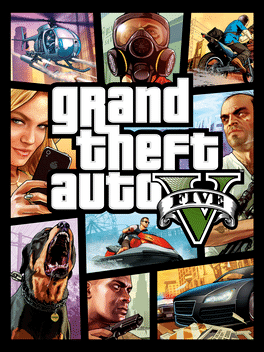 Grand Theft Auto VGame · Rockstar North · 2013 · 170 documents
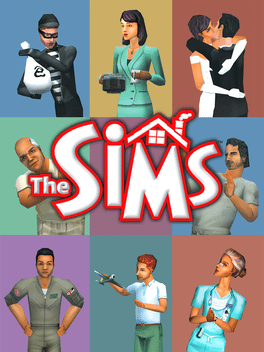 The SimsGame · Maxis · 2000 · 104 documents
 Far CryGame · Crytek Frankfurt · 2004 · 90 documents
 Max PayneGame · Remedy Entertainment · 2001 · 61 documents
 Mirror's EdgeGame · EA Digital Illusions CE · 2008 · 7 documents
 Far Cry 3Game · Ubisoft Montreal · 2012 · 6 documents
 The Sims 3Game · The Sims Studio · 2009 · 4 documents
Each row is a game or company this document names, each column a document, oldest first. A mark means that document names it. Select a row to see those documents.
DiGRA · 2016