1 free read left. Create a free account for unlimited reading + AI research.
Create free accountWhitepaper DiGRA
1 free read left. Create a free account for unlimited reading + AI research.
Create free accountWhitepaperDiGRA
Distilling the key insights…
Nixon and Bizzocchi's paper argues that the quick time events and contextual controls of Heavy Rain generate a distinctive form of player identification with its protagonists, which the authors term "interaction-images." Extending Deleuze's film theory of movement- and time-images, the authors contend that when players physically enact a character's gestures through the controller, interaction itself becomes a primary site of meaning, emotion, and moral reflection. The thesis rests on phenomenological reasoning drawn from Merleau-Ponty, applied to the game's kairotic temporal structure and its visual cues of urgency.
The analysis moves through three interlocking claims. First, the game's control scheme maps character positions and gestures onto the controller, creating what the authors call a "narrativized interface," illustrated through driving, shootout, golf, and finger-chopping sequences. Second, mastery of this gestural grammar, together with branching narratives and the handling of failure, fosters a visceral connection that the authors argue exceeds what traditional cinema allows. Third, player choices, such as Ethan's execution of the dealer or Paige's escape, combine with depictions of psychological pathology, including insomnia, addiction, phobias, and blackouts, to produce identification through both affect and cognition.
The scope is focused on a single title, Heavy Rain, and on player experience rather than measured outcomes. The evidence is qualitative and interpretive, drawing on close readings of specific game sequences and on theoretical frameworks from film studies and phenomenology. The authors' conclusions are therefore best understood as well-argued claims about the nature of player engagement, not as empirically established findings about player populations.
Each row is a game or company this document names, each column a document, oldest first. A mark means that document names it. Select a row to see those documents.
DiGRA · 2016
DiGRA · 2016
DiGRA · 2016
DiGRA · 2016
DiGRA · 2016
DiGRA · 2016
DiGRA · 2016
DiGRA · 2016
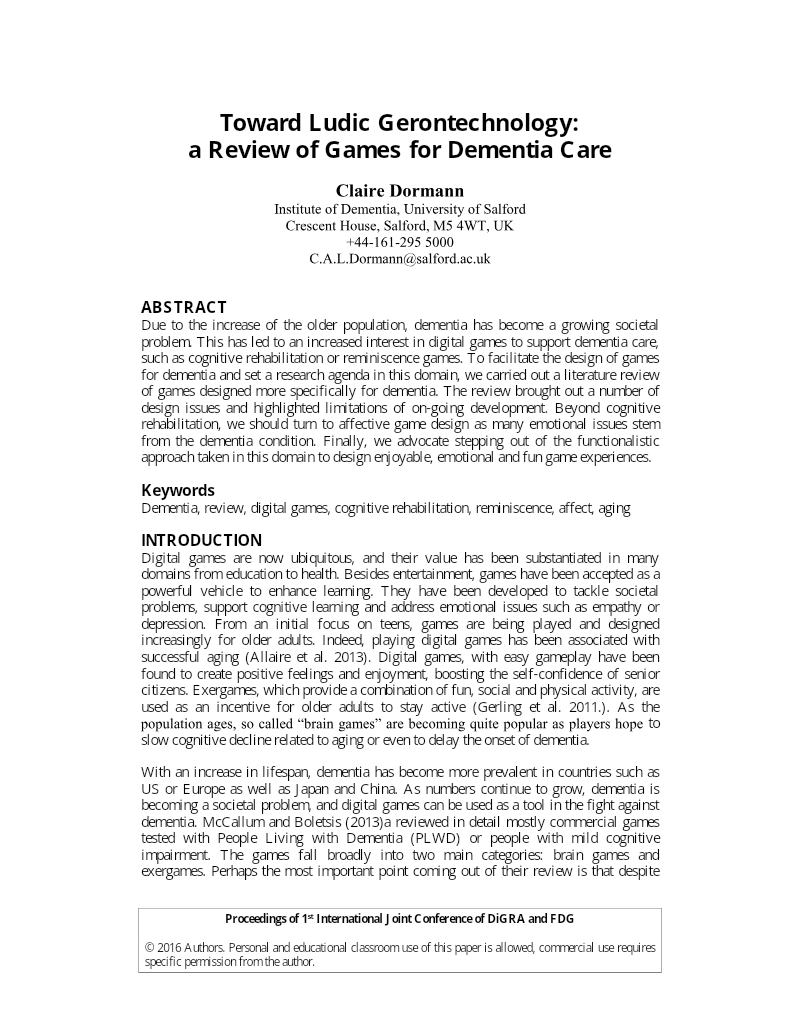
DiGRA · 2016
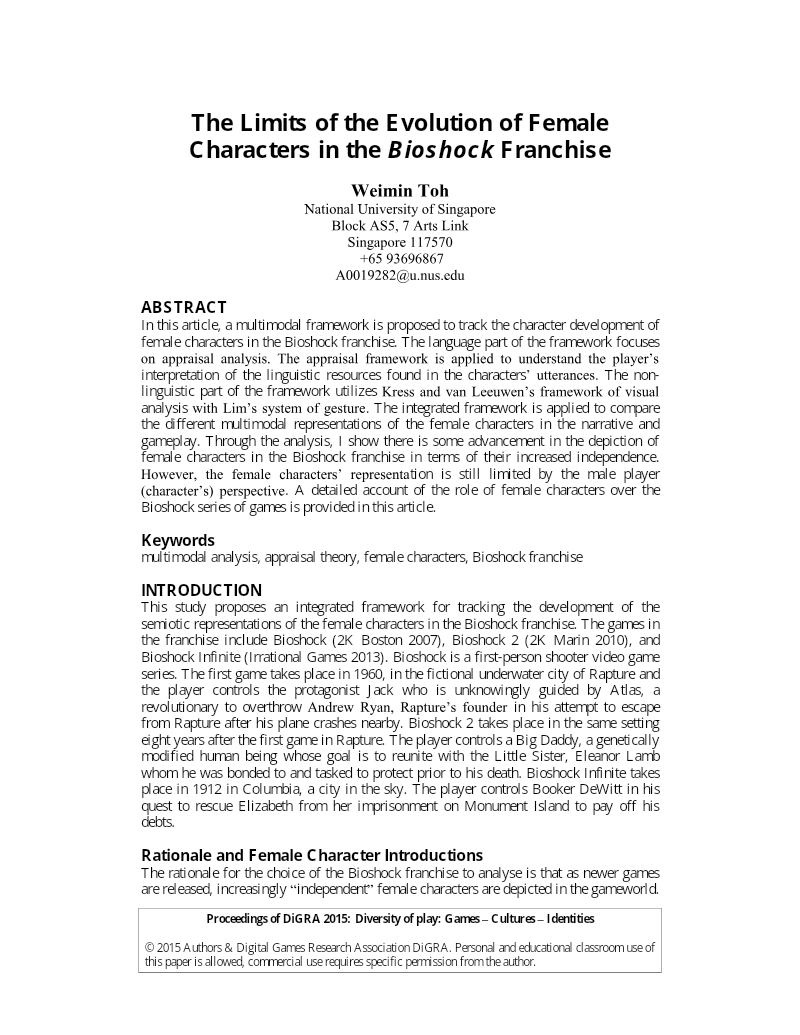
DiGRA · 2015
DiGRA · 2015
DiGRA · 2015