1 free read left. Create a free account for unlimited reading + AI research.
Create free account
Whales in the wild: What big data reveals about the biggest game spenders

Key insights
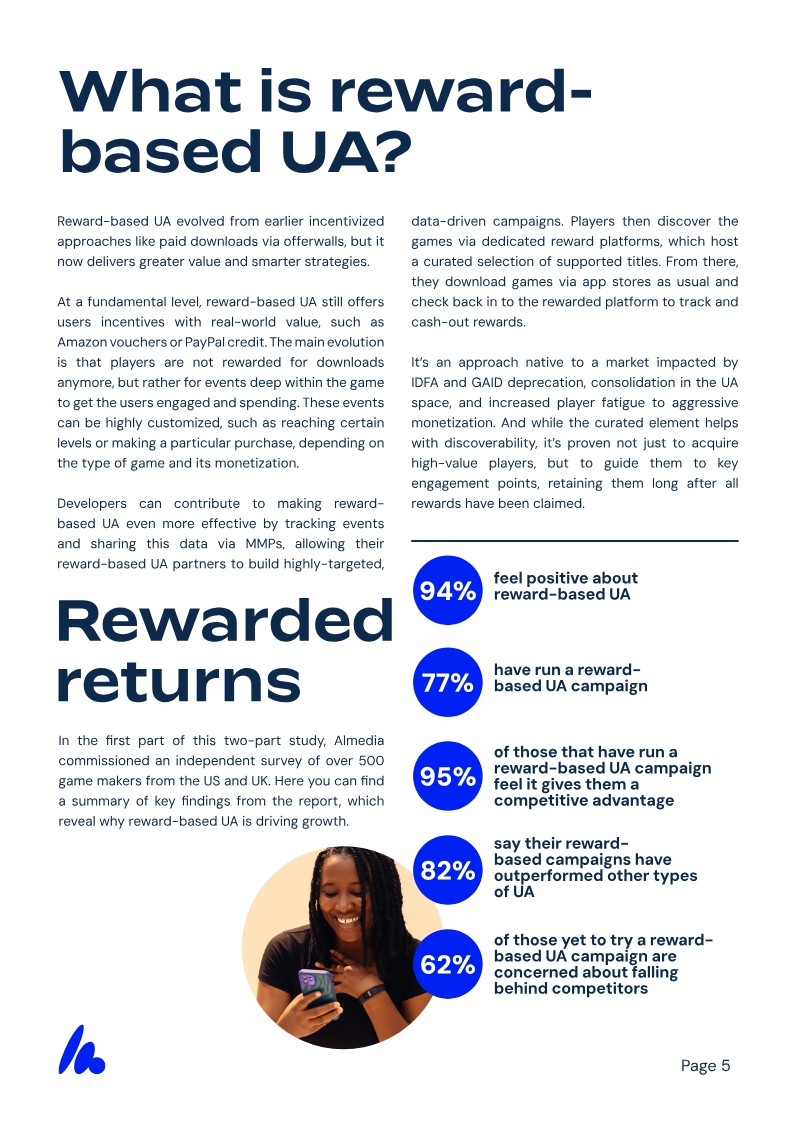
7 takeaways- 01A small cohort of high-spending users, known as whales, accounts for 80% of total mobile gaming revenue despite representing only 16% of the spender population.
- 02Developers often fail to identify high-value users by relying solely on internal data, as many whales distribute their spending across multiple titles rather than remaining loyal to one.
- 03A game's revenue performance shows a strong positive correlation with its 'wellness score,' a metric quantifying dependence on high-value spenders.
- 04Analysis of 500,000 spenders across 4,000 titles identified 59 unique whale species categorized into four primary demographic families, ranging from older male sports fans to younger female casual gamers.
- 05While most top-grossing titles rely on whale-centric monetization, games like Pokémon GO prove that capturing a larger share of smaller wallets is a viable alternative strategy for financial success.
- 06The most effective acquisition targets are users with low-to-mid loyalty but high 'stickiness,' characterized by frequent game switching and consistent spending behavior upon engagement.
- 07Sustainable growth in the maturing mobile market requires shifting from internal data optimization to competitive intelligence and cross-platform behavioral analysis.
Ask AI about this video
Transcript
[Music] all right good morning everybody my name is Ryan Cato I head up the marketing science to disperse light pink powder and you can see that my designer got a little chilly held too much fun with this but I'll be talking about wills in a while we looked at our data set and we found some really interesting insight on the biggest game spender so I'm here to share some of that and so my goal today is make this clicker work to answer these three questions so first how important are these whales to again success our successful games more reliant whales already let's rely on well the second question that would be China answer is what are the difference issues are well can we identify the different traits that and can tell me close to these users and finds the different species and the third question is the billion dollar question how do we
connect swells and there's always kind of a conundrum there be trying to find your competitors customers who is by definition also the most loyal and will be looking at different metrics and we'll see if we can help you identify the next whales so give you a little more context on foo your size intelligence is a data science company and we have about 5 million people who for whom we feed a comprehensive online shopping behavior the way we do that is by bikini a third person data out of a logo or email receipt and one of the service that we provide is creating audiences for for look like targeting us to shoot for for you a so here's the Duras data set that we'll be working with in today's analysis this is a mobile game spenders so in the past four month we have close to half a million users which spend money in games
and we've identified more than four thousand titles and we found 9 million in Google Play nitrones receipt and the receipts are very important because we were able to identify from in anonymized basis who's buying what kind of product or what food buying raw song which games in what sequence and what else do they buy so so that gives us this view of the bird's eye view of the whole industry so each of these dots represents a game and we see that a game also tends to share a lot of consume allowed customers with another game which are aligned between them so we see there's a whole network of different games and kind of organize this a little bit so we would we go to cluster these games together for each of these games each of these colors represents a game cluster so the games within the cluster tend to share similar customer base so that's kind of definitely see from a very macro perspective and from a micro perspective we see at the individual level how much
money they spend across all games so what's their annual budget for games and we'll call that per capita expand and this is the distribution of that so we were able to calculate that we found a 16 percent of the mobile game spenders remember these and lots of players of the spenders so 16 percent of the standards are responsible for 80% of the revenue across four mobile games and for the benefit of consider just call these guys the whales so the first question was how important are the whales to gain success and in order for us to look at this are we going to invent them a new metric will quote a will net score so we're looking at how reliant your game is on down the whales a game with the high willness score might have 80% of the revenue coming in from 7% of their people where
the game with low revenue or low wellness score might have 80% of revenue coming from 27% defenders and we can salvage this metric across everything one of these games and we also see the revenue amount that's just flowing through our users so we're able to create basically a graph that compares wellness scores to revenue so the further right you go the more reliant you are on the smaller number of people so that's the high wonder score people and then the y-axis is obviously revenue so you can see that there's a strong strong correlation here P games that tend to have higher wellness score tend to do better in revenue thank you see on the top right you see all these the the most prominent game titles testing mobile game today so candy crush mobile strike game award show parents all these guys are very relying on whales and the generates a lot of revenue so what's really
interesting here is also the exception to the rule so the free outliers we see here one of them is Super Mario and for them to free-to-play app we have to pay $10 in order to unlock all the the levels and you can't pay more than $10 on cuz we don't accept any in-app purchases so 80% of the revenue is coming from 80% of their users or descendants minecraft is you install - there's a $6.99 fee for to install the app and then you can make in-app purchases so they're slightly to the right of Super Mario but we what's interesting here is Pokemon go because it's been about a year since state lines but they've really figured out a different approach of generating a lot of revenue and what we can be done being dug into Pokemon go a little bit and we saw that the way that they are generating all this revenue is not necessary by relying on a small number of people they're there Wales have to tend to be smaller
but what they do really well is they capture a lot of the highest share of the wallet if these users are spending $100 you know $99 maybe you go into Pokemon so then we've been able to capture allow these the share of these smaller wallets so can answer the first question yes it is important the wellness core is very important there's a strong correlation between how we learn you are in the world for its revenue but there are also very some some notable games who's finding new ways to generate revenue so the first part and then there's the species of oil so each log is actually was inspired by a specie that we found so we'll find them but so in order to do this we're taking the 16% of the users that we found that's generating 80% of
the revenue and then we'd like to look at what games they spend money on and we'll cluster those users together and so that way we're able to identify the different species of whales based on what games they purchase so we found 59 very distinct species of whales and just organized this a little bit we can suss with them by demographic groups as well 459 species of whales I'll pass for families or whales and we can look at what a will speak looks like so here in the blue family of whales is a group of whales or Google people who play Madden NBA Live in the GPS screen so these are supports whales you can see the demographics of this it's very intuitive there tend to be male 45 to 55 college graduate higher income and so for each one is $59 we see this kind of information
and we also see the relationship between the way of species so the the species that most resemble the support whales or the boom beach whale the more the whales as well to roblox whales and so on and if we take a step further step back the blue family of whale and we found that they tend to be the male to the five and older and higher income type people so we'll continue this tour and we'll look at the other family the whales will shift over here to the right and so these are the younger male whales and they also tend to be lower income and you can see there's a strong presence of the strategy game so there's a clash of Clan whales who's very dedicated to that one game on the game of war and you see Pokemon go appear in a couple of these whale species what's interesting here is for clash of clans the big circle in the
middle that's the obvious whales those where people would only spend the money in your game but if you look up the top there's going to be clash Ferrell Patrick lambs Pokemon go away off and from these guys their money is being spread amongst different games so from class to class perspective you may or may not be recognizing them as well so the lesson here is there may actually be people who have a hidden who are hitting well through people who have a lot money to spend on game but whose monies can spread across different games and you may not be capturing everything so I guess that's the classic plan well then we have the more female-oriented whales for this group of whales are the female 55 and over and you can see candy crush's that has a strong presence here and but we also see a lot of casino game players here as well so this is a very distinct good group of whales that's very
different from the other world that we've seen so far and that's a casino whale and then that's see the last time the oil with the younger female whales so they tend to be under 35 and considered likely a lot of casual games a lot of deformed hero really games ago as the cooking games and the Kings Kardashian ones so that's what casual will and if we zoom back out again you can see how they relate to each other so the family one two and four actually have some connection between each other but the family three the casino and candy crush whales also tend to kind of live in an island there and for each and every one on these world species we know their demographic attributes and so we can look at their gender breakdown versus age and can organize this slightly differently and so it looks
like this so the further right you go the more female skewed that will be tears for change Express is an example of a way of BC that's very very female and if you go further to the left it's more male so casual parents the very male heavy specie or whale and you can see that the whales are very diverse there's a lot of gender diversity as well as out of age diversity but if we began in terms of quadrants we can also see that some species from some of these projects are very be populated to the bottom-left in the top right there's a lot of different world species there but there's not a whole lot of whale species who are older and male and there's not a whole lot who are younger than female and this may or may not be true but we may be it may be because we're still fairly young industry and we're still discovering new
species of whales much the way that Pokemon Goa has done so they may be actually undiscoverable species that we haven't seen yet so one of the different species of whales or we talked about the four families of whale species and 59 distinct species and then we'll talk about how do we stop the next 12 to do this I'm going to use a whale analogy because why not so this is the natural habitat the beluga whale it's the white cute whale that you've seen in the second mission and stuff they only live in the Arctic Ocean so they live right around North Pole so if you're trying to order them down to the Hawaiian ocean they won't move because some whales are just too loyal they're so committed to one thing that you know from a from the game standpoint that you won't be switching games
and this map actually shows the blue whale we're the the natural habitat of the blue whale and they're all those who play skin they are travelers and they go across the ocean and so if you're trying to move a we'll come to Hawaii these are whether you're looking for so some whales can be converted to too many waters the only problem is they may just be passing through and from a mobile game standpoint you want them to stick around they want them to generate enough revenue for you to justify the cost of acquisition so the people that we are actually looking for are not super loyal customers let's switch for for your competitive games you're looking for people who are low to mid royalty who are showing behavior patterns that that says they're sticky and both of these attributes we can measure so with no Yahtzee we can we can look at this chair wallet with stickiness we can see how frequently
these people change Chris games with a switch games more awesome daily test is or do they you know keep playing one game and then switch keep playing that other game so those are the two metrics that we looked at and so we we have tinted the calculation for one one game we take that candy for us and so it's just one of these does now represent a user the red dot is the high spender and the blue dot is a low standard so the x-axis stick nearest to the further back you go the less we can be discouraged games and loyalty grips is the share of wallet measure so the higher up you go the bigger proportion of there then that goes to candy crush and you can see that in order for a for a user to be generating a lot of revenue for you they either have to be loyal or sticky or I give you both from the bottom left quadrant doesn't there's a it's full of blue blue dot in cost money
to serve these users so they're not the most attractive people are to having a user base and if you are you know if you pretend that you're the you a manager for a direct competitor for candy crush you want to target as to these people on the bottom right so these are the people who are not loyal who spend money across different games but when they start spending money they tend to stick around and so this is the application sweet spot the only problem with this is it's hard to really know for you're competing against like who are like which games do you actually share customers with who are you should you be going after you can get it from like a game player or John route standpoint from a qualitative standpoint but that doesn't always give it an answer they may always be some quantitative big surprises that you find by looking at these cross game data so understanding your who your neighbors are is also very important and for that
you your you require a cross game behavioral pattern and you need to give seed that pattern to to take action so planning the next whales we talk about low achievers stickiness you want to find people who are not super loyal but sticky and in order to do that and in order to be effective in your UA you want to you need to be able to get the cross game behavior of these users so we have a booth out there in the four corners day we're launching a particle size intelligence amplify for user acquisition and here we were able to leverage order the cross game particular that we see so yes come stop by the booth thing we're happy to give you a demo and that's what split well again thank you can you very much Alex fantastic I love it when you see data that proves that you know what kind of
behavior you should be looking for and then you can act on you can actually give me a specifically I particularly like that that last chart where you're showing the stickiness versus dough of tea and how we're not asleep people need to sort of access the data where you guys come in but how many people do you think are actually actively looking at their competitor analysis in that way right now so what we found so far is because mobile game as an industry is still young and we're still growing so much that our eyes have always been focused on our own KPI very leveraging your own first buggy data and subtract to your question they the competition doesn't matter as much today or it hasn't what it has in that but they haven't mattered much because there's so much you can do with your own data and there's so much data you can begin with and just with using your first party data but I think things will start changing such as we become a bigger
industry and you know you start spending so much money on the first party data that the user team diminishing returns so I think there is some views shift in the mindset there so I think we have time for one question if anyone wants to ask it I mean any willing volunteers out there in which case oh we got one that rate right back so the question for the microphone because then we were recording is where do you find that data yes the data says we are looking at is all coming from email receipts and the way we get our data is we have a couple of propriety apps that we own where the user would sign up and we provide them functionality and they're basically the email users the UT regionals that we provide and in return we are able to find those participator from the receipt we are non lies them and we monetize
them through research reports as well as audience creation cool well Rob thank you very much very much [Applause] [Music] you [Music]
Summary
Mobile gaming revenue is heavily concentrated among a small segment of high-spending users known as whales. Analysis of approximately 500,000 mobile game spenders across 4,000 titles reveals that 16% of these users account for 80% of total industry revenue. This reliance on a small, high-value cohort is quantified through a "wellness score," which demonstrates a strong positive correlation between a game’s dependence on these spenders and its overall revenue performance. While most top-grossing titles follow this pattern, exceptions like Pokémon GO demonstrate that alternative strategies—such as capturing a larger share of smaller wallets—can also drive significant financial success.
The mobile gaming ecosystem is characterized by distinct clusters of games that share overlapping customer bases. By analyzing cross-game spending patterns, 59 unique species of whales have been identified, categorized into four primary demographic families. These species range from older, high-income male sports fans to younger, female-oriented casual gamers. Some whales exhibit extreme loyalty to a single title, while others distribute their spending across multiple games, creating "hidden" high-value users that developers may fail to recognize if they rely solely on internal, first-party data.
To effectively acquire new high-value users, developers must look beyond simple loyalty metrics. The most attractive acquisition targets are users who exhibit low-to-mid loyalty but high "stickiness"—meaning they frequently switch between games but demonstrate consistent spending behavior once they engage with a new title. Identifying these users requires a cross-game perspective to understand competitive overlaps. As the mobile gaming industry matures and the returns on internal data optimization diminish, shifting focus toward competitive intelligence and cross-platform behavioral analysis is becoming increasingly essential for sustainable growth and effective user acquisition.

















Comments