1 free read left. Create a free account for unlimited reading + AI research.
Create free accountWhitepaper ETC Press
1 free read left. Create a free account for unlimited reading + AI research.
Create free accountWhitepaperETC Press
This shift emphasizes that games are complex, multi-layered systems.
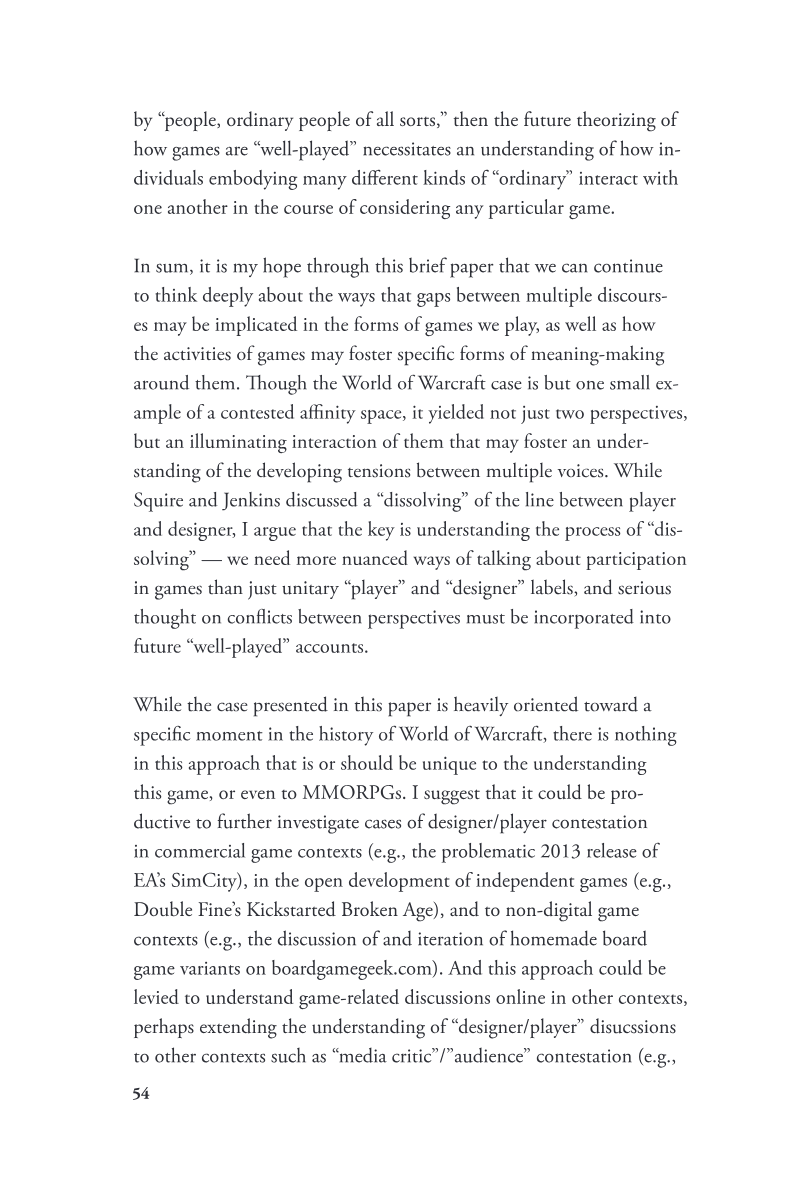
Methodology shift. Game criticism is shifting from aesthetic close-reading toward a multi-methodological framework that treats play as an embodied, collaborative, and reflexive practice.
The discourse surrounding the concept of playing well has evolved from a focus on aesthetic close-reading toward a rigorous, multi-methodological framework for game studies. This shift emphasizes that games are complex, multi-layered systems that cannot be understood through detached observation or reductive, score-based reviews. Instead, the field is moving toward a reflexive model that treats game criticism as an embodied, collaborative practice. By integrating deconstructionist theory, Science and Technology Studies, and sociological analysis, this approach seeks to move beyond commercial evaluation to foster a deeper critical literacy that accounts for the diverse, often contested, ways in which players and developers negotiate meaning.
Central to this analytical shift is the study of affinity spaces, where stakeholders—including designers, critics, and players—engage in ongoing debates over game mechanics and cultural value. Research into these environments reveals that definitions of a well-played game are not static but are instead contingent on competing value systems. For instance, studies of MMORPG forums demonstrate that players frequently rely on industrial, market, and domestic justifications to define success, balancing efficiency-driven performance against community-oriented norms. These findings suggest that the tension between a designer’s intended engineering and a player’s tactical interpretation is a fundamental, productive component of the gaming experience.
Furthermore, the practice of glitching serves as a critical case study in how users subvert and expand upon game architecture. Rather than viewing such activities as purely destructive, contemporary analysis recognizes glitching as a sophisticated form of counterplay that facilitates community building and technical exploration. By deconstructing code and negotiating the boundaries between institutional censure and creative discovery, glitchers contribute to a broader understanding of game design. Ultimately, the field is establishing that a comprehensive understanding of games requires acknowledging the multi-vocal discourse of all participants, moving away from unitary labels toward a nuanced appreciation of the complex, evolving nature of digital play.
ETC Press · 2023

ETC Press · 2023
ETC Press · 2022

ETC Press · 2022
ETC Press · 2022

ETC Press · 2022

ETC Press · 2021
ETC Press · 2021


ETC Press · 2021

ETC Press · 2021
ETC Press · 2021

ETC Press · 2020
DiGRA · 2026