1 free read left. Create a free account for unlimited reading + AI research.
Create free account
Venture capital and other investments for Nordic games developers
Key insights
6 takeaways- 01The Nordic region maintains a consistent deal flow, with Sweden and Finland serving as primary hubs and the industry recording roughly 10 to 12 major exit or acquisition deals annually.
- 02Investors typically target approximately 25 percent equity stakes in early rounds, intentionally avoiding majority control to ensure founders remain incentivized.
- 03Specialized game-focused investors are preferred over generalist firms because they provide industry-specific expertise to evaluate studio potential and actively mitigate risk through board participation.
- 04Venture capital is a long-term partnership focused on building studio sustainability and operational stability, rather than simple project-based funding for individual titles.
- 05Securing venture capital is a rigorous process that typically spans three to six months from the initial discussion to the final payout.
- 06Developers should initiate investor outreach early, even without a finished product, provided they can present a coherent roadmap for future growth.
Ask AI about this video
Transcript
[Music] hey I'm Eric I'm a failed game developer I did III try to tell myself that all the money that I've lost on making games has actually come to good use in in building Nordic game into the largest game developer conference in Europe it just took twice as long as I thought it would but what we eventually realized that so so that so now I try I'm I'm sort of seeing the end of my career thinking about pensions and stuff so I thought I'd try something really hard to to cap it all off and I do it I do try to tell myself that yes I could work with investments in games because I of the amounts of money that I've wasted on trying to make games I can almost make
games I can tell myself on a good morning but I'm I've always been pretty crap at selling them and I think I can recognize those traits in others so who are you or are you looking for in are you the game developers that are looking for investments right now please raise a hand yes and you can it's okay to turn around and look at the other people behind you that are also looking for the same money it's totally ok how good I I hope we're all in the right room together and yes yes I should do I should follow this example here so you know a little bit more about me if a game has Schwartz or elves it's not for me it'll make me fall asleep I don't write read those books anymore and it just bores the hell out of me I have finished the both GTA 5 and mafia
3 and all the downloadable content I hate fortnight the kids kill me immediately I hate it I mean my first console was actually a Nintendo 64 my first game that I got sorta good at was arcade defender but but twin-stick sort of came late to me I've had always had problems with my motor skills and let me stop complaining about that and go on to what might the first slide be is it the big green button possibly new city oh there's an arrow yes yeah it's too it's too designed I didn't even understand what an arrow yes money is being invested in games in the Nordics I think we ripped all these numbers from deal room so they should have credit for this and this is just six months in 2018 and
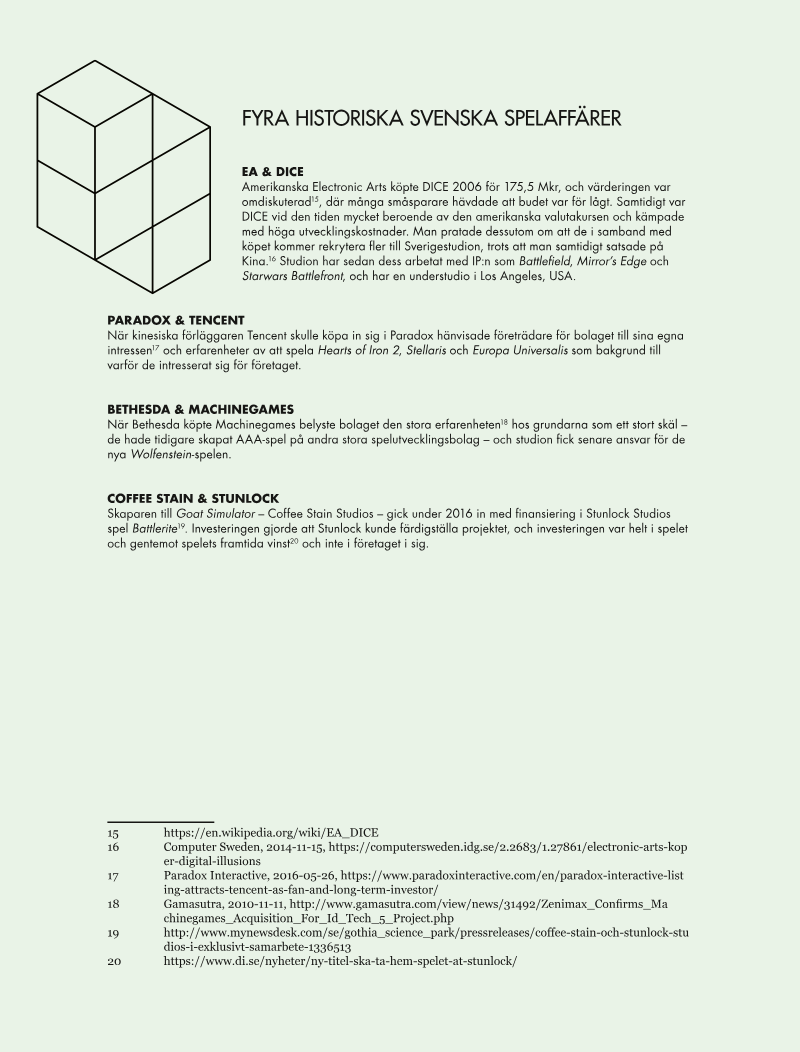
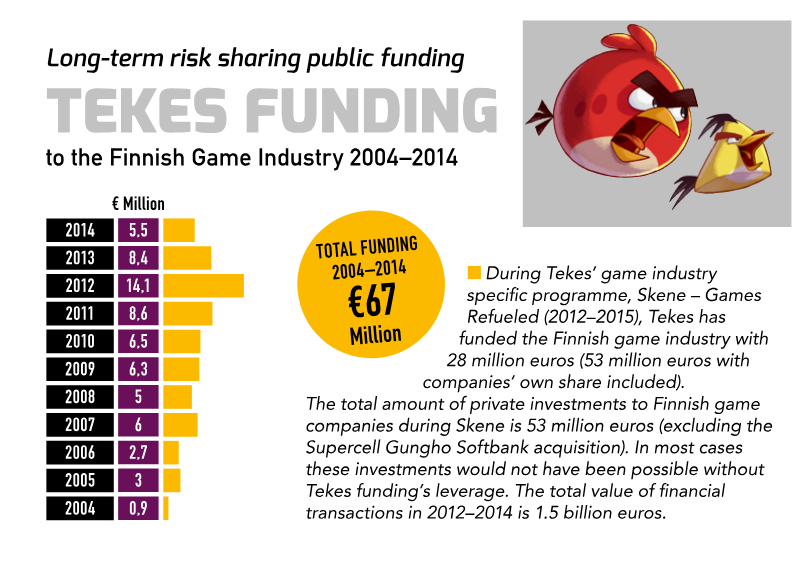
as I think everybody in this room is aware some of our our very very dear old Icelandic friends will pop that into out of the chart for this year and that's only nine months in this is number of investments I don't know how important that is but I'm sort of an I used to collect stamps when I was a kid I like I like stuff like that so yes the numbers of the investments in in Sweden where were a lot larger than in Finland and last year it was pretty even and so for this year it looks pretty even I don't know what that said that's then and but at the end of the line I mean there are several exits area I mean this is a acquisition that's selling your company basically at least the majority of the company and and those have been a little bit unbalanced but but I mean it we're talking 10 to 12
major deals per year here so that that will flip around I don't know yeah well that's about that and now I will talk forever about a little the the small print here I mean you you you either finance your game or your finance your company and you really have to figure out what you're doing if you want venture capital if you think venture capital is something for you you do have to have a more long run to run approach to it I mean there's all sorts of loans I I didn't even list bank loans because in my mind those are I mean by the point you are can you I mean your your house or your apartment is already borrowed to the hilt so you can't offer very much that that will interest a bank as collateral and then they won't lend you any money slightly exaggerating but I
think there's that that's that's that's the approach that's the the rule you can get grants and subsidies they could go towards your game or they could go towards building your company yes a quaint factory silhouette there symbolizes your come company how strange it might seem and these are it's it's also about the stages that you're in if we're looking at equity investment such as IPOs any initial public offerings when you float your stock on a stock exchange big one or a small one then you're selling your stock suddenly to not only institutional investors but also to the general public and that that's sort of yes that's the the crowning achievement of a capitalists being listed on a stock exchange but you if you're is that's your approach and you can see the different approaches in different companies when they got listed is it
about the owners recouping is it about the owners saying well it might not get better than this so I'd better cash in a bit or it is it also but it's also very very good also for the owners if even if they don't really need the money they're not cashing out but putting a value on their stocks I mean I mean the capitalism of Stock Exchange money it's all a game and money is the score how it is it's a very very easy measurement of your achievement whether it's good bad or it suddenly it's it's a very clear measurement of what you've done in other people's eyes at the very least what are they willing to pay to get the piece piece of what you've built and if you're very nice and I handed me a business card at the end if you think there's something interesting in the fine print on these slides just give me a business card and you can get the slides of course and it's very I mean this is this
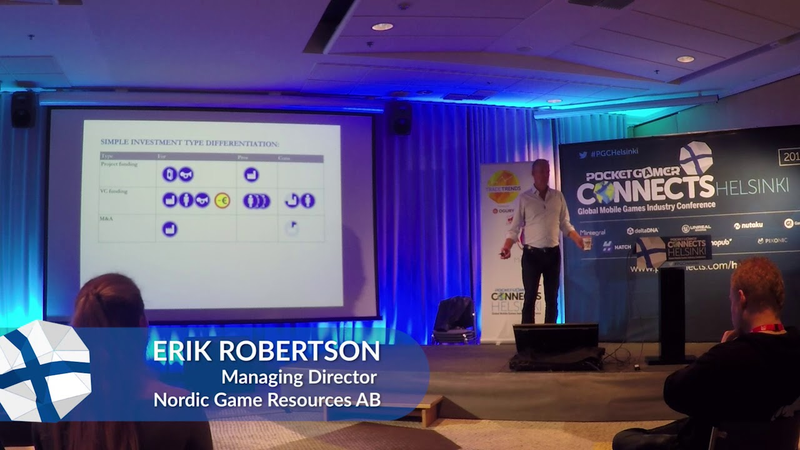
huge span in the numbers are we looking at a thousand euros from from from a friend that that will sort of tide you you and the team over to next month because you can actually pay the rent and electricity and the coke coca-cola that is or it won't go long will it now I'm getting off track here let's look at that differentiation project funding whatever the source that goes toward your game it could go go towards marketing in some cases and in some cases it doesn't that's what that's sort of old horn symbolizes VC funding that goes towards building your company it's totally okay to to give people money these do understand that theses do understand that you need to have a salary to to to
come into work even if you're an owner of you're a founder of the company a VC really wants you to feel good not to lay awake at night and figuring out how to you're going to meet your next mortgage payment if you're gonna lay awake at night it's how to meet me meet your delivery debt for the game that's what the VC wants to see you do and of course you can use it towards marketing what you can never ever do with the VCS money is to pay off old debt however good that will make you feel no no that that's when our VC sees their money draining off into something irrelevant you need to have that solved or pushed into the future the pros of a VC funding is that they actually also bring people theses bring people and contacts and so forth that will help you because they are with you in this they will help you build your company with
skills and and and mentoring you and opening doors for you that's what they're about the con is well you might not like all those people so you better figure out I mean a VC is someone that you might be working together with for 10 years you will have him or her on your board or their or their colleagues or so forth so so so if I mean this is this is up to you how do you judge people but this might be one of the most important people judgments you will ever do bringing the right VCS on board and another con is of course you're giving them you're giving the VC is a substantial part of your company but there is a rule they really don't want more than a quarter of it they want a I mean let that's a rule of thumb if you don't have VC money they'd be happy to take a quarter there if they want more you need to look closely at them because
then they're what are they are they actually these C's because a VC knows that there will be more money needed eventually so other chunks of the company will be need to be sold off to the VC or to other investors VC's like to have other investors on board because that they don't compete for deals that's not how visas look at it they look at sharing risk having another good VC on board that that that antes up half the money and bring their skills and content in the eyes of a real good real pure-play VC that's good they'd like to have other VCS on board eventually your cap table can get a bit messy but your first VC certainly do not want to take too larger chunk of your company again if they are talking about half 4:49 look out there's something fishy mergers and acquisitions yeah well that's when somebody buys you all of your company strategic investors were eventually they
are looking to buy eventually all of your company that's that that's what's in the sites they they're not interested that's by definition you know in having half of your company they might be interested in having you you and your staff still have a slice and and to keep you on board for years to come but they certainly want to have absolute say the last say and full control that is what a merger or acquisition is all about and these are equity investors that are active active VCS most of them active in the Nordics and these are known to you I mean random eqt from Sweden well they're domiciled in Luxembourg that's sort of that sort of shows their pros at this game when you're domiciled in a tax haven or either initial capital they're actually private company and even London Venture
Partners they're not a VC company they're they're a gang of of rich friends basically slightly exaggerating Nordic game ventures that's that's who me and my friends are and we're starting out and trying to fear I've been I've been an LP a limited partner the one who is on board for a couple of entry funds for Lea four years trying to learn sort of guerilla style how this guy works North's own play ventures are coming domiciled in the Singapore but you'll have Hari here as collateral in Helsinki I believe has been top ventures that's the fund or a couple of those funds I've been involved in they are they are betting not on only on games I mean they have they have small giant and they sort of lucked into that so I don't expect to see very much more game investments from spin top actually and then we of course have family and Cecil and and also Sunstone from Denmark
and I mean it's widely varying I mean we're talking 30 million down to 50k euros how does that make sense well sort of depends on your situation you should certainly not go talking to the to the smaller guys us who invest quite not very big amounts if you're really looking for the big numbers now however the the smaller actors could be door openers I mean we will not be able to provide a good service for the Nordic game developers that we intend to finance if we don't have global friends that can can join in the next round where there's another zero or two at the end so if you feel that you are not not playing in that league I think you should speak to us you should speak to Sisu of course and you should eventually speak to play ventures that could be
those door openers for you depending on their mindset investors they want to buy you or at least part of you if there are strategic investors if there are publishers they want all of your game or at least all the rights and they might want to be all me I want all of your company you need to figure out what what what is it that you want how why are you willing to part with your company that's what we're talking about here I'm not talking very much about reject funding there are other other opportunities for that what why are you willing to share a part of your company and it certainly if we're talking venture capital investment it has to be about more than the money as silly as it sounds it's always about the money yes but what else are they bringing to the table but that said all investors are
really looking for good stuff to invest in and the good thing about being specialized and the focused on the game sector as we are the good thing is that we actually don't have all that much competition from from the big guys and girls with a big funds because they don't really know how their games industry works yes they might might have a captive partner on board recently that come out of the games industry but it's not really in their blood they are more much more they're much more more comfortable betting on some some large marketing play for a consumer website that will append some business or another so but but they they I mean they do want to invest in games I mean every Nordic aim ventures we will invest in games the game studios not in game sorry in game studios we will invest in games Tech and we might consider investing in game services if we can really be
convinced that it could scale and we will only invest in the Nordics so and that's for for convenience it's for legal reasons it's for cultural reasons it's for a lot of of practical reasons when we're operating on on the scale that we do and yes you will find funding some of you in this room but most of you you won't get it because I mean competition is pretty fierce and investors want to be yes investors investors take risks but then having it taken a risk they do their best to minimize it afterwards that's that's sort of what entrepreneurship and risk-taking is all about so I'm sorry if they don't need all of you but all of you are certainly welcome and come to come and talk to us and I got eight seconds I got seven
seconds I got five extra seconds for questions I think yeah surprise to you there didn't I fire on you there team do the dance can we get those questions always trying to go we'll say the round applause that's the questions is it working yes it's working what is this good stage to come ask for investment from an investor do you invest in teams or do you have to have a prototype ready I mean it's I mean it it's teams teams teams teams track record teams how they work together but I mean it's always very good to see a product again a venture capitalist does not invest in your game but of course we were extremely interests in the game but you must be ready to explain at least to the venture capitalist what your third game is going to be about because they are investing
in your company they want to see you build a company and that so you need to have have you need to have a fair idea if it's a prototype or whatever you need to have a fair idea what's also coming the reasoning behind why you are moving maybe if you're staying in one genre on one platform or if you're doing something else you need to have you need to have a clear strategic vision for your company and I think I I mean it's it's like anything else in life start out too early and then keep going so I mean I mean I would say that just as a rule of thumb or something a venture capital investment takes absolute minimum three months I would say six months it is from from the beginning of the discussion to the actual deal sign and payout that's half a year so I would say that you should you should and I mean it takes a
lot of time opening up contacts and so forth so I don't think you should be too afraid of starting too early I mean and and venture capital it they will and there are nice people there will always say well come back when you have a little more to show and some of them will will actually mean that thank you [Music]
Summary
The investment landscape for Nordic game developers is characterized by a strategic distinction between project-based funding and equity-based venture capital. The primary thesis for developers seeking capital is that venture investment is a long-term partnership rather than a simple cash injection. Investors prioritize the sustainability of the studio, the strength and track record of the team, and a clear, long-term strategic vision that extends beyond a single title. While project funding may cover development or marketing costs, venture capital is intended to build the company itself, providing mentorship, industry contacts, and operational stability.
Data from 2018 indicates a robust investment environment in the Nordic region, with Sweden and Finland emerging as key hubs for deal flow. The industry sees approximately 10 to 12 major exit or acquisition deals annually. Investors typically look for equity stakes, often aiming for around 25 percent ownership, and generally avoid taking majority control in early rounds to ensure founders remain incentivized. A critical finding is that venture capitalists are risk-averse by nature; once they commit capital, they actively work to minimize risk through board participation and strategic guidance.
The process of securing venture capital is rigorous, often requiring three to six months from initial discussion to final payout. Developers are advised to approach investors early, even if they lack a finished product, provided they can demonstrate a coherent roadmap for future projects. While competition for funding is fierce, specialized game-focused investors offer a distinct advantage over generalist firms, as they possess the industry-specific expertise necessary to evaluate studio potential. Ultimately, the decision to seek investment should be driven by a desire for growth and professional support, as the relationship between a founder and a venture capitalist is a long-term commitment that fundamentally alters the company’s governance and ownership structure.















Comments