1 free read left. Create a free account for unlimited reading + AI research.
Create free accountWhitepaper European Conference on Games Based Learning (ECGBL)
1 free read left. Create a free account for unlimited reading + AI research.
Create free accountWhitepaperEuropean Conference on Games Based Learning (ECGBL)
The Red Circle was built in Unity and moves from shape-based puzzles to abstract functions. The design draws on concreteness fading theory.
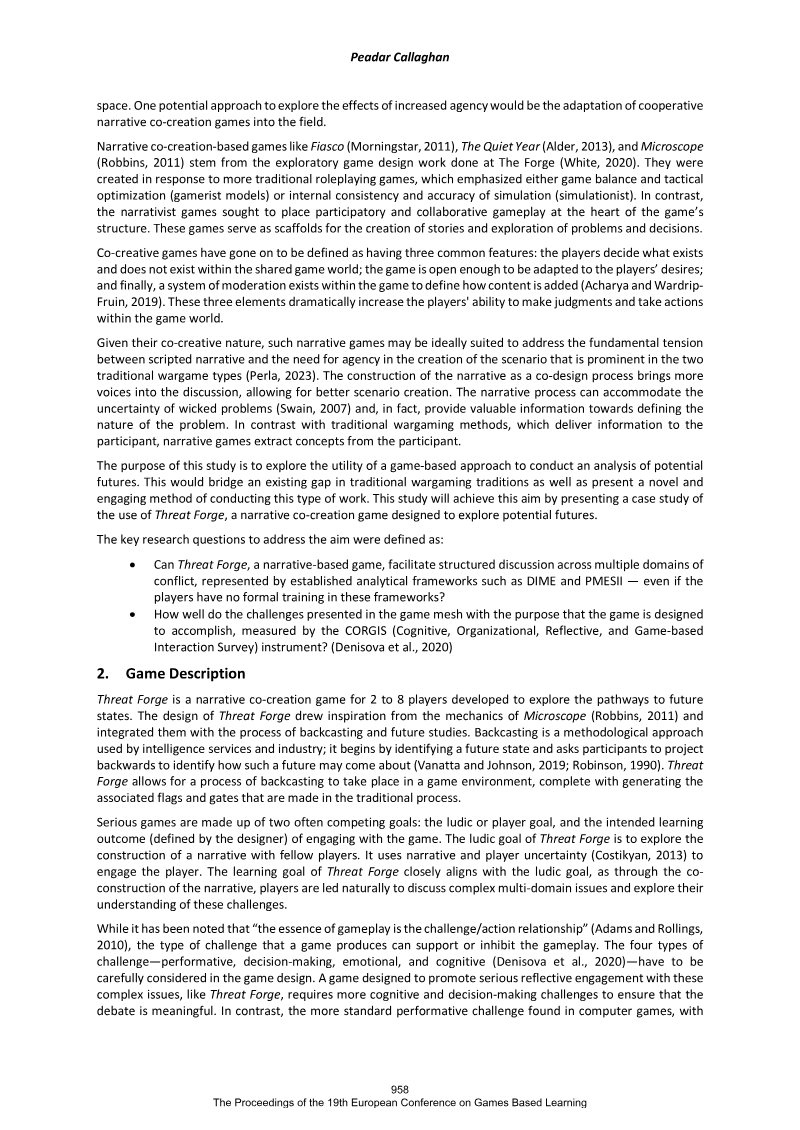
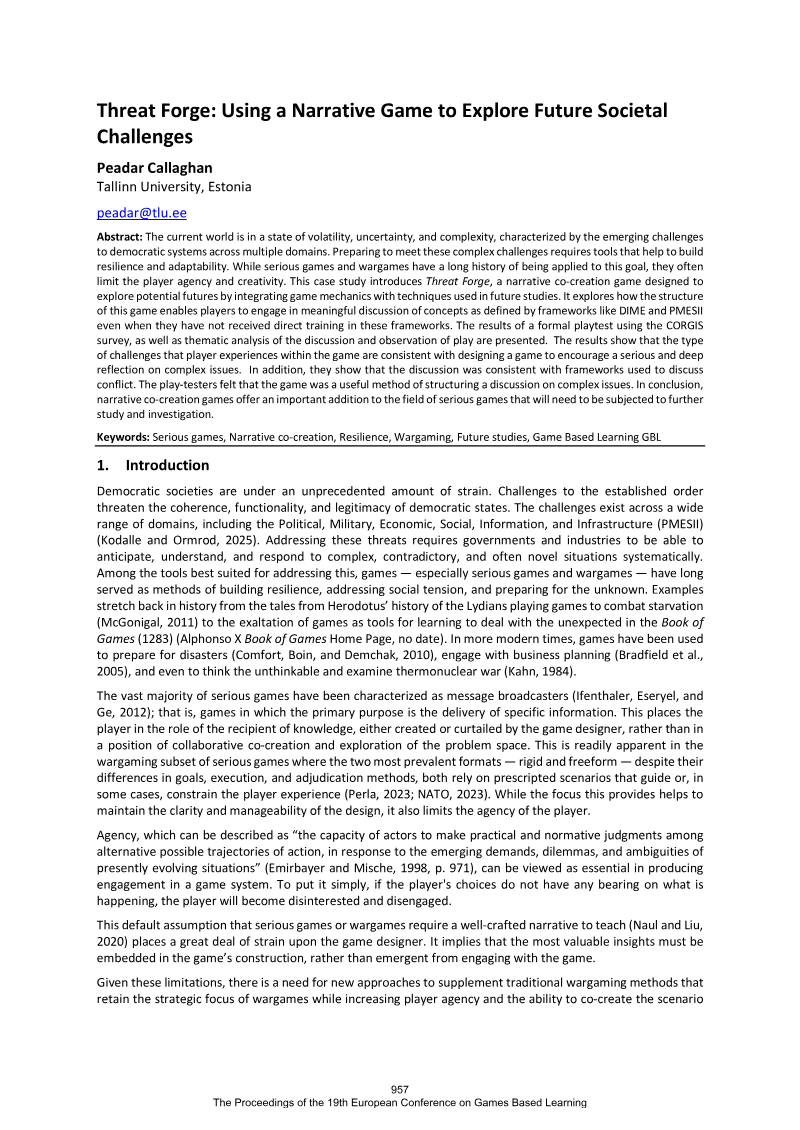
This paper examines whether a fantasy role-playing game can teach higher-level mathematics, specifically differentiation at the KS5 level, while preserving entertainment value. The author developed "The Red Circle," an RPG built in Unity using a design-based research process, in which learning content is introduced through a quest-driven storyline and gradually moves from shape-based puzzles to abstract functions based on concreteness fading theory. The study's primary focus is qualitative, drawing on questionnaires, observations, and interviews with 148 participants aged 18 to 60, most of whom were University of Sussex students with varied levels of prior mathematics knowledge and gaming experience.
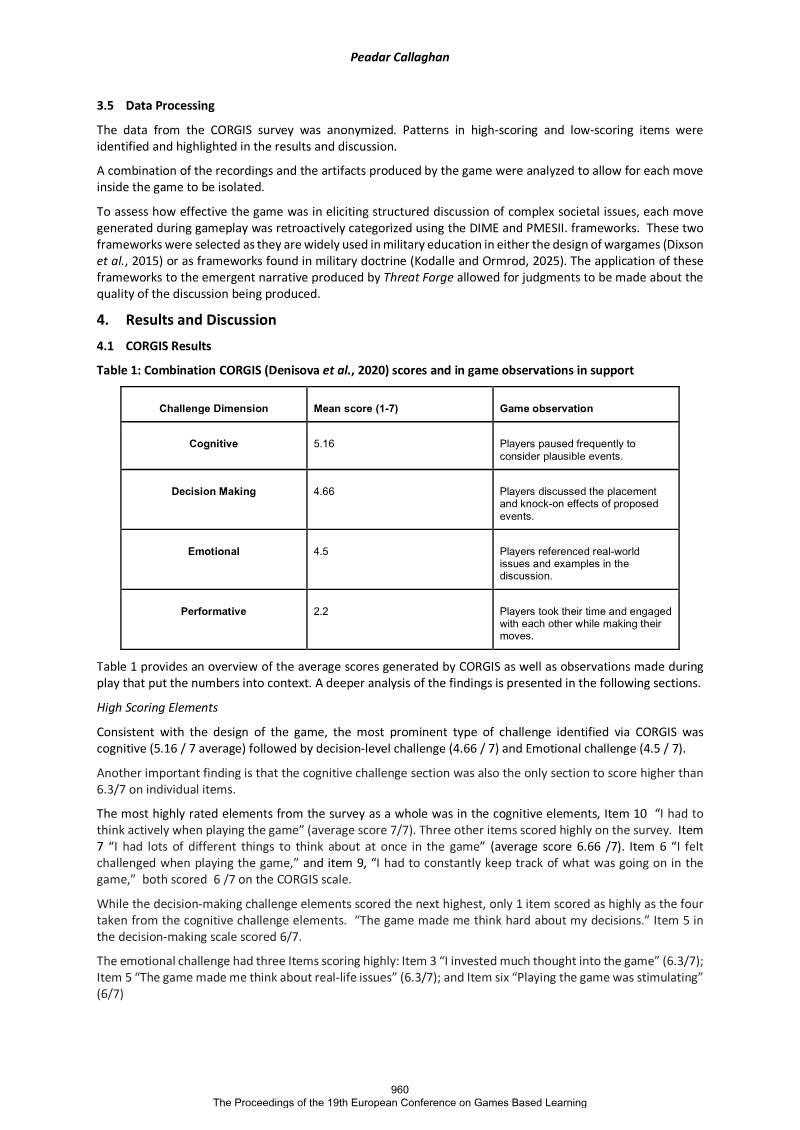
Participants widely reported that the game was enjoyable and useful for learning. Feedback praised the immersive visuals, storyline, humour, and music, as well as the way mathematical tasks were woven into quests without interrupting the flow of play. Low-prior-knowledge learners were especially motivated, and some said they were willing to try games for the first time. Quantitative results cited in the paper show that mean scores rose from 49.17% before play to 87.63% afterward, with the largest gains among participants with little prior mathematics background, while high-knowledge participants did not experience any disruption.
The qualitative findings also surfaced several limitations. Some experienced players found the shape-based introduction confusing, a few encountered minor bugs and navigation difficulties, and many wanted more content, save functionality, and more challenging combat. Gameplay averaged 40 to 60 minutes, and collaborative play among participants appeared to heighten immersion. The author acknowledges constraints of a small development team and a PhD-stage timeline, and outlines plans for controlled comparisons with traditional instruction, expanded mathematical content, and eventually a multiplayer educational MMORPG.
Each row is a game or company this document names, each column a document, oldest first. A mark means that document names it. Select a row to see those documents.
European Conference on Games Based Learning (ECGBL) · 2025
European Conference on Games Based Learning (ECGBL) · 2025
European Conference on Games Based Learning (ECGBL) · 2025
European Conference on Games Based Learning (ECGBL) · 2025
European Conference on Games Based Learning (ECGBL) · 2025
European Conference on Games Based Learning (ECGBL) · 2025
European Conference on Games Based Learning (ECGBL) · 2025
European Conference on Games Based Learning (ECGBL) · 2025
European Conference on Games Based Learning (ECGBL) · 2025
European Conference on Games Based Learning (ECGBL) · 2025
European Conference on Games Based Learning (ECGBL) · 2025
European Conference on Games Based Learning (ECGBL) · 2025
DiGRA · 2026