1 free read left. Create a free account for unlimited reading + AI research.
Create free accountWhitepaper DiGRA
1 free read left. Create a free account for unlimited reading + AI research.
Create free accountWhitepaperDiGRA
The paper treats griefing in Taiwan's MMORPGs as more than individual antisocial behavior.
This study examines the "white-eyed" phenomenon in Taiwan's massively multiplayer online role-playing games (MMORPGs), where "griefers" are players who disrupt others' gameplay for enjoyment, and the concept carries fluid, ambiguous meanings. The authors argue that grief play must be understood not only as individual antisocial behavior but as a collective social process involving the construction of deviance, normative power, and "othering." They identify two types of white-eyed players: an explicit, self-aware group that organizes into griefer pledges and rebels against game rules, and an implicit majority who grief unknowingly and deflect the stigma onto others to ease anxieties.
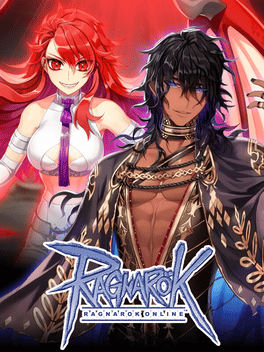
The research draws on 20 in-depth individual interviews and 9 focus group interviews with 53 participants aged 11 to 54, focused on the games Lineage and Ragnarok Online. Supplementary data came from official game rules, griefer clan websites, discussion forums such as Bahamut, Gamebase, and PTT, and participant observation. The findings show that grief behavior is defined inconsistently: players disagree about what counts as griefing, often accuse others of the same acts they commit, and rarely reach consensus. Game management seldom intervenes, and ordinary players have limited means of retaliation beyond cursing or avoidance.
The central explanatory claim is that the griefer stigma primarily functions to express anxiety about cross-age co-playing. Because online interfaces conceal the age and sex of other players, adults are unsettled by sharing games with younger participants, and junior high school students emerge as the imagined griefers. The authors conclude that the stigma serves as a contested claim over who legitimately owns online gaming, with the label "little white-eyed" revealing a collective effort to redefine the boundaries of legitimate play in a still-unnormalized virtual society.
Each row is a game or company this document names, each column a document, oldest first. A mark means that document names it. Select a row to see those documents.
DiGRA · 2019
DiGRA · 2019
DiGRA · 2019
DiGRA · 2019
DiGRA · 2019
DiGRA · 2019
DiGRA · 2019
DiGRA · 2019
DiGRA · 2019
DiGRA · 2019
DiGRA · 2019
DiGRA · 2019
NEXON Co. · 2017