1 free read left. Create a free account for unlimited reading + AI research.
Create free accountWhitepaper DiGRA
1 free read left. Create a free account for unlimited reading + AI research.
Create free accountWhitepaperDiGRA
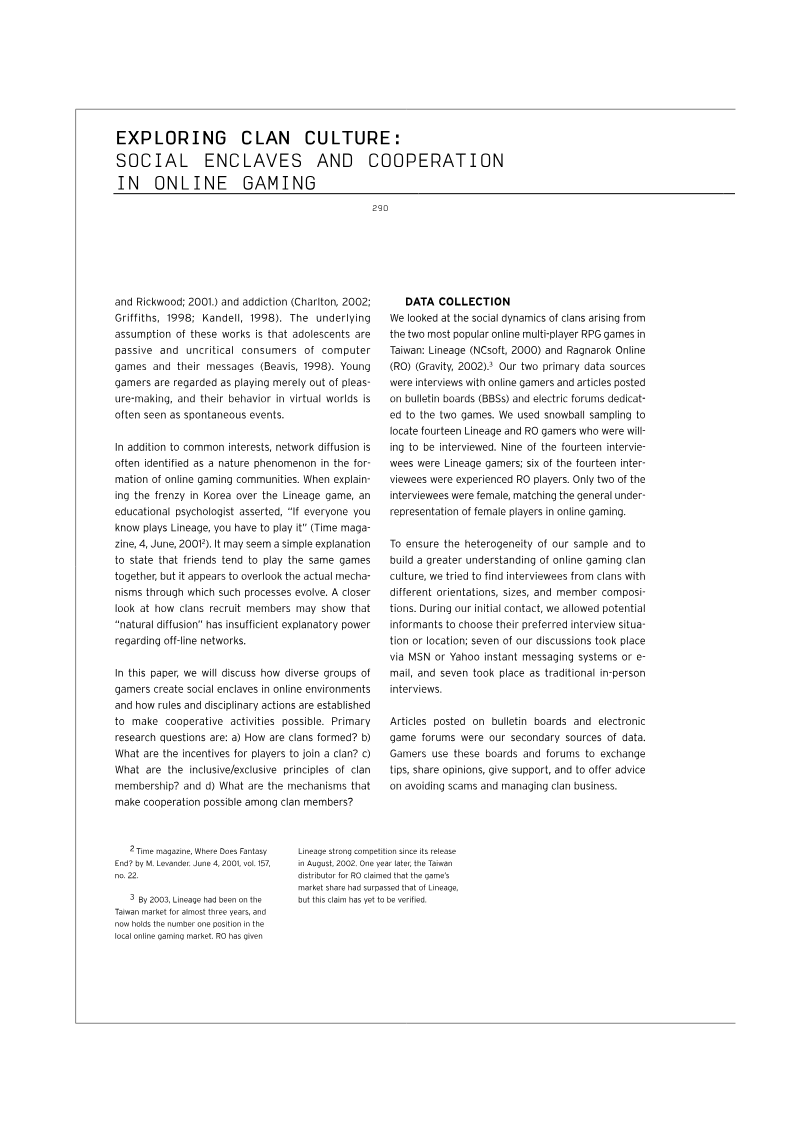
The paper examines tips shared among console and online role-playing game players in Taiwan.
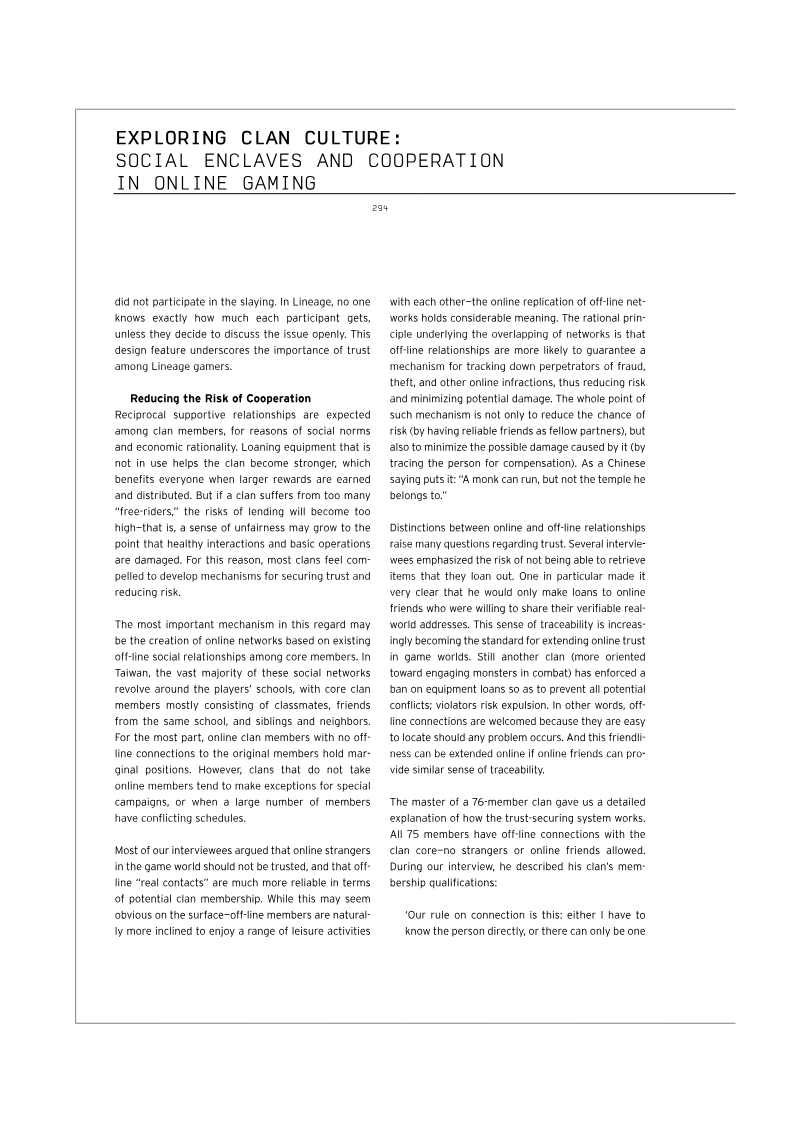
Game tips shared among console and online role-playing game players in Taiwan are examined here as a form of gift economy, with the study arguing that tip exchanges are driven less by pure altruism or narrow reciprocity and more by social approval, networking, and local linguistic and social contexts. Drawing on interviews with 15 gamers, an online survey of 861 respondents recruited through Taiwan's largest gaming website, and observation of bulletin board postings, the authors identify four categories of tip production: complete walkthroughs, need-based answers, secret treasure maps, and drama-play translation guides. Their findings suggest that tip contributors seek a "stage" for demonstrating achievement, particularly console players whose friends often play different games and therefore cannot acknowledge their accomplishments.
The survey data indicate that RPGs are the dominant genre, with 67.6% of respondents naming them their favorite format, and that experienced players are less likely to want an audience while relying more heavily on magazines and advertisements than on friends when choosing games. Language also shapes tip culture: because console RPGs released in Taiwan lacked Chinese versions, players depended on Japanese or English editions, which created demand for translation guides and fostered distinct sharing practices. Among online players, by contrast, tips largely reinforce existing guild relationships, and treasure maps serve as a means of demonstrating achievement and building ties with others.
The study also examines the effects of tip culture on game play and industry practice. Companies publish official guides that function largely as collectibles, while bonus content and staged tip release are used to sustain player engagement, and contributors often temper their output to protect their reputations. The authors conclude that tip cultures overlap with fan communities and cannot be reduced to simple altruism or social exchange, and that their development is shaped by factors such as game speed, regional availability, and the desire for recognition.
DiGRA · 2018
DiGRA · 2018
DiGRA · 2018
DiGRA · 2018
DiGRA · 2018
DiGRA · 2018
DiGRA · 2018
DiGRA · 2018
DiGRA · 2018
DiGRA · 2018
DiGRA · 2018
DiGRA · 2018
DiGRA · 2007