1 free read left. Create a free account for unlimited reading + AI research.
Create free accountArticle Naavik
1 free read left. Create a free account for unlimited reading + AI research.
Create free accountArticleNaavik
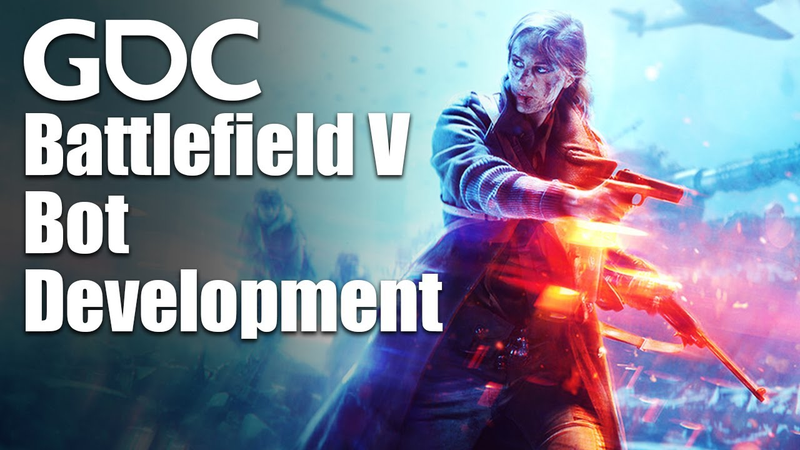
EA utilizes AI for 85% of its testing. Square Enix targets 70% automation of QA and debugging by late 2027.
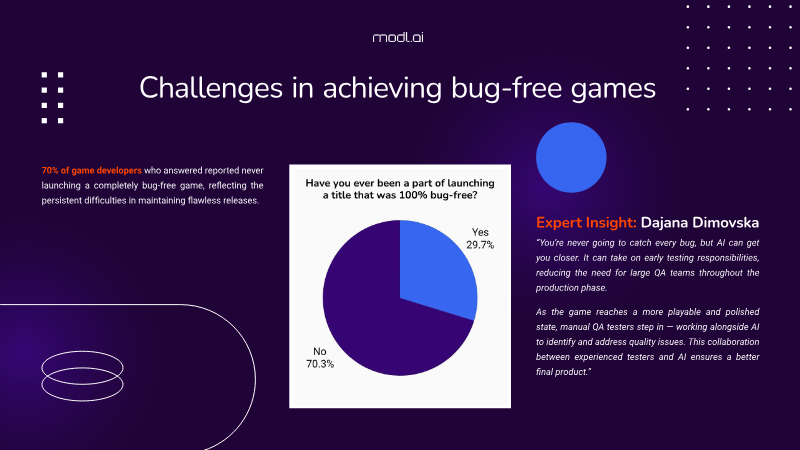
The gaming industry is increasingly turning to artificial intelligence to address the growing complexity of software testing and the rising costs associated with quality assurance. As game development scales, traditional manual testing methods struggle to keep pace, leading to a reliance on outsourced services that now represent a billion-dollar market segment. The primary thesis is that AI-enabled QA infrastructure allows studios to scale testing efforts without a linear increase in costs, facilitating faster iteration cycles and more polished releases. Currently, 94% of developers utilize some form of automated testing, with major industry players like EA and Square Enix aiming to automate between 70% and 85% of their QA and debugging workflows by 2027.
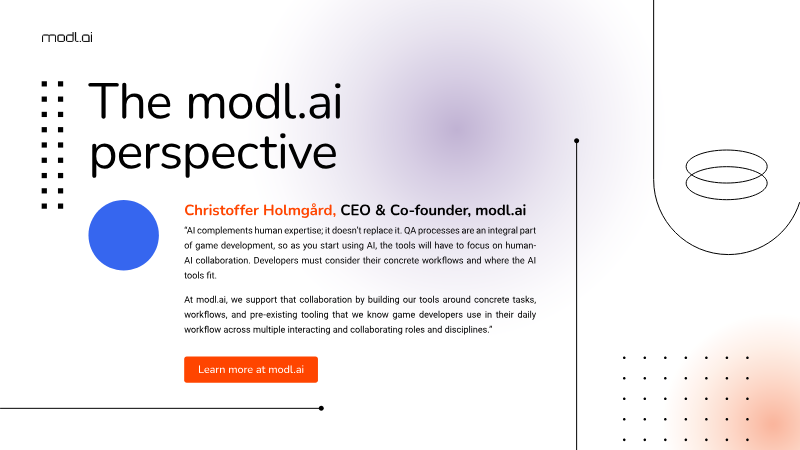
The current maturity of AI in QA is characterized by a shift toward black-box testing, which avoids deep, maintenance-heavy code integration in favor of AI agents that simulate human behavior through computer vision and reinforcement learning. While AAA 3D open-world titles remain technically challenging, AI is already effectively handling 30% to 50% of repetitive, pattern-based tasks such as bug triage, log analysis, and regression testing. Early adopters report significant operational improvements, including up to 30% reductions in QA costs and a 5x increase in testing speed.
Despite these advancements, the industry faces a significant "readiness gap," with only 18% of developers feeling fully prepared to implement these tools. The ecosystem remains fragmented, with startups having raised approximately $35.8 million to date. Future growth is expected to hinge on advancements in perception models and world models, which will enable AI to better navigate complex 3D environments. Ultimately, the successful integration of AI into QA is viewed not merely as a technical upgrade, but as a necessary organizational overhaul to improve governance and feedback loops across the entire game production pipeline.
The games and companies this document names on the inner ring, other documents about them on the outer one. Select a cover to see it up close and open it in a new tab; drag to move, pinch or Ctrl + scroll to zoom.

Naavik · 2026
Deconstructor of Fun · 2025