Quality Assurance reports and market data
133 game industry reports, presentations and talks about quality assurance from writers such as Game Developers Conference, PocketGamer.biz and Extra Credits, newest from 2026. Every document has a summary and key insights with the page they come from, and 58 charts and tables are extracted as data.
Key figures
While 94% of studios currently utilize non-AI automation, there is a near-unanimous consensus (94%) that AI integration is essential for the future of quality assurance.
modl.ai, 2025 · The State of Games QA, p. 8
AI adoption has reached over 60 percent, fostering deep skepticism and heightened job insecurity, particularly among creative and quality assurance roles.
InvestGame · Big Games Industry Employment Survey 2025: Salaries, Compensation Trends and State of the Games Sector in Europe, p. 35
Documents

How Behavioral AI Helps Fight Cheating
The gaming industry faces a significant security crisis as the professionalized cheat-as-a-service economy reaches an estimated valuation of $5 billion to $8 billion.
- Anti-cheat technology is shifting from software-based detection to behavioral analysis, which monitors player inputs to identify anomalies regardless of the underlying hardware or game file modifications.
- Behavioral analysis is increasingly necessary to combat 'cheat-as-a-service' economies and hardware-assisted cheats, such as DMA (Direct Memory Access) cards and second-PC setups, which bypass traditional OS-level security.
- Studios should integrate anti-cheat strategies from 'day zero' of development, as cheating directly impacts player retention, game economy stability, and the overall reputation of the title.

Let's Review Your Games — Ep. 060
The provided content features a game development critique session focused on evaluating indie titles to provide constructive feedback before their official releases.
- To prevent players from bypassing level content in first-person shooters, developers should implement trigger-based 'lockdown' systems that force players to defeat all enemies in a zone before progressing.
- Game feel is prioritized by ensuring combat is highly reactive, with instantaneous feedback and clear telegraphing of actions, even if graphics and audio quality are suboptimal.
- Destructible environmental objects should provide clear visual and audio cues, such as flashing white or breaking animations, to communicate to the player that an object is interactive.
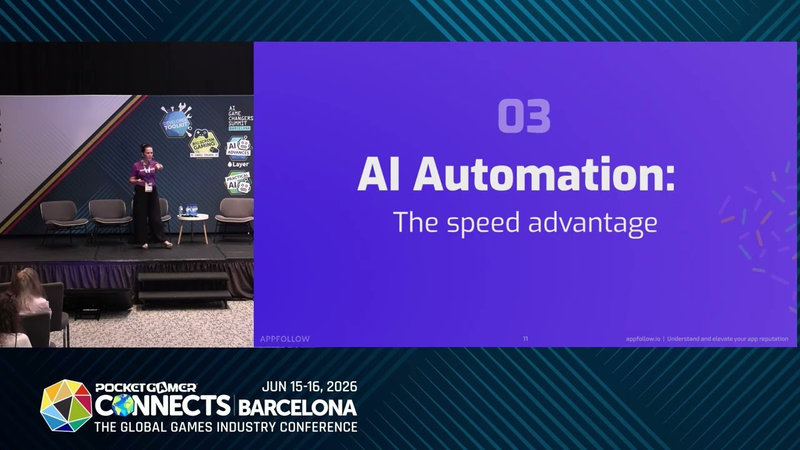
Session: From Reviews to Ratings: Scaling Player Experience with AI Automation - J. Rodríguez.
The primary objective of this analysis is to demonstrate how game developers can leverage AI automation to scale player experience management, specifically through the systematic handling of user reviews and ratings.
- Consistent engagement with user reviews creates a 'reply effect' that directly correlates with higher star ratings on the Google Play and Apple App Stores.
- Top-performing gaming titles maintain a minimum 30% response rate to user feedback, whereas nearly one-third of all gaming apps fail to reply to any reviews.
- AI-driven automation enables developers to respond to player feedback 12 times faster than manual processes while providing 24/7 coverage across multiple languages.
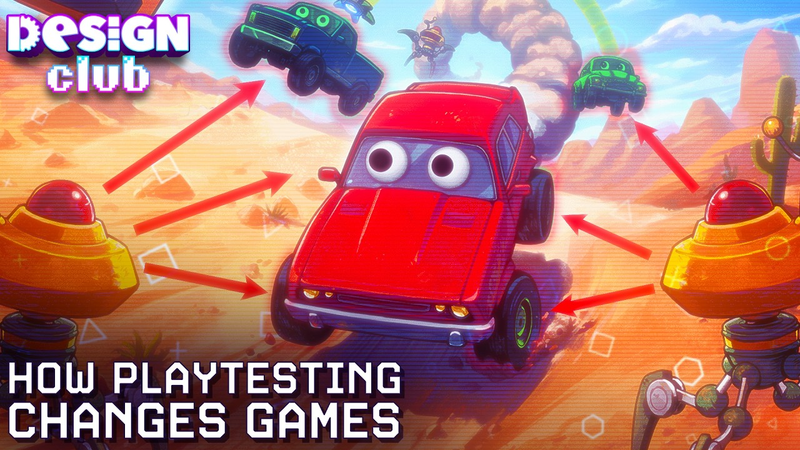
How Playtesting Changes Games | Design Club
The development of the game Without a Hitch demonstrates that successful game design relies on a rigorous, iterative playtesting strategy that prioritizes player agency and emergent behavior over rigid adherence to initial design concepts.
- Successful game design requires an iterative playtesting strategy that prioritizes player agency and emergent behavior over rigid adherence to initial design concepts.
- Developers should be prepared to discard non-essential work, regardless of the effort already invested, to maintain a cohesive and engaging final product.
- Unconventional player strategies, such as wall-climbing or complex jumping, should be embraced and transformed into core mechanics rather than treated as bugs.

The story of Samson: The buggy GTA-style game that just had to launch this month
The global gaming industry is currently navigating a period of significant structural recalibration, characterized by shifting subscription models and volatile market performance.
- The gaming industry is undergoing structural recalibration, evidenced by a 5% increase in U.S. consumer spending and a 69% surge in U.K. hardware sales driven by anticipation for the Nintendo Switch 2.
- Major industry players are adjusting strategies, such as Xbox reducing Game Pass pricing by 23% and delaying the inclusion of flagship titles like Call of Duty.
- The open-world title Samson highlights the risks of independent production, as Liquid Swords was forced to pivot to a self-publishing model in 2025 due to a lack of publisher funding.

How Game Devs Use AI Today
Artificial intelligence is currently transforming the global game development landscape by prioritizing operational efficiency, cost reduction, and workflow optimization.
- Game studios are increasingly using AI to optimize Live Ops, such as the case where a studio reduced the team required to maintain 'Sunrise Village' from approximately 25 people to two by implementing AI-assisted content production.
- Large publishers like Nexon and Embark are leveraging AI to reduce internal 'blindness' by integrating company-specific data into models, aiming to improve decision-making and development efficiency.
- AI is currently being deployed across the entire game development pipeline, starting with pre-production ideation at companies like Capcom and extending to rapid prototyping that allows teams to test new game modes in hours rather than weeks.

Making Friendslop Work | Design Club
Effective game design relies on a rigorous, iterative process that bridges the gap between developer intent and the unpredictable nature of player behavior.
- Developers should explicitly signal when a player has completed a collection task, as providing a clear 'done' state prevents frustration and allows players to mentally move on to new objectives.
- Streaming playtests provides developers with invaluable, unfiltered feedback, though it requires them to distinguish between intentional design choices and accidental bugs revealed by player behavior.
- Iterative development cycles, such as the one used by Codename Entertainment between January 29th and February 26th, allow for rapid implementation of features like loot drops from destroyed enemies, which significantly improves gameplay loops.

Speed Panel: Next-Gen Game Security: How To Protect Your Players In Games.
The modern gaming industry is undergoing a fundamental shift in how it approaches player security, moving away from reactive, defensive postures toward proactive, offensive strategies integrated directly into the development lifecycle.
- Game studios are shifting from reactive security to proactive, offensive strategies by integrating behavioral analysis and protection mechanisms directly into the early stages of the development lifecycle.
- Security is now viewed as a competitive advantage that directly correlates with improved player retention and long-term financial stability, rather than just an operational cost.
- The industry is increasingly utilizing AI-driven detection tools to identify and mitigate toxicity, fraud, and cheating in real time to maintain competitive integrity.

How AI Continues to Reshape Game QA
The integration of generative AI and vision-language models is fundamentally transforming game quality assurance by shifting the industry toward black-box testing methodologies.
- Game QA is shifting from code-integrated systems to 'black-box' testing, where AI agents use computer vision to observe and interact with games without requiring deep engine-level software integration.
- Modern multimodal AI models, such as Gemini and various open-source alternatives, allow agents to perform visual reasoning by processing game images and text, enabling them to navigate and test games similarly to human players.
- The primary technical challenge in current AI QA is balancing reasoning quality with operational speed and cost, as high-latency cloud-based models often require integration with faster, locally-run models to maintain production-ready workflows.

Making Your Game 10X Better Is Easier Than You Think...
The primary thesis of this analysis is that game feel—often referred to as "juice"—is the most critical factor in elevating a game's quality, frequently outweighing the importance of core mechanics or complex programming.
- Game feel and 'juice' are primarily tools for emotional manipulation, designed to dictate how a player should feel at any given moment in the game loop.
- Using non-game software like Adobe Premiere allows developers to rapidly prototype and iterate on sound design and feedback loops without the time-consuming overhead of coding in engines like Unity or Unreal.
- Effective sound design for combat requires layering multiple audio elements, such as combining a quick impact sound with a longer 'tail' or 'fleshy' effect to provide clear player feedback.
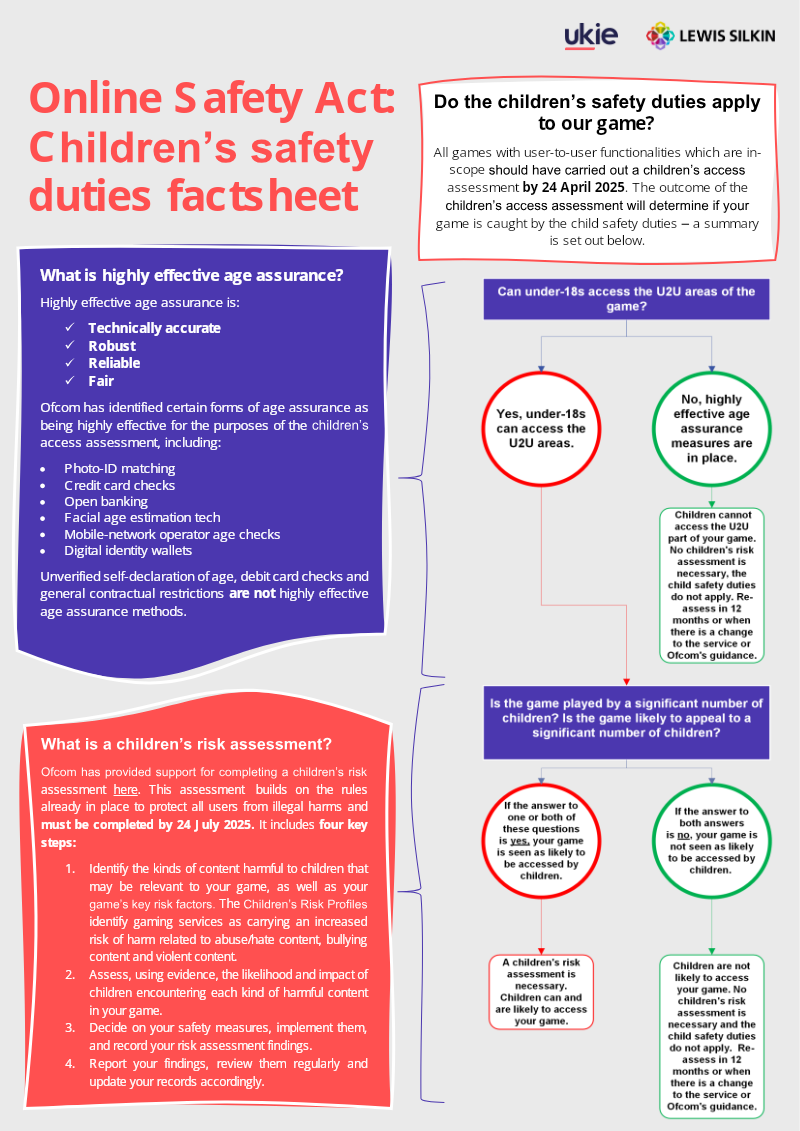
Online Safety Act: Children's Safety Duties Factsheet
The Online Safety Act establishes a regulatory framework requiring gaming services with user-to-user (U2U) functionalities to assess and mitigate risks posed to children in the United Kingdom.
- Gaming services with user-to-user features must complete a comprehensive children’s risk assessment by July 24, 2025, if their platform is likely to be accessed by a significant number of minors.
- Ofcom requires the implementation of highly effective age assurance methods, specifically citing photo-ID matching, facial age estimation, or digital identity wallets as the standard.
- Basic age verification methods, such as unverified self-declaration or simple debit card checks, are explicitly excluded from meeting the regulatory compliance standard.
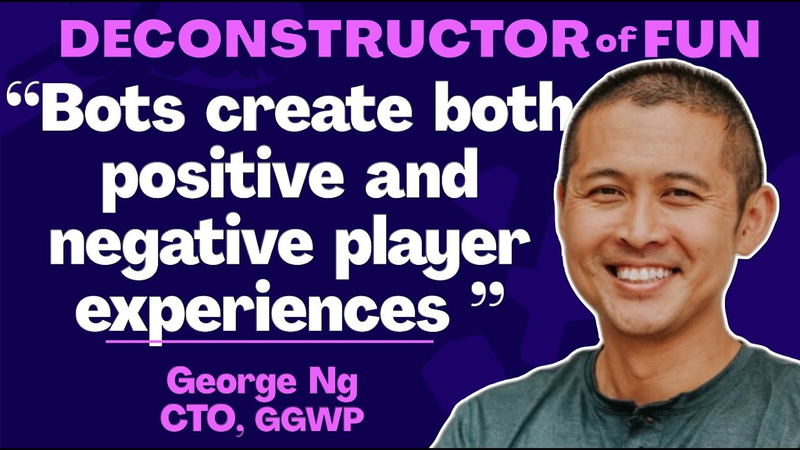
Bots in Gaming: The Good, The Bad, and The Future with GGWP's George Ng
The integration of bots in gaming represents a complex, evolving landscape that balances player experience, game design, and security.
- Bot impact is defined by origin: developer-created bots enhance onboarding and immersion, while player-created bots drive anti-competitive behavior, toxicity, and player churn.
- The industry faces a resource-intensive 'cat-and-mouse' game where studios must balance the high cost of sophisticated anomaly detection models against the scale of their player base.
- Cheating trends are regionally distinct, with North American markets primarily seeing competitive-focused exploits like aimbots and boosting, while Asian markets are dominated by gold farming and real-money trading.