1 free read left. Create a free account for unlimited reading + AI research.
Create free account
Believer’s $55M Series A / Exits in Gaming / Gen AI Playtesting Workflow
Key insights
6 takeaways- 01Studios are increasingly using generative AI to automate labor-intensive tasks like playtesting and quality assurance, converting verbal feedback into actionable project management tickets.
- 02Modernizing legacy game titles remains a significant technical challenge, as engine migrations frequently disrupt established physics and competitive mechanics.
- 03The gaming industry is shifting its business model away from quarterly performance metrics toward building games as lifestyle platforms that foster enduring audience engagement.
- 04Believer secured $55 million in Series A funding to prioritize the development of expansive, long-term transmedia IP over standalone titles.
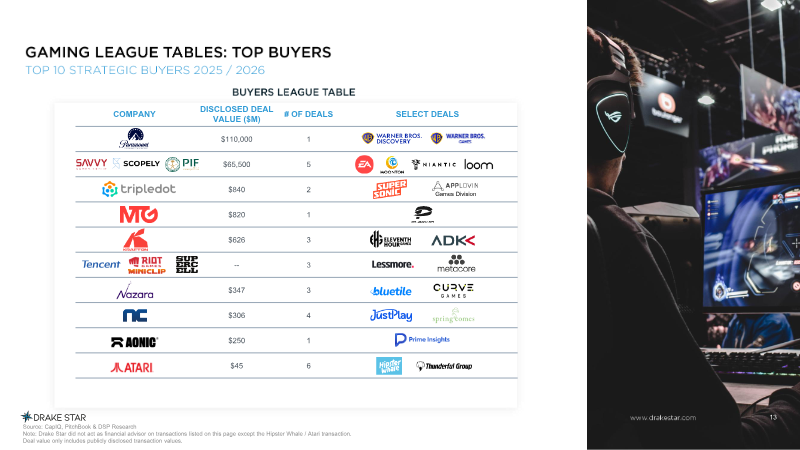
- 05The collapse of serial acquisition models and tightening economic conditions are forcing venture investors to move away from short-term gains toward multi-year, large-scale IP investments.
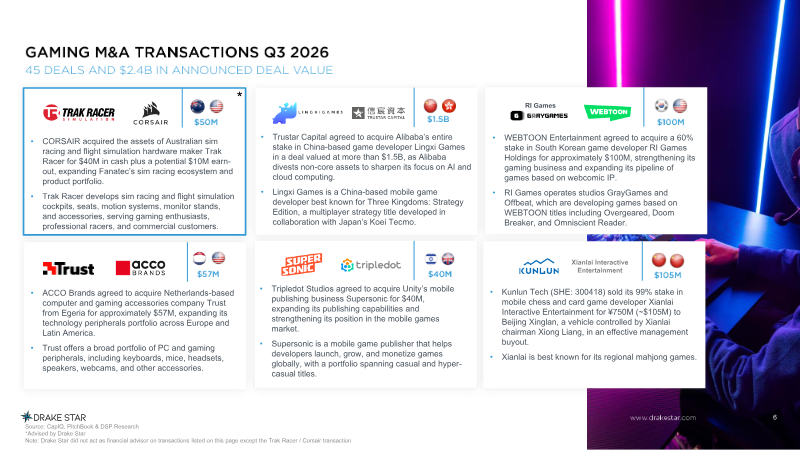
- 06M&A exit valuations are currently volatile and lack standardized metrics, relying instead on a complex mix of EBITDA multiples, recurring revenue potential, and strategic competitive pressures.
Ask AI about this video
Transcript
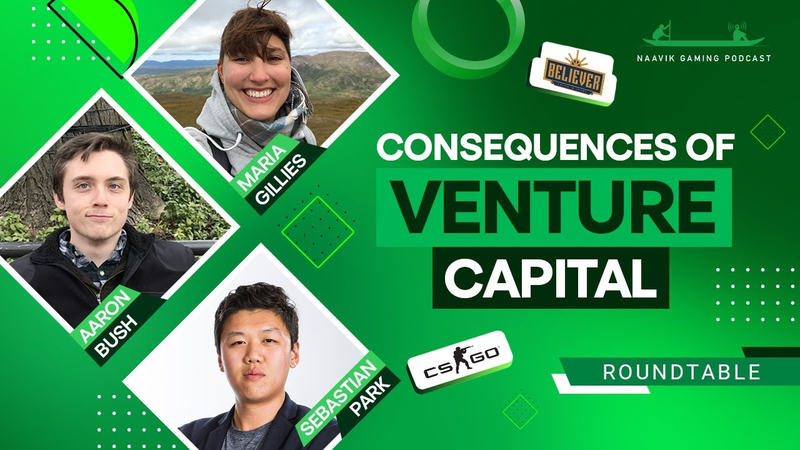
foreign [Music] gaming podcast where it is our mission to explore the business and future of video games we bring together the industry's brightest Builders investors and thinkers to keep a full sun current events dissect emerging Trends and games share Lessons Learned and have a great time this podcast is also part of novik's growing ecosystem which ranges from free and premium research to Consulting and advisory services for more information visit www.navic.com now let's jump into the episode hi friends welcome to another round table episode this is where we're going to analyze the latest games business news and today I'm joined by Aaron Bush co-founder of navic and Seb Park co-founder of infinite canvas and Venture partner at baycraft hello so game on game on says I I always have
the most awkward intros and that one is is awkward too but I asked to chat GPT uh I said hey I'm in a video game podcast Whatever video gamey ways of saying hello that was its first uh suggestion but if you're curious here here here here are a couple others that I thought were were funny welcome to the ultimate gaming destination our podcast so there's that uh I thought this one might be good for you Maria it's to me Maria and welcome to the podcast so anyways chat GPT is full of ideas I think we should definitely definitely leverage it for a future episodes I I honestly don't know what to say you go Aaron I mean talk about the party oh yeah oh yeah so an actual an actual news um we're having a party um I'm excited to share that navic will be co-hosting a party at GDC and San Francisco in partnership with lean Plum
the event will take place on March 23rd from 8 to 9 30 p.m p.m um it's going to be a thought environment with fantastic networking opportunities lots of great people and I there I think there might be a live panel too RSVPs are limited to 200 people and Slots are filling up so if you are interested in in joining this party make sure to register pretty quickly the link for learning more and signing up is in the episode description so check that out should be a lot of fun for those who can make it is it is it going to include chat gbt hosting messages it should I don't know I don't know how that would work at a Live party but um if there's a way to incorporate that in I would be all for it hell yeah this is a great transition into the first topic for today so Sam you've been
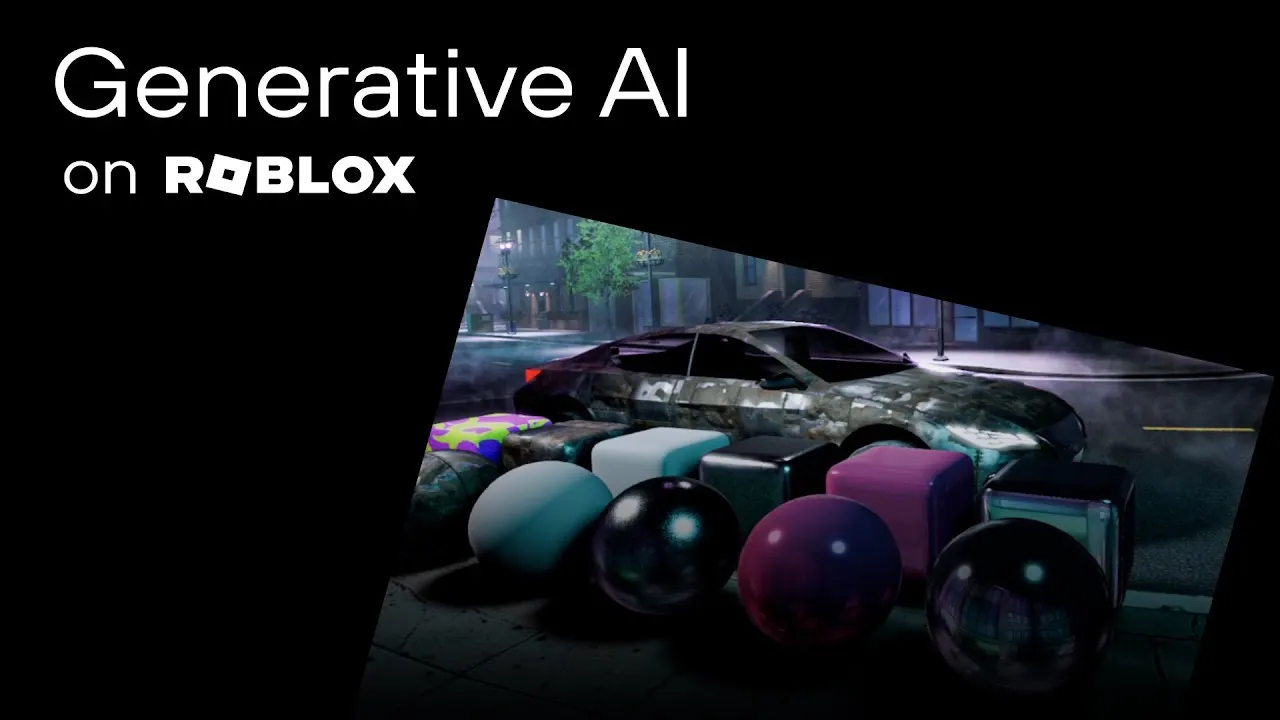
applying uh genitive AI to game development and we've talked about it in the fast on the podcast was very theoretical so yeah we're looking forward to actually sharing some applied experiences of working with AI yeah I mean Beyond creating really cool openings to a podcast I mean like realistically to take a step back gen AI is oh first of all we are now uh shortening of concatenation of the word and part because I always thought gen AI would be like generalized AI which is its own world of awesome that we are nowhere close to being and people should really calm their horses about like like we are no closer to gender like generalized AI with Gen AI than we have ever been but one of the really cool things that we often see with new technology and this is something that I love as both an entrepreneur and an investor is like how do you apply it right historically speaking it's about 10-year gap between the theoretics and
the applied nature of Sciences so fundamental Sciences take about 10 years in Material Sciences before they start showing up on the Mars rover for example that is I think one of the cool Parts about this new application layer of generative AI reinforcement learning based tooling has been around for about a decade and this is like really the first time we've seen a really cool user flow and UI flow that allows us to like Leverage it some people have been messing around doing some really fun things but the thing that we've been using at the most inside Infinite Campus is actually to improve our workflow so what's a good example of this right as you probably know most of the time when it comes to game um development is not actually in the coding right it's a lot in the play testing it's a lot of the QA it's a lot in the user feedback historically the way this has worked is that you have a junior to mid-level PM sit in a room take notes and then take turn those notes into specific cards for your like project tracker either jira
Trello click up whatever what's been really fun is that there's a lot of these workflow things that we've just been able to solve inherently with chat GPT and free up our project management resources for more theoretical things a good example of this is that we now ingest all of our QA sessions so we have like senior and Junior and like user testing QA where we have people play our games and they just talk incessantly it's like an hour and a half of non-stop verbal communication and feedback and how these people are playing these games instead of having then someone go through and troll through the two hours of conversations in order to come up with the interesting answer what we now have is we uh we record and analyze the data to make it go from voice to text which is a that's not trivial but it's like a it's not not it's not trivial or non-trivial it's like somewhere in between and then we have an LM model either be chat GPT or our own implementation analyze that text to pull out what are the five things that we should be working on in terms of improving the game what are the bugs
that people talk about the most like how do you triage this and it's done an amazing job like it's really fundamentally changed our workflow it's saving definitely tens of hours a week and that equates to like entire head counts in the company and it's really made me bullish on this technology in general because it's not a theoretical value add it's literally allowing some of the worst parts of being a PM which is just like listening to feedback and trying to write it down into cards and making it you know bringing up people to spend more of their time on hey what should we do with these things how should we prioritize these five takeaways like are these takeaways important how should we triage it how should we implement it which is really cool that's amazing what tools are you yeah that's really cool I'm curious what tools are you using to do that is it just chat GPT or are you using other other tools too yeah so we're using a variety of different tools the way we record our meetings or our online discussion is both through voice recorder which when you just like record
a voice but we also have stuff where it's like in real time either using a combination of like fireflies AI there's like three to five different products on the market that do a lot of like voice to text transcription so we've been trying all of them there's also some like open source implementations that allow you to just like create a pod and upload it to Discord and have it record this core conversations obviously with these are all people who are either contractors employees so we have consent from the perspective of like or if they're or their volunteer play testers at which point we get their content as well and then the output of it there are three main mechanisms you can use you can either use it against your own trained llm which I don't recommend doing it doesn't output very interesting or well chat CPT in particular is amazing at summary like it's just like one of its core uses is to take large volumes of text and summarize it down and then there's some other even like more interesting stuff like uh there are some older implementations based on chat GPT or on gpt2 that we've been seeing and they have been trained specifically
to this type of information and that's been a ton of fun as well uh it's what's weird and what's really interesting about it from a technology standpoint is that this implementation isn't so hard or so difficult that like we would spend a lot of time to analyze it theoretically before we implement the workflow its results were strong enough Day Zero that we just immediately a little bit like if you do drug trials if the drug is effective enough you cancel the a b testing and you just like deploy the drug to make sure people are okay like this is like probably the first time in my career where like a new tech we experimented with it in a small case and it was so good we immediately just like deployed it across the entire company yeah well I want to know I want to know the other side do you have any challenges or yeah shortcomings that you're frustrated with and could be avoided yeah so I mean the biggest ones are framing right like it's really interesting if you think about it from a boomer perspective which I have been told increasingly Alex take a who I
think does one of the shows here she called me a boomer the other day and I completely agree which is I learned how to read encyclopedia books like back in in elementary school like I learned cursive I learned how to type and I learned how to read an encyclopedia and dictionary that was literally something that you did in like third grade it's like hey look up the definition of this word in a dictionary with a physical dictionary and write it out and part of the heuristics around that is like understanding alphabetical order and Page ordering that's super important to understand how Vibra how like dictionaries and encyclopedias are ordered in the Google era in the like search engine era it's been about like extracting keywords and having those keywords therefore find you things you're interested you don't need nor should you write sentences on Google it really is keyword keyword keyword let's see figure out when to renew your passport you look type in US passport renewal and then you type in weather
detail you want it's like trip to Europe right and you say oh you got renewed six to 12 months in the bands I hear the processes and those are Search terms that come out especially when we're dealing with llms and especially when we're doing dealing with generative bits what you learn is a heuristic around how you frame the question and how you get the outputs you want the important thing for us is we don't need an output that's suited for elite QA person to then triage that's an okay output a better output is one that already goes through and says hey here are the reproduction cases for the bug right like here is what they think the reproduction case is ought to be which allows us to already frame in the language ready for engineering right that I think is the biggest challenge that we've we've run into which is the first version of it just didn't have the exact Delta we wanted there was a gap in understanding and so still require the pass much better pass than before when there was a pass of like 20 000 words but like
still require the pass of our product team to go through and go through as we get better in terms of Framing and scoping and the sandboxing of this information that has been more and more automated and so that's been probably our biggest challenge is it's basically learning a new language I talk I talk differently to chat jpt or to LM models than I do to Google right and I talk to Google very differently than I did to a physical dictionary for one the dictionary didn't respond so it's it is a really that is probably the biggest challenge that we're running into from an operational standpoint other than for example that you know sometimes the outputs are just bad uh and and then you have to deal with that a good example of this is that there's an article right now on wired about how like chat GPT is great for giving poker advice I can assure you most of the advice you gain from Tech GPT is wrong because it doesn't take into account factors that are really important and is trained against a data set that involves bad poker players well I think that's really exciting and um it's also not the direction that I
thought that this that you would take this uh Seb talking more about like the inner company workflow side of things that you know it has things to do with games but you know not really it's it's just like all of the other like admin and management type of work that goes into you know managing a company and just the things that you have to do and I think that's that's really exciting I saw a chart um the the other day uh I think it was Toby Luke who's the CEO of Shopify who who's who put it out there and it was basically showing the number of workers needed at an S P 500 company to generate one million dollars in revenue and the chart which starts in the 1980s to now is just you know it's just right it just it just plummets and I I mean I'm pretty convinced that this AI as a platform is the next wave that is going to continue
that trajectory further and it's not alone but what you just laid out just kind of being on the Pioneer and testing some things out shows that yeah you actually can be more productive just by getting creative and figure out how to use these tools as assistants recognizing they're not perfect but also we're so early at this too right like it's only going to get better and better and more specialized tools are going to come to exist as well so I mean I'm excited about this I've been thinking about it similarly actually at Subways that I've been kind of testing out you know that we do a lot of content we do a lot of you know like episode description summaries and stuff and I've been kind of poking around I still don't think chat GPT specifically is good enough where I would feel comfortable just like you know handing it things and then it spits out content and then I just publish it and I would you know I still have to like go in and you know do all the editing and that type of work too but um but yeah I should definitely be exploring more of the workflow side of
things as well I think that's that's really cool there's a couple of things in there and I want to just unpack real quickly the first of which is uh the understanding of like applied work I have to be honest with you this is I think one of the biggest problems I see in gaming entrepreneurship where people come from SAS or bass or other segments of the consumer product and they're like oh we get to make games that means that we don't have any of these issues right it's actually it's the opposite it actually means that the interaction flow is a lot worse right like we have to deal with gravity gravity sucks physics is horrible like the testing is really bad and because we're an end user consumer product always in gaming it ends up being even a harder hurdle and what I mean by that is if you're if you're let's say podcast forces you to use um slack to communicate you don't really have another option and so like your bar for understanding slack and using slack is far lower because you're like look we
just need to use this like there is no other option for me other than to use what the company or the org I'm working with is using from a gaming perspective we have to understand that super red ocean and so anytime our game has a bug or does not produce what we wanted to produce suddenly that's massively negative to us they can churn immediately and so a lot of our workflow especially on Infinite Campus has always been hey like what are people playing how do we get them to play an extra minute extra five minutes extra 10 minutes and a lot of that has come to understand not only game Loops which you know you generate intuitions around and that's great but it's also just making sure the end product is minimally by a minimally viable game as opposed to many valuable products whereas if the game is good enough it has Loops enough such that people continue to play it survivor IO I was a great example of this where the release version Survivor IL was already a ton of fun but there were only a certain number of levels and it didn't have nearly the number of hedonic Loops that happy is known for they had like three at much but that was enough for them to get tuned enough to get people onboarded
onto the game and now they're implementing all the other archero things that they have as a Playbook and what's really cool about this process as well as its implementation is like we're starting to see it in our um flat concept art image outputs right we it outputs an interesting thematic and then we're able to then send it to one of our graphic artists who then like draws and eyes and redraws the hands right like that saves a ton of time but super important from iteration speed and so I think the coolest part of gen AI on that first part is the understanding of this is a tooling that allows us to actually compete with consumer levels of productivity in part because our bar has always been higher on the gaming consumer side to your second point which I think is the hey is chat GPT ready to write descriptions yet I will Challenge and push you on this because I wonder this all the time I often hear especially my colleagues tell me that a technology is not quite ready to do the thing they wanted to do and the thing that we've been approaching which has
been very strange and like sort of like a heuristic jump is like are we framing this right like I never yell at a computer when I write a piece of code in Python it doesn't execute the thing I want to execute that's on me like that's like oh like did I articulate to this computer properly to get the output I want and one of the cool things about this Tech especially from a game development and design perspective is we completely agree it has been very bad about generating the types of things we want we have been getting better like some of the title names that we have it just spit out emojis and I'm like what the hell is it doing why is it just spitting out a Roblox game name that only has emojis in it right and then we tested it and it was right like it was our own precept of words when some people just want emojis there's something about backlinking and other things that's a little more complicated but like it is such an interesting mental model to be like hey what if we attach attack this in perspective of like it's going to be right we're the wrong ones how do we solve for that and
I think that's been the coolest part about Gemini's gen ai's application to gaming consumer at all yeah that's true I need to play around with it a bit more I mean a lot of it has just been like well it's just it's just wrong uh so so I think that's the biggest are so wrong uh what other things are wrong by the way and for the poker perspective if someone has sub 20 big blinds and there's 50 big blinds in the pot and they go all in that's usually a call right it's not usually a fold and it's only a fold if you listen to people on Reddit poker right like that's uh if you if you think that you are a jerk and you ask chat GPT and it doesn't agree with you no that's trained against Reddit those people never think they're the jerk they're always the hero in their own stories so that's always a lot of fun I love that take away that we could be wrong when trying to use these tools and I think I can't stop thinking I have an AI or something else who went to come and
see what kind of information we humans produce they would have the same comments about us so does chat DBT have more probabilities than us than being wrong I'll leave you with this yeah I definitely good I definitely am concerned about enter morphizing Chachi PT because I do think that's a wrong framing but certainly from a tool perspective if I saw someone using a screwdriver as a hammer I'd ask a lot of questions and so and so I think similarly that's something that we've been thinking about well internally and it's been really fun it's been nice to like work on technology that actually Returns value immediately as opposed to um like VR or web3 recently where it's like hey the returns are sort of like in the future and like understanding technology is important now but it's like you're not gonna see anything whereas here I'm like I can literally point to a line item and be like oh this person's no longer working on that that's saved that's like five percent of the death cost yeah the last thing I was gonna say is that I was totally gonna answer anthro what's the word I'm totally I can't
speak yeah yeah yeah um uh yeah and so I would say I get that like yeah we should totally invite chat GPT on an episode at some point and like just ask it you know like we have questions that we prep and um you know have it be more like uh text to speech and just see what it has to say on some of these crazy topics [Music] it would just be fun it would be ridiculous but it would be fun let's have a segment of chat GPT one thing that I want to flag because I think it's important before you move on to another new topic is that I think there's a lot of fear-mongering with like hey now that let's just let's just use our workflow for example where it's like now that like someone's like putting together the cards does that mean you're not getting hired Junior PMS anymore right and I think that's a fair fear in a lot of ways but the honest answer is no we're gonna still hire Junior people and we can still need people it's just you get to work on things that are fun as opposed to our miserable and boring
right like I too was a junior technical product manager at some point I too also hated putting in the cards when and doing bug testing for Dots right I remember the Android version just wasn't as performance and it was off by like milliseconds and reproducing bugs I'm like listening to QA feedback and user testing the equivalent usertesting.com back then and that was not fun it is much more fun to be in my seat now just to be completely Frank right like and so what I would push people to say is like hey yeah like you're right somebody more low-level entry-level work may disappear in its original form but what's going to end up happening is that the entry level work that we consider to be more mid-level now is going to become entry level and that's gonna be awesome because it'll free up people do more and more cool stuff I think we'll have to move on to the to the next topic which is Ria rumor discussions about this CS go yeah did you hear the yeah so yeah uh so yeah a couple days ago it was
leaked and reported that CS go 2 might be coming out but on closer inspection it actually looks more likely that instead of getting a full-blown sequel CS go might just be migrating to valve's newer source to game engine which would occur as a major update most people seem to think that this update would simply Port most everything over like math skins and stats but it would also come with a few upgrades to things like graphical rendering fewer frame rate drops better matchmaking things like that um and so you know from a business standpoint and of course this is still in rumored territory um but from a business standpoint there actually isn't too much to discuss CS go a decade after launch continues to grow its player base and has a thriving economy um so so not blowing that up and making making everybody switch to a completely different game that makes a lot of sense um I imagine we'll learn the actual
details of this sooner than later they might even be out by the time this episode airs who knows um but I figure we can still talk about a couple quick angles here and and first is just the it's just the idea of engine upgrades and shifting games to new game engines um doing that might be easier than creating a new game from scratch but it's it's still a headache and stuff I was just curious to hear your uh your thoughts on just like the Practical considerations on engine like on taking a game to a new engine and what is involved in that um and if any insights there just inform what the heck is going on with cs go right now oh my goodness I would not recommend doing it and for what's worse like the people at CS go weren't doing it either right for context they're on the engine that was released like in 2004 right and and the the new engine was released the year after CS go and they've been on their engine for about a decade now it'll look better but this is
back to the bar when we talk about um physics engines and just engines in general is you have no Freedom like you're at the behest of the nuances that it's not even documented so a good example of this is a really proper physics engine has the ability for a fast enough projectile to degrade in trajectory over set amount distance right and that's how reality Works a bunch of engines didn't calculate that a decade ago because it's computationally headache and like there's no reason to a bunch of new engines can calculate that but how does that change the game Flow right does that completely change the style of gain does that change how it works there's something called um like that's like scan hit which is like instantaneously hits the person as soon as it's launched versus a projectile right and that I think is something that wasn't different at all in Quake for example oh with the exception of their like the Bazooka or the gun but in modern Shooters you will see that Delta
and so what's really interesting is that almost certainly if there was a release source to CS go the game will be fundamentally different at the highest highest level for pro players the game will be different for them for everyone else it will be imperceptible but on the back end if you care about hey the specific interaction of a specific mechanic oh my goodness that is so painful to program that's so painful the QA that's so painful to implement in part because everything's different the nuances are different the language might be the same but if there is a five frame difference in implementation and tick rate for example suddenly the game is played differently by speedrunners or suddenly things are different my favorite example that I think is really visible to people especially if they had old TVs is a difference in how Mario Kart 64 rendered in Europe than North America European Mario Kart was 64 was much slower like literally like 10 slower than American Mario Kart 64. just because our TVs had
different frame rates we have 29.97 here y'all have something else I don't I don't really know what it is if I know it's lower and so like the NTS seed standard was just different and so how does that mean that someone who plays European like who's Master at the art of the European drifting in Mario Kart 64 can play North American version eventually but it was different at the time and I think that's one of the things like imagine that for every single edge case that someone's been complain about and that's what it's like to move from one engine to another well do you think this is I mean a situation of well csgo will have to upgrade eventually so we might as well bite the bullet now like do you think that's what's going on or I I don't know honestly I mean actually I do know I know for a fact that almost every single gaming engineer I've met in my life has always want to refactor the code and ship to the new engine like like if they're sufficiently poured and I also know that every engineer who's working on the live Ops hates doing that so it imagines a combination
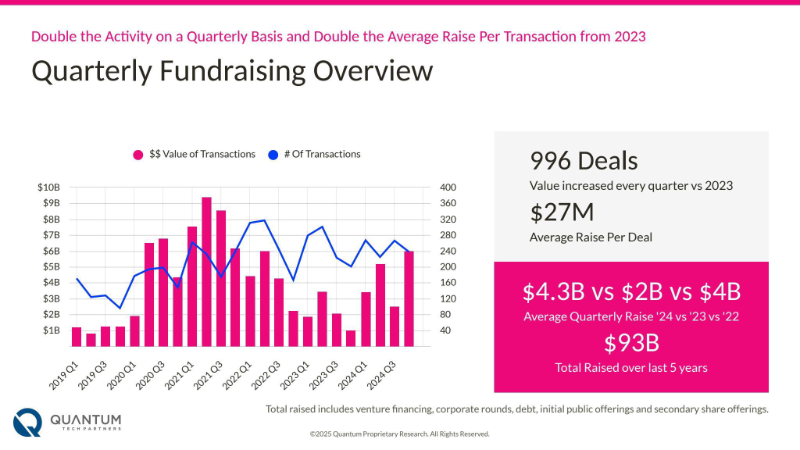
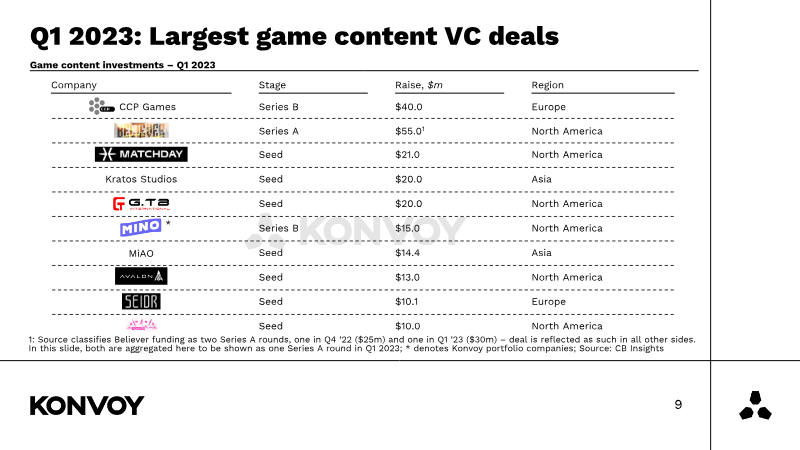
of two it will certainly look better it will certainly be highly more performant and it'll certainly be awesome despite the fact Source 2 is again like 16 years old or or 10 years old now right it'll be fun to see how that changes I do think from a competitive nature we will see probably the most number of changes at the highest level of gameplay because that's where you'll see the most edge cases come out I looked into the believer companies 55 million series a raise and so I wanted to dive into that it was led by a light speed and it had key support with most most companies that you expect by now a16z bitcraft Raya games will continue the list Anton gordodeski co-founder of invest game he actually shared a couple benchmarks to help us size what this the the value of this race so the biggest series a I was probably monsters they raised 200 million back in 2021 and also that year Forte raised 185 million and while you
might be thinking now is Oh I thought that you know the VC environment was cooling down in gaming so how is the company doing a series a at 55 million and it is not surprising when we start diving into the details so first let's look at the co-founders former Riot games vice president Michael Chao who's now CEO and the chief product officer is Stephen snow who was a founding member of Riot games and he I think it was the EP of League of Legends second if we look at the sea level and the leadership team that they already have onboarded it has Stalin from Microsoft Riot games Bungie EA and Morse like tick tick tick and then you look at third their mission which is to bring to life while before was considered players wildest dreams and it's about bringing players together and it's more than open world is open narrative where players are actually shaping the story of the game and I don't think that is a new pitch we've seen some new companies
entering wanting to explore building more than a game it's a transmedia universe really and then um yeah that's actually the fourth the fourth section and I like seeing all of these entries where it's almost I feel it's post Triple A it's like AAA veterans wanting to explore what quadruple a is and the way that I've managed to boil this down is I actually think that it is games as a lifestyle which is now now following on from games as a service is becoming more than a service to the player it's just yeah you play a game to be part of that whole universe so yeah I with this take I was wondering what do you think what do you think about this to take a step back one thing that's really important for people to look at from steel and I think full disclosure I'm a venture partner at Big craft big Craft's involved in this deal I know nabig does work with Lightspeed who are the like Moritz Shan Chan and Paul Murphy who are the leads on this
and also for disclosure like worked with Paul Murphy like a decade ago on dots so like there's a lot of intersection here I think for everyone on this call myself in particular there are two things that at the highest of high levels we really need to make sure about the first one is that this doesn't somehow reduce the pool of money for other types of games or other types of game products one of the biggest things I see on the internet right now is the idea of hey is this deployment of capital mean that we won't see deployment Capital than other types of gaming content or other types of things and that's just not the case I think people fundamentally misunderstand how ventral Works in that regard you really shouldn't care if a venture fund returns or not it's not your money it's not anyone's money other than the LPS The Venture funds you care if you return or not but as a consumer I really disliked the idea that somehow these guys shouldn't have received the money or that somehow by deploying 55 million dollars into this company that another company that quote unquote is more
deserving or more interesting or otherwise is not getting the money that's just not how Investments work that's not how evaluations work that's not the reality of the world who I will say is that from a venture standpoint and also full disclosure not my deal it's not this is not the world I operate in in terms of venture I actually operate more on the edges what's interesting here is that typically in any given cycle every three to five like three to five deals come up every year that are the hot deals of that year and then it's just a fight for allocation and everyone's like wow it hits all these heuristics that we have that will make this game interesting believer hits those things for sure they have a really interesting and successful founding team of track record in gaming which is hard to find by the way like most people don't haven't been part of a founding team of a multi-billion dollar gaming company because there's like a half dozen of them and it's like so whenever Kevin Chu shows up or Holly Lou shows up or these guys show up that's always going to generate some interest the
second thing is the vision is really large there is no simple next-gen thing here there's a large enough Vision that's such that if they are successful there is some upside there so from a pricing perspective it's really a combination of like combining someone's like pre-seed seed series a and maybe even a series B at this price point I think the the full disclosure for other people those whether it's called series a or seed that's all just language it doesn't actually really matter it's just think about hey they have 55 million dollars to build something interesting as an end consumer I think it's really cool I think we should all think it's cool and let's see what they do will they fail most of the time startups and game fail games fail at even higher rate than startups so like the answer is most likely but now we have a really interesting team that has the resources to pursue a really large vision and let's see what happens there I think that's a really cool and interesting framing of this and on the flip side I also think that this is indicative of gaming as a whole Marie like you said people are caring about gaming more and
so as a result there are theoretically more upside cases for gaming than historically the old upside case for game studio is you create Starcraft and you sell a bunch of copies at Best Buy the new upside case can be you create Riot games and you have a live op service that does something like a billion five or two billion recurring Revenue every year with very low churn right so that I think is the big Delta that we see here I will say that I don't have like any insight information on this this is not something that I'm seeing this is purely as an external Observer I want to emphasize that it is just not taking money out of someone else's pocket and so I I've seen that comment a bunch we should just all be happy that we might get one of the coolest games on Earth sometime the next decade not gonna win I just don't think it's a coincidence if we look at what probably monsters is trying to build yes it's more it's about creating this network of Studios or building AAA games and shared processes
and Technology I believe but if you look at their pitch of what kind of games they're trying to build again we see the the same keywords seeing its um Adventure driven it's open narrative it's the player that is helping build a story and driving what the game is and yeah I just don't think that is a coincidence that for me it shows a pattern of what certain key players in the industry believe will be the next generation of what gaming means yeah and I think it's the first deal that Moritz LED over at light speed and you know it's I'm one of the first deals I've seen Paul Murphy's name come up and Sean Sean is amazing over there and so I I can imagine there's a lot of interest in that side I just think that the framework is a little bit wrong like people externally judging because it's so easy to create content and by the way can check on chat CPT just before and bring a full circle it's so much easier for chat GPT to write criticism or something than to write something in support or something when they write criticism it looks really good when it writes something in support it's really
hard and I do think that we should not stop caring as a society whether or not Venture funds return or not that's not our job unless you're part of a venture fund and as consumers we should be like oh let's see if they make an interesting game uh that's going to be fun to play and if not who cares I was going to push back a little bit I think it does matter a bit in the sense that like still Venture funds succeeding is what will probably Drive future capital to to invest it even more games across the ecosystem I still hear what you're saying and I agree with that probably like 90 of it but I I think still creating an environment where win wins happen is still important and um setting the right beginning for companies to succeed um that is a win for the founders and a win for um investors I think that still is pretty important I don't know enough to comment like on the details of this deal of whether raising you know over 50
million is too much I don't know the valuation or anything like that um but um but I think you're right that it checks all of the boxes and I think the the vision is big and it's interesting to see just as a trend like more of the the trans media side of things start popping up more and more and this seems like a team that you know has experience of succeeding elsewhere um to pull that off because as you were saying um so like the the upside of of the big wins is perhaps bigger than what people would have thought a decade ago because as we've seen with with Riot like obviously it took him a long time to grow from just League of Legends but then now they have a an ecosystem of games but also increasingly that's looking to be transmedia properties too that's just getting just getting started and so I don't know whether having that mindset at the very beginning whether that helps or hurts in
the sense of like whether that like spreads your mission too thin uh like or spreads your focus too thin at the beginning on on too large of a mission or if it actually helps to be able to orchestrates all of all of these pieces at once with a ton of capital and a ton of effort from from the ground up so I'm really curious to see where where that where that goes but yeah I'm excited to see what they spin up even though I don't know all the the details here for sure I I I will I will add to that and say one of the coolest things about Venture is that you got to ignore kpis it's one of the weirdest things about uh token Venture by the way because like tokens are publicly traded so people are asking you quarterly questions about what they're doing like one of the reasons why like privately held Venture back companies got to do really cool things is that I don't have to worry about my q1 results I can make investments into my Q one for next year as an example the year after and that allows people to make really interesting decisions on different time scales one
of the fun things about believer is that they will now have the resources and the head count and the people to make a decision that's based on like a 36 48 60 month time scale as opposed to if you were currently an executive at scopely for example you have a quarterly kpi you have a quarterly earnings thing you have an annual erlings report and you just make different decisions like you just make fundamentally different decisions and to your point Aaron we have no idea if that's correct or not gaming Venture hasn't been around enough for us to know right like it's not as though when Riot raised money they were like oh we're going to do something for like 20 years from now like there are no we're going to try and make this free to play game work and then we'll go from there and then we'll go from there so I think that's gonna be really interesting to see if like what this looks like and from a pure uh gaming Venture standpoint I also agree is important for some of these guys and gals to succeed I will push back and say it's not important for them all to succeed though so I think it's totally fine yeah of course if some
of those guys and gals don't make it and I think that's gonna be fine for gaming Venture as a whole we will see if it looks more like movies or if it looks more like the Publishers of movies that I think is going to be really interesting to see the next decade that we talk about exits you know you're building a new company and you probably have an exit Insight how do you believe that this yeah venture capital and for example these kind of raises how does that affect the prospects of the future of exiting exiting is harder the larger the round is just as a fundamental the hurdle rate that you need to achieve to clear your preference stack is so large that like if you've raised two million dollars on 10 million evaluation and then your company sells for 30 million dollars not only you but all your employees and your all your investors will see a return like that's unequivocally the case one of the cool things about x's in that regard is that uh that's not necessarily what you want as an investor either right that's I think the fundamental they say the stone soup issue of venture capital and startups is that uh
Venture startups in a lot of ways a very privileged thing to do like I talked to my co-founder talk about this all the time like we're in a very privileged situation to have our own startup because I can tell you a decade ago I there's no way in how I could uh started to start I had no exits I had no like it was just really dumb to have done all the startups I did at the beginning of my career right because it was like oh like if things fail and a lot of them did like I have no money at the end of the day I have like 3K left in savings like what do I do like I need to go get a job at Google or I need to go figure out I need to go be a barista or bartender right like there is that downside where it's much easier after a couple exits or after you've solidified yourself and your family and you're good to go to be like okay cool I should make a best decision for the company a 10-year time span as opposed to for the best decision for me you know 12 month time span which might just be to get that money right I think that's like the hardest thing to understand and partly why when I give advice to entrepreneurs I'm like hey no one talks about this but
you should really do a full analysis of your own financial situation your parents health your partner's Health your partner's job opportunities what makes you guys happy like that's all really important because it's a hell of a journey if you don't know what those things are so I I think This lends itself to an interesting conversation to just talk about exit opportunities more in general and naturally as the games industry has changed over time both the size and the type of companies and just the business models of companies that lend themselves to consolidation or not exit opportunities have already changed over the past but I think we should expect them to in the future as well and I think maybe to start before even looking at the future is just to recognize what's going on in the present and what that says about you know just how investors are thinking about um like the the exit opportunities when they fund startups um and um so I'm sure you have thoughts on this we've talked a little bit um just kind of in the prep about like
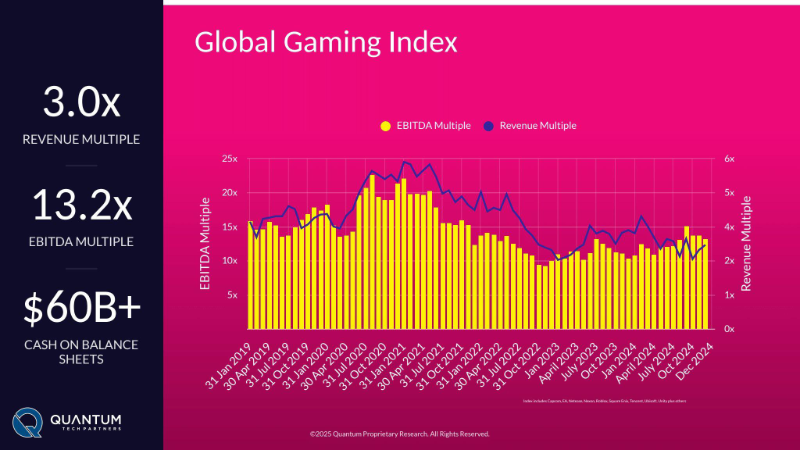
Rovio is looking to sell at you know a sub 1 billion dollar valuation and if that you know as a company that has very well established IP has a great track record is profitable and it's you know selling out below a one billion dollar evaluation like what does that mean um for the ecosystem how should we be extrapolating from examples like that right now it's first of all if you think of Rovio as The Bull case for gaming like there's a lot of issues right it's like 8 to 10x ebitda not Revenue right up from 5x ebitda and it does have a lot of things that we like it has strong IP it has trans media elements it has a engaged audience that pays them a lot of money right if that's the case we're starting to look at some interesting problems in terms of the analysis of what the bull case will be fortunately for the rest of us there are other bull cases right so for example the king acquisition was like what five six billion dollars if I remember
correctly the Activision um blizzard acquisition by Microsoft is 69 billion dollars right there are other examples of growth in the space but I think the price of acquisition is really interesting do you treat games like movies like the actual movie themselves like do you treat a game like the copy of um what's a good example of like a single shot movie oh like your name like the Makoto shinkai movie right like if it's a singular movie historically movies are best funded by like reverse pickup deals right there's like an exchange of money and IP creation and you got the thing out of the product and everyone makes some money and they call it a day right or is it a tech platform is it a social media platform is it something that like it's going not only generate Revenue but it's recurring Revenue one of the biggest issues with Esports historically has been that a lot of their revenues have been non-recurring sponsorship
Revenue there's nothing consumer or interesting about that there there's no reason to give them a 20x multiple or a 10x multiple or one next multiple on that Revenue because it just doesn't exist necessarily the year after we saw this with IMG going public or trying to go public where an agency that doesn't rely on consumer Goodwill to grow as revenues is not given a proper multiple by the market so it's a weird world where we're dealing with ebitda versus Revenue multiples and what's correct is is the activism blizzard price correct is the king um games price correct or is the Rovio price correct and I can just assure you if it's roview is correct then we got a lot of things to talk about yeah I mean I I would just add that I mean talking about Rovio and they're looking to sell at what was it eight to ten times ebitda the king acquisition back in the day that took place at about nine times ebitda so it's not actually all that different uh naturally and we
don't probably want to over Focus this conversation on just mobile too right because mobile has its own slew of of issues right now that's pretty unique to that that segment of gaming but I I don't know I mean there's no one perfect metric whether it's revenue or ebitda to kind of like compare contrast all these different types of companies the reason why um uh you know exits happen and and the m a sense you know it occurs for different reasons right either companies are acquiring what they lack such as you know attack acquiring other attack or such as when console companies you know have been trying to get into Mobile in the past or things like that and sometimes like the fear of not having something important that is going to be a big driver for the future of the industry sometimes that fear pushes up prices and maybe we're just at a time in the market where some companies don't have that that level of fomo for certain things and and fomo you know it ends and flows with the market I mean second a
lot of times too it's just large companies thinking they they can unlock more upside from what they acquire more so than if those companies were Standalone which I think can still exist in in some cases but again in a place like mobile where in the past Zynga acquired several Studios because it was able to to reinvest and support um those those games in a way that maybe those companies couldn't do as well on their own and get benefit from the longevity of cash flows that come from extending the life cycle of these games successfully maybe I still think that can exist in some ways but it's been put more Under Pressure recently in the market environment and then lastly like I think just the business models of like the big companies in the space also have a big sway on just how um M A happens right and so if we look right now um we see consolidation coming from console types of companies as they're building their own ecosystems and
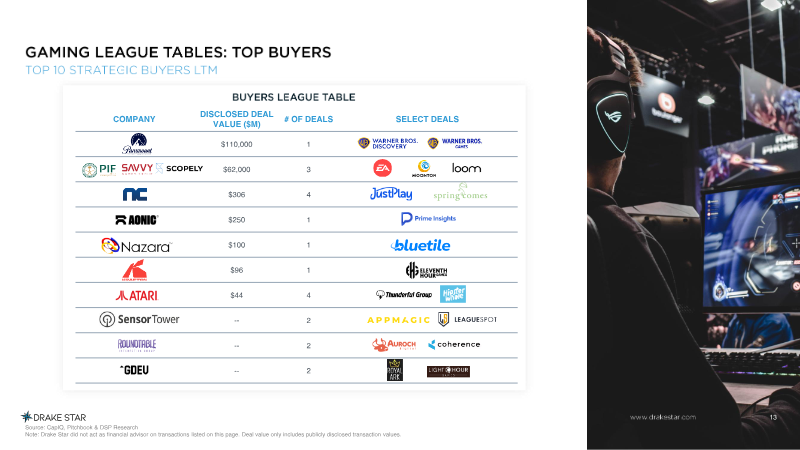
battling over exclusives and having subscription business models that you maybe don't see in other sides of the industry and it might be and it might actually be worth it for them to pay up higher multiples than than otherwise because it has some type of outsized impact on their their business model or competitive Advantage so I think it I think it really just like depends on what you're looking at but I do think that as a whole the exit opportunities probably have shrunk down a little bit that's probably not rocket science to to say that because even if you look at just like the serial acquires in the space like the embracers and distill fronts like that that business model that they had of being serial acquirers has had to dramatically change not just because of you know balance sheets weakening by taking on debt or the stock price is falling and so they can't use their shares as well but just um the natural like mean reversion that happens when you acquire companies that are slower growing or maybe not as as
profitable um so yeah I think it's a fascinating topic I tend to think that these things are cyclical um and as like the industry and the economy ebb and flow like any pains we feel now will you know five years from now it might be like overhyped what what exits are happening who knows um but it's an interesting topic I know we gotta go but that actually makes for a really strange Venture evaluation world right because you know the companies aren't going to exit for five to ten years so if you're lucky right and so you're like oh okay well so should we just assume that it's like like how should we solve for this right and it makes more like should we be doing larger deals or smaller deals and I think that's been so interesting yeah we'll wrap up here that was very interesting maybe we can have a deeper topic uh in another episode I feel like there's still a lot left to uncover here uh yes sir Aaron thank you so much for joining today it's lovely to have you on and we'll see you all next week if you enjoyed today's episode whether
on YouTube or your favorite podcast app make sure to like subscribe comment or give a five star review and if you want to reach out or provide feedback shoot us a note at podcast navic dot Co or find us on Twitter and Linkedin plus if you want to learn more about what novik has to offer make sure to check out our website www.navic.com there you can sign up for the number one games industry newsletter navic digest level up your insights with our premium research platform navic Pro or contact us to learn about our wide-ranging Consulting and advisory Services again that is www.navic.com thanks for listening and we'll catch you in the next episode
Summary
Generative artificial intelligence is fundamentally reshaping game development workflows by automating labor-intensive processes such as quality assurance, playtesting, and content iteration. By leveraging large language models to transcribe and synthesize verbal feedback into actionable project management tickets, studios are achieving significant operational efficiencies. While some skepticism persists regarding the artistic quality of AI-generated assets, the technology is increasingly viewed as a vital tool for reducing manual labor, allowing junior staff to pivot toward higher-level creative strategy. Concurrently, the industry faces technical hurdles in modernizing legacy titles, where engine migrations often disrupt established physics and competitive mechanics, necessitating rigorous quality control.
The investment landscape is shifting toward long-term, ambitious IP development, as evidenced by Believer’s recent $55 million Series A funding. This capital infusion reflects a broader trend of veteran-led studios prioritizing the creation of expansive transmedia universes over standalone titles. By securing substantial runway, these studios aim to bypass the constraints of quarterly performance metrics, focusing instead on cultivating games as lifestyle platforms. This strategic pivot highlights a desire to build enduring audience engagement that transcends traditional product cycles.
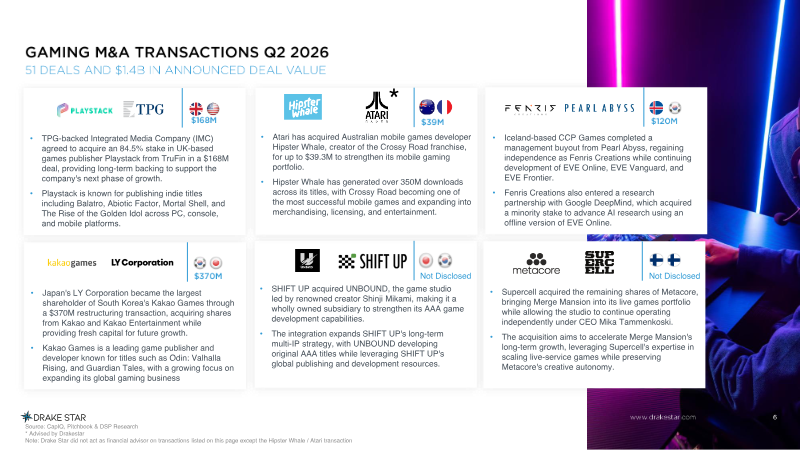
Despite these advancements, the broader gaming exit market remains volatile. M&A valuations are currently dictated by a complex interplay of EBITDA multiples, recurring revenue potential, and strategic competitive pressures rather than standardized metrics. As the collapse of serial acquisition models and tightening economic conditions force a reevaluation of exit strategies, venture investors must navigate a cyclical environment characterized by significant uncertainty. Ultimately, the industry is transitioning away from short-term gains toward a model defined by large-scale, multi-year IP investments and the integration of automation to sustain long-term growth.