Transcript
All right, let's get into the first story. Us going after Matthew Ball yet again. Crest, take it away.
No, I No, for the first time, I think in a while, [laughter] I actually agree with his assessment of this EA acquisition. I think this is hopefully the last time we'll talk about the EA acquisition because I am actually quite bored with it. But he did write a very succinct piece. You know what I think it is? is the brevity of the piece makes it much more easy to digest and therefore I can understand it better. I don't know. But anyway, he's talking about the deal with EA and basically he's basically saying the premium was lot a lot lower than it should have been given if it was an LBO. Like the report suggests that the PIFF really wants to uh expand their reach into other things and PIFF is going to own the most important thing is 93% of the company. So, in essence, this is not an LBO. Fundamentally, this is not an LBO when PIFF owns 93% of this company. This is a
strategic acquisition, which was obvious from the get-go, but many, many, many people got it wrong. We'll get to that in a minute. But what he goes on to say is that they basically want to build a sports platform using not only games, but also to buy leagues by build a sports media ecosystem. They want to start with EA Sports app, betting, and fantasy. They are looking for, you know, all kinds of different technologies to help like engage and interact with sports, predictive simulations, which they already have with Madden and FIFA, but to make that more ubiquitous and they're looking to buy live rights across the world on on games. So, broadcasting rights. So I think fundamentally this is the true vision for this acquisition is that again 93% ownership by PIP is a strategic acquisition. It's not LBO, right? So like people like Jason Shrier and all these other guys writing about you know
30% layoffs and like this is going to be dramatic. They can't pay the debt. All that stuff was kind of [ __ ] And what I only wish that these guys, Jason Shrier, Juiced, Reese Elliot,
it doesn't matter. Simon Pullman, Mark Dura, David Cole, Michael Futter, all these guys retract their erroneous reporting and write a correction, but that'll obviously never happen.
I don't know if EA is kind of the right people to execute against something like this. uh you know they don't really have the chops to actually execute against some kind of old you know uber you know media strategy certainly Andrew is not the right guy right he's a pretty face he has the right BMI but you I don't think he has the chops to pull this off and no one really at the company at EA has that type of skill set what I naturally think is that oh you're going to hire some huge media guy to do this but the challenge with that is that you take someone from media and they don't give a [ __ ] about video games and so they basically destroy the interactive
part of it. So, it's like and then people like Vince will leave and like all this it'll create this cascade effect that's not good for the industry. So, frankly, it seems like this impossible task, right? A Rubik's cube that cannot be solved type thing. So, we we we'll have to see what ends up happening. But fundamentally, this is a strategic acquisition. That's the way it's always been from the get-go. And people's interpretation was completely off on this. Um, there will be layoffs. I am actually hearing that there are going to be griffs at a low reasonable level like 5% somewhere around there maybe 10% overall
and if you're not part of the core strategy tenants like if you're not sims
Apex
EA Sports
EA Sports and God you're being like my wife uh finishing my sentences
sorry sorry
if you're not EA Sports Sims
you guys are work husband work wife we kind of [laughter] are ironically
that drives me insane I can't have another please. Anyway, if you're not part of the four tenants, then there may
be some issues, but for the most part, those price sake.
You're questioning can EA management do it? But then if somebody else do it as a can they do it without destroying the interactive part of the business? And that's kind of how I'm I'm kind of interpreting what you're saying. But like what I really want to know is like is EA's video game business really the primary source of revenue growth from this? And then if not, does PIF even need EA to pull off the interactive part if they get the relationships, the licensing, and all of those things? Like, how important is the execution there to the actual strategy? Maybe video games isn't the crux of this highle thing. It's all I don't know. This is where I get over my skis. Like, it's it's all a lot of tech [ __ ] that like there's no way these media guys know how to do. you know, some guy who's doing deals to bring in leagues and bring in broadcasting rights. They're not going to know how to build an interactive tool that like helps you like simulate what's happening on the
field. There's something here here, but it's like so complex. That's why it's so hard to like kind of get my head around it. But I I do think that EA and the interactive portion is at the core of what the strategy may be. The question is like on the execution side,
Chris, you and I were there when even back in the day when they were providing a lot of the tech to ESPN or to some some of the sports networks, you know, to help media be better at showcasing why sports is great. So, you've got this interactive side with EA, you've got the old school media side, and there's nothing kind of pulling them together. And I think the vision is that this is going to be the first thing that pulls it together. But how do you do that when now the pendulum is like fe you know purely sitting with the interactive company that has to figure out how does it like you to your point is how do they bring in some media people to help like I can't they've done some deals where you can actually watch some of the the football games inside of this app which I'll show you in a second no one is
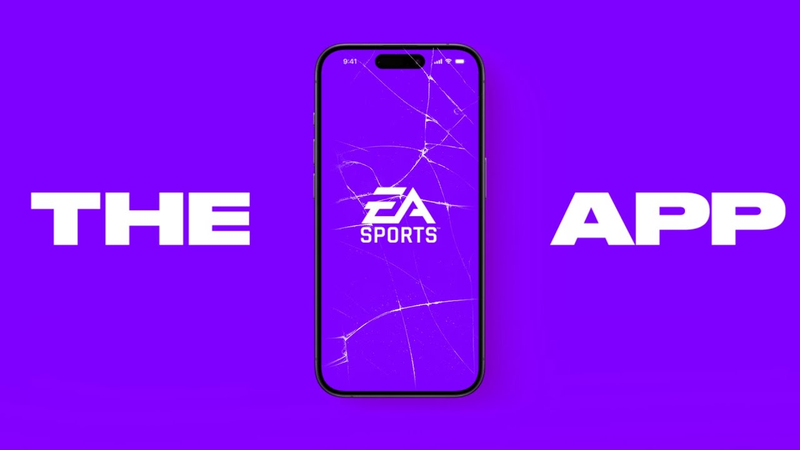
actually doing. I think that's the start of it. And so for me, I think this is an exercise in patience that they are going to need years for this kind of vision to come to fruition. Actually, let me show you that app. So this is the EA Sports app. So what Matthew Ball said in his piece, what was interesting is like this is newly launched. This has been out for a year. It doesn't look like I even have the right app to what everyone is describing. It looks like a media app from 5 years ago. uh just the UI and everything in here. So I guess you get live, you know, you get a lot of things that you get in other places and it to me it felt a little bit like Americans trying to make a a football app for Europeans and the Europeans being like what do what that's like so 5 years ago. Anyway, so you know at first I was like oh they had almost 3 million units that have been downloaded and then basically they've all come in the last month and 97.4% of them were from India. followed by Italy, Spain, and the US. And the US was
like
really
52,000. Yeah. Like this is this is Jen's investigative reporting dun.
I'm not even sure like honestly I don't even know if I have the right app because this seems like it doesn't even match with what's going on. And a lot of this is, you know, how much EA has just decimated all of the mobile people. We talk about this all the time. So this app is free. There's no AP. So, I imagine they aren't doing UA against this and trying to market it because it doesn't make today yet revenue itself. I don't know if there's ads inside to be honest. I didn't pop it open enough to see if there was ads. Maybe that's the case. But my only thing to think about is we have to have patience to see this strategy play out that the tech has to be built, the deals have to be done, but that the future and the idea of this is coming. I don't know. The last thing I want to say is that look, EA stock, although it was at a reasonable price when it was bought, has been kind of flatlined for a long time.
EA management is particularly Andrew have been looking for an exit for years. Like they've been trying to sell this company for years. Like that is that is fact evidently. And what I found out was really funny is that Andrew and that guy from Goldman that we talk about all the time who's made more money in this space without ever working in the space. [laughter] They have like a house right next door to each other in Hawaii, dude. So they're like hanging out drinking my ties discussing who's going to buy this piece of [ __ ] company, right? It's like that's the way this [ __ ] works, you know? That's the way this [ __ ] works. And so like is Andrew really wanting to like do this kind of [ __ ] Does he really after all this time as a CEO of a publicly traded company, does he want to deal with the Saudis and all PIFF and Savvy and all the Scoply? I don't think so. That's why this is all [ __ ] This is all lipstick. You know, no one knows what the is going to happen, right? I think they actually literally probably need new management team in order to execute anything like this,
right? And hopefully it's not a media guy that destroys the interactive portion, which we are getting to right now.
Yes. Yes. Let's do it. Let me do a little
I was going to comment. I had such a good joke lined up. I'm like waiting for my time to jump in. And my joke was going to be Okay, ready? We were looking at the screen shares. sorry, the screenshots of the game and I was like, maybe they should pull a Dolingo and hire a gaming company to help them build this app. And then I was like, wait, they are a gaming company. [laughter] Well, maybe they need a media company to help their interactive app be a better interactive app. It's probably reverse dual lingo. Yeah. No, that's a good call. Oh man, this is in all of my podcasts. The drama. So Netflix, Warner Brothers, Paramounts calling it a dating drama. It's like, you know, if in a couple years they're going to have TV movies based off of everything that's going on here. So I wanted to talk about this as much as we could from a game from a WB games perspective. What happens to
games? You know, this is going to be a lot of in a sense speculation, but here's what happened. Paramount on Monday launched a hostile takeover offer for Warner Brothers Discovery uh initiating a potentially bruising battle with the rival bit bidder Netflix to buy the company behind HBO, CNN and a fain movie studio along with a power to reshape much of the nation's entertainment landscape. You got even unions getting into the fray on what's going on. So the part that I wanted to do which was a little bit like rampant speculation is what is the future of WB Gaming? at first, you know, when it was just the Netflix deal, but now it actually might be under Paramount, which Paramount has a really robust licensing team. So, if the hostile takeover bid actually works, you know, by the way, here's what Netflix said when somebody asked them about, hey, you know, if you buy Warner Brothers, like, what are you going to do with the gaming assets? Like, here's what Greg Peter says. While they definitely have been doing some great work on the game space talking
about Warner Brothers, we actually didn't attribute any value to that from a get-go because they're relatively minor compared to the grand scheme of things. Ouch.
That's all you need.
Now, we're super excited because some of those properties that they built, Hogwarts is a great example. Thank god he at least mentions the, you know, multi-billion dollar game that came out. they've done quite well and we think that we can incorporate that into what we're offering. They've got some great studios, some great folks working there. Uh this is him basically backtracking like hey this doesn't matter. So we think there's definitely an opportunity there but just to be clear we haven't built that into our deal model end quote with sorry with my commentary. Uh, so based on that, let's play the game. Who's a better home for WB games, Netflix or Paramount? No matter what the home and then like what should happen. So, let me go first. It's my game. So, who's the better home? I'm going to say Paramount only because they understand
licensing, which is the beauty of this business. Many of you know I worked at Disney and I did licensing for consumer products for many, many years. I that business is stellar. That team is stellar. They get that. Maybe they could do a oneplus 1 equals 3 with, you know, all of the great brands that are coming in. I don't think it's a a home for the studios, however, is the only problem. You know, Netflix just isn't out to make any money. So, that's pretty pretty challenging. What should be done? I don't know. You carve it up is what I think you need to get rid of. Some of these studios, like TT needs to go to Lego, for example. Some of the studios need to go to really really good homes at other companies and and maybe give licensing to Paramount. I don't know.
I'm not sure about Paramount. I feel like I'm watching a bad episode of Celebrity Matchmaker where like all these people are trying to like find like homes with each other and it's just not I feel like there's no vibe. I don't know. I feel like Disney should have been in the mix. I'm not sure how, but I look at Disney. Look at Netflix and Paramont and WB. I don't I mean, yes,
sure, they might have the licensing game down, but like is Paramount a better home? I'm not sure for WB Games because I feel like they don't know what they're doing either. They they might have the licenses. Sure. But like you're going to license these things out and there's a whole life cycle to it, right? You put the games out there, someone buys it, they start building stuff. You need people that can actually evaluate it and I and say this is going to be a good game and then you know Josh, you can chime in and say you know this they can evaluate whether they can scale it, right? So they need these these skills that I just haven't seen in the past have especially in mobile. So, I'm just letting them all kind of draw straws and see who's going to end up with each other. And I'm not sure any of them is going to work out for WB Games at least.
Chris, from your expert strategy perspective, I I actually couldn't wait to hear what you're going to say about this.
All right. So, this is a really complex deal with all kinds of political drama going on, and I I really don't want to comment on all that. And frankly, I don't really understand all the drama behind a lot of these big media
conglomerates. So, not my rule really, but I want to be clear on this. All the big media companies were bidding on this and Netflix won and everyone else lost. Like that's that's the way a bidding process works. So,
this deal from Paramount is a hostile deal trying to put a monkey in the wrench of Netflix deal that was already agreed upon by the board, right? The board fundamentally rejected Paramont's deal initially and it rejected its current deal too. So this is this is clear and there's a lot of reasons for this right which we don't know that's internal. One of them which is the big one I think is that a Netflix deal likely will pass scrutiny with the FCC and other reg other agencies in the government right and
while a Paramont deal likely will not [laughter] because
of what Parammont is. So that is probably one of the reasons why the Netflix deal sealed better. So Netflix was proposing $82 billion, but they were
only going to buy studios and streaming. So that basically puts all their assets outside of that. It's a separate entity, which not quite ideal for shareholders, but nonetheless is what they agreed upon. Paramount deal is 108 billion, but that was all cash, right? And it's the whole company, right? Which is much cleaner from a perspective of shareholders, but again, regular scrutiny is a problem. There's like a six or eight billion dollar like breakup fee too that has to be paired. Not to mention the fact that they already have $40 billion from that from the discovery merger. So there's a lot of debt already. This company was only worth like 1520 billion dollars when they do this acquisition. Paramount, it's a huge pill to swallow. And that's probably the other reason that doesn't make sense to Paramount to do it. Netflix, on the other hand, could probably do have this kind of money in the on the in the couch, right? At the end of the day, old media mergers like this don't pass scrutiny with the FCC, right? They don't want big media companies buying big media companies. Netflix can be
considered a media company, but it's also a tech company, so that might be easier. And it also likely excites investors as well, which is the other part of it, what investors might accept. All right, so I think the Netflix acquisition is likely going to happen, right? That's probably what's going to happen. It is going to take years for this to get through this [ __ ] right? This is almost as bad, maybe not nearly as bad as the Activision deal cuz you won't have as much international issues, but like so what what are the good things about this? Look, I mean, at the end of the day, from a customer perspective, dude, they have a gajillion franchises, right? Like having HBO, Game of Thrones, Lord of the Rings, DC, Harry Potter, this is brilliant for Netflix and it makes it so they don't have to build their own, right? They don't have to build their own Stranger Things, their own, you know, licenses and stuff and build that. So obviously this will be a huge streaming service right they will be able to charge a premium for this streaming service with all this content right 100% great also they are only taking the good assets right CNN TNTBS none of these assets are really that valuable and so like they're basically
getting the best of the best from this this company
and there will be some cost efficiencies they there will be layoffs but it will probably be more like central tech and things like that as if they did the deal with Paramount which is a lot more overlap with Paramont generally. The cons, obviously this is a regulatory nightmare, almost a $6 billion breakup fee. If it doesn't happen, there will clearly be some union issues, right? There will clearly be some problems with union
people getting laid off. But the big thing I think and the one thing that people are not talking about is the culture clash between what Netflix does on a regular and what HBO does, right? So, it's basically HBO versus the algorithm is what I like to say. It's like Netflix is all about volume first. They do have some marquee franchises that are not like that like Stranger Things, but for the most part, it's volume. In essence, I think it would actually create a kind of like a not a very creator friendly type environment for HBO, which could lead to poor quality, generally speaking. So this is my interpretation is like this may look
good in the short term because you're getting a lot of content under the same service but I think what'll ultimately having happen is there'll be higher prices which with potentially weaker content because the content will be geared towards Netflix algorithm as opposed to HBO quality right and I think this will end up hurting the quality and the type of entertainment that you get on the service plus with increasing pricing. So, I don't think actually this is a long-term good necessarily. Like, I think a lot of things could end poorly for this, but it's likely going to happen ultimately from a gaming place. No one gives a [ __ ] Okay? Everyone out there that's all hooing hawing about games, no one [ __ ] cares. This is like two drunks holding each other up again, right? Netflix games and WB games. Like, come on, dude. They have neither know what the [ __ ] they're doing, right? And from Peter's own world, I think what you made a mistake is that Peter is from Netflix. So he basically said the quiet part out loud. He said they are doing great work
in the games. But we don't attribute any value to that from the get-go because they're relatively minor compared to the grand scheme of things. That's all you [ __ ] need to know, right? Like they don't care. They don't give a [ __ ] And Paramount could give a [ __ ] too. Like they don't give a [ __ ] about games, right? So it doesn't matter in this equation at all. There's no trans media play here. These are just juggernauts in the media space that are consolidating because the regulatory environment is more forgiving right now, right? That's all this is. And gaming, no one cares. Nobody cares, right? So that's kind of where I'm at. Obviously,
it broke my heart. Laura, did it break your heart?
It broke my heart. But Eric, I have a question on this two drunks analogy. So if the two drunks are WB and Netflix, where's Paramount come in? Are they the bartender that cut the drunks off? And is Sprite Fox like the poor soul that the two drugs tripped over on the way out?
Yeah, I get your joke, but [laughter] this is the this is the games divisions is what I'm talking about. Not not the
merger.
We should have Heatherly here who's like an expert on all this stuff. Talk about like all the ins and outs and the history of all these relationships and like how this stuff is done like
and and how they came to this conclusion. But we will see what happens. Josh, what do you think?
If they can, I would just spin it out neither. I have no idea how that would work, but with licensing, but I I think that, you know, we're games people, so we want this to to matter. Maybe it just doesn't to them. I think that it's also kind of interesting from Eric's point of view, the idea of acquiring these Temple franchises. I think you you made a point, Eric, about quality reduction, potential like quality reduction in price increases for streaming. I I think that's a really big risk here for us as consumers because the way I think about the Netflix kind of business model is they're tent poles like Stranger Things. They acquire us and they retain us, but they don't make money if that's all we watch. We need to watch the slop to make money per like minute. And so if they're
acquiring all this stuff to acquire and retain us, they're going to have a glut of that. And so we're probably going to end up with less quality content and what's going to remain the slop and the prices going up. So that's my that's my personal take.
That's exactly what I was trying to say. It's like it doesn't end well really. Like
yeah,
the incentives are not aligned right here to continue to do what HBO does.
So
no, super concerning. I I think they just need to find somebody to help do the licensing for the content wherever it lands and then sell the studios off to people who actually care. I think for gaming this is a kind of a sad a [laughter] sad thing all around. you know, th this is going to be rough for anyone if you're, you know, at WB, even if you're at Netflix, like I mean, that's a whole other topic, but, you know, they're they're clearly already not getting the love. And now if you're Warner Brothers games, who does who are like some of those studios like are like, you know, Avalanche, who did
Potter or you know, who did the Batman series? Like there's some TT, right? Like these great studios are I mean, if I were them, I'd be like, [ __ ] like where am I going to land?
Yeah. I mean, they they they're kind of dead already, to be honest. And and Netflix's strategy is completely different now, right? They're not going after
they don't monetize, right? Like, their whole strategy is retention based. And so, if you're a business coming in for Warner Brothers, like I just don't even know if they know what to do with that. So, yeah, that's why I keep saying I think they're going to sell off anything that's not a retentionoriented gaming division for them.
I could actually see where they just stop gaming altogether, right? like this solves their content problem. They don't need games. Games is just a distraction. I mean, they're trying to get to like a, you know, 10% engagement with gaming, but they're they're back down to like
barely nothing now because they got rid of a lot of the stuff that was actually working right from that perspective, from that metric, which includes GTA, which is the irony.
[music]
Auto-generated captions from YouTube — names and numbers may be misheard.





















Comments