Key insights
6 slides
Core premise
Video games are active sites of power, not neutral products.
Aesthetic structures and mechanics in games reinforce or subvert dominant societal norms. Games are deeply embedded in societal struggles.
1 / 6
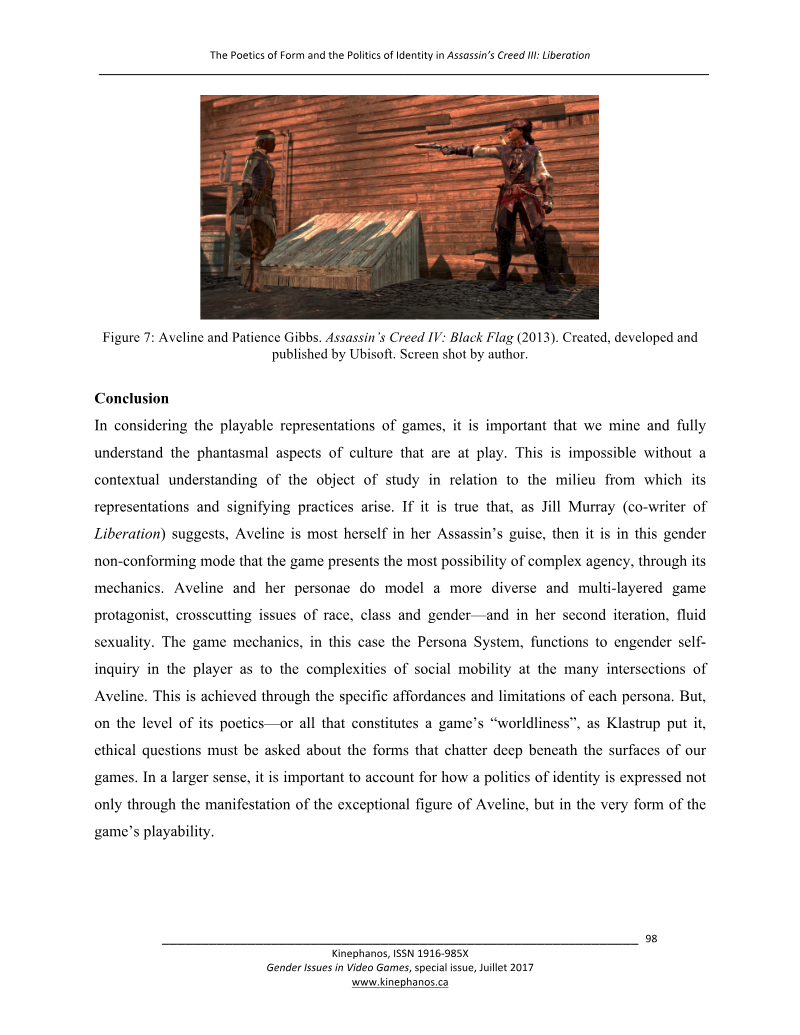
- 01The Persona System in Assassin’s Creed III: Liberation integrates identity into gameplay mechanics by requiring players to navigate colonial Louisiana through the distinct roles of Lady, Slave, and Assassin.See it on page 13
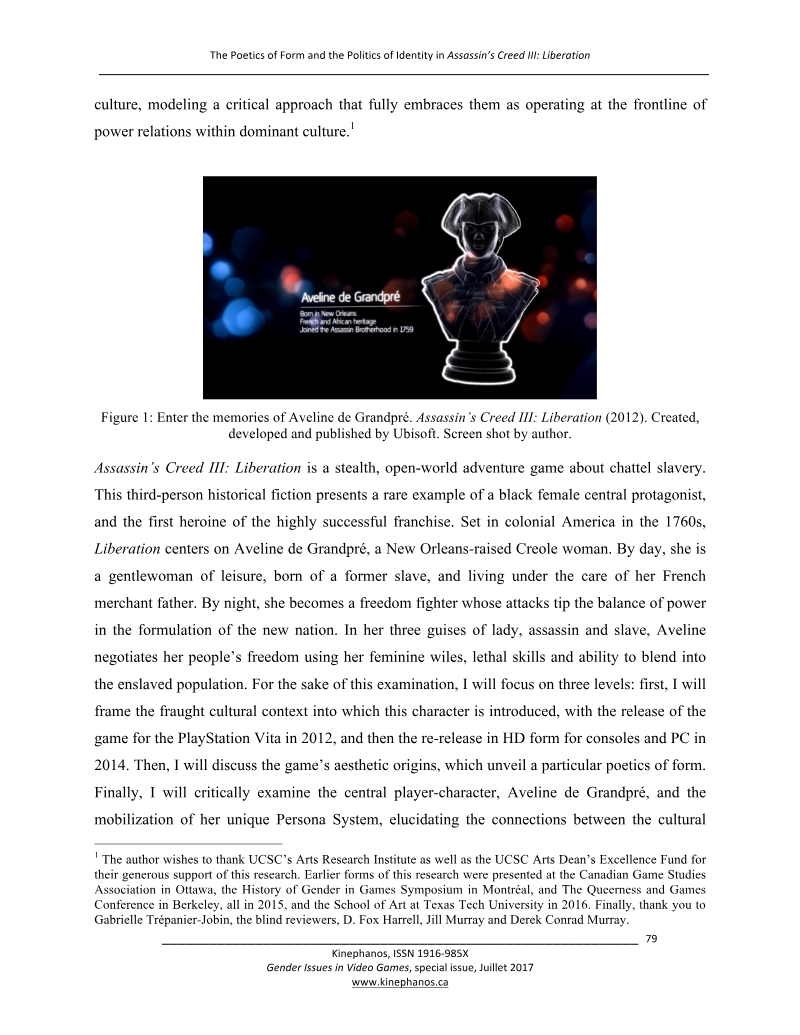
- 02By centering on Aveline de Grandpré, the game challenges industry norms that have historically favored patriarchal and colonial narratives by making race, class, and gender central to the player experience.See it on page 3
- 03The game’s mechanical design allows for fluid interpretations of the protagonist, facilitating potential queer or transgender readings that move representation beyond simple narrative exposition.See it on page 22
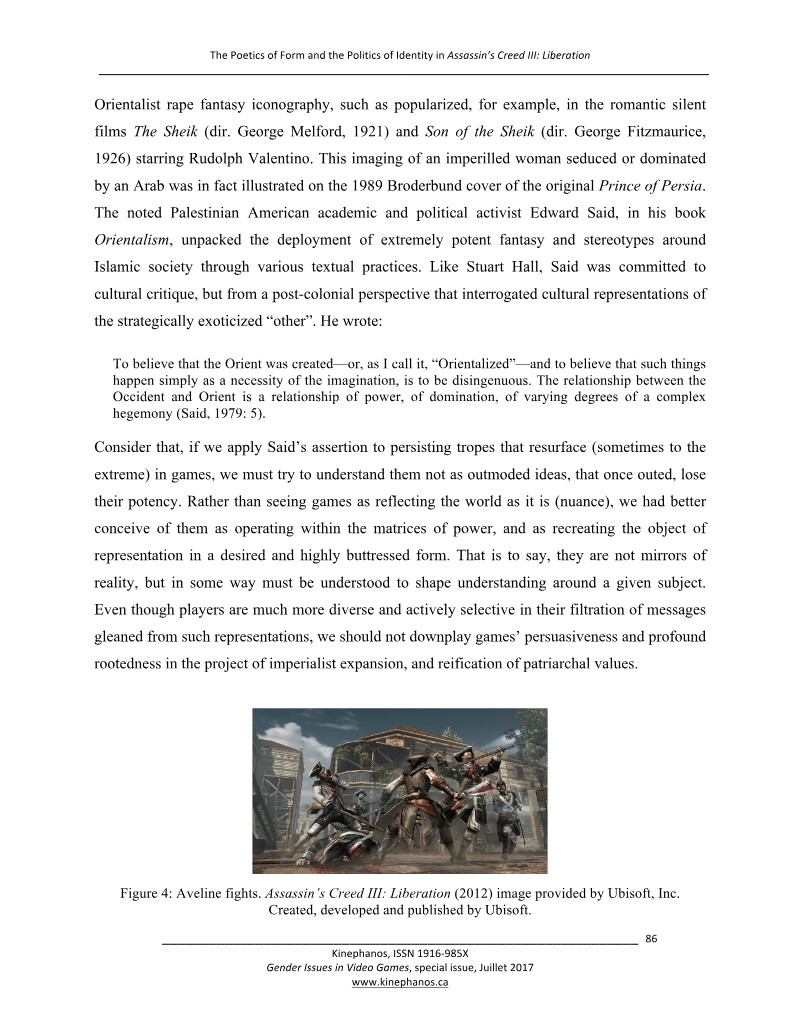
- 04Despite progressive character representation, the game remains constrained by traditional swashbuckler and Orientalist tropes rooted in European colonial history.See it on page 12
- 05The title serves as a model for how developers can use systemic design to embed social and historical identity complexities directly into game code.See it on page 17
- 06The report concludes that video games are not neutral products but are active sites of power where aesthetic structures and mechanics reinforce or subvert dominant societal norms.See it on page 10
Ask AI about this article
Summary
Assassin’s Creed III: Liberation serves as a critical case study for examining how video games function as sites of power, identity politics, and social representation. By centering on Aveline de Grandpré, the franchise’s first Black female protagonist, the game challenges traditional industry norms that have historically favored patriarchal and colonial narratives. The central thesis posits that games are not neutral consumer products but are deeply embedded in societal struggles, where the poetics of form—the underlying mechanics and aesthetic structures—actively shape cultural understanding and reinforce or subvert dominant power structures.
The game’s most significant innovation is the Persona System, which integrates identity directly into gameplay mechanics. By requiring players to navigate colonial Louisiana through the distinct lenses of Lady, Slave, and Assassin, the design forces an engagement with the intersections of race, class, and gender. This mechanical integration moves representation beyond mere narrative exposition, allowing for fluid interpretations of Aveline’s character, including potential queer or transgender readings. These mechanics effectively challenge the normative expectations of a female lead and demonstrate how game design can facilitate a more nuanced exploration of social identity.
Despite these advancements, the game remains caught in a tension between progressive representation and the persistent influence of imperialist tropes. While Aveline subverts the damsel-in-distress archetype, the core gameplay still relies on swashbuckler and Orientalist fantasies rooted in European colonial history. Ultimately, the game illustrates that while digital spaces offer profound opportunities for diverse representation, they remain tethered to the unconscious language of dominant power. By embedding identity-based constraints into the code, the title provides a model for how developers can use systemic design to engage players in the complexities of historical and social identity, even while navigating the broader culture wars that define the contemporary gaming landscape.